



The US pulled out of Afghanistan in August 2021, ending a 20-year conflict in which 140,000 of its soldiers fought and 2,400 gave their lives.
Now, veterans of America's longest war are working to reintegrate into society – something that is much more difficult than it seems.
Many have returned with physical and psychological wounds, some of which make them unable to work. Those who can work are sometimes unable to find jobs or readjust to civilian life, leaving them to fall through the cracks in a society that tends to remember only the dead.
“If I had a magic wand, I would make sure veterans were stable before they leave active duty and give them jobs, but it doesn't work like that,” Deborah Snyder, founder and president of the Operation Renewed Hope Foundation, tells The National.
A US Army veteran and a Virginia native, Ms Snyder retired in 2009 after 21 years in the service, achieving the rank of lieutenant colonel. The former Black Hawk pilot now dedicates her time to helping veterans rebuild their lives after returning from war.
In the US, almost 40,000 veterans are homeless, according to the Department of Veterans Affairs, out of a total of 582,000 people experiencing homelessness. Twenty out of every 10,000 veterans are homeless, compared with the nation's overall rate of 18.
After being shocked by the number of unhoused people she saw on her daily commute to the Pentagon, Ms Snyder launched her foundation in 2011 to combat the epidemic of thousands of former soldiers experiencing homelessness, convinced that the situation “is a solvable problem”.
US withdrawal from Afghanistan – in pictures
-

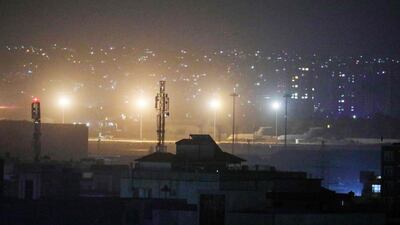
Celebratory gunfire light up part of the night sky after the last US aircraft took off from the airport in Kabul early on August 31, 2021. AFP -

Planes are seen on the tarmac at the airport in Kabul late on August 30, 2021, hours ahead of a US deadline to complete its frenzied withdrawal from Afghanistan. AFP -
Planes are seen on the tarmac at the airport in Kabul late on August 30, 2021, hours ahead of a US deadline to complete its frenzied withdrawal from Afghanistan. AFP -

Celebratory gunfire light up part of the night sky after the last US aircraft took off from the airport in Kabul early on August 31, 2021. AFP -

Celebratory gunfire light up part of the night sky after the last US aircraft took off from the airport in Kabul early on August 31, 2021. AFP -
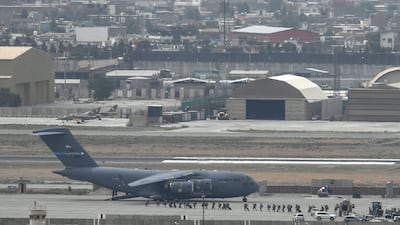
US soldiers arrive board an US Air Force aircraft at the airport in Kabul on August 30, 2021. AFP -
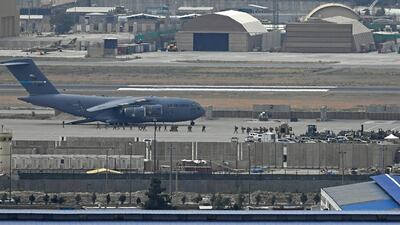
US soldiers arrive to board an US Air Force aircraft at the airport in Kabul on August 30, 2021. AFP -

An US Air Force aircraft takes off from the airport in Kabul on August 30, 2021. AFP -

An US Air Force aircraft takes off from the airport in Kabul on August 30, 2021. AFP


In its first decade, Ms Snyder's foundation has benefitted more than 1,200 veterans in the Washington metropolitan area. The foundation helps former soldiers from the Second World War, the Vietnam War and the Korean War, as well as the conflicts in Iraq and Afghanistan.
Lloyd Clarke was the foundation's first beneficiary.
“I don't know what I would have done without Deborah,” says Mr Clarke, a veteran who had been stationed in Korea and Vietnam. He was living in his car when he met Ms Snyder.
“Out of work, with my wife sick and consoling myself with alcohol, I was on the verge of suicide when I met her.”
Reintegrating into society is one of the biggest challenges for veterans upon their return. In addition to economic problems, other issues make everyday life difficult to navigate.
Post-traumatic stress disorder, or PTSD, is the most common. Vivid flashbacks, anxiety and intrusive thoughts often lead to unemployment, drug addiction and even suicide.
Of the estimated 30,000 people who die by suicide each year in the US, more than 7,000 are veterans – an average of almost 20 a day.
“We have to do a better job, as a nation, taking care of our veterans,” Ms Snyder says.
“At least now we are doing better than ever: about 85 per cent of the veterans that ORHF helps remain stably housed after exiting the programme.”
The foundation's “housing first” method – getting a veteran into a home first and then tackling other problems – has been successfully used in Washington and could be extended to the rest of the country.
“We find this method works well. It is important to house the family as soon as possible, then work on longer-term stabilisation,” Ms Snyder says.
The idea was first used in the neighbourhood where Ms Snyder was born and raised, and it ended up becoming a national reference in the fight against one of the biggest scourges in American society.

A family with six children were only the latest to be helped by the foundation, which placed them in a newly renovated house in Alexandria.
“I was in a precarious plight that would have undoubtedly left me a homeless veteran statistic without timely intervention,” says one of the recent beneficiaries.
Critics of the housing-first method say addicts and alcoholics will return to old habits regardless of their living situation. But Ms Snyder says “it’s easier to work on life issues with a roof over your head”.
“I've seen 500 different stories of why people end up homeless. Some lose jobs. Others have medical challenges or struggle with addictions,” Ms Snyder says.
“Many are in a financial crisis and most lack any kind of family support network.”
While some can count on family to help, “many of these veterans have nowhere to go”.
Diseases such as cancer not only have a wider variety of options for treatment but also generate more sympathy, while addiction and mental illness, frequently faced by veterans, have fewer resources dedicated to them.
Despite the myriad challenges, Ms Snyder is optimistic.
“We are serving those who served,” she says, smiling.
“This is a team effort. Thanks to the generosity of the people, we can do what we do.”
From the initial 68,000 veterans who were homeless when she created her foundation, that number has been cut by more than half, with about 29,000 today.
“The numbers are going down in the right direction, but we are still well above target,” she says.
“For every call from a homeless person, I get another six from people who are about to be left homeless and need immediate assistance.
“So we have to combat this problem by helping those who are literally without anything, but also those who are on the edge. Help them reach a minimum level of wellbeing before they lose everything.”
As grassroots efforts such as Ms Snyder's gain traction, the federal government is also stepping up.
Last year, President Joe Biden signed the Pact Act, which expanded veterans' health care. During the anniversary of the signing of the act earlier this month, Mr Biden stated his intention to continue to focus on veterans' health care, including mental health care and tackling homelessness.
“We have a moral obligation … and I'm here today to spread the word so every veteran or surviving family member knows how to access the benefits of this law,” he said.

