


Construction number 21098, a 747-200M, rolled off the production line at the enormous Boeing plant in Everett, Washington State on June 20, 1975.
Resplendent in its new livery of white and red, and with a green cedar tree painted on the tail, the 253rd jumbo jet to be delivered was about to become a flagship for Middle East Airlines.
History had other ideas ― 1975 was the year the Watergate scandal caught up with President Richard Nixon, Hanoi celebrated victory in the Vietnam war and Margaret Thatcher was elected leader of Britain’s Conservative Party.
It was also the beginning of a bitter, 15-year civil war in Lebanon.
An early casualty was Beirut’s international airport, which closed as fighting raged around it.
Built to fly MEA’s premier routes to London, Paris and New York, the shiny new Boeing 747 was effectively homeless.
Nearly 50 years later, this week the final Boeing 747 left the assembly line, destined to carry freight for Atlas Air, an American cargo airline.
More than 1,570 have been built since 1969, but no more will be made. Once the Queen of the Skies, the aircraft whose glamour epitomised international travel now largely ferries parcels and packages.
Nearly a third are still flying, although the oldest is only about 32 years old. The class of 1975 may be all but extinct.
_________________________________________________________________
50 years of the Boeing 747 - in pictures
-
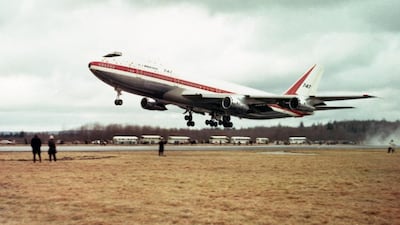
The 747 takes off for its first flight in 1969. All images courtesy Boeing -
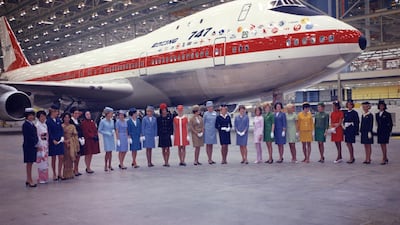
Flight attendants pose in front of the jumbo jet. -
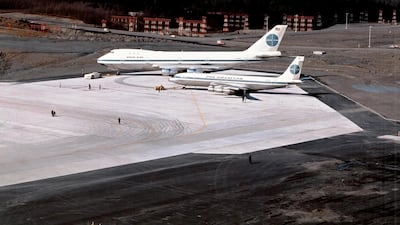
The Boeing 747 next to the 707. -
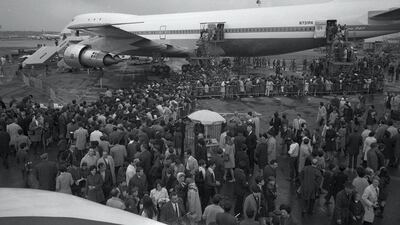
Crowds tour the 747 for a closer look. -
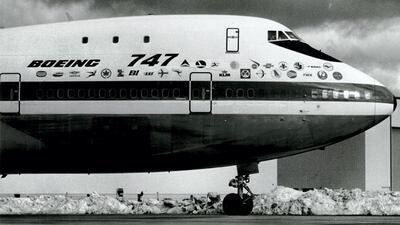
The iconic 747 nose. -
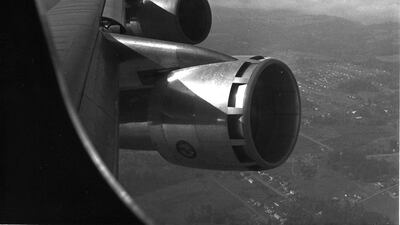
A close-up of the early 747 engines. -
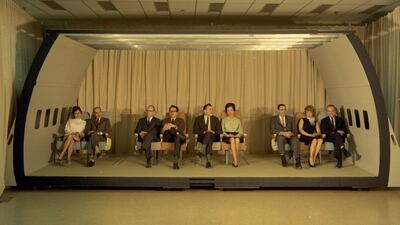
A mock-up of the 747 interior. -
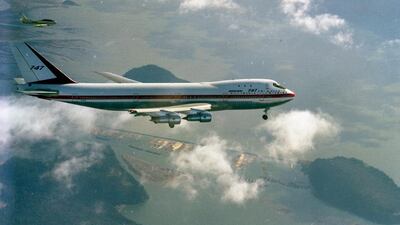
The first 747 flight in 1969. -

A 747 byline on the occasion of the Queen of the Skies 50th first flight anniversary. All photos by Boeing -
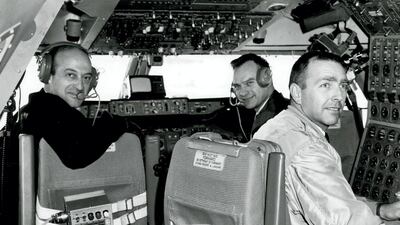
The flight crew for the first flight in 1969. -
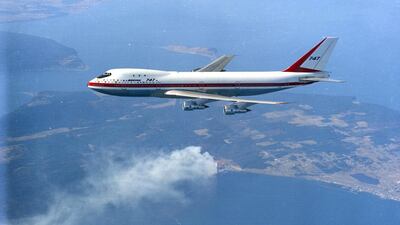
A 747 byline on the occasion of the Queen of the Skies 50th first flight anniversary. All photos by Boeing -
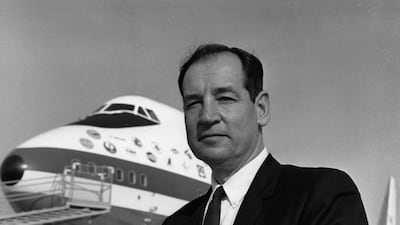
Joe Sutter headed the design team and has since been known as the “Father of the 747.” -

The first 747 flight in 1969. -
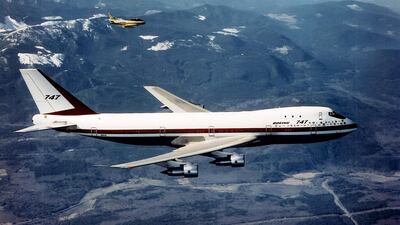
A 747 byline on the occasion of the Queen of the Skies 50th first flight anniversary. All photos by Boeing -
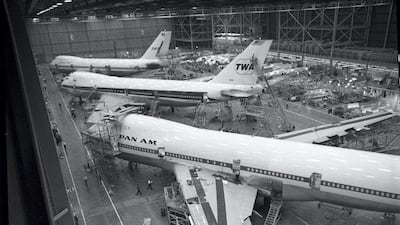
Pan Am 747s in the factory. -
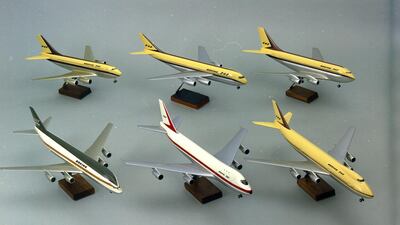
Model mock-ups of the 747. -
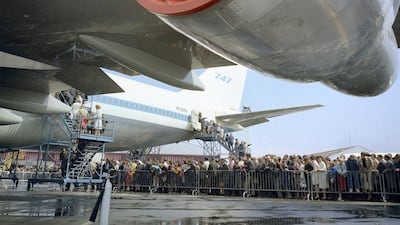
Crowds queue to board a 747 at an air show. -
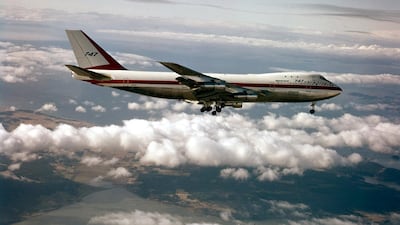
The first 747 flight in 1969. -
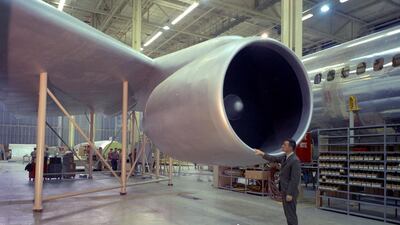
The 747 marked the first commercial use of the high bypass turbofan engine. -
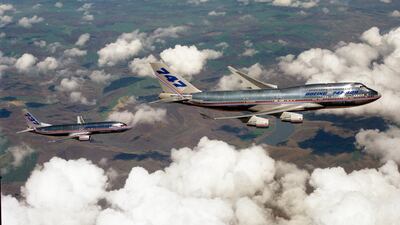
A Boeing 747-400 flies alongside a 737-400. -
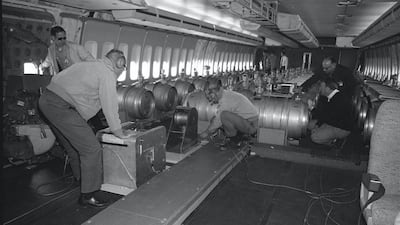
Balast tanks during the assembly of the 747. -
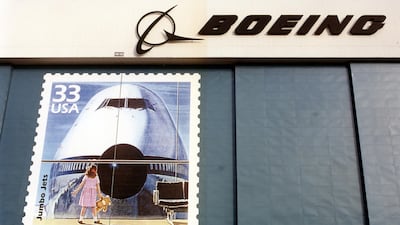
A stamp on the side of the Boeing plant at Everett, Washington. -
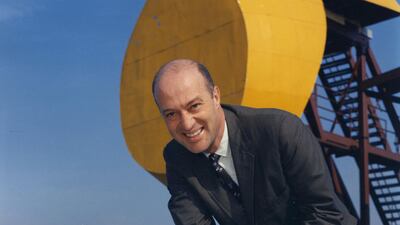
747 project test pilot Jack Waddell.


_________________________________________________________________
But much of the story of the jumbo jet can be told through this single 747-200, the second version of the aircraft, introduced in 1971, with more powerful engines that increased its range.
It was too valuable an asset for MEA to leave idle on the ground. And so, in June 1977 the aircraft joined the fleet of Saudi Arabia’s Saudia airline.
It was the second of what would be 10 changes of airline. Four years later, the 747 was back at MEA, until leaving for Bahrain’s Gulf Air in 1985. The ownership then passed to Carter Leasing, with Gulf Air keeping the aircraft for only six months.
British Airways was next, with the aircraft repainted and renamed the City of Lancaster, and flying long-haul destinations from London’s Heathrow and Gatwick airports.
Now 15 years old, BA was introducing new models and the 747-200 was taken back ― under lease from Carter ― for its third stint at MEA.
It operated from Beirut for two more years before, in a series of eight transfers in only six years, it was loaned to Indonesia’s Garuda in 1992, back to MEA, then Nigeria’s Trans-Air Services, a cargo airline, in 1995.
Within the year it was returned to MEA but then sent to Philippine Airlines until 1996.

The 747 was then sold by Carter Leasing to MEA, who promptly sent it to Kalitta Air, an American cargo airline founded by its namesake Conrad Kalitta, a former drag-racing champion from Michigan.
A year on, in 1998, there was another change of ownership, to Kitty Hawk International, a Dallas-based cargo airline, and named after the place where the Wright brothers made the first powered flight in 1903 for a distance of 37m ― less than the wingspan of a 747.
Its 495 seats ripped out and the champagne service of first class now just a memory, it might be assumed the jumbo jet’s glory days were over. But there was one last twist.
As the 21st century dawned, this flagbearer for aviation in the 20th was bought for Dubai’s Royal Air Wing.
Painted a gleaming white, and with the callsign Dubai 008, the aircraft was converted in 2000 as a flying horsebox, transporting racehorses from Sheikh Mohammed bin Rashid’s Godolphin Stables.
Capable of carrying up to 50 horses, with their grooms and equipment, to any racecourse in the world, it visited Britain, Ireland, Japan, Australia, South Africa, Brazil, France and the United States ― its new passengers arguably more famous, and certainly more valuable, than any previously.
It remained in the service of Sheikh Mohammed, Vice President of the UAE and Ruler of Dubai, until 2010.
After 35 years in the air, Construction Number 21098 made its final flight to Kemble-Cotswold Airport, a former Royal Air Force base that is now a storage facility and aircraft graveyard.
The fuselage around its passenger door had been signed with dozens of farewell messages. “Ma Salama. It’s been a long way here,” read one. “Blue skies and smooth ride. It’s been great,” another.
In its lifetime, the 747 had flown for airlines in seven countries and flown a distance totalling more than 2,000 circumnavigations of the Earth.
Surrounded by other relics of the jumbo jet age, by 2013 it had been cut up for scrap and recycling.
British Airways retires its fleet of Boeing 747 - in pictures
-

British Airways has retired its final two Boeing 747 jumbo jets in 2020. Courtesy British Airways -
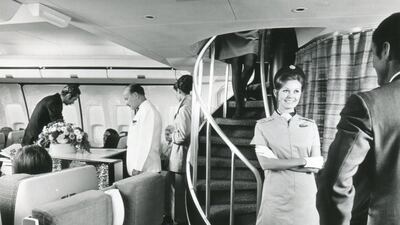
British Airways welcomed its first 747 jet in 1971. -
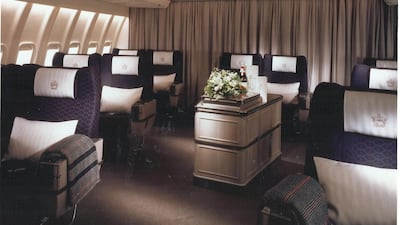
The 747 ushered in the era of twin-aisle wide-body passenger planes. -

The Boeing 747 has been forced into early retirement due to the impact of the global pandemic. -
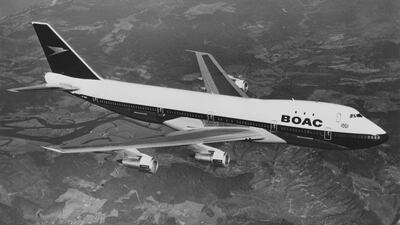
A Boeing 747 long-range wide-body four-engined commercial jet airliner for the BOAC - British Overseas Airways Corporation - flying above the UK on in April 1971. Getty Images -
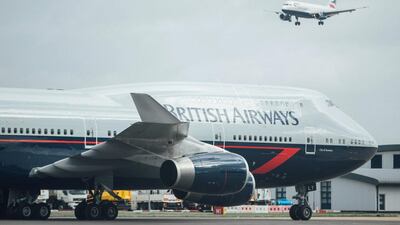
British Airways 747 in Landor livery arrives at London Heathrow in March 2019. Picture by Nick Morrish/British Airways. -

The Red Arrows aerobatic team perform a flypast with a British Airways Boeing 747 over the Royal International Air Tattoo in 2019. -
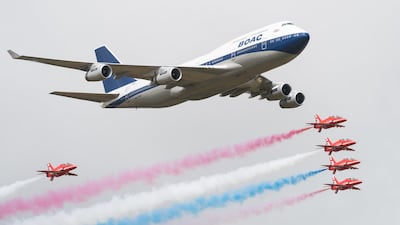
A British Airways special liveried Boeing 747 takes to the skies alongside the Red Arrows during the 2019 Royal International Air Tattoo on July 20, 2019 at RAF Fairford, England. Getty Images



