


It’s been an extraordinary two and a half years for volunteers and staff at the Islamic Food Bank of Toledo in the US state of Ohio.
When the pandemic hit in March 2020, the organisation, situated in the north-western part of the state, sprang into action after many people lost their jobs and found themselves without enough income to buy food.
Even as the threat of Covid-19 continues to recede, Americans are facing a new challenge that is resulting in the increased demand for food assistance: the rising cost of living.
“For some families, it’s become a trade-off between putting food on the table and paying off medical bills or utilities,” says Razi Rafeeq, executive director of the food bank.
In the 12 months to last March, the food bank distributed more than 308,000 meals — including about six tonnes of halal meat — to food-scarce communities in and around Toledo, a city with a metropolitan population of about 650,000.
To meet the growing demand, the food bank opened a new warehouse close to the city centre earlier this year.
“We have definitely seen a tremendous increase in the number of guests coming, asking for help,” adds Dr Rafeeq.
Tunisia struggles with food shortages — in pictures
-

Empty shelves in a main supermarket in Tunis. Tunisian shops and supermarkets are struggling with massive shortages of basic food supplies such as cooking oil, sugar, coffee and bottled water. Ghaya Ben Mbarek for The National -
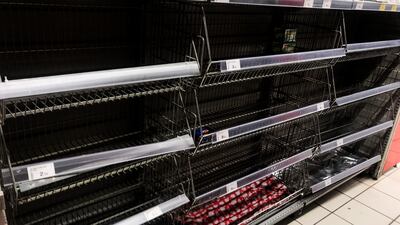
Shops have restricted their customers to buying a specific amount of supplies in an attempt to alleviate the worsening situation. Ghaya Ben Mbarek for The National -
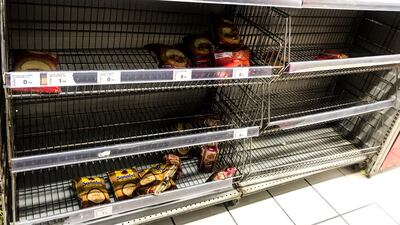
Most of the goods running short are state-subsidised, which analysts say highlights the growing dysfunction in the state-administered purchasing and distribution of food. They also say there is a growing black market in subsidised goods. Ghaya Ben Mbarek for The National -
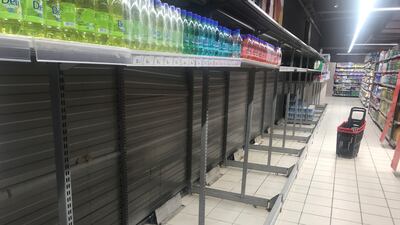
For the past two weeks, coffee and tea have become the latest products to be scarce in supermarkets. Pictures have circulated online of empty shelves and brands limiting their sales to 100 grams per person. Ghaya Ben Mbarek for The National -
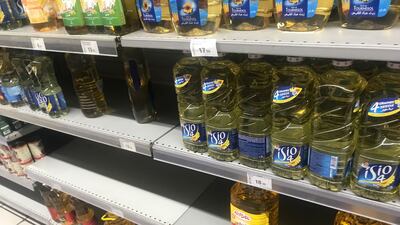
President Kais Saied and the Tunisian government have blamed the issue on traders monopolising control of basic goods and hoarders. Ghaya Ben Mbarek for The National -

A customer shops at a bakery in Tunis. Reuters -

Fruit for sale at Sidi Bahri market in Tunis. Reuters -
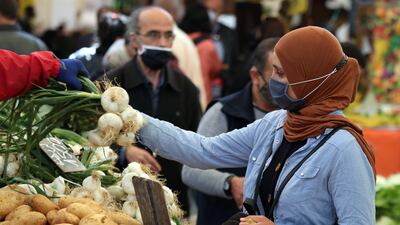
A Tunisian woman buys vegetables on the first day of the Muslim holy month of Ramadan at a market in Tunis, on April 13, 2021. EPA -

Sidi Bahri market in Tunis, on June 27, 2021. Reuters -

Vegetables for sale in Sidi Bahri market in Tunis. Reuters -
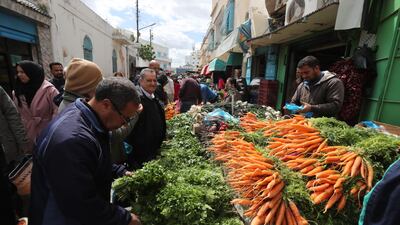
Tunisians buy fresh produce at a market on the first day of the Muslim fasting month of Ramadan in Tunis, on April 2. EPA -
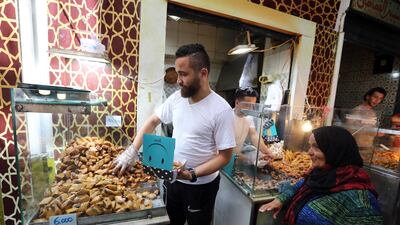
A man sells traditional cakes in his shop at the old city in Tunis, on July 1, 2022. EPA -
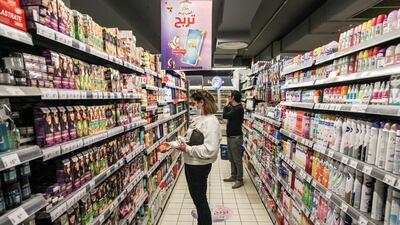
Shoppers browse products in a supermarket in the Ariana district of Tunis, on April 8. Turmoil triggered by rising food and energy prices is already gripping countries, including Sri Lanka, Egypt, Tunisia and Peru. Photo: Bloomberg -
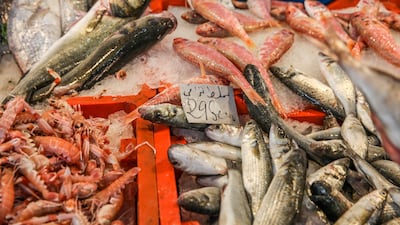
A Tunisian dinar price tag on a display of fresh fish at a fishmonger's shop in the Ariana district of Tunis, on April 8, 2022. Photo: Bloomberg -
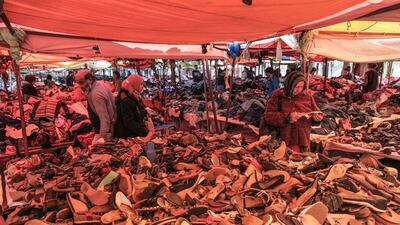
Shoppers browse shoes for sale at a second-hand clothing market in the Ettadhamen district of Tunis, on April 8, 2022. Photo: Bloomberg


Though the pandemic led to an unprecedented rise in the demand for food assistance across the country — surging beyond rates seen during the Great Depression in the 1930s — the cost-of-living crisis has led to a jump in prices for everything from airline tickets to petrol.
In June, inflation in the US reached 9.1 per cent, its highest rate in more than four decades.
Rising food prices have hit many at-risk Americans particularly hard, increasing way above the average inflation rate.
A dozen eggs, for example, cost 38 per cent more last month compared to August 2021. Flour is about 23 per cent more expensive, while chicken is more than 17 per cent pricier.
Feeding America, a network of more than 200 food banks located across the country, reported that in June, 90 per cent of its partner organisations had faced “either an increase or steady demand for emergency food services”. That percentage rose 15 per cent compared to the previous month.
“Inflation is devastating to the budgets of families, seniors and people just barely getting by, driving more and more of them to food banks and food pantries,” president and chief operating officer of Feeding America, Katie Fitzgerald, said last month.
Why is everything so expensive right now? — video
All the while, halal and other culturally specific food banks are playing a leading role in helping to feed Americans amid the economic crisis.
For Zahid Hussain of Islamic Circle of North America Relief, there has been no let up since March 2020.
As the director of hunger prevention for an organisation that runs 48 halal food banks in 34 states, he has overseen the handing out of $22 million worth of free food.
And yet the challenges continue.
“Halal meat used to cost $9 per pound; now, it’s touching $12,” he says.
“Refugees are suffering, specifically single mothers who come here with children.
“They are doubly burdened with running the family and feeding their children.
“[Their children’s] education is not their priority because they have to bring food to the table for their parents.”
Mr Hussain says individual clients receive between 30 and 35 kilograms of food through his organisation’s pantries, but there are different preferences and dietary requirements from community to community: Arab clients, for example, prefer Basmati rice, he says, while members of the Rohingya community like long-grain rice.
“People want to cook, not consume fast food,” he says. “It’s their culture.”
Across the country, immigrants have made up a large proportion of service industry workers who initially lost their jobs due to the closure of restaurants, meat processors and other businesses in 2020.

Today, many of those people have been unable or are unwilling to return to work due to the risk of contracting Covid-19 or due to wages that aren’t keeping up with inflation.
While salaries for low-wage and blue-collar workers have increased over the past year, so, too, has the cost of childcare, petrol, used cars and a host of items other than food that many people need to make working possible.
The effect on children has been particularly significant.
Last January, the child tax credit programme, a temporary measure the US government deployed to help families through the pandemic, expired. That resulted in 3.7 million children sliding back into poverty.
During the 2021-22 school year, schools in Dearborn, Michigan, a suburb of Detroit that is home to one of the country's largest Arab-American communities, provided more than 2.2 million free lunches and close to three quarters of a million breakfasts to pupils as part of a nationwide programme.
Though the programme has since ended, Dearborn’s school system is set to continue providing free lunches throughout the coming school year.
This move follows a period of serious financial instability for many Dearborn residents that in January 2021 prompted municipal authorities to launch a rent assistance programme to help families facing the prospect of losing their homes.
Zeroing in on the needs of families with school-going children has been a recent focus for the Islamic Food Bank of Toledo. Though some low-income children in Ohio continue to receive free meals during the week, that does not extend to weekends.
It’s a shortcoming Dr Rafeeq has been keen to address.
“The biggest programme that has taken off is the ‘weekender food bag',” he said.
“We are building and distributing about 1,500 weekender bags [enough food for four people] on a monthly basis.”
With inflation remaining stubbornly high and energy demands set to skyrocket as winter approaches, America’s halal food banks are set to play a key role in the months to come.
Food insecurity report — in pictures
-
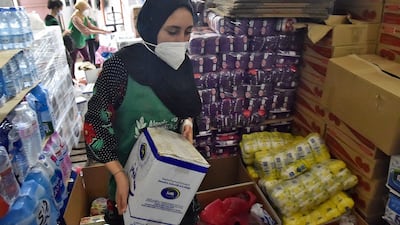
ALGERIA: The report studied not only food scarcity but how much a household must spend on food to get by. In Algeria, the average family spent 42.5% of their monthly income on food, placing them fifth from the bottom of the global chart. AFP -

KAZAKHSTAN: Kazakhstan came fourth from the bottom, with a household spending 43% of their income on food. Anadolu Agency via Getty Images -
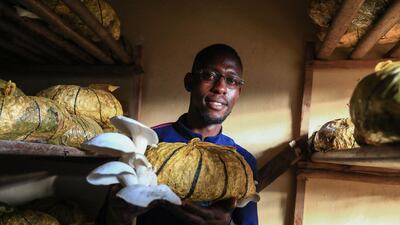
CAMEROON: A farmer grows mushrooms in to diversify his crop. Cameroon was third from the bottom, with the average household spending 45.6% of their budget on food. AFP -
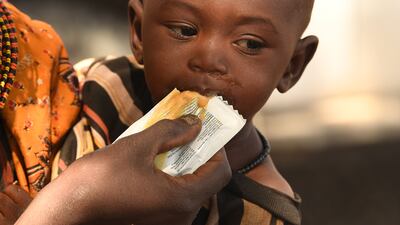
KENYA: Despite its position as one of Africa's stronger economies, food shortages left the average family spending 46.7% of their income on food. AFP -
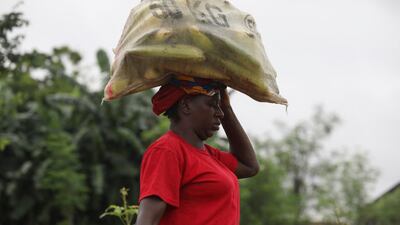
NIGERIA: With one of the world's fastest growing populations, Nigeria struggles to feed its 200 million people. It languished at the bottom of the global table, with the average family spending 56% of their income on food. AFP



