

Even for a veteran of an industry in which people go out to work in the field and some days don’t come back, Paul Heslop has the date of August 31, 1997, seared into his memory.
It was when, on a cloudy morning in the Angolan capital, the country programme manager for The Halo Trust mine charity received a telephone call that elicited a characteristically candid outburst of expletives.
The burly former British military officer had mistakenly thought that a journalist’s request for a response to the death of Diana, Princess of Wales, at the age of 36 in the Pont de l’Alma tunnel in Paris, was some sort of prank.
“The comms weren’t brilliant back then,” Heslop tells The National, “and there wasn’t the internet the way it is today. So I went around to a friend’s house who had satellite TV and the news was obviously across every station.
“My phone rang, and it was another journalist asking for a comment. Then my mum rang, and then everybody rang. It kept going all day.”

His immediate thoughts and feelings about the reality of what had happened were set against the backdrop of his own work in making a treacherous landscape safe for its people.
“You have a slight mindset of preparing yourself for what might be the worst. So she was just another person I met, who I dealt with, and who ultimately died in an accident ... it wasn’t, for me, as traumatic as for some people.
“I was absolutely staggered by the outpouring of grief seen on the TV because,” and he pauses to smile wryly, “that’s not really British, is it?”
Within hours, Heslop was on a plane with a press pack destined for Huambo province, scene of Diana’s visit eight months earlier to boost a Red Cross campaign for an international ban on landmines.
He could be forgiven for feeling that the incoming calls about Diana have not stopped since. There is an insatiable interest in the mine-action advocate who has described his terror at potentially “going down in history for blowing up the most famous woman in the world”.
The January before her death in a car crash, the world’s media recorded a 27-year-old Heslop strapping the princess into body armour, handing over a protective visor and leading her through a live minefield.
He managed to pull off the publicity coup of a lifetime for his charity after fashioning Halo logos out of a pillowcase and a blue felt tip pen the night before, and having a maid stitch them on to the flak jackets.
Among the images repeatedly used in tributes marking her death then and to this day was a photograph taken with Heslop just out of shot showing the princess alongside a row of red hazard signs bearing the skull and crossbones.
“I wish I had a tenner or 100 quid for every time it’s been used,” he says. “There would be a lot more mine clearance being paid for around the world ― and I’d have retired by now. My father always jokes, ‘Have your royalties cheques come in yet, Paul?’
“I think what that visit did was create a buzz and an interest in the subject that continues 25 years later. It shows the power of her celebrity, and how people are still interested in the causes she was interested in.

“Of course, being asked the same questions for 25 years can be a bit repetitive but, in reality, in that time tens of millions of mines, and millions and millions of bombs, shells and rockets have been cleared.”
Now global head of operations with the United Nations Mine Action Service (Unmas), Heslop, 53, notes that a problem arose from Diana’s involvement as ambassador: her death made it difficult, if not impossible, for anyone else to take up the mantle.
Nearly 20 years passed before the James Bond actor Daniel Craig was appointed UN Global Advocate for Elimination of Mines, and then Prince Harry stepped forward to continue his mother’s legacy.
“It almost took a generation to allow somebody not to be embarrassed by it,” Heslop says. “Every time they did, they were sort of lambasted as though trying to steal Diana’s glory. In a sense, she created a vacuum that wasn't really filled until her own son was old enough.”
The Duke of Sussex visited Huambo province in December 2019, finding a thriving high street full of businesses and educational colleges where once there had been the deadly minefield.

In an emotional tribute, the prince talked of his pride at the transformation but also of the 1,000 minefields in the country that have yet to be cleared. “I wonder if she was still alive whether that would still be the case," he said.
It’s the million-dollar question that Heslop, too, has pondered. He weighs on one hand whether governments would have felt as compelled to rally to the cause had she lived, against, on the other hand, the possibility of Diana having as much or even more influence through two decades of advocacy.
"We'll never know," he says.
The car accident, outpouring of grief and the playing of the minefield imagery 24/7 came as negotiations were being finalised on the Ottawa Convention, also known as the Mine Ban Treaty, that aims to eliminate anti-personnel landmines by 2025.
“Tony Blair, as a prime minister who wanted to be popular … would have been a very brave man not to go to parliament and ratify it,” Heslop says.

The decision by the UK, a permanent member of the United Nations Security Council, sent a strong message that “created a momentum”. In December 1997, 121 countries signed. To date, there are 164 signatories, China, Russia and the United States the notable exceptions.
Heslop’s greatest fear these days is losing the impetus, possibly through the mine action sector not managing to convey the successes achieved since then. Some estimate that 55 million mines in 30 countries have been cleared, a number he deems reasonable with stockpiles included.
The biggest current concern to him are statistics from Afghanistan, where he is on a two-year secondment as programme manager. Twenty-five years ago, there were nearly 3,000 casualties a year, mostly from anti-personnel pressure mines. That rate dropped to a low of about 200 in 2012, but is back up to about 2,000.
“They're from improvised mines that were laid in the last 10 years. So only 1 per cent of the casualties in Afghanistan are from mines laid when Diana went to Angola. She helped remove what was a massive problem around the world at the time of her visit. Now that problem has evolved because conflict has evolved.”
Demining, particularly with respect to IEDs, is expensive, and Heslop knows all too well the scale of the challenge just to keep donors engaged in such a long-running effort.
“Donor fatigue is massive. We’re probably looking at a requirement of $50 million to $100 million a year for the next five years in Afghanistan alone. So across all the countries affected that is a big chunk of change.”

But the knock-on effects of what is being done are incalculable. He talks of the sweeping humanitarian benefits of employing locals as deminers, giving them self respect, a salary to support their extended family, and a compelling reason not to pick up an AK47 as combatants.
Whether it’s in Angola, Cambodia or Mozambique, they are, he says, “the unsung heroes” on their hands and knees with a trowel and metal detector in extreme weather conditions searching for something intended to maim them.
There are women being empowered in Afghanistan as community liaison officers with Unmas teams, spreading educational programmes to matriarchs to advise boys in particular of the hazards of collecting scrap metal or tampering with devices for fun.
He cites further examples such as the canals cleared of mines in Kandahar 25 years ago, allowing their repair and the recent refurbishment by the World Food Programme of irrigation systems that mean hundreds of thousands of hectares of land can be cultivated.
The clearing of an IED from a bridge across the Euphrates in Iraq ended a four-hour drive to a maternity hospital from the wrong side of the river. “People can get to the hospital in 15 minutes, and 1,000 vehicles an hour use that bridge now. The economic impact of that is well over the $100,000 [it cost] to clear that device.”

The war against mines is being won, he says, but will require long-term commitment by member states and donors. And there will be setbacks as seen in Ukraine this year when new mines were laid in Europe for the first time since the Balkan wars in the 90s. "But, every year, deminers are making the world a safer place."
It is difficult to determine how much of the tide was turned by one princess traversing a stretch of ground littered on either side with buried military munitions, but there is no doubt that Diana laid it all on the line for a cause she believed in.
She was nervous at the prospect of entering the minefield, Heslop says, admitting that he was, too, his first time “and I didn’t have two billion people watching me on CNN and the BBC”.
Afterwards, Diana helped the team decommission an anti-personnel mine in a controlled explosion. Presenting her with the misshapen metal, Heslop quipped: “Please don’t put this in Charles’s bed when you get home.”
She threw back her head and laughed in another moment captured by the press that is one of Heslop’s favourite pictures of her.
“My abiding memory is of spending time with a very beautiful woman who was incredibly nervous when she arrived, warmed up during the day and left holding the mine I presented her with, still grinning at a joke I cracked,” he says.
“I thought, yeah, that rounded the day off quite nicely.”
Princess Diana through the years — in pictures
-
Ten-year-old Lady Diana Spencer during a summer holiday in Itchenor, West Sussex, in 1971. Here 'The National' takes a look back through Princess Diana's life in pictures. Getty -
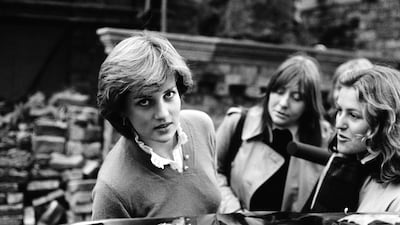
Lady Diana Spencer, 19 at the time, responds to the press while getting into a car in London, in 1980. Getty -
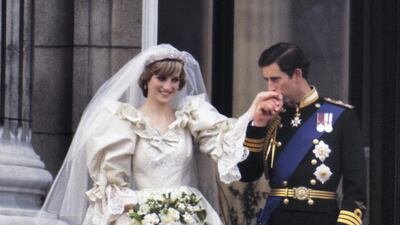
The Prince and Princess of Wales on the balcony of Buckingham Palace on their wedding day, on July 29, 1981. Getty -
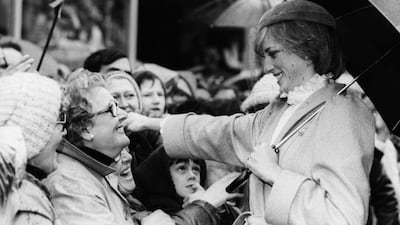
Princess Diana smiling as she prepares to embrace a woman in the crowd, on the streets of Carmarthen, Wales, in 1981. Getty -
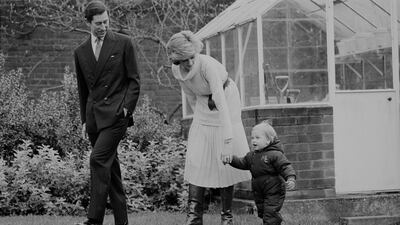
Princess Diana and Prince Charles with their son, Prince William, in December 1983. Getty Images -
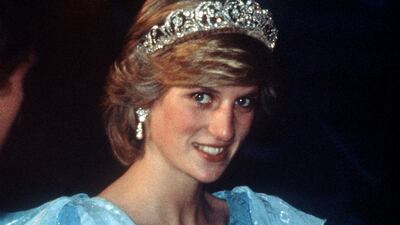
Princess Diana wearing the Spencer family tiara at state dinner in Saint John, New Brunswick, Canada, in 1983. PA -
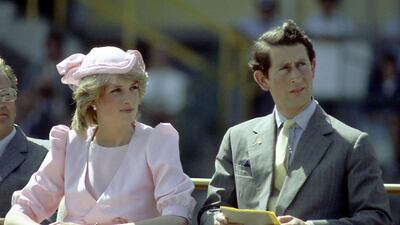
Princess Diana And Prince Charles watch an official event during their first royal Australian tour in 1983. Getty -
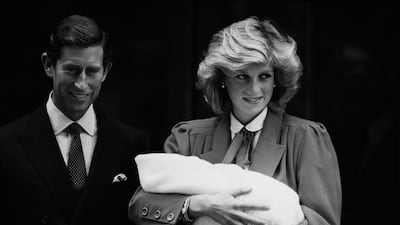
Princess Diana and Prince Charles with newborn Prince Harry, leave St Mary's Hospital in Paddington, London, in 1984. Getty -
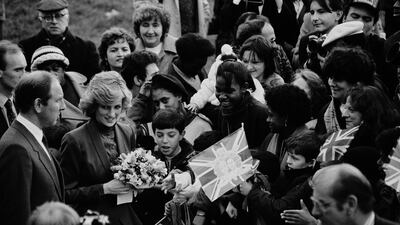
Princess Diana meets members of the public during a visit to a community centre in north London in 1985. Getty -
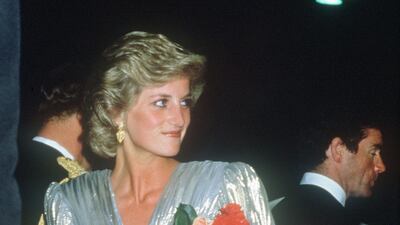
Princess Diana arrives at a dinner during a visit to Australia in 1985. AFP -
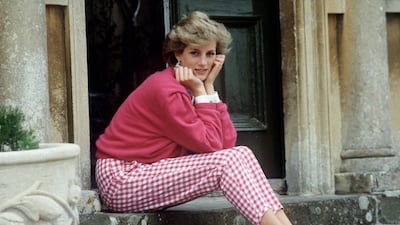
Princess Diana sits on a step at her home, Highgrove House, in Doughton, Gloucestershire, in 1986. Getty -
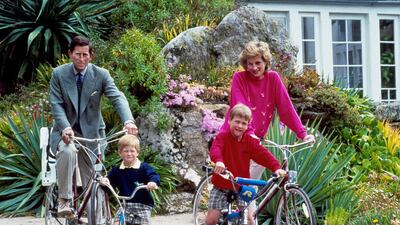
Prince Charles and Princess Diana and their sons, Princes William and Harry, on a cycle ride around the island of Tresco, Italy, in 1989. AP -
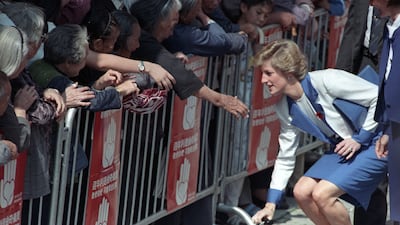
Princess Diana stoops down to pick up a walking stick after a woman she dropped it over the crowd barrier, during a walkabout in Hong Kong in 1989. Reuters -
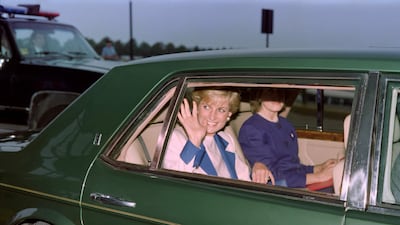
Princess Diana waves on her way to visit US first lady Barbara Bush at the White House in Washington, in 1990. AFP -
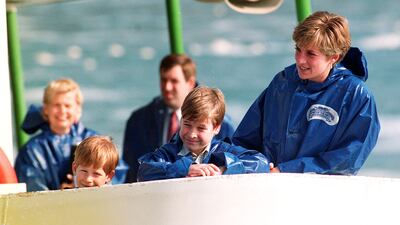
Princess Diana and her sons onboard the 'Maid of Mist' ship as they take a close look at the Niagara Falls, Canada, in 1991. PA -
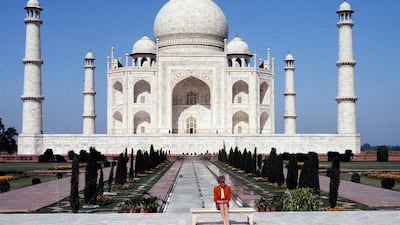
Princess Diana poses alone at the Taj Mahal during her visit to India in 1992. Getty -
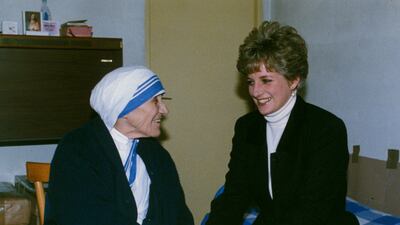
Princess Diana holds the hands of Mother Teresa during their first meeting at the Missionary Sisters of Charity residence in Rome, Italy, in 1992. Reuters -
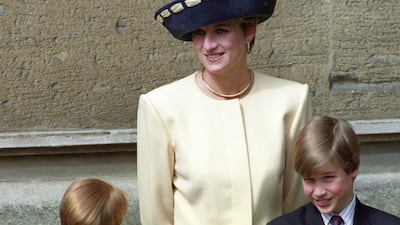
Princess Diana with her sons outside St George's Chapel, Windsor Castle, in 1992. PA -
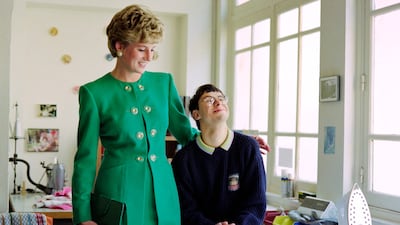
Princess Diana listens to a young boy during her visit to a home for children in Paris, France, in 1992. AFP -
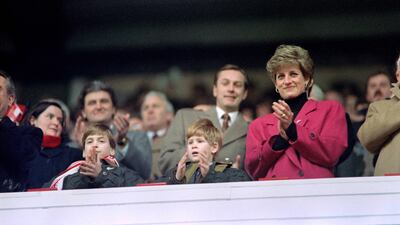
Princes William and Harry applaud alongside their mother, Princess Diana, during a Five Nations rugby match between Wales and France in 1992. AFP -
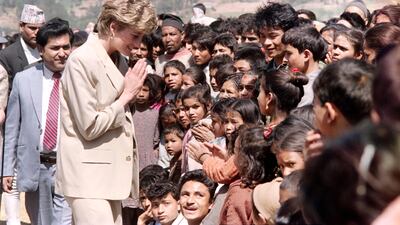
Princess Diana speaks to Nepali children while touring a Red Cross project in the Himalayan foothills in 1993. AFP -
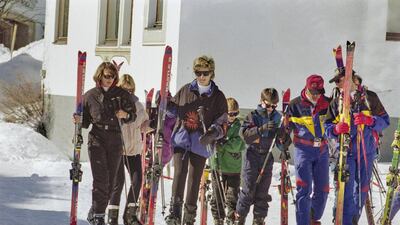
Princess Diana, Prince Harry and Prince William carrying their skis during a skiing holiday in Lech am Arlberg, Austria, in 1994. Getty -
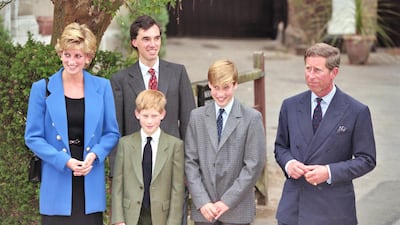
Princess Diana, Prince Harry, Prince William and Prince Charles outside Manor House, on Prince William's first day at Eton College in 1995. Getty -
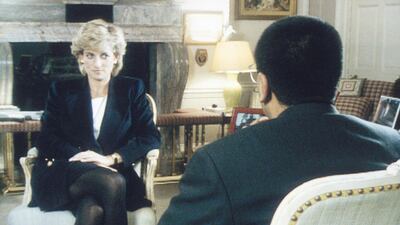
Martin Bashir speaking to Princess Diana in Kensington Palace during the infamous 'Panorama' interview that was aired by the BBC in 1995. Getty -
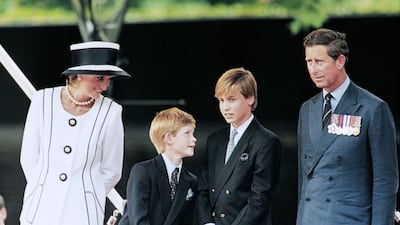
Prince Charles, Princess Diana and their children watch the march past on the mall as part of the commemorations of VJ Day in London in 1995. AFP -
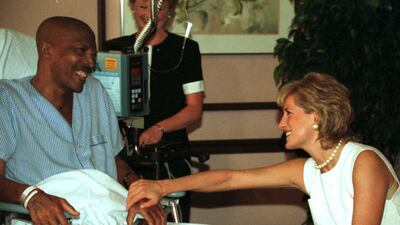
Princess Diana meets with John Collins, a 51-year-old lung cancer patient, while visiting Chicago's Northwestern Memorial Hospital's Hospice in 1996. AFP -
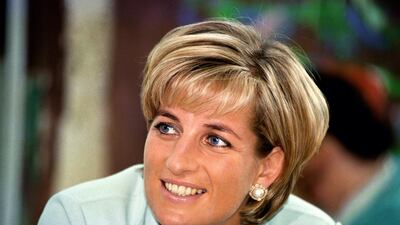
Princess Diana during a visit to Leicester, to formally open The Richard Attenborough Centre for Disability and Arts, in May 1997. Getty -
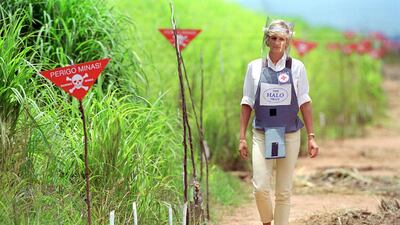
Princess Diana, wearing protective body armour, visits a minefield being cleared by the charity, Halo, in Huambo, Angola, in 1997. Getty -
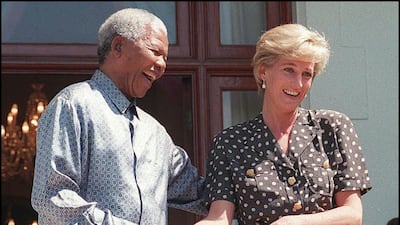
South African President Nelson Mandela and Princess Diana speak with the press after meeting in Cape Town, South Africa, in 1997. AFP -
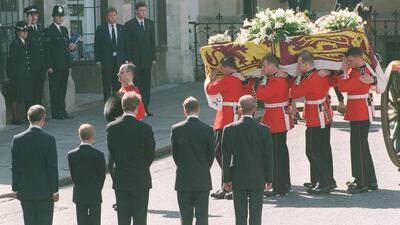
Prince Charles, Prince Harry, Earl Spencer, and Prince William watch as the coffin of Princess Diana is carried into Westminster Abbey, London, in September 1997. AFP -
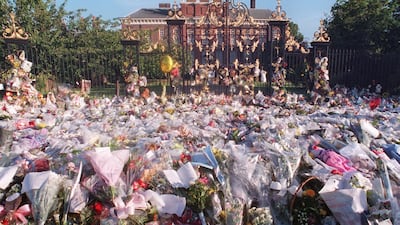
Floral tributes for Princess Diana in front of Kensington Palace in London, in 1997. AFP -
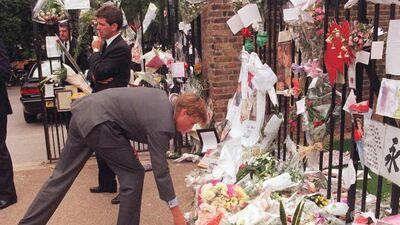
Prince William places a bunch of flowers with the hundreds tributes already laid outside his mother's official residence at Kensington Palace, in 1997. AFP -
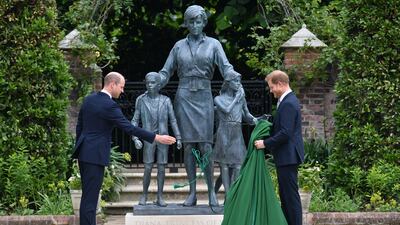
Prince William and Prince Harry unveil a statue they commissioned of their mother, at Kensington Palace in 2021, on what would have been her 60th birthday. PA



