

Demand in the UAE’s mortgage market is being driven by “Fomo [fear of missing out] buyers” as many prospective home owners are rushing to enter the property market before the purchase becomes out of reach, industry experts say.
“With the dual impact of accelerated home price appreciation and rising interest rates, mortgage payments have gone up close to 50 per cent in some cases,” said Mohamad Kaswani, managing director of Mortgage Finder.
“However, it’s still premature to measure the real impact of rising interest rates on the local market as most transactions that took place in the second quarter were likely negotiated and decided in March prior to the rate hike.”
The central banks of the UAE, Saudi Arabia, Bahrain, Kuwait and Qatar raised their benchmark borrowing rates last month after the US Federal Reserve doubled down and aggressively raised its key interest rate to tame surging inflation.
The Fed increased the policy rate by 75 basis points (bps) on July 27 after a larger-than-expected three-quarters percentage point increase in June. This is the Fed’s fourth interest rate increase in four months and the biggest since 1994.
Most central banks in the GCC follow policy rate moves by the Fed due to the peg of their currencies to the US dollar.
The Central Bank of the UAE raised its benchmark base rate for its overnight deposit facility by three quarters of a percentage point. It maintained the rate applicable to borrowing short-term liquidity from the regulator through all standing credit facilities at 50 bps above the base rate.
Higher interest rates mean a range of personal finance products, including mortgages, will cost more.
Recent rises in interest rates will likely moderate demand for UAE properties as mortgage rates move higher. However, it is worth remembering that the market as a whole is still below the peak price level of 2014, said Sameer Lakhani, managing director of commercial lender Global Capital Partners.
“Concerns on the interest rate trajectory and inflation will undoubtedly play a factor in decision-making for end-users, though this will be less of a factor at the top end of the market [this segment has moderated worldwide in recent months, but continues to dominate headlines based on the gargantuan ticket sizes for deals that occur periodically],” Mr Lakhani added.
Mortgage transactions in Dubai in the second quarter of this year were relatively flat over the same period last year. There were 4,823 mortgage deals recorded between April and June, compared with 4,742 transactions for the corresponding time frame in 2021, Mortgage Finder reported.
The overwhelming majority of mortgage transactions are by first-time home buyers, the consultancy found.
The most important advice for a first-time buyer in this market is to work with an excellent mortgage broker who understands your budget and repayments and keeps you informed of any changes in “a very fast-moving mortgage market”, said Richard Waind, group managing director of real estate broker Better Homes.
“The majority of mortgages we originated in the second quarter were fixed-term products, though it’s becoming more challenging as most local lenders have been pulling back on offering attractive fixed-term mortgages, which is typical in local markets during periods of interest rate volatility,” Mr Kaswani said.
However, there has been increased demand for mortgage refinancing as many home owners are looking to maintain stability in their monthly payments and mitigate against the risk of further rate rises, he adds.
“In the long term, as interest rates continue to rise, the mortgage industry will be under pressure to innovate and introduce more value to prospective borrowers,” Mr Kaswani said.
The UAE property market has been extremely resilient in the face of rising interest rates, said Mr Waind from Better Homes.
“What we are seeing is a normalisation of interest rates, although it may impact the budget of some buyers,” he said.
Dubai apartment prices - in pictures
-
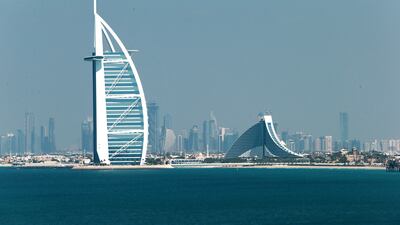
Jumeirah: Dh2,079 per square foot — up 1.8 per cent in June, up 3.6 per cent in May, up 3.5 per cent in April. The National -
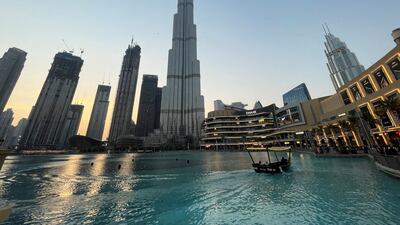
APARTMENT PRICES: Downtown Dubai rose by 0.3 per cent month-on-month in June, 0.5 per cent in May and are at Dh2,050 per square foot (they were up 0.7 per cent in April). Reuters -
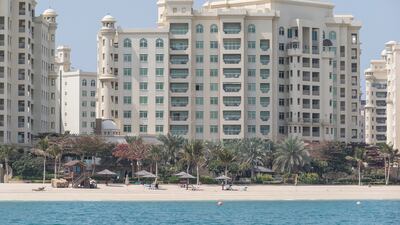
The Palm Jumeirah: Dh1,913 per square foot — down 4.2 per cent in June, up 4.2 per cent in May, up 4 per cent in April. Antonie Robertson / The National -
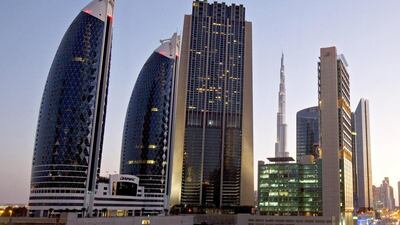
DIFC: Dh1,679 per square foot — down 0.5 per cent in June, up 2.5 per cent in May, up 1.2 per cent in April. Jeff Topping / The National -
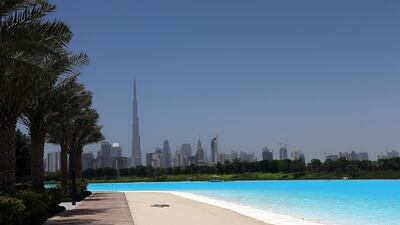
Mohammed bin Rashid City: Dh1,531 per square foot — up 1.9 per cent in June, up 2.3 per cent in May, down 0.2 per cent in April. Satish Kumar / The National -
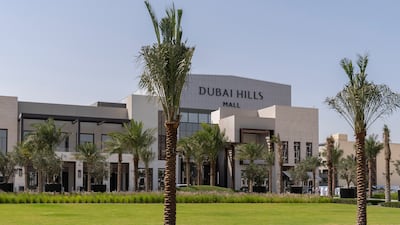
Dubai Hills: Dh1,511 per square foot — up 1.6 per cent, up 2.7 per cent in May, up 0.3 per cent in April. Photo: Emaar Malls Management -
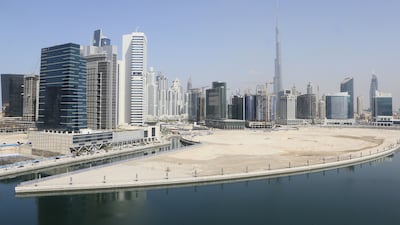
Business Bay: Dh1,489 per square foot — down 2.2 per cent in June, up 1.3 per cent in May, up 1.7 per cent in April. Sarah Dea / The National -
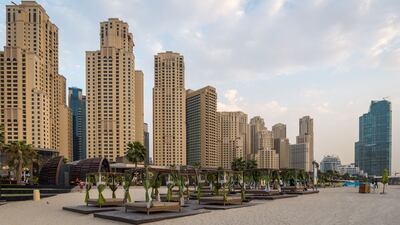
Jumeirah Beach Residence: Dh1,412 per square foot — down 2.8 per cent in June, down 1.0 per cent in May, down 2.2 per cent in April. Photo: LuxuryProperty.com -
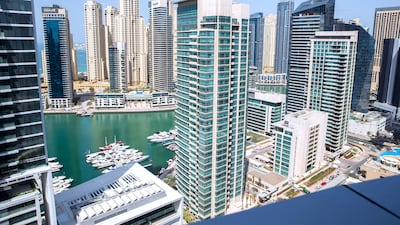
Dubai Marina: Dh1,386 per square foot — up 1.8 per cent in June, down 0.3 per cent in May, down 0.7 per cent in April. Victor Besa / The National -
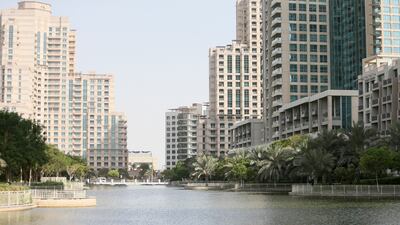
The Greens and The Views: Dh1,082 per square foot — up 1.2 per cent in June, down 2.5 per cent in May, down 0.6 per cent in April. Sarah Dea / The National -
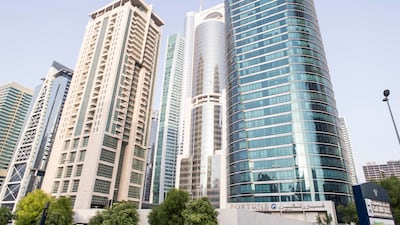
Jumeirah Lakes Towers: Dh1,004 per square foot — down 0.9 per cent in June, up 3.1 per cent in May, down 1.1 per cent in April. Antonie Robertson / The National -

Damac Hills: Dh1,002 per square foot — up 0.4 per cent in June, up 2.1 per cent in May, down 0.7 per cent in April. Pawan Singh / The National -
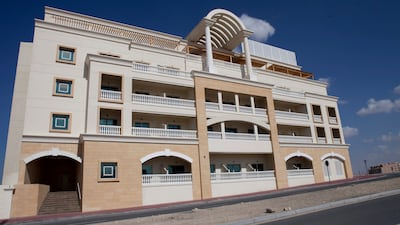
Jumeirah Village Circle: Dh911 per square foot — up 1.2 per cent in June, up 0.4 per cent in May, up 0.1 per cent in April. Razan Alzayani / The National -
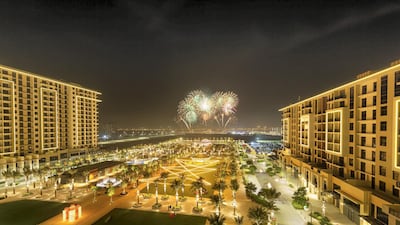
Town Square: Dh846 per square foot — down 1.9 per cent in June, up 0.4 per cent in May, down 1.9 per cent in April. -
Motor City: Dh653 per square foot — down 2.5 per cent in June, up 0.8 per cent in May, down 0.7 per cent in April. -
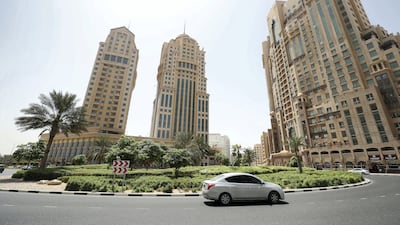
Dubai Silicon Oasis: Dh601 per square foot — up 3.6 per cent in June, down 2.9 per cent in May, down 0.7 per cent in April. Chris Whiteoak / The National -
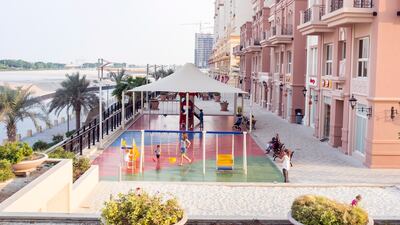
Dubai Sports City: Dh606 per square foot — up 3.0 per cent in June, down 3.9 per cent in May, down 1.1 per cent in April. Reem Mohammed / The National -
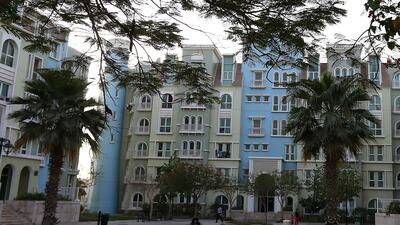
Discovery Gardens: Dh515 per square foot — down 1.8 per cent in June, up 0.3 per cent in May, down 2.2 per cent in April. Pawan Singh / The National -
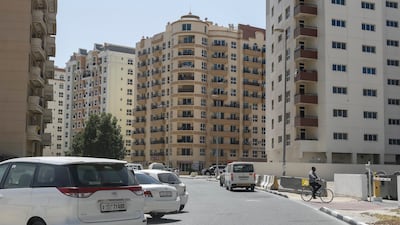
International City: Dh442 per square foot — up 0.9 per cent in June, down 0.5 per cent in May, down 0.6 per cent in April. Antonie Robertson / The National


While it had been a buyers’ market in Dubai for the past six to seven years, with rising demand, sales prices and transaction volumes, it is increasingly becoming a sellers’ market, said Edward Macura, partner at property consultancy Core.
However, it is important to note that higher interest rates and inflation are affecting the purchasing power of buyers, Mr Macura said.
Indians ranked first in Better Homes’ list of top five buyers of Dubai real estate by nationality, followed by people from UK, Italy, Russia and France.
The war in Ukraine, domestic tax concerns and an increasingly mobile workforce are some of the reasons behind the increased migration of Europeans to the UAE, Mr Waind said
“We have also seen many global expats relocate to Dubai from the Asia Pacific due to continuing Covid-19 restrictions. Chinese buyers continued to drop in our rankings in the face of continued lockdowns,” he added.
Meanwhile, the secondary market in Dubai continues to be in higher demand with a higher share of transactions than the off-plan market, the consultancy Core said.
However, both off-plan and secondary market transactions in Dubai are witnessing a similar level of increase in demand. Off-plan transaction volumes in the second quarter of 2022 are up by 47 per cent annually, while secondary market transactions increased by 42 per cent year on year, the consultancy said.
“Catering to improved market sentiment and demand conditions, developers are continuing to launch projects, which are witnessing strong absorption,” Mr Macura said.
“There has been a 215 per cent increase in the number of new projects launched in the first half of 2022, compared with the same period last year.”
Nearly 60 per cent of all year-to-date transactions in Dubai so far are below the Dh2 million ($544.6m) mark, Core’s data shows.
“We are seeing more buyers identifying themselves as investors,” Mr Waind said.
“Average gross rental yields are more than 6 per cent, which are very high internationally, and we expect modest capital growth over the short and medium term.”
While price increases are being witnessed across all districts, the luxury villa segment in Dubai recorded a sharp increase in sales prices, with demand outstripping supply in areas such as Palm Jumeirah, Jumeirah Park and Arabian Ranches, Core’s Mr Macura said.
In the apartment segment, districts such as Downtown Dubai, Palm Jumeirah, City Walk, Business Bay and Jumeirah Lakes Towers have seen the highest rise in sales prices, he added.
managing director of Mortgage Finder
“The market narrative of oversupply has been in place for a few years now and for the most part, it has been wrong,” Mr Lakhani said.
“At the luxury end of the market, the resurgence in prices has shown that if anything, the market was under-supplied. In the mid-market segment, there has been a steady increase in demand as well, particularly in locations such as Jumeirah Village Circle.”
The prime and ultra-prime segment of the Dubai market is currently under-supplied as demand has outstripped supply, Mr Macura said.
However, the outer areas and the cheaper and mid-market segment is balanced in terms of supply/inventory levels and demand, he said.

