



It should have been Heathrow’s comeback summer, as the bleak months of travel bans gave way to the most carefree holiday season in three years.
But long queues, cancelled flights and scathing reviews from airlines have tarnished the image of Britain’s gateway to the world.
Travelling through Heathrow has been such a dire experience for some — although airlines and border police take a share of the blame as well — that the actor Hugh Grant felt compelled to apologise, in Britain’s name, for scenes at in Terminal 3 that he described as “a disgrace and inhumane”.
And in the departures hall, hospital consultant Ammar Al Midani was so frustrated by a cancelled booking that foiled a family reunion in Lebanon, leaving his daughters distressed and in tears, that he wrote a message to Heathrow’s chief executive John Holland-Kaye: “You have to be ashamed.”
"We had two weddings in the family," he told The National. "Cancelling a flight like that for people, and everyone has his own story after the pandemic, it seems to be very, very unfair."
Heathrow is by no means the only airport under pressure. Gatwick and Luton, which also serve London, had more flight delays than Heathrow in a recent set of rankings, and passengers at regional ports such as Manchester, Birmingham and Glasgow have complained of long queues.
But Heathrow is different. It is the UK's most visible gateway and is drenched in British history and culture, from Queen Elizabeth’s first footsteps back home after the death of her father to the Beatles being mobbed by fans after their first American tour.
In a recent investor brochure, Heathrow went as far as to call itself an “iconic British institution”.
While some of Britain’s airports cater unashamedly to the low-cost market, Heathrow prides itself on showing a touch of class – with lounges, spas, high-end restaurants and an all-electric chauffeur service – that sits poorly with unseemly scenes of chaos at the border.
After long queues and baggage problems, Mr Holland-Kaye tried to limit the damage to Heathrow's reputation by announcing a cap of 100,000 passengers a day until September.
But the gambit embroiled his airport in a public power struggle with Emirates airline over whether to stop selling tickets.
John Grant, the chief analyst at data company Official Airline Guide, said announcing a cap only weeks before the peak of the summer holidays was “morally indefensible”.
Heathrow told The National its own security and infrastructure were fully operational but airline ground staff, who provide check-in, load and unload luggage and turn around aircraft, were still at only 70 per cent of pre-pandemic levels, despite passenger numbers surging back to 80 or 85 per cent.
“We have been warning airlines for months that this capacity constraint needed addressing but there has been no change in the number of airline ground handlers since January 2022,” a Heathrow spokeswoman said.
Decades of flight at Heathrow - in pictures
-

Heathrow Airport in London, the UK's busiest, has been a travel hub for decades. Here The National takes a look back at Heathrow through the years. All photos: Getty Images -
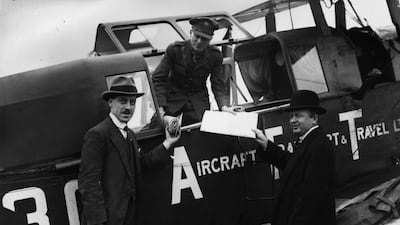
An Airco De Havilland biplane of the British airline, Aircraft Transport and Travel Limited, about to leave on the company’s inaugural flight from Hounslow Heath Aerodrome, later known as Heathrow, to Le Bourget, Paris, in August 1919 -
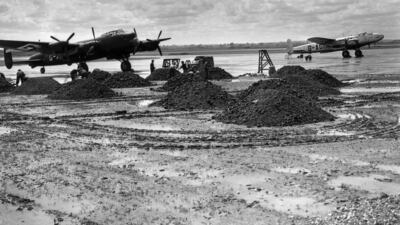
Waterlogged runways at London Airport - Heathrow's original name - one week before it became Britain's main aerial gateway to the US in 1946 -
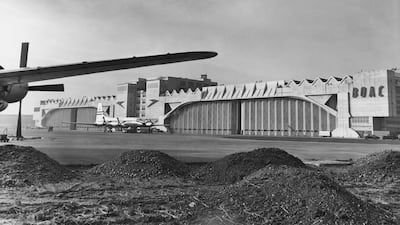
The new BOAC maintenance headquarters at London Airport circa 1955 -
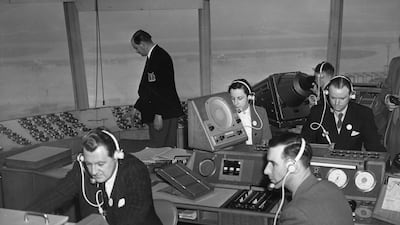
The air traffic control room at the airport's new terminal in 1955 -
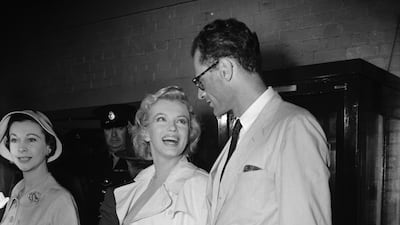
US film star Marilyn Monroe with her husband, playwright Arthur Miller, after arriving at the airport in July 1956 -
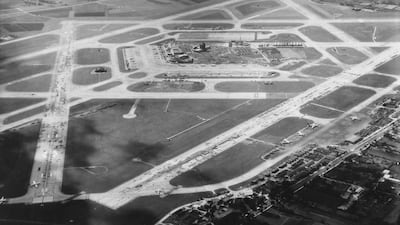
An aerial view showing the runways in 1958 -

The arrivals and departures board in 1960 -

A new airport gift shop, selling items by Chanel, Wedgwood and Pringle of Scotland, in 1961 -
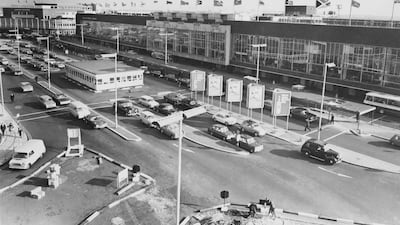
The Queen's Building and the No. 1 Building Europa at Heathrow in 1965 -
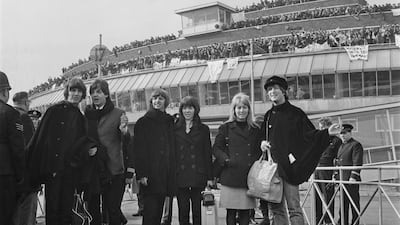
The Beatles leave Heathrow for Salzburg in Austria, to resume filming of the movie Help!, in 1965 -
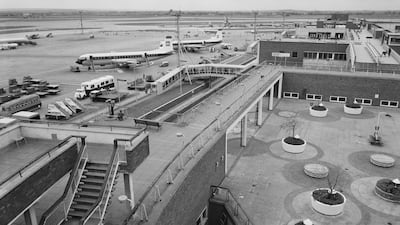
Passenger terminal gates at Heathrow in 1966 -
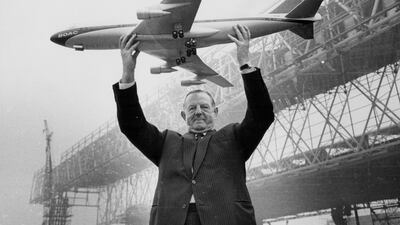
Keith Granville, managing director of BOAC, holding up a model of the Boeing 747 jet, with the new aircraft hangars under construction in the background, at Heathrow in 1969 -
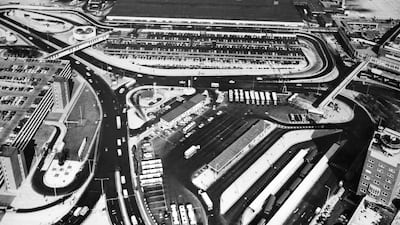
An aerial view of Heathrow in 1970 -
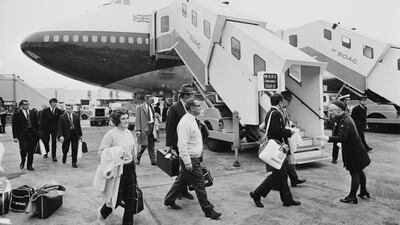
Passengers boarding the first BOAC Jumbo Jet 747 used for a commercial flight, from London Heathrow to New York, in 1971 -
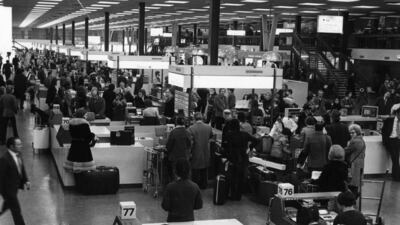
Passengers going through the departure lounge at Heathrow in 1973 -
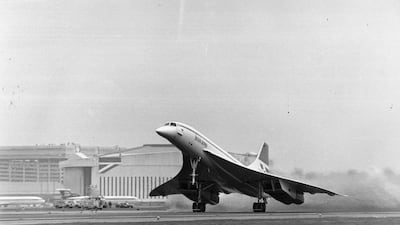
Concorde takes off from Heathrow on her first commercial flight for British Airways in 1976 -
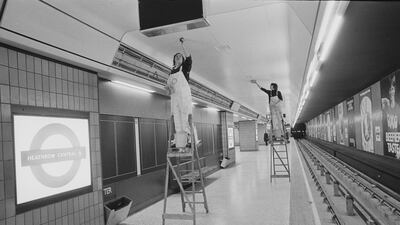
Men at work finalising the Heathrow Central underground station before its opening in 1977 -
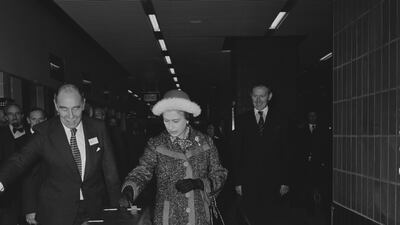
Queen Elizabeth II passing though the Tube gates at Heathrow Central station on its opening in 1977 -
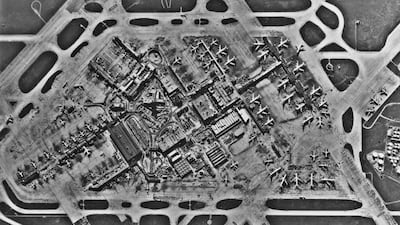
An aerial view of Heathrow in 1978 -

Passengers waiting near a departures board in 1979 -
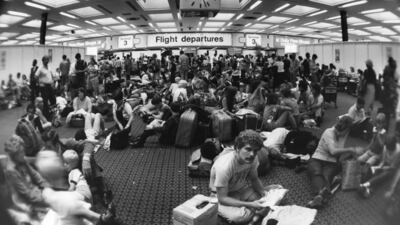
Holidaymakers waiting in the departure lounge at Terminal 3 of Heathrow in 1981 -
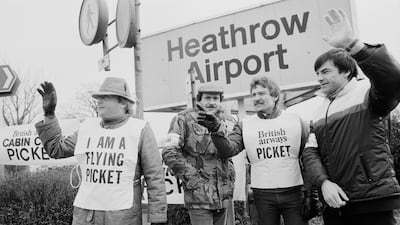
British Airways employees protesting at Heathrow in 1984 -
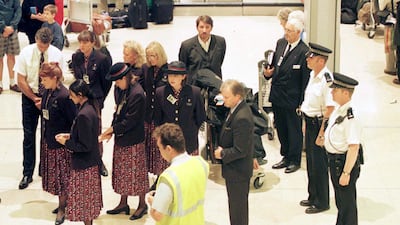
Passengers and staff observe a silence in Heathrow's Terminal One to mark the beginning of the funeral of Diana, Princess of Wales, in 1997 -
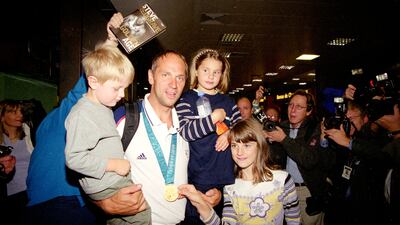
Rower Steve Redgrave at Heathrow with daughters Sophie and Natalie and son Zak after returning from the Sydney 2000 Olympic Games with his gold medal -
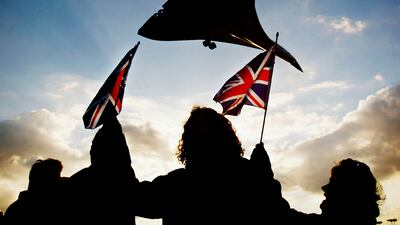
Spectators watch the last Concorde land at Heathrow in 2003 -
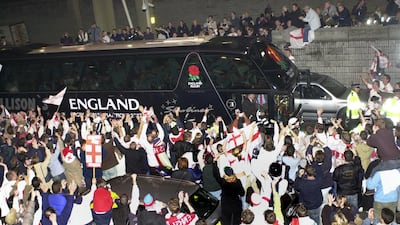
Fans surround the coach carrying the England rugby team at Heathrow, as they arrived from Sydney after winning the World Cup in 2003 -
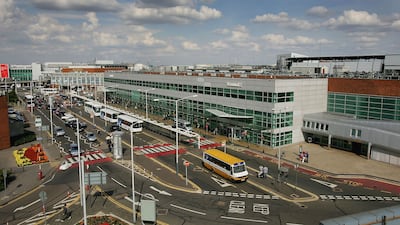
Heathrow's Terminal 2 in 2004 -
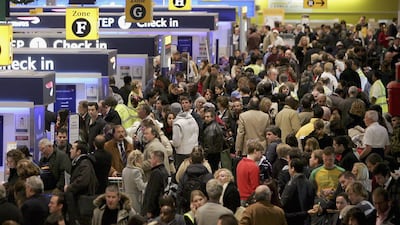
Passengers queue to check in at Terminal 1 of Heathrow Airport during the Christmas 2006 and New Year period -
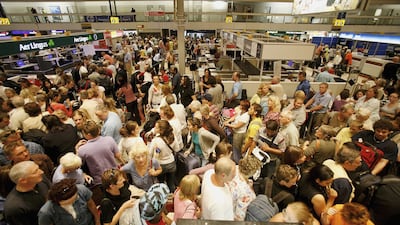
Passengers wait at Terminal 1 on August 10, 2006, after airport security was raised to critical when a terrorist plot to blow up planes in mid-flight from the UK to the US was disrupted by police -
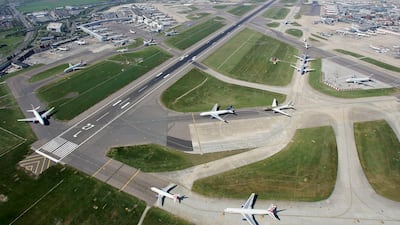
Planes queueing to take off at Heathrow in 2007 -
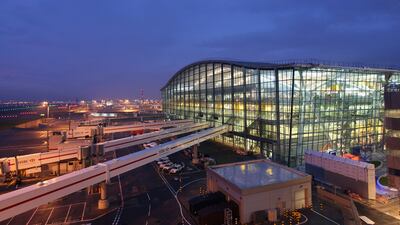
The new Terminal 5 at Heathrow in 2008 -
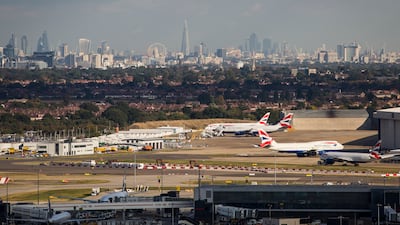
Aircraft at Heathrow Airport in front of the London skyline in 2016 -
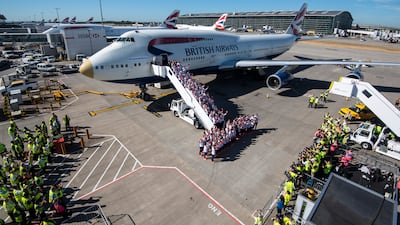
Members of Team GB arrive from Rio de Janeiro at Heathrow, after returning from the 2016 Olympics, which saw Great Britain's strongest performance at the Games in over a century -

A composite photo shows planes taking off from Heathrow in November 2016. Forty-two planes were captured between 10.17am and 11.17am and a montage was created from those single images -
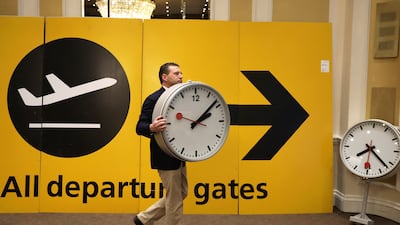
Items are arranged during an auction preview at Heathrow in 2018. The contents of Terminal 1, which closed in 2015, were being sold -
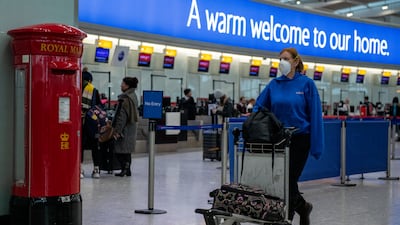
An airline passenger wearing a face mask pushes her bags through Heathrow's Terminal 5 during the coronavirus pandemic in 2020 -
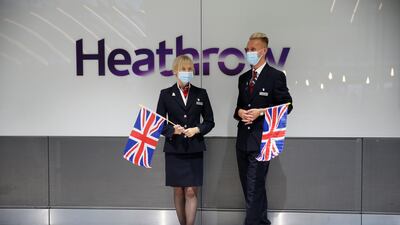
British Airways employees welcome Olympians returning from the Tokyo Olympics in 2021 -
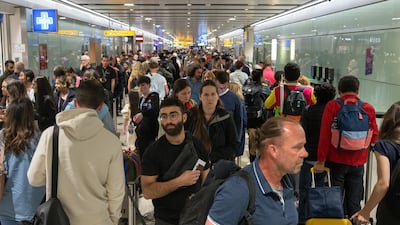
Travellers wait in a long queue to pass through the security check in 2022


Planes have been taking off from Heathrow’s corner of west London for more than a century.
The world’s first scheduled international service, from London to Paris, departed from the former Hounslow Aerodrome in 1919 carrying one passenger, a shipment of leather and some clotted cream.
By 1944, the area around the village of Heath Row had been requisitioned by the wartime government as a base for military aircraft, but after the war it was handed to civilian authorities and became known as London Airport.
What was once a single terminal, the Europa Building, had grown to four by the time Diana, Princess of Wales unveiled an expansion in 1986, and it was Heathrow where the Concorde made its inaugural passenger flight to Bahrain.
By the time Terminal 5 opened in 2008, Heathrow was one of the biggest airports on the planet, and although the building’s opening was marred by baggage problems, it soon established itself as the new home for flag carrier British Airways.
The pandemic hit hard, as it did the whole industry. Heathrow’s passenger numbers crashed and the airport lost billions. Recovery was slow in 2021 as laborious travel restrictions led to long queues.
Speaking at an aviation festival in December, Mr Holland-Kaye said “travel as we know it” would not come back until testing swabs and passenger locator forms were a thing of the past.
But that future is now largely here, certainly for people travelling to Britain, and yet normality is yet to return, with Heathrow advising passengers to arrive three hours before their flight because of expected long queues.
Staff shortages
The problems have been highly publicised. There is a shortage of staff after many people were laid off during the pandemic, and they cannot be replaced at the snap of fingers because of required security checks.
Surging demand after the pandemic means the industry is dealing with the equivalent of four decades of growth in the space of a few months, Heathrow says, putting airport infrastructure under pressure.
The airport has struggled to cope with a volume of more than 100,000 departing passengers a day, with bags arriving late, queues snaking through terminals and flights being cancelled at the 11th hour.
The threat of strikes has also loomed over Heathrow, although refuelling staff called off a four-day walkout this week.
Blaming Heathrow's staff shortages for the chaos, Mr Al Midani makes an analogy: "When, let's say, there is a patient coming to my hospital and a couple of my colleagues were Covid-positive, I had to cover them.
"You don't allow one patient to come and the second not to come."
Mr Holland-Kaye wrote in a letter to passengers that there were times when “service drops to a level that is not acceptable” but staff were going “above and beyond” to help passengers.
With airlines and airports under fire, Mr Grant said the two sides were sometimes competing for the same staff but that the high demand at Heathrow was foreseeable months ago.
Changing face of Heathrow: 1950s to 2020s
“If you look at the data from around March onwards, it’s been pointing very strongly to the fact that the industry would be operating at about 85 per cent of capacity,” he said.
“The thing at Heathrow and for the airlines at Heathrow is the bookings came in quicker, everyone hoped really that they would be able to fill these positions quicker than they have. By not being able to fill them quickly, they’ve been caught cold.
“It’s either a failure of leadership to be strong and make those decisions earlier, or a naive belief that they would be able to do what others have not been able to do, and fill those gaps.”
Heathrow baked in 40ºC weather on Tuesday as tension simmered over the passenger cap.
Emirates called it “highly regrettable” and said the figure of 100,000 “appeared to have been plucked from thin air”. It eventually reached an agreement that it would maintain its schedule but curb ticket sales.
The potshots did not stop there. Willie Walsh, a former BA boss and now head of the International Air Transport Association, told the Farnborough Airshow that Heathrow had been a “bunch of idiots” for failing to foresee the problems.
And the head of Qatar Airways, also a board member at Heathrow, said he was disappointed by the airport’s performance and said it “should have seen this coming … they should have taken mitigating actions”.
Heathrow rejects the accusation of having failed to prepare, saying it started recruiting extra staff last November, is better placed than one of its main rivals, Amsterdam Schippol, and that others are also imposing caps.
Mr Grant said a low cancellation rate at Ryanair this summer showed that chaos was not inevitable — “that proves that it can be done” — but that problems should ease later in the year when peak demand eases off.
Ministers have said they will help to streamline recruitment and offered an amnesty in which carriers could cut their schedules without giving up precious slots at the airport.
But the main message from the government is that airlines and airports should come together and sort things out.
Transport Secretary Grant Shapps said there was “no excuse” for major disruption and he would not “pull the lever marked 'more immigration'” as some countries have done.
Heathrow has fought back, putting its case that circumstances and partners have weighed on its position.
“The aviation industry has faced 40 years of growth in just four months and that has put the entire sector under pressure," it said.
"The airport is only responsible for providing infrastructure and airport security, which are fully operational and this month we will have the same security capacity as we had back in summer 2019.
"The airlines and their contractors provide every other element of the journey.
“Without an increase in airline ground handlers, Heathrow had to put in place a limit on daily departing passengers based on the amount of passengers that airline ground handling teams could serve.
"The cap is something in place at many airports around the world – including Amsterdam, Frankfurt and Gatwick.
"The fact that the cap at Heathrow is over 50 per cent higher than that at Schiphol, our nearest rival, shows how much better we have planned than our competitors.”
Regardless of who is to blame, there is no denying the situation at Heathrow is damaging its reputation, with the prospect of turbulence for passengers still a reality.

