

In April 2009, David Morgan sat in an anteroom of the shiny and new Dubai International Stadium. While Pakistan and Australia played each other out in the middle, he took questions from a handful of journalists.
As president of the ICC, Morgan was more or less the most powerful cricket administrator in the game.
In the brief exchange, set up to coincide with the first series played at the ritzy 25,000-seater stadium in Dubai, he was asked whether he could foresee the place staging World Cup finals in future.
The amiable Welshman sidestepped the question with a laugh. Just because he wanted to avoid any headlines ushering the next World Cup to the Emirates, it was safe to assume. Not because he would doubt a city of such vaulting ambitions would be capable of putting on just such a show.
It took a little over 12 years for Dubai to stage a World Cup final for the first time. Not a bad strike-rate for a place in a country without a Test team of its own, or even a system for first-class cricket, and one where grass does not even grow naturally.
In mid-November 2021, Australia beat New Zealand to claim the T20 World Cup title under the glare of the stadium’s “Ring of Fire” floodlight system, and in front of a television audience of millions.
It capped the best part of a month of the world’s leading teams playing the international game’s most dynamic format across Abu Dhabi, Dubai and Sharjah.
According to Geoff Allardice, the current chief executive of the ICC, the World Cup was “the biggest sporting spectacle to have ever taken place in the region”.
Australia win T20 World Cup final in Dubai
-

Australia players winning the T20 World Cup in Dubai on Sunday, November 4, 2021. Chris Whiteoak / The National -

Mitchell Marsh celebrates winning the T20 World Cup final. Chris Whiteoak / The National -

Australia's David Warner scored a fine fifty to set up victory over New Zealand in the T20 World Cup final at the Dubai International Stadium. Chris Whiteoak / The National -

Australia's Mitchell Marsh scored a superb fifty against New Zealand in the T20 World Cup final on Sunday. Chris Whiteoak / The National -

David Warner celebrates reaching fifty at the Dubai International Stadium. Chris Whiteoak / The National -

New Zealand captain Kane Williamson held the innings together with a fifty. Chris Whiteoak / The National -

Australia's Steve Smith fields at the boundary. Chris Whiteoak / The National -

New Zealand's Kane Williamson is caught on the boundary by Steve Smith. Chris Whiteoak / The National -

Josh Hazlewood was the pick of the bowlers, taking 3-16. Chris Whiteoak / The National -

Australia's Glenn Maxwell at the Dubai International Stadium. Chris Whiteoak / The National


In truth, it might not even have been the biggest that month. Two days before the World Cup had started, the sport’s most lucrative competition, the Indian Premier League, had been played to its conclusion in the same venue. And that, too, for the second time in two years.
All of this had unfolded just a couple of kilometres or so away from the headquarters of cricket’s governing body.
Given all that, it would not be outlandish to claim the UAE as the centre of world cricket at present.
How the country reached that point has been a triumph for a few cricket-loving visionaries, as well as the expatriate community – especially from the Asian subcontinent.
The presence of cricket on these shores long pre-dates the formation of the UAE itself, in 1971.
As far back as 1892, cricket was played on military bases where British forces were positioned, when the treaty was signed with the Trucial States.
In 1969, two years before independence and the establishment of UAE, Darjeeling Cricket Club was created by a group of expatriates.
Chennai Super Kings win IPL 2021 in UAE
-
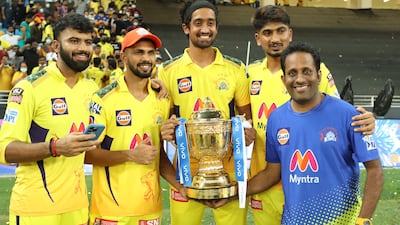
Ruturaj Gaikwad of Chennai Super Kings with the trophy after the final of the IPL against Kolkata Knight Riders at the Dubai International Stadium in the United Arab Emirates on October 15, 2021. All pictures Sportzpics for IPL -
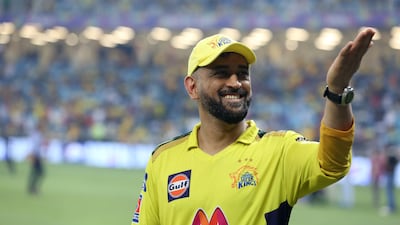
MS Dhoni, captain of Chennai Super Kings, during the final of the Indian Premier League 2021. -
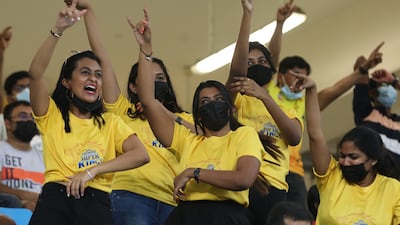
Chennai Super Kings fans at the Dubai International Stadium. -
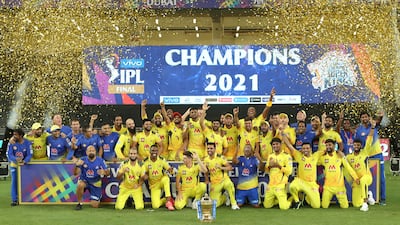
Chennai Super Kings are crowned champions. -
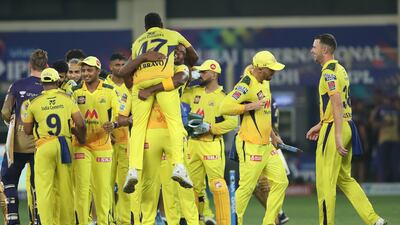
Chennai Super Kings celebrate the win. -
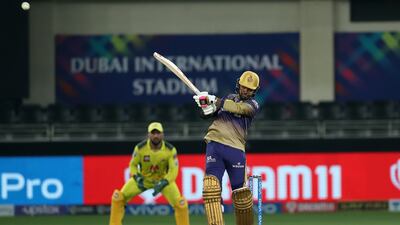
Sunil Narine of Kolkata Knight Riders hits out and is caught. -
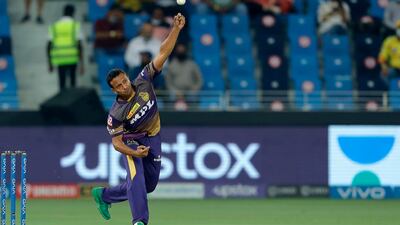
Shakib Al Hasan of Kolkata Knight Riders bowling during the final. -
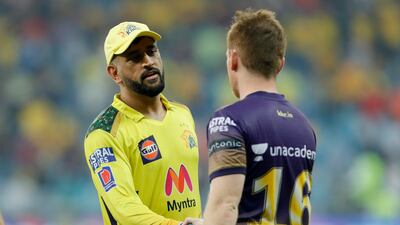
MS Dhoni, captain of Chennai Super Kings, and Eoin Morgan, captain of Kolkata Knight Riders. -
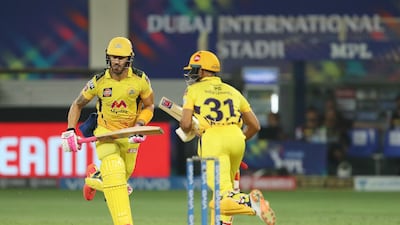
Faf du Plessis of Chennai and Ruturaj Gaikwad of Chennai Super Kings during the final. -
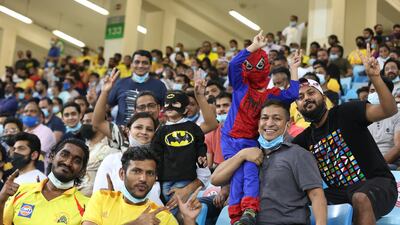
Fans enjoy the final in Dubai. -
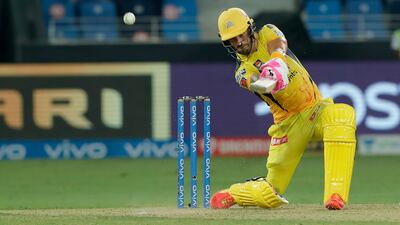
Faf du Plessis of Chennai Super Kings hitting a boundary. -
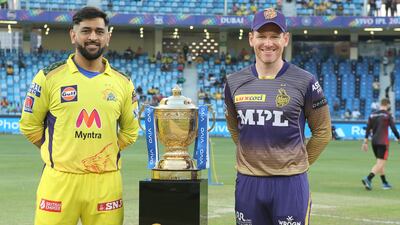
Eoin Morgan, captain of Kolkata Knight Riders, and MS Dhoni, captain of Chennai Super Kings, at the toss. -
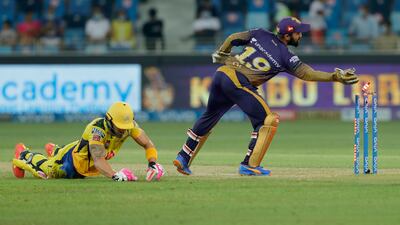
Dinesh Karthik of Kolkata Knight Riders trying to run out Faf du Plessis. -
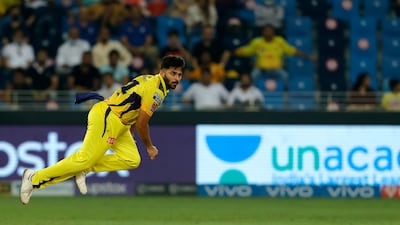
Shardul Thakur of Chennai Super Kings bowling during the final. -
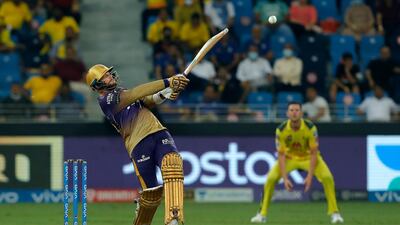
Lockie Ferguson of Kolkata Knight Riders during the final. -
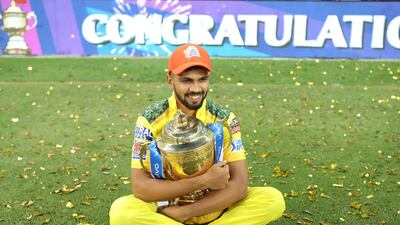
Ruturaj Gaikwad of Chennai Super Kings with the trophy after the final victory. -
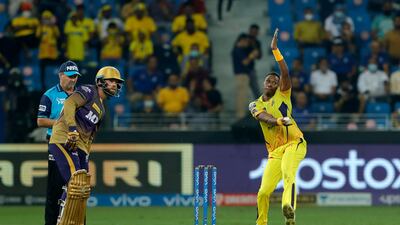
Dwayne Bravo of Chennai Super Kings bowling during the final. -
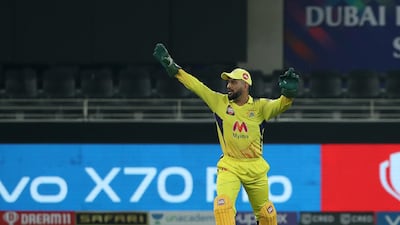
MS Dhoni, captain of Chennai Super Kings, during the final.


They maintained the same site in Al Awir, with a cement wicket and sand outfield, until the rapid urban expansion of Dubai consumed the ground in 2008. The club itself is still thriving today, though.
The sport became most firmly entrenched in the country thanks to Abdul Rahman Bukhatir, an Emirati business magnate who had first fallen for the game while at school in Karachi.
Bukhatir’s influence on the sport here is still being felt today. In 1974, he did his best to harness the love of the sport among the expatriate workforce by setting up a cricket league in his native Sharjah. The eponymous Bukhatir League is still the most sought-after title in domestic cricket, 47 years later.
Fittingly, his family name remained prominent even while the country was staging a World Cup for the first time.
Khalaf Bukhatir, one of his sons, is the chief executive of Sharjah Cricket, which was one of the three centres at which the World Cup was played.
“It is my luck that I am working at this time,” Khalaf said last month. “This [World Cup] is very precious. There’s nothing bigger than this. It is a proud moment for all of us – my father and the whole family.”
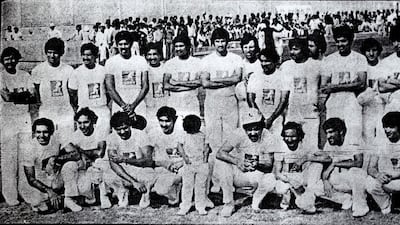
Miandad XI v Gavaskar XI in Sharjah — April 3, 1981
-
-

An advert for the match between Gavaskar XI and Miandad XI which took place at Sharjah Cricket Stadium, April 3 1981. Courtesy: The Cricketer Pakistan -
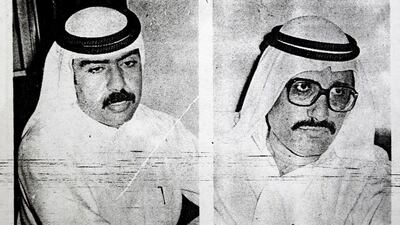
Abdul Rahman Falaknaz and Mahmood Redha Abbas. Courtesy: The Cricketer Pakistan -

The two captains after the toss during a match between Gavaskar XI and Miandad XI at Sharjah Cricket Stadium, April 3 1981. Courtesy: The Cricketer Pakistan -

Hanif Mohammad. Courtesy: The Cricketer Pakistan -
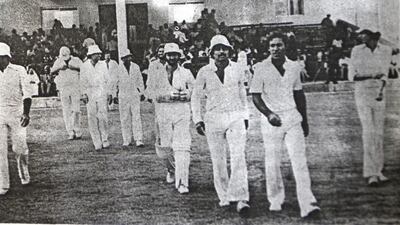
The Pakistan side, led by Javed Miandad, takes the field during a match between Gavaskar XI and Miandad XI at Sharjah Cricket Stadium, April 3 1981. Courtesy: The Cricketer Pakistan -
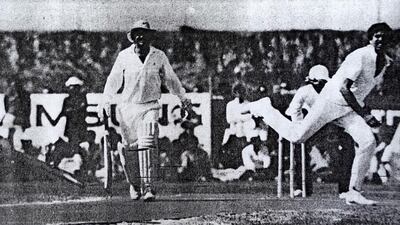
Man of the match Taslim Arif steers Kapil Dev through the slips, while Sadiq Mohammad looks on during a match between Gavaskar XI and Miandad XI at Sharjah Cricket Stadium, April 3 1981. Courtesy: The Cricketer Pakistan -

Hanif Mohammad with Qasim Noorani and Abdul Rehman Bukhatir. Courtesy: The Cricketer Pakistan -
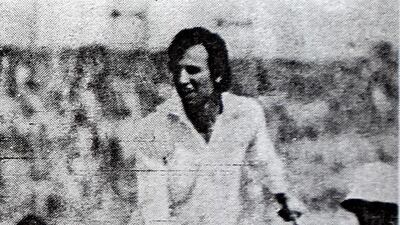
FAsif Iqbal during a match between Gavaskar XI and Miandad XI at Sharjah Cricket Stadium, April 3 1981. Courtesy: The Cricketer Pakistan


The fact the Sharjah matches at the World Cup were among the most atmospheric was no surprise. A clear line can be traced back from the “cricketainment” which pervades at tournaments like the IPL and the T20 World Cup to the heyday of Sharjah Cup cricket in the 1980s and 1990s.
Those twice-annual one-day international tournaments did more than anything else to entrench cricket in the region.
The highlights were many. Javed Miandad’s last-ball six off Chetan Sharma for Pakistan to beat India was said to be the shot that was heard around the world.
Sachin Tendulkar’s “Desert Storm” – a brace of centuries in a matter of days against Australia – in 1998 had effects far and wide. A generation of Indian cricketers were inspired by it.
Even Khalaf Bukhatir, who had until that point not shown much interest in his father’s passion beyond eating ice-cream from the concession stands and playing football on the outfield, was converted by seeing Tendulkar at his zenith.
Where Sharjah led, Abu Dhabi and Dubai followed. The Zayed Cricket Stadium in the capital became operational in 2004, but staged its first major cricket – a bilateral ODI series between India and Pakistan, watched by President Pervez Musharraf – two years later.
The futuristic stadium in the capital is among the most eyecatching in world cricket. So ambitious was the design, it required its architect to prove to its chief engineer that it could be done by creating a model using coat hangers.
Dubai’s grand opening followed in 2009. Already, it has staged more T20 internationals than any other venue in the world.

The country’s success at hosting major events has yet to trickle down into a consistently competitive national team of its own, but there have certainly been moments to celebrate.
Sultan Zarawani took the team to the 1996 World Cup, after they won the ICC Trophy. It would be 19 years before they would return, when Khurram Khan almost single-handedly took the side to glory in the qualifier.
The side is on its way back after a corruption controversy in 2019 led to six players being banned for a combined total of 45 years.
Dubai passed on the baton to Australia, who will host the next edition of the T20 World Cup a little under a year from now. It will be a marker of the development of domestic cricket if the national team are lining up to take part.

