Coronavirus: UAE issues safety guidelines when using public transport


Gillian Duncan
  • English
  • Arabic

Anyone using public transport should keep a safe distance from other passengers and avoid touching surfaces, authorities have said.

Those riding a taxi should always sit in the back seat.

Plastic screens to separate the driver and passengers will remain in place.

The UAE is slowly returning to normal life after businesses were shut and services suspended for several weeks to slow the spread of the coronavirus.

But people have been urged to take extra precautions to protect themselves when venturing out.

Officials have now issued advice for using public transport.

“While riding a taxi, leave a safe distance between you and the driver,” said a video, which has been released on the state news agency Wam.

“Do not sit on the front seat.”

People should also wear masks and avoid touching surfaces when they travel in a taxi, bus or the metro.

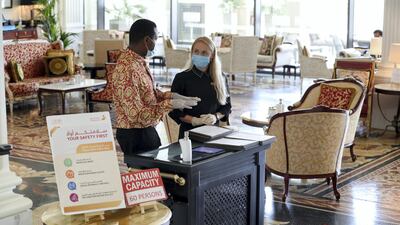
  • Waitress at Vanitas, Nina Manalo wears a branded mask at the Palazzo Versace hotel, Dubai. Chris Whiteoak / The National
    Waitress at Vanitas, Nina Manalo wears a branded mask at the Palazzo Versace hotel, Dubai. Chris Whiteoak / The National
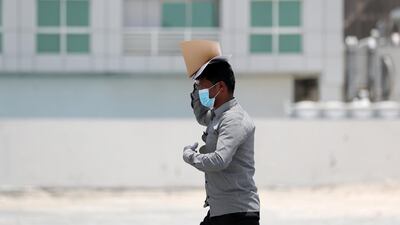
  • A man shields his face from the sun on a hot day in Al Barsha, Dubai. Chris Whiteoak / The National
    A man shields his face from the sun on a hot day in Al Barsha, Dubai. Chris Whiteoak / The National
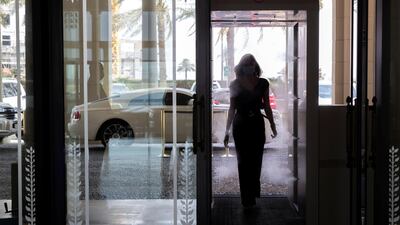
  • A woman walks through the disinfection booth at the Palazzo Versace hotel, Dubai. Chris Whiteoak / The National
    A woman walks through the disinfection booth at the Palazzo Versace hotel, Dubai. Chris Whiteoak / The National
  • The entrance to Vanitas at the Palazzo Versace hotel, Dubai. Chris Whiteoak / The National
    The entrance to Vanitas at the Palazzo Versace hotel, Dubai. Chris Whiteoak / The National
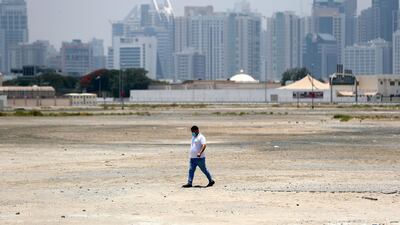
  • A man wearing a face mask walks across an open space of land in Al Barsha, Dubai. Chris Whiteoak / The National
    A man wearing a face mask walks across an open space of land in Al Barsha, Dubai. Chris Whiteoak / The National
  • Duncan Gichana & Luliia Sliusar at the Mosaico lobby lounge in the Palazzo Versace hotel, Dubai. Chris Whiteoak / The National
    Duncan Gichana & Luliia Sliusar at the Mosaico lobby lounge in the Palazzo Versace hotel, Dubai. Chris Whiteoak / The National
  • A man sits by Dubai Creek on Baniyas road in Deira. Reem Mohammed / The National
    A man sits by Dubai Creek on Baniyas road in Deira. Reem Mohammed / The National
  • A man walking in Al Sabkha in Dubai. Reem Mohammed / The National
    A man walking in Al Sabkha in Dubai. Reem Mohammed / The National
  • A man wearing a face mask in Al Sabkha, Dubai. Reem Mohammed/The National
    A man wearing a face mask in Al Sabkha, Dubai. Reem Mohammed/The National
  • Information desk at the new Covid-19 prime assessment centre in ADNEC, Abu Dhabi. Victor Besa / The National
    Information desk at the new Covid-19 prime assessment centre in ADNEC, Abu Dhabi. Victor Besa / The National

Passengers should also avoid touching their face without cleaning their hands with sanitiser and keep the window open to let the air flow.

Cash transactions should be avoided and commuters should not take a taxi or bus with many passengers, officials said.

Last week, the authorities announced that passengers can also make contactless payments for taxi rides in the capital.

The payments can be made by downloading the Abu Dhabi Taxi app, which is available on Apple Store and Google Play.

Passengers need to create an account and provide credit card details, which are saved for future taxi journeys.

Once the trip is over, passengers can make the payment through the app without any need to interact with the driver.

An Integrated Transport Centre representative said the move was in line with the organisation’s efforts to improve the level of service and minimise human interaction to limit the spread of the virus.

The centre manages public transport in the emirate.

In Dubai, passengers can book Roads and Transport Authority taxis directly through the Careem app.

At the end of the journey, the fare will be automatically deducted from the passenger’s debit or credit card.


Story%20behind%20the%20UAE%20flag
%3Cp%3EThe%20UAE%20flag%20was%20first%20unveiled%20on%20December%202%2C%201971%2C%20the%20day%20the%20UAE%20was%20formed.%C2%A0%3C%2Fp%3E%0A%3Cp%3EIt%20was%20designed%20by%20Abdullah%20Mohammed%20Al%20Maainah%2C%2019%2C%20an%20Emirati%20from%20Abu%20Dhabi.%C2%A0%3C%2Fp%3E%0A%3Cp%3EMr%20Al%20Maainah%20said%20in%20an%20interview%20with%20%3Cem%3EThe%20National%3C%2Fem%3E%20in%202011%20he%20chose%20the%20colours%20for%20local%20reasons.%C2%A0%3C%2Fp%3E%0A%3Cp%3EThe%20black%20represents%20the%20oil%20riches%20that%20transformed%20the%20UAE%2C%20green%20stands%20for%20fertility%20and%20the%20red%20and%20white%20colours%20were%20drawn%20from%20those%20found%20in%20existing%20emirate%20flags.%3C%2Fp%3E%0A
Fixtures

Opening day Premier League fixtures for August 9-11

August 9

Liverpool v Norwich 11pm

August 10

West Ham v Man City 3.30pm

Bournemouth v Sheffield Utd 6pm

Burnley v Southampton 6pm

C Palace v Everton 6pm

Leicester v Wolves 6pm

Watford v Brighton 6pm

Tottenham v Aston Villa 8.30pm

August 11

Newcastle v Arsenal 5pm

Man United v Chelsea 7.30pm


Dengue%20fever%20symptoms
%3Cp%3EHigh%20fever%20(40%C2%B0C%2F104%C2%B0F)%3Cbr%3ESevere%20headache%3Cbr%3EPain%20behind%20the%20eyes%3Cbr%3EMuscle%20and%20joint%20pains%3Cbr%3ENausea%3Cbr%3EVomiting%3Cbr%3ESwollen%20glands%3Cbr%3ERash%26nbsp%3B%3C%2Fp%3E%0A
Stamp duty timeline

December 2014: Former UK finance minister George Osbourne reforms stamp duty, replacing the slab system with a blended rate scheme, with the top rate increasing to 12 per cent from 10 per cent:
Up to £125,000 - 0%; £125,000 to £250,000 – 2%; £250,000 to £925,000 – 5%; £925,000 to £1.5m: 10%; Over £1.5m – 12%

April 2016: New 3% surcharge applied to any buy-to-let properties or additional homes purchased.

July 2020: Rishi Sunak unveils SDLT holiday, with no tax to pay on the first £500,000, with buyers saving up to £15,000.

March 2021: Mr Sunak decides the fate of SDLT holiday at his March 3 budget, with expectations he will extend the perk unti June.

April 2021: 2% SDLT surcharge added to property transactions made by overseas buyers.

Boston%20Strangler
%3Cp%3E%3Cstrong%3EDirector%3A%3C%2Fstrong%3E%20Matt%20Ruskin%3Cbr%3E%3Cstrong%3EStarring%3A%20%3C%2Fstrong%3EKeira%20Knightley%2C%20Carrie%20Coon%2C%20Alessandro%20Nivola%3Cbr%3E%3Cstrong%3ERating%3A%3C%2Fstrong%3E%203%2F5%3Cbr%3E%3C%2Fp%3E%0A
SHAITTAN
%3Cp%3E%3Cstrong%3EDirector%3A%20%3C%2Fstrong%3EVikas%20Bahl%3Cbr%3E%3Cstrong%3EStarring%3A%20%3C%2Fstrong%3EAjay%20Devgn%2C%20R.%20Madhavan%2C%20Jyothika%2C%20Janaki%20Bodiwala%3Cbr%3E%3Cstrong%3ERating%3A%20%3C%2Fstrong%3E3%2F5%3C%2Fp%3E%0A
SPECS
%3Cp%3EEngine%3A%20Supercharged%203.5-litre%20V6%0D%3Cbr%3EPower%3A%20400hp%0D%3Cbr%3ETorque%3A%20430Nm%0D%3Cbr%3EOn%20sale%3A%20Now%0D%3Cbr%3EPrice%3A%20From%20Dh450%2C000%0D%3Cbr%3E%3C%2Fp%3E%0A
Who's who in Yemen conflict

Houthis: Iran-backed rebels who occupy Sanaa and run unrecognised government

Yemeni government: Exiled government in Aden led by eight-member Presidential Leadership Council

Southern Transitional Council: Faction in Yemeni government that seeks autonomy for the south

Habrish 'rebels': Tribal-backed forces feuding with STC over control of oil in government territory

Company profile

Name: The Concept

Founders: Yadhushan Mahendran, Maria Sobh and Muhammad Rijal

Based: Abu Dhabi

Founded: 2017

Number of employees: 7

Sector: Aviation and space industry

Funding: $250,000

Future plans: Looking to raise $1 million investment to boost expansion and develop new products

OPENING FIXTURES

Saturday September 12

Crystal Palace v Southampton

Fulham v Arsenal

Liverpool v Leeds United

Tottenham v Everton

West Brom v Leicester

West Ham  v Newcastle

Monday  September 14

Brighton v Chelsea

Sheffield United v Wolves

To be rescheduled

Burnley v Manchester United

Manchester City v Aston Villa

PROFILE OF CURE.FIT

Started: July 2016

Founders: Mukesh Bansal and Ankit Nagori

Based: Bangalore, India

Sector: Health & wellness

Size: 500 employees

Investment: $250 million

Investors: Accel, Oaktree Capital (US); Chiratae Ventures, Epiq Capital, Innoven Capital, Kalaari Capital, Kotak Mahindra Bank, Piramal Group’s Anand Piramal, Pratithi Investment Trust, Ratan Tata (India); and Unilever Ventures (Unilever’s global venture capital arm)

Teaching your child to save

Pre-school (three - five years)

You can’t yet talk about investing or borrowing, but introduce a “classic” money bank and start putting gifts and allowances away. When the child wants a specific toy, have them save for it and help them track their progress.

Early childhood (six - eight years)

Replace the money bank with three jars labelled ‘saving’, ‘spending’ and ‘sharing’. Have the child divide their allowance into the three jars each week and explain their choices in splitting their pocket money. A guide could be 25 per cent saving, 50 per cent spending, 25 per cent for charity and gift-giving.

Middle childhood (nine - 11 years)

Open a bank savings account and help your child establish a budget and set a savings goal. Introduce the notion of ‘paying yourself first’ by putting away savings as soon as your allowance is paid.

Young teens (12 - 14 years)

Change your child’s allowance from weekly to monthly and help them pinpoint long-range goals such as a trip, so they can start longer-term saving and find new ways to increase their saving.

Teenage (15 - 18 years)

Discuss mutual expectations about university costs and identify what they can help fund and set goals. Don’t pay for everything, so they can experience the pride of contributing.

Young adulthood (19 - 22 years)

Discuss post-graduation plans and future life goals, quantify expenses such as first apartment, work wardrobe, holidays and help them continue to save towards these goals.

* JP Morgan Private Bank