


More than 50 projects around the world have been given grants of up to $25,000 each in the latest round of funding from the Mohamed bin Zayed Species Conservation Fund.
The projects focus on conserving a particular mammal, bird, plant, reptile, amphibian, fish, fungus or invertebrate in countries including Guatemala, Nigeria, Romania, South Africa and Vietnam.
Among the grants is one of $12,000 to develop and test an early-warning system in India to alert people to the presence of elephants with the aim of reducing conflict between people and the animals.
The Elephant – Automated Infrasonic Device (Elephant-AID) will detect elephants using infrasound, which is the low-frequency sound elephants use to communicate, in three protected areas in the state of Karnataka in south-west India.
Text message alerts will be sent out indicating where the elephants are and how likely it is that they will cause disruption, allowing people to avoid those areas.
Also, wildlife managers will be made aware, and there will be data for landowners who may consider claiming compensation for damage to their crops or property by the elephants.
“Our project is definitely a step closer to saving the lives of elephants, humans or other wildlife, by helping the local community to adapt and live with majestic, emotional, and highly intelligent wild beings such as elephants,” said Sathya Chandra Sagar Halehalli Sathyanarayana, alias Sagara, of the Sound Forest Lab at the University of Wisconsin – Madison, who is working on the project with colleagues including Dr Zuzana Burivalova, the lab’s principal investigator.
“We think that by March 2023, communities should be able to receive the first set of early-warning signals based on real-life, on-ground situations,” Sagara said.
The organisers hope to produce kits to be sent to village communities in India, and ultimately they could be used in other parts of the world, such as West Africa.

Razan Al Mubarak, the fund’s managing director, said at a time when climate change was in the spotlight, support for grassroots biodiversity conservation was “crucial to the protection of nature on our planet”.
“While climate change is a threat to species, it is not the only threat,” she said. “Species are threatened every day with overharvesting, illegal trade, habitat destruction and poaching, and our small grant programme is critical to those clear and present dangers.”
Another project supported, awarded $5,000, is focused on “the rarest spider in the world”, the Batu Cave trapdoor spider, which catches prey by pouncing on it when vibrations are detected.
The creature has been identified only in two limestone outcrops in Malaysia, and a survey supported by the grant will identify more sites where it is found and, by analysing the microclimate, try to understand why it is present in some caves but not others.
“This will be invaluable data to understand what conditions are favoured by the spider and what are not,” said Zarris Kem, of Malaysian Cave and Karst Conservancy, which was awarded the grant.
“This data will also tell us how anthropogenic activities that surround its habitat can threaten the species, its environments and how we can mitigate such threats.”
The Mohamed bin Zayed Species Conservation Fund was launched in 2009 with an initial endowment of $25m and has given more than $22m to 2,334 projects in more than 160 countries.
Mohamed bin Zayed Species Conservation Fund work - in pictures
-

Sheikh Mohamed bin Zayed, Crown Prince of Abu Dhabi and Deputy Supreme Commander of the Armed Forces, with Marilyn Cornwell of the Tiaro and District Landcare Group, Queensland, Australia, and Razan Khalifa Al Mubarak, Managing Director of the Environment Agency - Abu Dhabi, and MBZ Fund, in May, 2018. Photo: MBZ Fund -
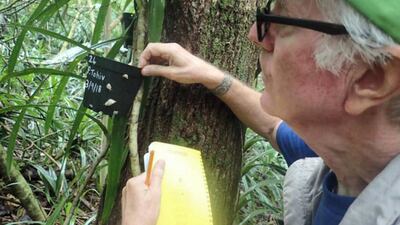
Dr Trevor Coote, conservation field biologist on the International Partulid Programme and recipient of MBZ Fund grants, releasing the critically endangered polynesian tree snail, or Partula, on the South Pacific island of Moorea. Photo: Trevor Coote. -
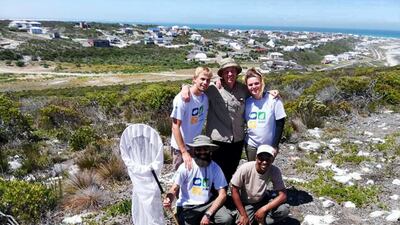
The Grootbos conservation team. The team works to conserve the critically endangered fynbos, while also focusing on the training and skills development of the surrounding communities in South Africa. Photo: MBZ Fund -
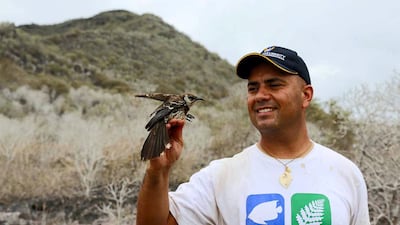
Dr Luis Ortiz Catedral, conservation biologist at Massey University in New Zealand, is also a recipient of MBZ grant. Photo: Joshue Ortiz-Catedral) -
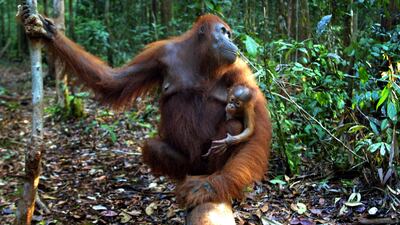
The Bornean orangutan. A grant from the MBZ Fund aids efforts to help their conservation. Photo: Mohamed bin Zayed Species Conservation Fund -
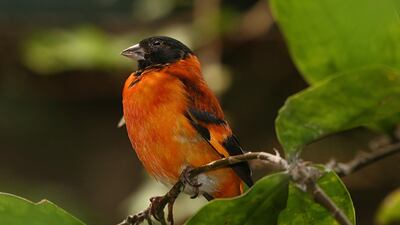
Red Siskin found in northern Colombia and Venezuela. Alamy -
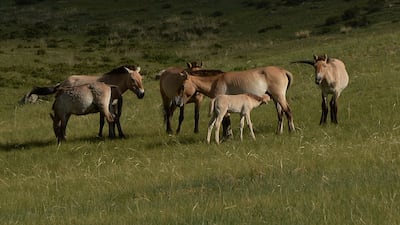
The Przewalski’s horse was practically extinct in the 1970s because of competition with livestock, hunting and intrusion into their habitat. AFP -

Grants also go to help the Malabar water lily in India. Photo: Mohamed bin Zayed Species Conservation Fund -
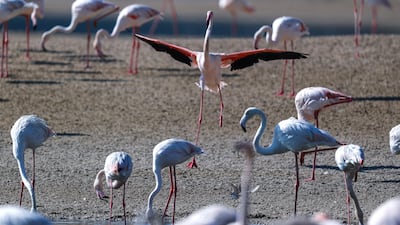
Flamingos at the Al Wathba Wetland Reserve in Abu Dhabi. Victor Besa / The National -
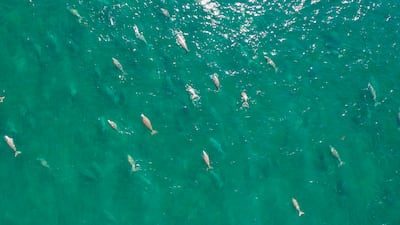
A herd of dugongs moving about the waters of the western region, Abu Dhabi. Photo: Abu Dhabi Marine Conservation Group -
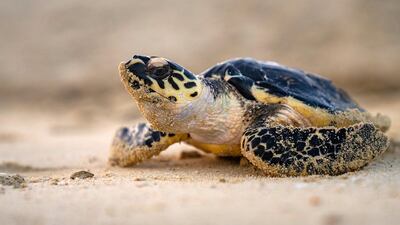
A turtle is released into the ocean by the The Environment Agency - Abu Dhabi. Photo: Abdullah Al Junaibi for the Ministry of Presidential Affairs -
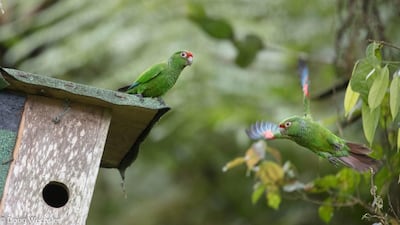
The rare and endangered El Oro parakeet in the Buenaventura Reserve, Ecuador. The MBZ Fund aids projects across the world to safeguard these species. Photo: Mohamed bin Zayed Species Conservation Fund -
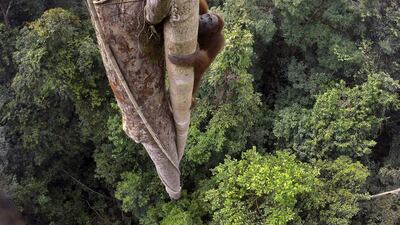
A Bornean orangutan in a tree in the Indonesian rainforest of Gunung Palung National Park, in West Kalimantan, Indonesia. AP -
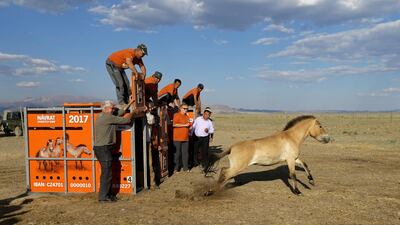
A Przewalski's horse leaves its container after being released in Takhin Tal National Park, in south-west Mongolia. Reuters



