• Ali Salem Al Kaabi Mosque in Abu Dhabi will have safety in mind as it welcomes worshippers during Ramadan. All pictures by Victor Besa / The National
    Ali Salem Al Kaabi Mosque in Abu Dhabi will have safety in mind as it welcomes worshippers during Ramadan. All pictures by Victor Besa / The National
  • Worshippers wear masks in line with Covid-19 safety measures at Ali Salem Al Kaabi Mosque
    Worshippers wear masks in line with Covid-19 safety measures at Ali Salem Al Kaabi Mosque
  • Mohammad Moin Uddin, the imam of Ali Salem Al Kaabi Mosque, said preparations are well in hand for Ramadan
    Mohammad Moin Uddin, the imam of Ali Salem Al Kaabi Mosque, said preparations are well in hand for Ramadan
  • Mosques will be open during Ramadan after being closed during the holy month of 2020 due to Covid-19 safety restrictions
    Mosques will be open during Ramadan after being closed during the holy month of 2020 due to Covid-19 safety restrictions
  • Mohammad Moin Uddin, the imam of Ali Salem Al Kaabi Mosque in Abu Dhabi.
    Mohammad Moin Uddin, the imam of Ali Salem Al Kaabi Mosque in Abu Dhabi.
  • Health protocols are being closely followed at the mosque
    Health protocols are being closely followed at the mosque

Ramadan fasts can boost immune system to fight infections such as coronavirus, study says


Gillian Duncan
  • English
  • Arabic

Fasting during Ramadan could help a person's immune system fight infections such as Covid-19, a study showed.

Researchers said fasting allowed the body to produce new white blood cells, rejuvenating the immune system.

In a study published in the journal Frontiers in Nutrition, the researchers suggested that fasting could reduce the harmful effects of inflammatory cytokines.

Cytokines are essential to the immune system but the inflammatory kind attack the body and are believed to be a major driver of severe cases of Covid-19.

The promising results of studies have shown that inflammatory cytokines ... might be reduced by Ramadan fasting

Fasting during Ramadan could help a person's immune system fight infections such as Covid-19, a study showed.

Researchers said

fasting allowed the body to produce new white blood cells, rejuvenating the immune system.

In a study published in the journal Frontiers in Nutrition, the researchers suggested that fasting could reduce the harmful effects of inflammatory cytokines

Cytokines are essential to the immune system but the inflammatory kind attack the body and are believed to be a major driver of severe cases of Covid-19.

The wider benefits of fasting 

Dr Mohammed Arif, a specialist in internal medicine at Aster Hospital in Mankhool, Dubai, said fasting helped to boost a person's metabolism and their ability to tackle health problems such as high cholesterol and diabetes.

Fasting can even improve the effectiveness of cancer treatment.

"Studies show that people who underwent chemotherapy responded better while fasting," Dr Arif said.

But doctors emphasised the beneficial effects largely depend on what people eat when they break their fast.

Nutrient-rich foods such as nuts, fruit and vegetables should feature prominently in iftar and suhoor meals.

"When fasting, we need to maintain the balance between all micronutrients," said Dr Iffat Sultana, a specialist in internal medicine at NMC Royal Hospital in Dubai Investments Park.

“As a general rule, carbohydrates should be 55 per cent, proteins 25 per cent and fat should be 20 per cent.”

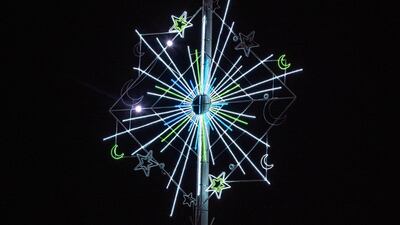
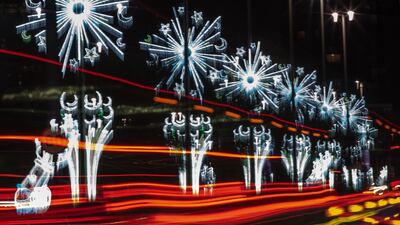
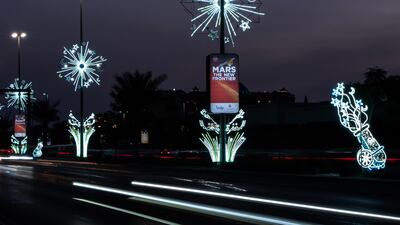
  • The streets of Abu Dhabi have been decorated with dazzling illuminations ahead of Ramadan. Victor Besa / The National
    The streets of Abu Dhabi have been decorated with dazzling illuminations ahead of Ramadan. Victor Besa / The National
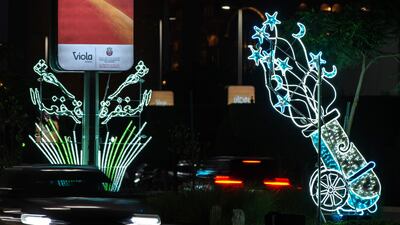
  • The decorative lights include beautiful Islamic designs inspired by the holy month. Victor Besa / The National
    The decorative lights include beautiful Islamic designs inspired by the holy month. Victor Besa / The National
  • Hundreds of illuminated shapes have been hung throughout the capital, comprising thousands of colourful lights. Victor Besa / The National
    Hundreds of illuminated shapes have been hung throughout the capital, comprising thousands of colourful lights. Victor Besa / The National
  • The visually appealing, Ramadan-themed designs include crescent shapes and star-shaped pieces. Victor Besa / The National
    The visually appealing, Ramadan-themed designs include crescent shapes and star-shaped pieces. Victor Besa / The National
  • There will also be illuminated lanterns hanging from trees and lamp posts. Victor Besa / The National
    There will also be illuminated lanterns hanging from trees and lamp posts. Victor Besa / The National
  • The decorations aim to provide a joyful setting that reflects the values of the holy month. Victor Besa / The National
    The decorations aim to provide a joyful setting that reflects the values of the holy month. Victor Besa / The National
  • The safety of pedestrians and the environment were taken into consideration before the decorations were hung. Victor Besa / The National
    The safety of pedestrians and the environment were taken into consideration before the decorations were hung. Victor Besa / The National
  • All cables have been safely secured and LED power-saving lights have been used. Victor Besa / The National
    All cables have been safely secured and LED power-saving lights have been used. Victor Besa / The National
  • The lights will be turned on from Thursday, May 10, until the end of the Eid Al Fitr holiday. Victor Besa / The National
    The lights will be turned on from Thursday, May 10, until the end of the Eid Al Fitr holiday. Victor Besa / The National

How to eat for your health during Ramadan

Vitamin C is an important immune booster, as is vitamin B6, said Dr Azeem Mohamad, a specialist in internal medicine at Bareen International Hospital in Mohamed bin Zayed City, Abu Dhabi.

Foods rich in vitamin E and omega-3 fatty acids can also be important parts of Ramadan diets.

“Remember, having healthy food and antioxidant rich foods will give your body enough strength to fight any infection,” Dr Arif said.

Foods that have high levels of sugar or salt and fried meals should be avoided, Dr Mohamad said.

Muslims can exercise as normal during the holy month and should aim to sleep for at least seven to eight hours a night.

Doctors in the Emirates also said it was safe for people to be vaccinated against Covid-19 while fasting.

Those fasting should also drink at least two litres of water after the daily fast breaks.

Despite the benefits of fasting, Ramadan can be a busy time for hospitals and clinics across the country.

Doctors have said it is not uncommon for patients who are managing existing conditions to fall ill after breaking their fast at sunset.

The most common admissions are of people with chronic conditions like diabetes, hypertension, asthma and epilepsy.




Ten tax points to be aware of in 2026

1. Domestic VAT refund amendments: request your refund within five years

If a business does not apply for the refund on time, they lose their credit.

2. E-invoicing in the UAE

Businesses should continue preparing for the implementation of e-invoicing in the UAE, with 2026 a preparation and transition period ahead of phased mandatory adoption. 

3. More tax audits

Tax authorities are increasingly using data already available across multiple filings to identify audit risks. 

4. More beneficial VAT and excise tax penalty regime

Tax disputes are expected to become more frequent and more structured, with clearer administrative objection and appeal processes. The UAE has adopted a new penalty regime for VAT and excise disputes, which now mirrors the penalty regime for corporate tax.

5. Greater emphasis on statutory audit

There is a greater need for the accuracy of financial statements. The International Financial Reporting Standards standards need to be strictly adhered to and, as a result, the quality of the audits will need to increase.

6. Further transfer pricing enforcement

Transfer pricing enforcement, which refers to the practice of establishing prices for internal transactions between related entities, is expected to broaden in scope. The UAE will shortly open the possibility to negotiate advance pricing agreements, or essentially rulings for transfer pricing purposes. 

7. Limited time periods for audits

Recent amendments also introduce a default five-year limitation period for tax audits and assessments, subject to specific statutory exceptions. While the standard audit and assessment period is five years, this may be extended to up to 15 years in cases involving fraud or tax evasion. 

8. Pillar 2 implementation 

Many multinational groups will begin to feel the practical effect of the Domestic Minimum Top-Up Tax (DMTT), the UAE's implementation of the OECD’s global minimum tax under Pillar 2. While the rules apply for financial years starting on or after January 1, 2025, it is 2026 that marks the transition to an operational phase.

9. Reduced compliance obligations for imported goods and services

Businesses that apply the reverse-charge mechanism for VAT purposes in the UAE may benefit from reduced compliance obligations. 

10. Substance and CbC reporting focus

Tax authorities are expected to continue strengthening the enforcement of economic substance and Country-by-Country (CbC) reporting frameworks. In the UAE, these regimes are increasingly being used as risk-assessment tools, providing tax authorities with a comprehensive view of multinational groups’ global footprints and enabling them to assess whether profits are aligned with real economic activity. 

Contributed by Thomas Vanhee and Hend Rashwan, Aurifer

Petrarch: Everywhere a Wanderer
Christopher Celenza,
Reaktion Books