
Emirati twin brothers have told of a shared goal to help their country win the fight against the Covid-19 pandemic.
Sultan and Hamdan Al Hammadi, 19, juggle their studies at Zayed University with volunteer work at a vaccination centre in Abu Dhabi.
They spend up to six hours a day ensuring hundreds of people are immunised, helping the UAE reach its target of inoculating half of its population by the end of next month.
Sultan deems it an honour to lend his support at such a challenging time.
"I am doing this for my country. I want to give back to my country who has given me everything. This is actually a privilege," said Sultan, who also has seven other siblings.
UAE forges ahead with immunisation campaign:
-
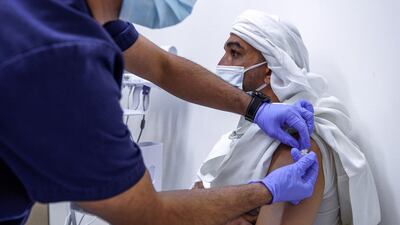
Abu Dhabi resident Abdulaziz Karmastaji gets vaccinated at Seha's cruise ship terminal facility in January -
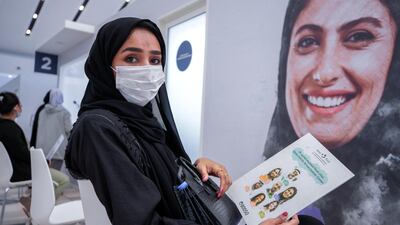
Abu Dhabi resident Shaikha Al Dheiri waiting to get vaccinated. -
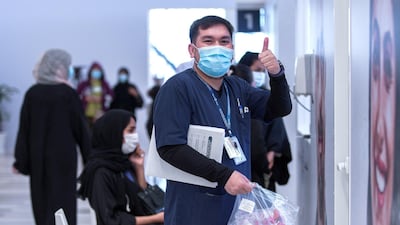
A healthcare worker smiles for the cameras. -
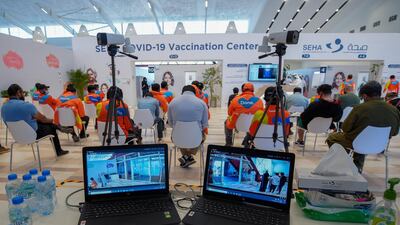
Nearly 20,000 people are vaccinated daily at the centre. -
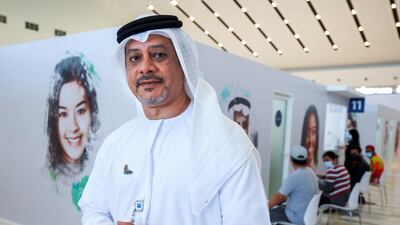
Mohamed Hawas Al Sadid, chief executive of Seha, said nearly 20,000 people are getting shots every day. -
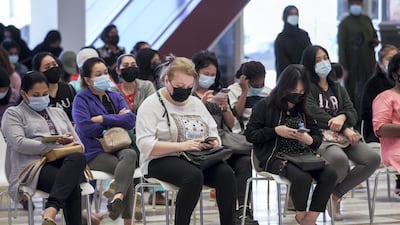
People in the waiting room. -
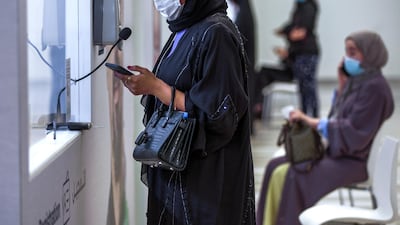
An Emirati waits for her turn to get the vaccine. -
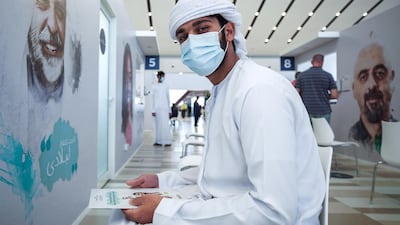
A young Emirati at the vaccination centre at the Abu Dhabi Cruise Terminal area. -

Aya, 24, and Jana, 18, after receiving the vaccine. The Sinopharm vaccine is available across the country without charge at dozens of hospitals, vaccination centres, majlis and clinics. -
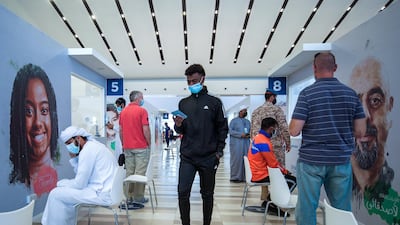
The Covid-19 vaccination drive is the country's largest to date. The health authorities aim to inoculate half the population by the end of the first quarter. -
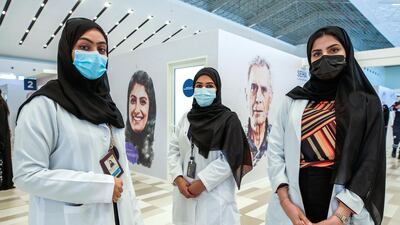
(L to R) - Emirati healthcare workers, Mouza Al Beshr, Khadija Al Nuaimi and Za,zam Al Naqbi at the Seha vaccination centre.


The brothers study Information Security at Zayed University.
They have been volunteering at the Seha Vaccination Centre at Abu Dhabi Cruise Terminal for three weeks, fitting in volunteer shifts after they end their university classes at about 2pm.
Sultan helps with day-to-day operations while Hamdan assists with registration.
They help about 400 people navigate the vaccination process each day, from labourers to the elderly.
Hamdan said his work at the vaccination centre was a valuable learning experience for him and still left him plenty of time for his academic studies.
“There is a lot of time. I have time after 8pm to catch up on my school work," he said.
“This experience has taught me the magnitude of Covid. It is more serious than many of us know.”
He said dealing with blue collar workers from different nationalities was initially a challenge because of the language barrier.
“I have picked up a few words of their language and do ask for the assistance of an interpreter but I like dealing with people and helping them," he said.
"There is nothing better than hearing the words 'thank you' at the end of the day. This is the drive that keeps us going.”
The brothers strictly follow precautionary measures in order to stay safe while they are in close proximity with hundreds of people each day.
"We do keep safe and as soon as we go home and before getting into contact with anyone we sanitise ourselves," said Hamdan.
The brothers called on other members of the community to volunteer as the national inoculation campaign intensifies.
"The UAE and the world needs our help to fight this pandemic. Our community needs us to be safe,” Sultan said.
The UAE has administered more than 5 million doses of vaccine in the past two months and ranked second only to Israel in global immunisation rates.

