


Doctors may be better able to combat the UAE’s biggest killer – cardiovascular disease – in Emirati patients thanks to a groundbreaking research project.
A researcher at UAE University in Al Ain has used data collected over more than a decade to create a prediction model that indicates who is most at risk of developing the condition, often referred to as CVD.
If used by doctors, the model could allow preventative measures to be targeted at those in greatest need, potentially saving lives.
Created using data from Emiratis, it contrasts with the norm for such models of being formulated using information from European and North American populations.
The researcher, Dr Saif Al Shamsi, an associate professor at UAE University and an internal medicine consultant, said the most effective way to stop patients developing CVD was primary prevention or intervening before negative health effects developed.
"This includes using prediction models to identify people at risk, and then using primary preventative measures to lower that risk, such as prescribing them cholesterol-lowering medications and encouraging at-risk patients to adopt a healthy lifestyle," he said.
Doctors may recommend that at-risk patients take regular exercise, eat a balanced diet, stop smoking or take cholesterol-lowering therapy.
Emiratis at greater risk

Better ways to identify people at risk of CVD are especially important in the UAE because previous research by Dr Al Shamsi and colleagues found that the disease is about twice as common among Emiratis than Europeans. UAE nationals also tend to develop the disease earlier.
An estimated 35 to 40 per deaths in the UAE are linked to CVD, according to reports.
In 2020 Dr Al Shamsi and colleagues published a study showing that the prediction tools currently used were inaccurate when used with UAE citizens, tending to overestimate or underestimate an individual’s CVD risk.
"This can lead to physicians prescribing unnecessary treatments if the model over-predicts, or failure to treat if the model misses at-risk patients," he said.
"Also, these same popular models were developed excluding younger patients and we now know that the prevalence of CVD is relatively higher in younger Arabs compared to the younger population in western countries.
"Therefore, a significant proportion of the UAE population is not being accurately screened for CVD using existing tools."
The new study, published in BMJ Open, which is linked to the British Medical Journal, describes how Dr Al Shamsi developed a model based on data from about one per cent of the adult UAE national population of Al Ain.
Comprehensive study
Data came from Emiratis aged 18 and over who attended Tawam Hospital’s clinic in the last nine months of 2008. Information from these patients was collected until the end of January 2020, enabling Dr Al Shamsi to identify which risk factors affected the risk of developing CVD.
The model can be applied quickly by healthcare providers, Dr Al Shamsi said, by using a calculator based on eight clinical variables that are easy to obtain.
These include the patient’s age, sex, family history of cardiovascular disease, whether they are taking medication for high blood pressure, their blood pressure and cholesterol levels.
Also included is a measure of the blood glucose level, as this can indicate whether the patient has diabetes, and a measure of kidney function. These datapoints are used to generate the patient’s 10-year risk score for CVD.
Other prediction models used in the UAE do not, Dr Al Shamsi said, factor in a patient’s family history of CVD and their kidney function, but these "are known to be significant risk factors for developing CVD in Arabs". Including them makes predictions more accurate.
"In this new model, the cut-off for elevated risk was determined to be 10 per cent," Dr Al Shamsi said. "This means that if the patient’s 10-year risk for CVD is calculated to be greater than 10 per cent, physicians can provide ... guidance and advocate measures to prevent future disease."
To check the model’s accuracy, it has to be validated on a separate population, which is the next step of Dr Al Shamsi’s research. Once validated, the model may be used by doctors.
"This new model brings us a step closer to achieving the goal of having a CVD prediction tool that is tailored specifically for our population," Dr Al Shamsi said.
Arab Health 2023 - in pictures
-
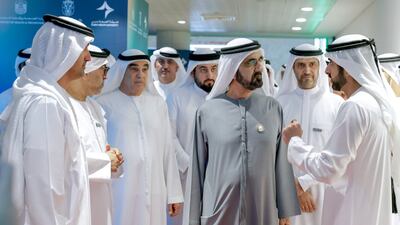
Sheikh Mohammed bin Rashid, Vice President and Ruler of Dubai, tours the Arab Health Exhibition. Photo: Dubai Media Office -
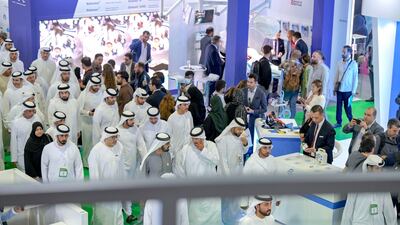
It is the largest medical exhibition in the region. Photo: Dubai Media Office -
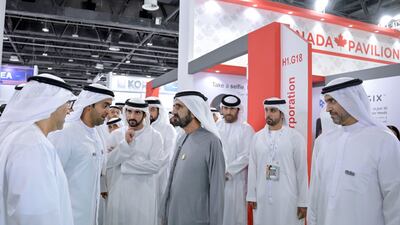
Sheikh Mohammed on the tour. Photo: Dubai Media Office -

The Vice President and Ruler of Dubai tours the Arab Health Exhibition. Photo: Dubai Media Office -

A visitor at the American Hospital stand at Arab Health event held at the World Trade Centre, Dubai. All photos: Chris Whiteoak / The National -

Visitors at the STC stand -

Pelvic bone implants made by Severn -

A visitor at the event that showcases the country's national health projects -

JMC Ambulance type B which has a higher roof for paramedics to stand and perform small surgeries -

A head made from donated human tissue at the Body Museum -

Anna Sattler, physio therapist at Spinefitter, demonstrates exercises to make mobilisation easier for the spine and loosen the muscles -

Shotaro Sekiya sits in a Cryobath at -117ºC -

Visitors flocked the 48th edition of Arab Health 2023 which will conclude on Thursday



