

A new Abu Dhabi health campaign which puts the benefits of a better diet on full display was introduced to the public on Tuesday.
Abu Dhabi Public Health Centre launched the Sehhi nutrition programme at Lulu hypermarkets in the capital as part of a major drive to slash obesity rates and bolster the health of the community.
A Sehhi logo will be placed on the packaging of healthy food items on sale at outlets including supermarkets, grocery shops and restaurants to encourage shoppers to improve their eating habits.
The mark of approval will also be published on menus in eateries in the capital.
The move is in line with a long-term vision to boost lifestyle habits, helping people to live longer and healthier lives while easing pressure on health services.
Food items which are low in fat, sugar and salt, and high in fibre will be identified as healthy options.
Calorie contents of dishes will also be published on menus under the scheme, which was announced on Saturday.
"ADPHC is committed to the safety and well-being of every member of the Abu Dhabi community and nutrition undoubtedly plays a critical role in promoting overall health and has a profound impact on reducing the prevalence and burden of lifestyle diseases," said Matar Al Nuaimi, director general of Abu Dhabi Public Health Centre.
"As such, the launch of the Sehhi programme aligns with our vision towards a healthy, safe society by consolidating the efforts of various stakeholders in the ecosystem to ensure access to healthy foods and promote more informed and educated dietary choices."
A recent study shed more light on the problem of obesity in the Gulf region, with young people said to be storing up problems for the future by putting on weight.
About one third of university students in the UAE are overweight or obese, the research said, and scientists have issued a warning that that rate is likely to increase as this generation grows older.
-

Almond oats with honey-whipped yogurt and banana. Photo: Scott Price -
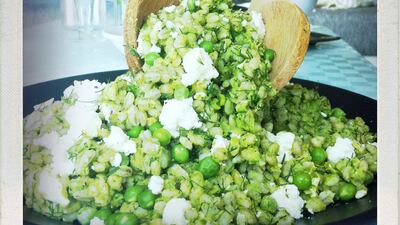
Pea and pearl barley salad with feta. Silvia Razgova / The National -

Ful medames, an Egyptian dish of cooked fava beans served with vegetable oil, cumin and optionally with chopped parsley, garlic, onion, lemon juice and chilli pepper. Fatima Al Marzooqi / The National -

Rashid Obaid grows cucumbers, tomatoes, aubergine, courgette and okra. Chris Whiteoak / The National -

A fruit bowl spilling over with apples and pears. Photo: Annabel James


Dr Omniyat Al Hajeri, executive director of community health for ADPHC, said the scheme highlighted the importance of a balanced diet.
"The Sehhi programme will support and empower the community to make well-informed decisions when it comes to the consumption of food," she said.
"Through the Sehhi programme, ADPHC has made sure to reach all consumer touchpoints to encourage better dietary decisions. We strongly urge the community to follow healthy eating habits and ensure they are consuming a balanced diet."
How the health drive will work
A comprehensive classification process has been established to identify foods that fall under the Sehhi programme, with the criteria considering calorie count, total fats, saturated and trans fats, sugar, salt and fibre amounts.
Outlets will also be able to input details about their food items into a digitised platform that will review and analyse the nutritional value of their dishes, identifying those that meet the Sehhi criteria.
Participating establishments will receive guidance and training on the programme, while members of the public will be given information on how to improve their diet.
"With the prevalence of obesity and sedentary lifestyles globally and locally, encouraging balanced and nutritious dietary choices is essential to an overall health of society, and aligns with ADPHC’s vision of a healthy, safe society by promoting preventive and public health," said the centre, in a statement carried by Wam.
The UAE is already taking steps to improve the health and well-being of its population.
In March, the UAE Taskforce on Obesity held its first meeting.
It focuses on educating children aged 5 to 17 on the dangers of being obese, focusing on healthy eating, weight management, exercise and nutrition.
Dr Hussain Al Rand, assistant undersecretary for the public health sector at the Ministry of Health, said at the time: "Combating obesity is a public health priority, while treating it requires raising awareness about obesity and its complications."

