



The UAE has one of the lowest smoking rates in the Middle East and North Africa region, according to a new report on the use of tobacco, while Lebanon has the highest.
The seventh edition of The Tobacco Atlas — a global analysis of smoking — reports that only Yemen has a lower figure than the Emirates in the region.
Using figures from 2019, the latest available, the report indicates that in Yemen the equivalent of 214 cigarettes per person are smoked annually, while in the UAE the figure is 438.
In Saudi Arabia, the country with the third-lowest figure, 485 cigarettes are smoked per person annually.

Lebanon has highest smoking figure in region
At the other end of the table, in Libya 1,764 cigarettes are smoked per person per year, in Kuwait the number is 1,849, while in Lebanon it is 1,955 cigarettes — the highest in the region.
Smoking rates in the UAE, as a percentage of the population, are thought to be less than the worldwide average, at around 14 per cent for men and two per cent for women.
In the region as a whole, tobacco control could be tightened up, according to Prof Kamran Siddiqi, professor in public health at the University of York in the UK.
“I think the strategies to control tobacco which are usually suggested by the WHO [World Health Organisation] in their framework convention, they’ve only been partially implemented in many countries in this part of the world,” he said.
“There’s a lot of improvement that can be done. So, for example, tobacco taxation isn’t as stringent as it should be. In many countries it doesn’t reach WHO [recommendations]. Smoke-free laws are not as comprehensive.
“There are many, many shortfalls in the implementation. Even if they’re part of the legislation, they’re not fully implemented.”
The WHO Framework Convention on Tobacco Control details measures that governments are advised to introduce, such as a ban on smoking in hospitality venues, offices and government facilities.
Using taxes to curb cigarette use
The WHO also recommends that taxes make up at least three-quarters of the price of the most popular brands of tobacco, that warnings cover at least half of the front and back of the packet, and that advertising, promotion and sponsorship is prohibited.
In the UAE, a number of measures have been introduced in recent years to cut down on smoking, which is responsible for multiple health issues, including lung cancer and cardiovascular disease.
These include the introduction in October 2017 of a 100 per cent tax on tobacco and tobacco products. This means that tax accounts for half of the total retail price — less than the WHO’s recommended figure of 75 per cent.
Dr Davinder Pal Singh, a cardiologist at NMC Royal Hospital in Dubai Investment Park, said he thought that tobacco taxes were effective at cutting smoking.
“If they are there, people will smoke less because they will cut down on their budget,” he said.
Other smoking rates detailed in The Tobacco Atlas, which is produced by The University of Illinois Chicago and Vital Strategies, a New York-headquartered public health organisation, include Iraq, where 1,243 cigarettes are smoked per person per year, Jordan, where the figure is 1,252 and Syria, where it is 1,275. In Israel, the average is 1,041 cigarettes, in Algeria it is 669 and in Egypt, 1,310 cigarettes.
Alternatives to cigarettes pose own dangers
-

A US conference on e-cigarette use has reported a halt in take-up among adolescents after regulations restricted sale of flavoured vaping cartridges. Reuters -

Flavouring of e-cigarettes is attractive to youths, as it masks the harshness of taste. Reuters -
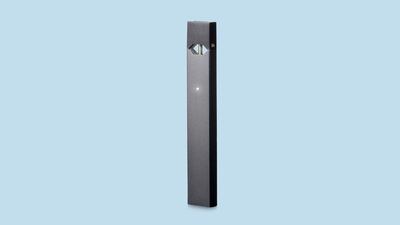
Juul was one of the strongest cartridge vaping brands in the US before enforcement policy by the Food and Drug Administration changed consumer trends.. Juul Labs via AP -
Regulatory changes were made to curb epidemic levels of youth use of e-cigarettes and the popularity of certain products among youths. Reuters


Dr Singh said he thought that the use of vaping had “increased dramatically in the last few years” in the UAE, a trend that potentially could have harmful health effects.
His advice is “to avoid any kind of tobacco”.
“It’s going to affect the heart,” he said. “It contains nicotine in some form. Definitely they should [avoid vaping]. It’s the same as cigarettes.”
A study of students at UAE University in Al Ain, Zayed University in Abu Dhabi and Dubai, and the University of Sharjah found that 15.1 per cent of students smoked conventional cigarettes or e-cigarettes. Of these, four per cent used e-cigarettes.
According to the researchers, the findings, which were published last year, indicated that “nicotine vaping use is relatively widespread, but still less common than traditional smoking”.
The popularity of vaping in a country can, Prof Siddiqi said, “go both ways”, because without tight control there is a risk that it could attract young people who never previously smoked.
He said that heavy regulation of vaping in the UK — where sales of vaping goods are banned to under 18s, certain ingredients such as caffeine are outlawed, and the tank capacity is limited to 2ml — has largely restricted take-up of vaping to people who previously smoked cigarettes.
“If it’s properly regulated, [it can] help smokers to quit combustible cigarettes,” Prof Siddiqi said. “On the other hand, it needs to be regulated so that it does not attract young people.
“The uptake on a regular basis [in the UK] has not been that much because it’s so heavily regulated, the advertising and so on. There’s tight control on how much nicotine they contain.”

