

Researchers in Abu Dhabi are developing a technology that could allow masks to filter out specific viruses, such as Covid-19 and the flu.
Associate professor at Khalifa University Dr Ammar Nayfeh and a team of academics and doctors are working on creating this new mask using nanotechnology.
“The idea is to create specific fibres with certain bonds that will filter out the virus,” said Dr Nayfeh.
Scientists across the world are using nanoparticles in mask designs due to their ability to slow or stop the spread of micro-organisms.
“Nano masks” are already in use. Made with nanoparticle fabric they are widely available and most people have been wearing them since the outbreak of the Covid-19 pandemic.
But the design has stayed the same despite virus particle sizes changing.
Scientists at Khalifa University used silicon nanoparticles encapsulated in aerosol to resemble the covid virus during testing. It was then sprayed on to two different masks with different fibre densities to demonstrate what would happen upon contact.
“Surprisingly, smaller virus [particles] are easy to block because the way these viruses work is that they get attracted to the fibres easier,” said Dr Nayfeh who works in the department of electrical engineering and computer science.
“Medium-sized particles – which are actually the size of the Covid virus – can make it through easier.”
-
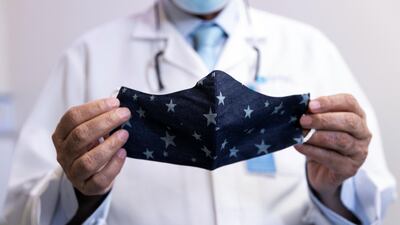
Cloth reusable facemasks are more environmentally sound than disposable ones, but must be washed every 24 hours to remain effective. All photos by Reem Mohammed / The National -

Surgical masks are cheap and effective if worn correctly but create mountains of waste once they are disposed of after each use. -
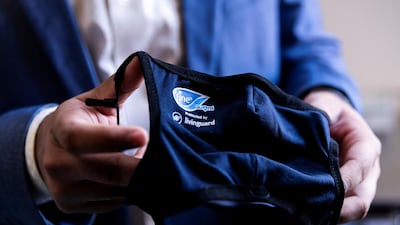
Fineguard manufactures face coverings in the UAE using Livinguard materials that repel viruses. A range of lightweight masks are designed for exercise. -
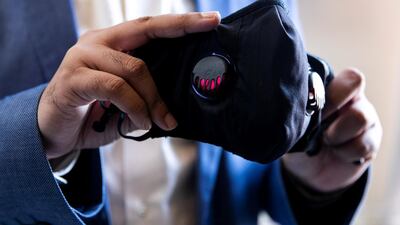
The ViroMasks viroblock mask has a double filter to ease breathing and block 95 per cent of viruses. -
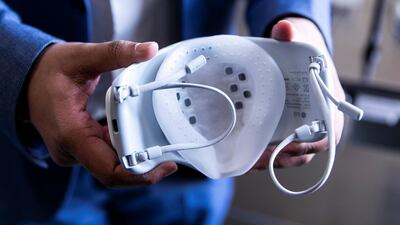
At Dh699, the LG Puricare wearable air purifier mask is the most expensive in the UAE. -

LG’s Puricare wearable air purifier mask is rechargeable and has two filters and three settings to respond to respiration rates.


The scientists also discovered that the structure of these particles changed when they came into contact with the fibre of the mask.
“The point is we can modify the nature of the fibre in the mask. If we can filter [imitation Covid particles] then we can filter out anything else, and this is the next step,” Dr Nayfeh said.
While current masks in the market work perfectly well, Dr Nayfeh believes that even one positive case among millions who are protected by standard face masks is one too many.
“If we could protect you 100 per cent instead of 99.9 per cent, then why not?
“Especially for frontline workers who are subjected to large viral loads all the time,” he said.
“Can you imagine a future where, when a new virus hits, we can design a mask that can filter specific viruses?”
Nanotechnology is already leading to dramatic improvements in health care.
Scientists have used nanoparticles to target tumours, to deliver drugs, and also to improve medical imaging. Some nanoparticle-based treatments are multifunctional – meaning that they both find tumours and carry drugs for treatment.
“There is a need for better protection for future pandemics,” said Dr Nayfeh.
“Even people who wear full PPE [personal protective equipment] can get infected.”
Mask wearing has become the new norm with health authorities around the world recommending them as part of a comprehensive strategy to stop the transmission of Covid-19 and save lives.
And while masks have become indispensable everyday items because of the pandemic, Dr Nayfeh said that there has been no update to these masks in years.
“There hasn’t been too much technology and innovation in masks,” he said.


