


UAE ministers said Expo 2020 Dubai organisers remain united in their goal to deliver a spectacular global event as they seek to overcome the challenges of the Covid-19 pandemic.
The world fair - the first to be hosted in the Middle East - was due to get under way in October before the international impact of coronavirus led to its delay by a year.
UAE officials outlined progress on the Expo site and looked ahead to next October's long-waited gathering during an International Participants Meeting held online on Monday.
Sheikh Nahyan bin Mubarak, Minister of Tolerance and Coexistence and commissioner general of Expo 2020 Dubai, said he was inspired by the resolve of the Expo community during difficult circumstances.
-
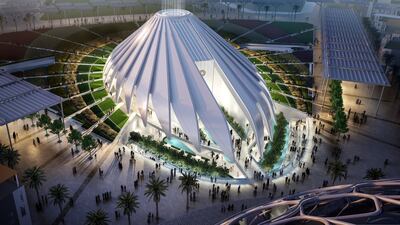
An artist's impression of the UAE pavilion at the Expo 2020 Dubai site. Wam -
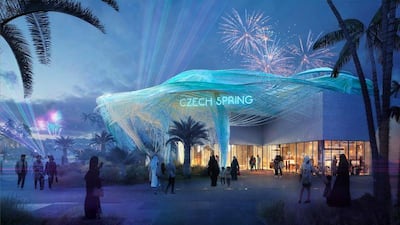
The Czech Republic Expo 2020 pavilion -
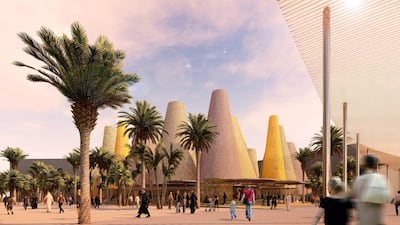
The Spanish Expo 2020 pavilion -
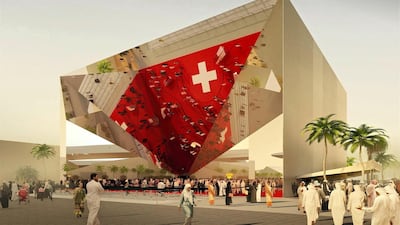
The Swiss Expo 2020 Pavilion -
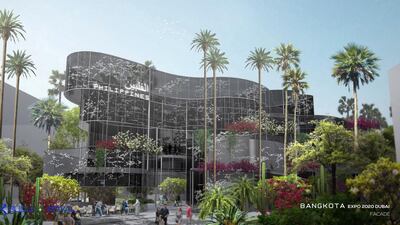
Philippines 2020 Expo pavilion. Courtesy: Philippines Expo 2020 -
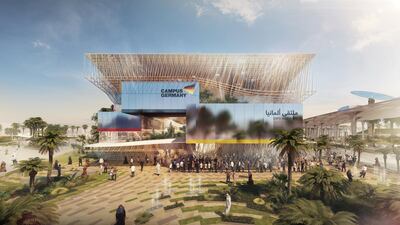
The German pavilion. Courtesy: German Pavilion EXPO 2020 Dubai -
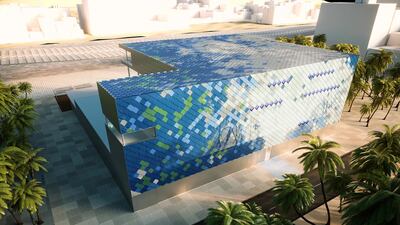
France pavilion Expo 2020 -
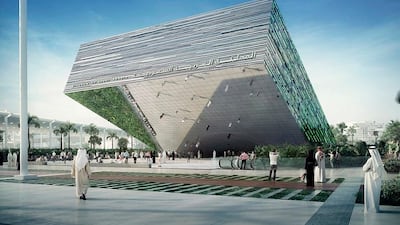
The Saudi pavilion at Expo 2020. Courtesy Expo 2020 Dubai -
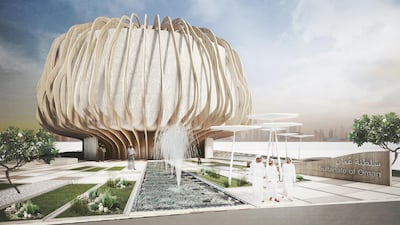
The Omani pavilion at Expo 2020 Dubai. Courtesy: Expo 2020


“I am excited by the potential of our collective efforts to learn, to grow, and to fulfil the mandate of our nations, and of the World Expo itself,” he said.
“While much has changed in the recent months, we are united in our ambitions, and empowered by the breadth and depth of our responsibilities. We will welcome the world, we will tell our stories to the world and together we will help build a better world.”
Drawing on the Expo theme Connecting Minds, Creating the Future, Reem Al Hashimy, Minister of State for International Co-operation, said connecting with others had been invaluable during the crisis.
“We must seek new definitions of success,” said Ms Al Hashimy, also director general of Expo 2020 Dubai.
“We must drive additional returns on investment. We must achieve tangible, positive outcomes.”
She said while the world awaits the creation and production on a Covid-19 vaccine, the knowledge gained would help build a safer, more resilient future.
Speaking from a small room on the Expo site instead of a stage normally set up for big conferences, Ms Al Hashimy said organisers were prepared to meet the end of year construction deadlines.
“Dubai is open, we are convening every day online and in person, we are planning for every scenario, and we are firmly resolved to deliver an outstanding World Expo in 2021,” she said.
“If 2020 has been a year in which we have all been forced to look after ourselves, then next year will be the moment and Expo the platform from which we are able to reach out again, across land and sea, and fully embrace our neighbours near and far.”
Sheikh Ahmed bin Saeed Al Maktoum, chairman of the Expo 2020 Dubai Higher Committee, highlighted the robust response of the emirate to the public health crisis.
“The agility and responsiveness of Dubai and the UAE has been instrumental in the swift re-opening of the country’s tourism sector. Coupled with its infrastructure and facilities, including airlines and hotels, Dubai has emerged quickly from what has been a challenging period for the whole world,” he said.
“Expo 2020 and its hundreds of participants will highlight the importance of international collaboration and co-operation to help contribute to global progress.”
He said the world fair was aligned with the country’s commitment to building a brighter future, acting in solidarity with countries and communities around the world.
Organisers and participants will convene virtually over four days to discuss updates in site operations, facilities management, content related to marketing, and communications.
After the completion of Expo-led construction last year, work is being carried out to landscape the site, fit out Expo-owned buildings and prepare the country pavilions.
Dimitri Kerkentzes, secretary general of the Bureau International des Expositions, the governing body of World Expos, said Dubai, the UAE and participating countries have made “remarkable progress” towards delivering the next World Expo despite the impact of a global pandemic.
He said the BIE would work with the UAE government and organisers in the coming months to develop guidelines for various scenarios to ensure a coronavirus-free Expo site.
“Expo 2020 Dubai will represent a new model for global events, one that innovates and fundamentally changes world expos,” he said describing it as a watershed event next year.
Planning and management while dealing with the challenges of a global pandemic would provide valuable lessons for mega events, Mr Kerkentzes said.
“Expo 2020 Dubai will be a transformative event and an inspiration for other organisers, cities and countries with regard to innovation and technology that can make a real difference to people’s lives.”
Pavilion construction is to be completed by the end of the year and it was critical participating countries and organisers worked in sync.
“Construction of many participating country pavilions has reached a very final stage,” he said.
“Once the construction has been finalised in December, the participating countries teams will continue working on the content, exhibition and operational plans in their home countries before coming back for a fit out of the pavilions.”
Expo 2020 Dubai will run for six months from October next year.
The world fair will coincide with the 50th anniversary of the founding of the UAE and aims to further cement the country’s position as a global hub that connects people, ideas and innovation.

