

A five-month ban on shark fishing in the UAE's waters begins on Monday, March 1, the Ministry of Climate Change and Environment announced.
The ban on fishing sharks and rays will continue until the end of June, to coincide with their breeding season and allow diminished populations to recover.
Shark fishing is only allowed to be carried out in the Emirates from July until February by people with registered lynch boats and licensed equipment.
“The seasonal ban on shark fishing and trade aligns with the ministry’s strategic goal of preserving ecosystems and marine life, as it helps sustain the population of the species through giving them time to reproduce,” said Halima Al Jasmi, who leads the fisheries section at the ministry.
She said the ruling, which was brought into effect in 2014, was an effective tool for alleviating the pressure on sharks cause by overfishing and habitat degradation.
The same legislation permanently prohibits the import and re-exportation of shark fins – fresh, frozen, dried, salted, smoked, canned, or in any other form.
Fins imported for scientific purposes are excluded from the legislation, subject to approval by the ministry.
When introducing the legislation, a senior ministry representative said the shark population had been in steady decline for several years because of overfishing.
Sharks are valued for their fins, meat and gill plates, the representative said.
"There are 43 shark species and 29 ray species recorded in the UAE's waters, with 42 per cent of these considered endangered as per the International Union for Conservation of Nature red list of threatened species."
Some of the species of sharks found in the UAE:
-
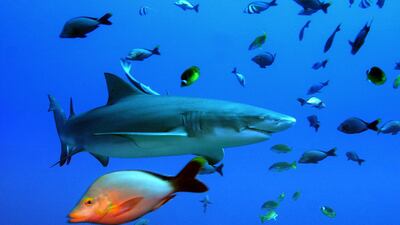
Lemon shark. Typically found in tropical and coastal waters, Sicklefin lemon sharks can grow up to 3.5m. They are ranked as vulnerable by the IUCN. Valerie Macon / AFP -

Giant Guitarfish. A critically endangered species, the guitarfish is at great threat from pollution, fishing and habitat destruction. Fishing them is banned all year round in the UAE. Andrey Nekrasov / Zuma Wire -

Small tooth sawfish. This large species takes its name from its long, narrow snout, which is lined with sharp teeth – resembling a saw. Sawfish fishing is banned throughout the year in the UAE as it is listed as critically endangered by the IUCN. Torsten Blackwood / AFP -

Whitetip reef sharks typically do not grow longer than 1 metre. They are one of the most common sharks in the Arabian Gulf but are still listed as vulnerable by the IUCN. Alamy -

The blacktip reef shark can grow up to 2 metres and are identified by their black tipped fins, They prefer shallow waters and are listed as near threatened by the IUCN. Getty -

The great hammerhead can grow up to 6 metres and can swim up to 40kph. They are listed as endangered by the IUCN. Norbert Wu / Science Faction / Corbis -
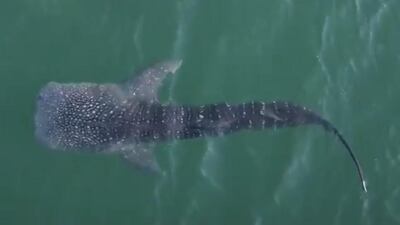
Whale sharks are known as the gentle giants of the sea because they are the biggest species of sny fish. The filter feeders grow up to 12m long and are listed as endangered by the IUCN. Environment Agency Abu Dhabi



