• More than 250 species of birds, including these greater flamingos, can be found at the Al Wathba Wetland Reserve in Abu Dhabi. Christopher Pike / The National
    More than 250 species of birds, including these greater flamingos, can be found at the Al Wathba Wetland Reserve in Abu Dhabi. Christopher Pike / The National
  • Greater Flamingo numbers in the UAE are also considered healthy, although many of its wetland habitats are under threat from development.
    Greater Flamingo numbers in the UAE are also considered healthy, although many of its wetland habitats are under threat from development.
  • Flamingo eggs from the Al Wathba Wetland Reserve that did not hatch. Antonie Robertson / The National
    Flamingo eggs from the Al Wathba Wetland Reserve that did not hatch. Antonie Robertson / The National
  • Al Wathba Wetland Reserve is famous for its flamingo population. Courtesy, Environment Agency Abu Dhabi
    Al Wathba Wetland Reserve is famous for its flamingo population. Courtesy, Environment Agency Abu Dhabi

Abu Dhabi's Al Wathba Wetland Reserve to temporarily close for eight months


  • English
  • Arabic

One of Abu Dhabi's largest wetlands will be temporarily closed to the public to protect nesting birds, the Environment Agency Abu Dhabi said on Wednesday.

Al Wathba Wetland Reserve, known for its large population of greater flamingos, will stop welcoming visitors from March 31 for eight months.

Thousands of birds migrate to the reserve from central Asia each year to enjoy the warm winter, with more than 4,000 remaining for the full 12 months.

The pink-tinged flamingos started nesting in February this year – one month earlier than normal.

The success of the reserve in attracting important birds for nesting is a positive indication of the improvement in conditions

The closure is necessary to protect the nests and promote the reserve's biodiversity, said Ahmed Alhashmi, acting executive director for terrestrial and marine biodiversity at EAD.

"The success of the reserve in attracting important birds for nesting is a positive indication of the improvement in conditions and the provision of a suitable environment for the birds to breed,” he said.

"This indicates the sustainability of the ecosystems in the reserve, as well as the good management and protection, which enhanced the willingness of these species to start nesting and increase their numbers.”

EAD said its bird watchers spotted several other migratory and resident species settling down for the season.

Breeds such as Kentish plovers, black-winged stilts, red-wattled lapwings, ringed plovers and white-tailed lapwings were seen building nests on the ground close to the roads and around the lakes.

More than 17,000 people have visited the reserve this year. Another 3,000 are expected before the end of the month – the highest number of visitors recorded since the site opened in 2014.

The five-square-kilometre conservation site was established in 1998 by the UAE's Founding Father, Sheikh Zayed.

The reserve has natural and man-made water bodies, salt flats, fossilised sands and dunes, which are densely packed with a variety of animal and plant species.

It also has designated walking trails, measuring 1.5km and 3km, which allow visitors to closely observe its natural habitats and wildlife.

The reserve has a visitor centre, bird hide and a viewing platform.

Al Wathba Wetland is the only site in the Gulf where flamingos have bred regularly since 2011. EAD researchers discovered three species of invertebrate new to science in the reserve, including a gasteruptiid wasp and a type of cuckoo wasp.

It was recognised in 2013 as a Ramsar site – one designated to be of international importance under the Ramsar Convention established by Unesco.

The reserve was also the first in the region to be added to the International Union for Conservation of Nature green list in 2018, joining 40 sites around the world.

Birds you often see in the UAE – in pictures

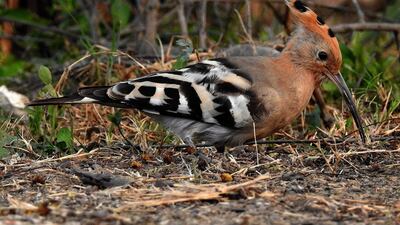
  • BIRDS YOU OFTEN SEE IN THE UAE: The hoopoe. Dr. Raju Kasambe / Wikimedia Commons
    BIRDS YOU OFTEN SEE IN THE UAE: The hoopoe. Dr. Raju Kasambe / Wikimedia Commons
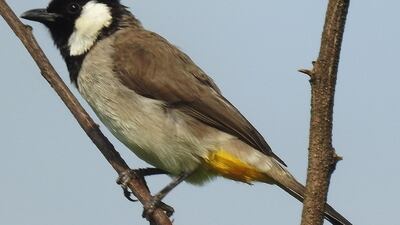
  • BIRDS YOU OFTEN SEE IN THE UAE: White-eared bulbul. Dr. Raju Kasambe / Wiki
    BIRDS YOU OFTEN SEE IN THE UAE: White-eared bulbul. Dr. Raju Kasambe / Wiki
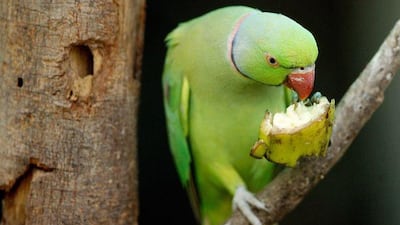
  • BIRDS YOU OFTEN SEE IN THE UAE: A rose-ringed parakeet. Supplied
    BIRDS YOU OFTEN SEE IN THE UAE: A rose-ringed parakeet. Supplied
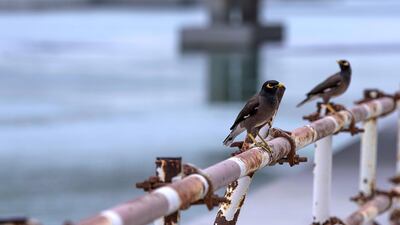
  • BIRDS YOU OFTEN SEE IN THE UAE: Myna birds perched on metal railings in Al Reem Island, Abu Dhabi. Victor Besa / The National
    BIRDS YOU OFTEN SEE IN THE UAE: Myna birds perched on metal railings in Al Reem Island, Abu Dhabi. Victor Besa / The National
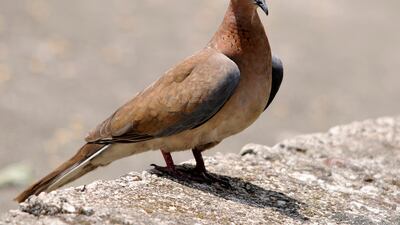
  • BIRDS YOU OFTEN SEE IN THE UAE: The palm dove, otherwise known as the laughing dove. Zeynel Cebeci / Wikimedia Commons
    BIRDS YOU OFTEN SEE IN THE UAE: The palm dove, otherwise known as the laughing dove. Zeynel Cebeci / Wikimedia Commons
Ten tax points to be aware of in 2026

1. Domestic VAT refund amendments: request your refund within five years

If a business does not apply for the refund on time, they lose their credit.

2. E-invoicing in the UAE

Businesses should continue preparing for the implementation of e-invoicing in the UAE, with 2026 a preparation and transition period ahead of phased mandatory adoption. 

3. More tax audits

Tax authorities are increasingly using data already available across multiple filings to identify audit risks. 

4. More beneficial VAT and excise tax penalty regime

Tax disputes are expected to become more frequent and more structured, with clearer administrative objection and appeal processes. The UAE has adopted a new penalty regime for VAT and excise disputes, which now mirrors the penalty regime for corporate tax.

5. Greater emphasis on statutory audit

There is a greater need for the accuracy of financial statements. The International Financial Reporting Standards standards need to be strictly adhered to and, as a result, the quality of the audits will need to increase.

6. Further transfer pricing enforcement

Transfer pricing enforcement, which refers to the practice of establishing prices for internal transactions between related entities, is expected to broaden in scope. The UAE will shortly open the possibility to negotiate advance pricing agreements, or essentially rulings for transfer pricing purposes. 

7. Limited time periods for audits

Recent amendments also introduce a default five-year limitation period for tax audits and assessments, subject to specific statutory exceptions. While the standard audit and assessment period is five years, this may be extended to up to 15 years in cases involving fraud or tax evasion. 

8. Pillar 2 implementation 

Many multinational groups will begin to feel the practical effect of the Domestic Minimum Top-Up Tax (DMTT), the UAE's implementation of the OECD’s global minimum tax under Pillar 2. While the rules apply for financial years starting on or after January 1, 2025, it is 2026 that marks the transition to an operational phase.

9. Reduced compliance obligations for imported goods and services

Businesses that apply the reverse-charge mechanism for VAT purposes in the UAE may benefit from reduced compliance obligations. 

10. Substance and CbC reporting focus

Tax authorities are expected to continue strengthening the enforcement of economic substance and Country-by-Country (CbC) reporting frameworks. In the UAE, these regimes are increasingly being used as risk-assessment tools, providing tax authorities with a comprehensive view of multinational groups’ global footprints and enabling them to assess whether profits are aligned with real economic activity. 

Contributed by Thomas Vanhee and Hend Rashwan, Aurifer

Cricket World Cup League Two

Oman, UAE, Namibia

Al Amerat, Muscat


Results

Oman beat UAE by five wickets

UAE beat Namibia by eight runs


Fixtures

Wednesday January 8 –Oman v Namibia

Thursday January 9 – Oman v UAE

Saturday January 11 – UAE v Namibia

Sunday January 12 – Oman v Namibia

THE%20HOLDOVERS
%3Cp%3E%3Cstrong%3EDirector%3A%20%3C%2Fstrong%3EAlexander%20Payne%3C%2Fp%3E%0A%3Cp%3E%3Cstrong%3EStarring%3A%3C%2Fstrong%3E%20Paul%20Giamatti%2C%20Da'Vine%20Joy%20Randolph%2C%20Dominic%20Sessa%3C%2Fp%3E%0A%3Cp%3E%3Cstrong%3ERating%3A%3C%2Fstrong%3E%204.5%2F5%3C%2Fp%3E%0A
The National's picks

4.35pm: Tilal Al Khalediah
5.10pm: Continous
5.45pm: Raging Torrent
6.20pm: West Acre
7pm: Flood Zone
7.40pm: Straight No Chaser
8.15pm: Romantic Warrior
8.50pm: Calandogan
9.30pm: Forever Young