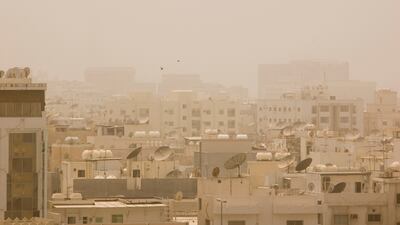
Smog obscures the view from the Saad Abad complex north of the Iranian capital Tehran in January, 2021. AFP

Road to Cop 27: humankind to blame for Middle East's worst pollution, study finds


Daniel Bardsley
  • English
  • Arabic

More than 90 per cent of exposure in the Middle East to the most harmful air pollutants is the result of human activity, not naturally occurring dust, according to a new study.

Researchers said that vehicles and fossil-fuel-powered industry, including power generation, were key sources of the smallest particulate matter (PM), which can cause potentially fatal illness.

Dust has long been seen as a major contributor to the region's pollution problems, but the findings indicate that it tends to be a source of larger and less harmful particulate matter.

"Previously it was assumed most of the particles that matter most for human health were natural," said Prof Jos Lelieveld, of the Max Planck Institute for Chemistry in Germany and The Cyprus Institute, who led the study.

Top 10 most polluted countries - in pictures

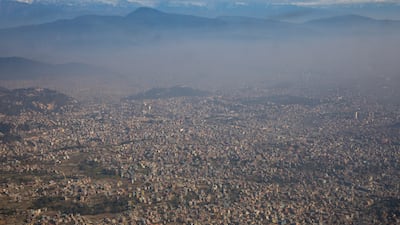
  • 1 Nepal. Annual mean concentrations should not exceed 10 micrograms per cubic metre and Nepal had 99.73 micrograms. EPA
    1 Nepal. Annual mean concentrations should not exceed 10 micrograms per cubic metre and Nepal had 99.73 micrograms. EPA
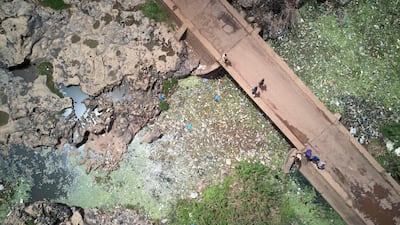
  • 2 Niger — 94.05 micrograms per cubic metre. AFP
    2 Niger — 94.05 micrograms per cubic metre. AFP
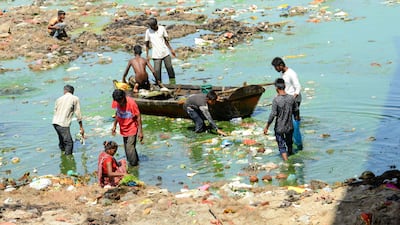
  • 3 India — 90.87 micrograms per cubic metre. AFP
    3 India — 90.87 micrograms per cubic metre. AFP
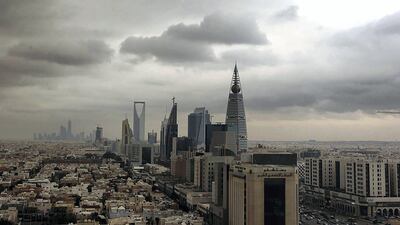
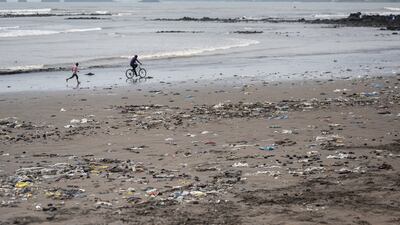
  • 4 Saudi Arabia — 87.95 micrograms per cubic metre. Reuters
    4 Saudi Arabia — 87.95 micrograms per cubic metre. Reuters
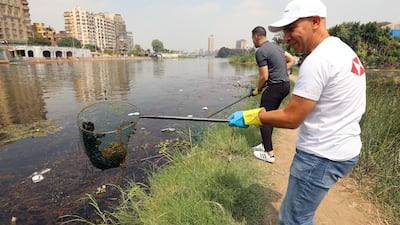
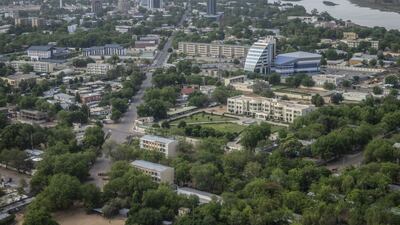
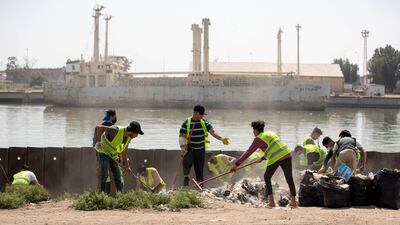
  • 5 Egypt — 87.00 micrograms per cubic metre. EPA
    5 Egypt — 87.00 micrograms per cubic metre. EPA
  • 6 Cameroon — 72.79 micrograms per cubic metre. AFP
    6 Cameroon — 72.79 micrograms per cubic metre. AFP
  • 7 Nigeria — 71.80 micrograms per cubic metre. AFP
    7 Nigeria — 71.80 micrograms per cubic metre. AFP
  • 8 Bahrain — 70.82 micrograms per cubic metre. Getty
    8 Bahrain — 70.82 micrograms per cubic metre. Getty
  • 9 Chad — 66.03 micrograms per cubic metre. Bloomberg
    9 Chad — 66.03 micrograms per cubic metre. Bloomberg
  • 10 Iraq — 61.64 micrograms per cubic metre. AFP
    10 Iraq — 61.64 micrograms per cubic metre. AFP

"Now we've found most are human induced. The potential for improving health related to air pollution is enormous."

The new study used data including measurements taken at sea across the Middle East over a two-month period in 2017.

By looking at the composition of particles and carrying out complex modelling, the scientists worked out what were the human and natural contributions to pollution of a given particle size.

Air pollution poses risk to health

A key finding was that anthropogenic or human sources were responsible, Prof Lelieveld said, for "more than 90 per cent" of exposure to PM2.5s, which are particles up to 2.5 microns in diameter.

PM2.5s are a significant health hazard because their small size means they can penetrate deep into the lungs and sometimes enter the bloodstream.

As well as causing short-term health effects, such as irritation to the eyes, nose, throat and lungs, and shortness of breath, they increase a person’s risk of developing serious conditions such as heart disease or lung cancer.

In some areas, such as deserts far away from towns and cities, naturally occurring dust may be responsible for a larger proportion of PM2.5s. But in urban settings, where people are concentrated, human activity, including vehicle use, plays the dominant role.

Naturally occurring dust tends to cause a greater amount of PM10 pollution, which consists of particles up to 10 microns in size.

Their larger size means these particles are more often trapped in the airways and therefore less likely to cause the most harmful health effects of pollution.

"They irritate the airways, they exacerbate asthma, [but] for the long-term health, the small particles are more relevant ― that's PM2.5," Prof Lelieveld said.

While some human-made pollution came from outside the region, including south-east Europe, he said most resulted from the burning of fossil fuels in the Middle East.

Almost all the region’s harmful gas pollution, including nitrogen dioxide and sulphur dioxide, is of human origin, Prof Lelieveld said.

According to figures published by the World Bank earlier this year, air pollution in the Mena region kills about 270,000 people a year.

Typical PM2.5 levels in the region are more than 10 times those recommended by the World Health Organisation.

Other researchers involved in the study came from King Abdullah University of Science and Technology and King Saud University, both in Saudi Arabia.

The Global Burden of Disease Survey 2017, created by the Institute for Health Metrics and Evaluation at the University of Washington, reported that the mean annual exposure to PM2.5s in the Arab world was 59 micrograms per cubic metre.

This compares with the world average of 46mcg per cubic metre.

The survey recorded a figure of 41mcg per cubic metre for the UAE.

A project that looked at anthropogenic sources of pollution in the country, the UAE Air Emissions Inventory Project, found that industry caused about two thirds of PM2.5s, while road vehicles caused about one fifth. In terms of harmful gases, traffic was the main source.

Clean energy investment

The UAE’s investments in clean energy, which avoids the particulate matter and greenhouse gases associated with fossil fuel power generation, have topped $40 billion.

There has been huge expansion in solar power capacity and the building of the four-reactor Barakah Nuclear Power Plant.

As reported in The National, earlier this month the authorities launched the UAE National Air Quality Agenda 2031 with the aim of reducing pollution levels.

Unveiled by the Ministry of Climate Change and Environment and including public and private sector organisations, the new strategy is aimed at providing cleaner air for all.

World's least polluted countries - in pictures

  • 1 Finland. Annual mean concentrations should not exceed 10 micrograms per cubic metre and Finland had 5.86 micrograms. Getty
    1 Finland. Annual mean concentrations should not exceed 10 micrograms per cubic metre and Finland had 5.86 micrograms. Getty
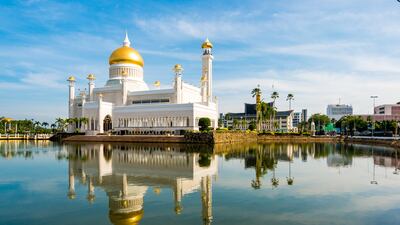
  • 2 Brunei — 5.90 micrograms per cubic metre. Getty
    2 Brunei — 5.90 micrograms per cubic metre. Getty
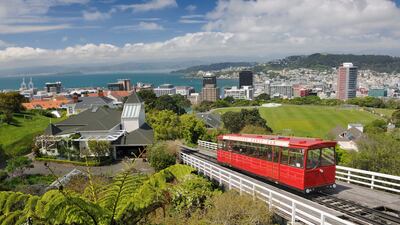
  • 3 New Zealand — 5.96 micrograms per cubic metre. Getty
    3 New Zealand — 5.96 micrograms per cubic metre. Getty
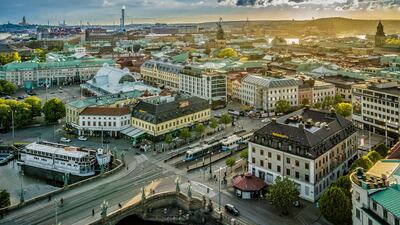
  • 4 Sweden — 6.18 micrograms per cubic metre. Getty
    4 Sweden — 6.18 micrograms per cubic metre. Getty
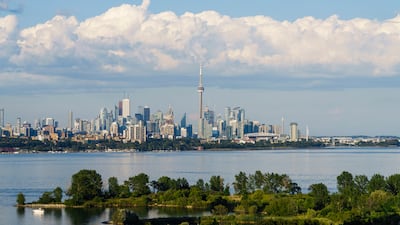
  • 5 Canada — 6.43 micrograms per cubic metre. Getty
    5 Canada — 6.43 micrograms per cubic metre. Getty
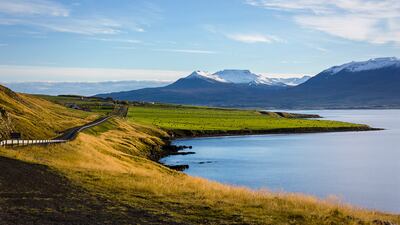
  • 6 Iceland — 6.48 micrograms per cubic metre. Photo: Visit Iceland
    6 Iceland — 6.48 micrograms per cubic metre. Photo: Visit Iceland
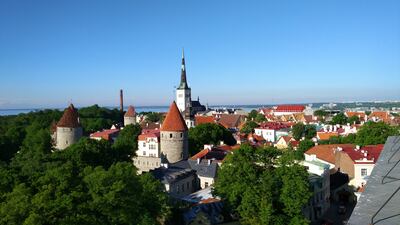
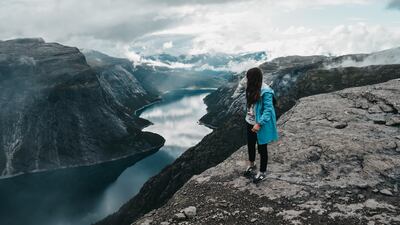
  • 7 Estonia — 6.73 micrograms per cubic metre. Photo: Pixabay
    7 Estonia — 6.73 micrograms per cubic metre. Photo: Pixabay
  • 8 Norway — 6.96 micrograms per cubic metre. Photo: Visit Norway
    8 Norway — 6.96 micrograms per cubic metre. Photo: Visit Norway
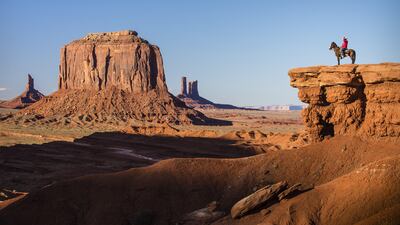
  • 9 USA — 7.41 micrograms per cubic metre. Getty
    9 USA — 7.41 micrograms per cubic metre. Getty
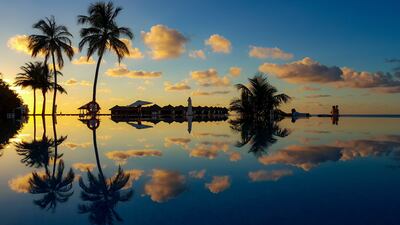
  • 10 Maldives — 7.80 micrograms per cubic metre. Photo: Unsplash
    10 Maldives — 7.80 micrograms per cubic metre. Photo: Unsplash
Lexus LX700h specs

Engine: 3.4-litre twin-turbo V6 plus supplementary electric motor

Power: 464hp at 5,200rpm

Torque: 790Nm from 2,000-3,600rpm

Transmission: 10-speed auto

Fuel consumption: 11.7L/100km

On sale: Now

Price: From Dh590,000

The specs
  • Engine: 3.9-litre twin-turbo V8
  • Power: 640hp
  • Torque: 760nm
  • On sale: 2026
  • Price: Not announced yet
The specs

Engine: 4.0-litre V8 twin-turbocharged and three electric motors

Power: Combined output 920hp

Torque: 730Nm at 4,000-7,000rpm

Transmission: 8-speed dual-clutch automatic

Fuel consumption: 11.2L/100km

On sale: Now, deliveries expected later in 2025

Price: expected to start at Dh1,432,000

Avatar: Fire and Ash

Director: James Cameron

Starring: Sam Worthington, Sigourney Weaver, Zoe Saldana

Rating: 4.5/5

PSL FINAL

Multan Sultans v Peshawar Zalmi
8pm, Thursday
Zayed Cricket Stadium, Abu Dhabi

Rainbow

Kesha

(Kemosabe)

Tentative schedule of 2017/18 Ashes series

1st Test November 23-27, The Gabba, Brisbane

2nd Test December 2-6, Adelaide Oval, Adelaide

3rd Test Dcember 14-18, Waca, Perth

4th Test December 26-30, Melbourne Cricket Ground, Melbourne

5th Test January 4-8, Sydney Cricket Ground, Sydney

How will Gen Alpha invest?

Mark Chahwan, co-founder and chief executive of robo-advisory firm Sarwa, forecasts that Generation Alpha (born between 2010 and 2024) will start investing in their teenage years and therefore benefit from compound interest.

“Technology and education should be the main drivers to make this happen, whether it’s investing in a few clicks or their schools/parents stepping up their personal finance education skills,” he adds.

Mr Chahwan says younger generations have a higher capacity to take on risk, but for some their appetite can be more cautious because they are investing for the first time. “Schools still do not teach personal finance and stock market investing, so a lot of the learning journey can feel daunting and intimidating,” he says.

He advises millennials to not always start with an aggressive portfolio even if they can afford to take risks. “We always advise to work your way up to your risk capacity, that way you experience volatility and get used to it. Given the higher risk capacity for the younger generations, stocks are a favourite,” says Mr Chahwan.

Highlighting the role technology has played in encouraging millennials and Gen Z to invest, he says: “They were often excluded, but with lower account minimums ... a customer with $1,000 [Dh3,672] in their account has their money working for them just as hard as the portfolio of a high get-worth individual.”

Monday's results
  • UAE beat Bahrain by 51 runs
  • Qatar beat Maldives by 44 runs
  • Saudi Arabia beat Kuwait by seven wickets
Women%E2%80%99s%20T20%20World%20Cup%20Qualifier
%3Cp%3E%3Cstrong%3EUAE%20results%3C%2Fstrong%3E%0D%3Cbr%3EIreland%20beat%20UAE%20by%20six%20wickets%0D%3Cbr%3EZimbabwe%20beat%20UAE%20by%20eight%20wickets%0D%3Cbr%3EUAE%20beat%20Netherlands%20by%2010%20wickets%0D%3C%2Fp%3E%0A%3Cp%3E%3Cstrong%3EFixtures%3C%2Fstrong%3E%0D%3Cbr%3EUAE%20v%20Vanuatu%2C%20Thursday%2C%203pm%2C%20Zayed%20Cricket%20Stadium%0D%3Cbr%3EIreland%20v%20Netherlands%2C%207.30pm%2C%20Zayed%20Cricket%20Stadium%0D%3C%2Fp%3E%0A%3Cp%3E%3Cstrong%3EGroup%20B%20table%3C%2Fstrong%3E%0D%3Cbr%3E1)%20Ireland%203%203%200%206%20%2B2.407%0D%3Cbr%3E2.%20Netherlands%203%202%201%204%20%2B1.117%0D%3Cbr%3E3)%20UAE%203%201%202%202%200.000%0D%3Cbr%3E4)%20Zimbabwe%204%201%203%202%20-0.844%0D%3Cbr%3E5)%20Vanuatu%203%201%202%202%20-2.180%3C%2Fp%3E%0A

((Disclaimer))

The Liechtensteinische Landesbank AG (“Bank”) assumes no liability or guarantee for the accuracy, balance, or completeness of the information in this publication. The content may change at any time due to given circumstances, and the Liechtensteinische Landesbank AG is under no obligation to update information once it has been published. This publication is intended for information purposes only and does not constitute an offer, a recommendation or an invitation by, or on behalf of, Liechtensteinische Landesbank (DIFC Branch), Liechtensteinische Landesbank AG, or any of its group affiliates to make any investments or obtain services. This publication has not been reviewed, disapproved or approved by the United Arab Emirates (“UAE”) Central Bank, Dubai Financial Services Authority (“DFSA”) or any other relevant licensing authorities in the UAE. It may not be relied upon by or distributed to retail clients. Liechtensteinische Landesbank (DIFC Branch) is regulated by the DFSA and this advertorial is intended for Professional Clients (as defined by the DFSA) who have sufficient financial experience and understanding of financial markets, products or transactions and any associated risks.

Defence review at a glance

• Increase defence spending to 2.5% of GDP by 2027 but given “turbulent times it may be necessary to go faster”

• Prioritise a shift towards working with AI and autonomous systems

• Invest in the resilience of military space systems.

• Number of active reserves should be increased by 20%

• More F-35 fighter jets required in the next decade

• New “hybrid Navy” with AUKUS submarines and autonomous vessels

T20 WORLD CUP QUALIFIER

Results

UAE beat Nigeria by five wickets

Hong Kong beat Canada by 32 runs

Friday fixtures

10am, Tolerance Oval, Abu Dhabi – Ireland v Jersey

7.30pm, Zayed Cricket Stadium, Abu Dhabi – Canada v Oman

Updated: October 12, 2022, 11:19 AM