

Children must be 3 years old to start school across the UAE, according to new guidelines issued by the Ministry of Education.
The move standardises age requirements across the country, which previously varied depending on the emirate.
The rule was already in place in Abu Dhabi while private schools in Dubai could offer some flexibility, allowing children who turned 3 before the end of the calendar year to join FS1 (British system) or pre-KG at the start of that academic year in the autumn.
For example, a child turning 3 on November 27 could previously join FS1 in August 29. Now they must be 3 on or before August 31.
Studies have shown that delaying the start of formal teaching is beneficial for children’s development.
Parents in Dubai welcomed the move.
Emma Lawrence, a mother of three children aged 5, 4 and 2 said: “I think it’s infinitely better they have realigned the start date for FS1 to match that of the UK.
“It means the reception start date is aligned, so children start FS2 in the year they turn 5, rather than having what must have been difficult for teachers, which is the British schools tended to take pupils from September 1 onwards, so they would have as much as a 16-month disparity between the eldest and the youngest in the class.”
The change will be applicable from the start of the 2021/22 academic year in September, said the Knowledge and Human Development Authority, Dubai's private school regulator.
“For schools that start in April, this change will be applicable from the start of the 2022/23 academic year in April 2022.”
Children can join FS1 or Pre-KG at schools in April as long as they are 3 years old on or before March 31 of that year, it said.
The change will affect children aged up to 6, who would be enrolling in school for the first time.
Pupils must have turned 4 by August 31 to start school on August 29 in Foundation Stage 2 or KG1; 5 to join Year 1 or KG2; and 6 to start Grade 1 or Year 2.
“The Ministry resolution stipulates that all students currently enrolled at private schools in the UAE are not affected by the change,” said the Dubai authority.
“This includes students who enrol for the final term of the 2020/21 academic year,” it said.
Applications by children who were enrolled to start in FS1 this year but withdrew and waived to 2022 will be affected, KHDA said.
A child who turns 3 this September and was due to start FS1 this year will have to enrol in FS1 in the next academic year.
“[A child] must have formally finished the previous academic year in order to enrol in the next one,” the authority said.
Anyone who has already paid for the deposits of children who will be affected by the new cut-off date will receive a refund.
There will be no exceptions to the cut-off dates “under any circumstances”.
According to research in New Zealand, cited by the University of Cambridge, earlier introduction of formal learning may even be damaging.
The study compared two groups of children, who started formal literacy lessons at age five and seven. By the age of 11, there was no difference between reading ability level between the two. However, children who started at five developed “less positive attitudes” to reading, and “showed poorer text comprehension” than the children who started later.
Nurseries are sanitised amid the Covid-19 outbreak:
-

British Orchard Nursery staff sterilise toys regularly. All photo by Reem Mohammed/The National -
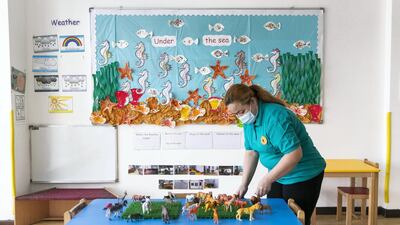
British Orchard Nursery staff arrange sanitised toys on the table -
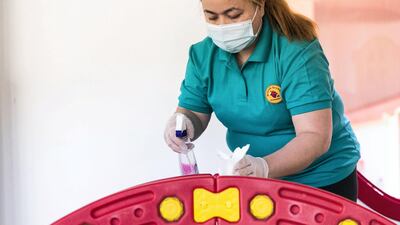
Safety is paramount for British Orchard Nursery as the group prepares to reopen its 23 centres in the emirate -
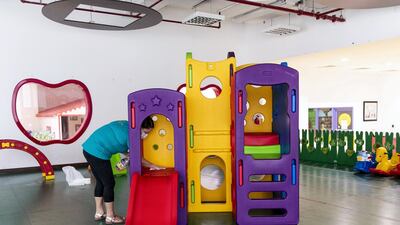
Extensive preparations have been made ahead of a planned reopening -
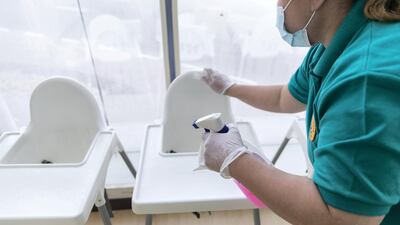
Nurseries will operate at 50 per cent capacity if given the green-light to resume operations -
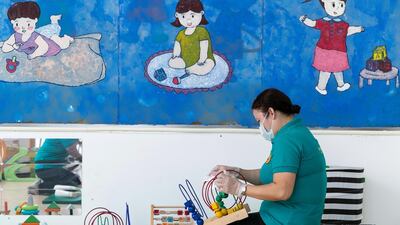
British Orchard Nursery was one of the many places of learning to close in March to restrict the spread of Covid-19 -
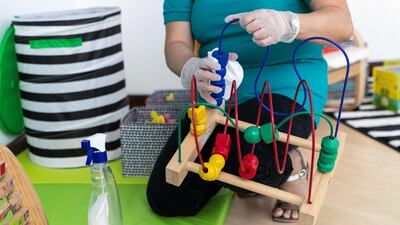
British Orchard Nursery is awaiting government approval to reopen its doors -
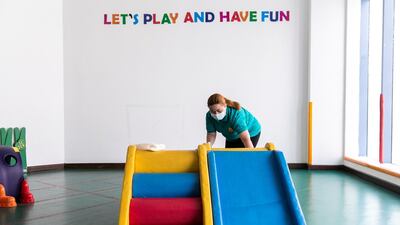
British Orchard Nursery staff are looking forward to welcoming back children for the first time in seven months -
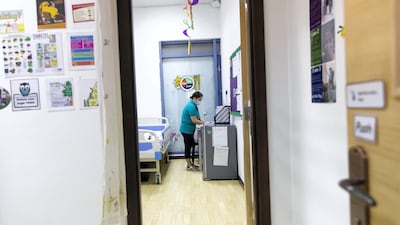
The clinic at British Orchard Nursery in Dubai Silicon Oasis -
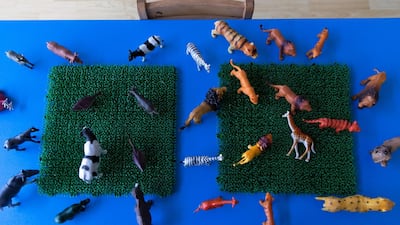
British Orchard Nursery in Dubai Silicon Oasis -
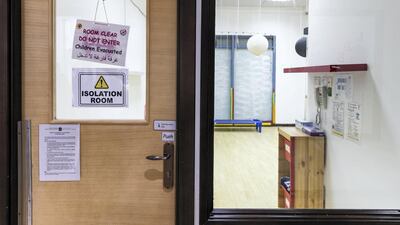
An isolation room at the British Orchard Nursery in Dubai Silicon Oasis -
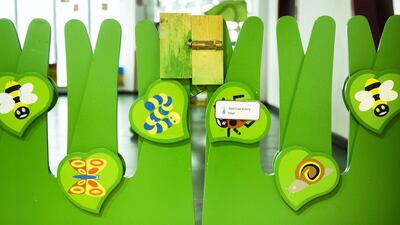
“Sanitise Every Hour” signs are placed around British Orchard Nursery in Dubai Silicon Oasis -
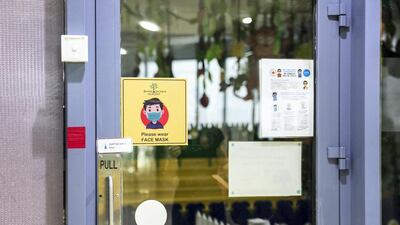
A “Please wear a face mask” sign at the entrance of British Orchard Nursery in Dubai Silicon Oasis



