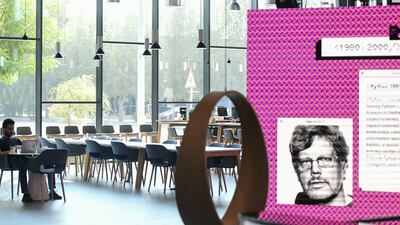
Students at 42 Abu Dhabi coding school in Al Mina. Khushnum Bhandari / The National

Abu Dhabi’s free coding school has 800 places available


Anam Rizvi
  • English
  • Arabic

42 Abu Dhabi, the city's tuition-free coding school, has 800 places available for its next session this year.

Students can join its 25-day coding boot camp — Piscine — the first of which will be held on February 20.

Marcos Muller Habig, acting chief executive of the school, said candidates can expect to "enhance their critical thinking and 21st century skills".

"Hosting the Piscine will grant all candidates the opportunity to unleash the passion within and shape the world that they live in, through technology."

Students who complete the Piscine can study at the school for a period of three to five years.

They learn all aspects of coding in a flexible curriculum at their own pace.

Graduates who complete mastery and final internship levels are highly sought-after.

Between October 2020 and 2022, the school received 31,000 applications for its sought-after places.

With no classrooms or teachers, students can attend the forward-thinking school free of charge.

Students sharpen their programming skills through internships, projects, games and peer-to-peer learning.

The centre has attracted applicants from diverse backgrounds, including oil and gas engineers, university professors, schoolteachers, flight attendants and even a DJ.

How difficult is it to get a place?

Applying to 42 Abu Dhabi is a three-step process. Interested candidates can register on the school's website and take a pre-selection test to evaluate their skills through logic and memory games.

Successful candidates are invited to attend a check-in, which is an hour-long virtual session that provides details about the test, curriculum and student life.

Following this, candidates are invited to join the Piscine, a comprehensive 25-day programme, designed to test aptitude in computer programming, motivation, endurance, and commitment.

To pass the Piscine and enrol in 42 Abu Dhabi’s programme, candidates need to commit time over 25 days to fully grasp the 42-Abu Dhabi learning technique. Once the candidates successfully pass the Piscine, they will be able to join 42 Abu Dhabi’s coding programme.

Who can apply?

42 Abu Dhabi is open to anyone aged 18 and above who has a high school certificate.

Candidates do not require previous coding experience or academic qualifications.

People looking for work across all industries with an interest in upskilling or re-skilling are encouraged to apply irrespective of coding experience.

There is no upper age limit, and a high school certificate and a minimum age of 18 years old are the only requirements.

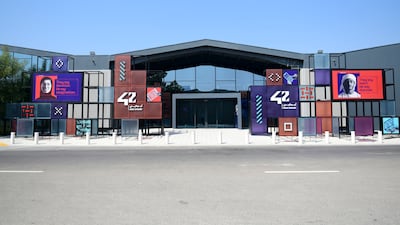
  • Coding school 42 Abu Dhabi is located in Mina Zayed. All photos: Khushnum Bhandari / The National
    Coding school 42 Abu Dhabi is located in Mina Zayed. All photos: Khushnum Bhandari / The National
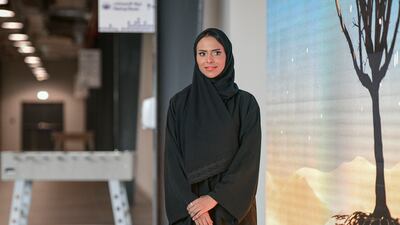
  • Hamda Alwahedi, a student at 42 Abu Dhabi, has been selected as a coding ambassador to help champion the UAE's digital drive.
    Hamda Alwahedi, a student at 42 Abu Dhabi, has been selected as a coding ambassador to help champion the UAE's digital drive.
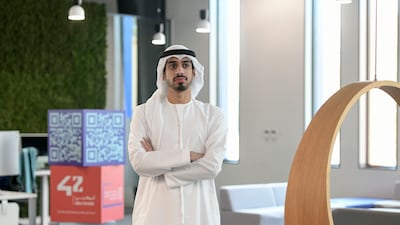
  • Hamed Al Hashmi, another student from the centre, has been selected as a coding ambassador.
    Hamed Al Hashmi, another student from the centre, has been selected as a coding ambassador.
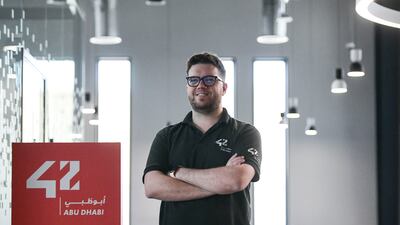
  • Marcos Muller Habig, chief executive of 42 Abu Dhabi, says he hopes the centre can attract talent from all over the world.
    Marcos Muller Habig, chief executive of 42 Abu Dhabi, says he hopes the centre can attract talent from all over the world.
  • The institute has received more than 31,000 applications since it opened its doors in October 2020.
    The institute has received more than 31,000 applications since it opened its doors in October 2020.
  • Students sharpen their programming skills through internships, projects, games and peer-to-peer learning.
    Students sharpen their programming skills through internships, projects, games and peer-to-peer learning.
  • The centre has attracted applicants from diverse backgrounds, including oil and gas engineers, university professors, schoolteachers, flight attendants and even a DJ.
    The centre has attracted applicants from diverse backgrounds, including oil and gas engineers, university professors, schoolteachers, flight attendants and even a DJ.
  • The cafeteria at 42 Abu Dhabi.
    The cafeteria at 42 Abu Dhabi.

Avatar: Fire and Ash

Director: James Cameron

Starring: Sam Worthington, Sigourney Weaver, Zoe Saldana

Rating: 4.5/5

Key figures in the life of the fort

Sheikh Dhiyab bin Isa (ruled 1761-1793) Built Qasr Al Hosn as a watchtower to guard over the only freshwater well on Abu Dhabi island.

Sheikh Shakhbut bin Dhiyab (ruled 1793-1816) Expanded the tower into a small fort and transferred his ruling place of residence from Liwa Oasis to the fort on the island.

Sheikh Tahnoon bin Shakhbut (ruled 1818-1833) Expanded Qasr Al Hosn further as Abu Dhabi grew from a small village of palm huts to a town of more than 5,000 inhabitants.

Sheikh Khalifa bin Shakhbut (ruled 1833-1845) Repaired and fortified the fort.

Sheikh Saeed bin Tahnoon (ruled 1845-1855) Turned Qasr Al Hosn into a strong two-storied structure.

Sheikh Zayed bin Khalifa (ruled 1855-1909) Expanded Qasr Al Hosn further to reflect the emirate's increasing prominence.

Sheikh Shakhbut bin Sultan (ruled 1928-1966) Renovated and enlarged Qasr Al Hosn, adding a decorative arch and two new villas.

Sheikh Zayed bin Sultan (ruled 1966-2004) Moved the royal residence to Al Manhal palace and kept his diwan at Qasr Al Hosn.

Sources: Jayanti Maitra, www.adach.ae

Mercer, the investment consulting arm of US services company Marsh & McLennan, expects its wealth division to at least double its assets under management (AUM) in the Middle East as wealth in the region continues to grow despite economic headwinds, a company official said.

Mercer Wealth, which globally has $160 billion in AUM, plans to boost its AUM in the region to $2-$3bn in the next 2-3 years from the present $1bn, said Yasir AbuShaban, a Dubai-based principal with Mercer Wealth.

Within the next two to three years, we are looking at reaching $2 to $3 billion as a conservative estimate and we do see an opportunity to do so,” said Mr AbuShaban.

Mercer does not directly make investments, but allocates clients’ money they have discretion to, to professional asset managers. They also provide advice to clients.

“We have buying power. We can negotiate on their (client’s) behalf with asset managers to provide them lower fees than they otherwise would have to get on their own,” he added.

Mercer Wealth’s clients include sovereign wealth funds, family offices, and insurance companies among others.

From its office in Dubai, Mercer also looks after Africa, India and Turkey, where they also see opportunity for growth.

Wealth creation in Middle East and Africa (MEA) grew 8.5 per cent to $8.1 trillion last year from $7.5tn in 2015, higher than last year’s global average of 6 per cent and the second-highest growth in a region after Asia-Pacific which grew 9.9 per cent, according to consultancy Boston Consulting Group (BCG). In the region, where wealth grew just 1.9 per cent in 2015 compared with 2014, a pickup in oil prices has helped in wealth generation.

BCG is forecasting MEA wealth will rise to $12tn by 2021, growing at an annual average of 8 per cent.

Drivers of wealth generation in the region will be split evenly between new wealth creation and growth of performance of existing assets, according to BCG.

Another general trend in the region is clients’ looking for a comprehensive approach to investing, according to Mr AbuShaban.

“Institutional investors or some of the families are seeing a slowdown in the available capital they have to invest and in that sense they are looking at optimizing the way they manage their portfolios and making sure they are not investing haphazardly and different parts of their investment are working together,” said Mr AbuShaban.

Some clients also have a higher appetite for risk, given the low interest-rate environment that does not provide enough yield for some institutional investors. These clients are keen to invest in illiquid assets, such as private equity and infrastructure.

“What we have seen is a desire for higher returns in what has been a low-return environment specifically in various fixed income or bonds,” he said.

“In this environment, we have seen a de facto increase in the risk that clients are taking in things like illiquid investments, private equity investments, infrastructure and private debt, those kind of investments were higher illiquidity results in incrementally higher returns.”

The Abu Dhabi Investment Authority, one of the largest sovereign wealth funds, said in its 2016 report that has gradually increased its exposure in direct private equity and private credit transactions, mainly in Asian markets and especially in China and India. The authority’s private equity department focused on structured equities owing to “their defensive characteristics.”

Classification of skills

A worker is categorised as skilled by the MOHRE based on nine levels given in the International Standard Classification of Occupations (ISCO) issued by the International Labour Organisation. 

A skilled worker would be someone at a professional level (levels 1 – 5) which includes managers, professionals, technicians and associate professionals, clerical support workers, and service and sales workers.

The worker must also have an attested educational certificate higher than secondary or an equivalent certification, and earn a monthly salary of at least Dh4,000. 

White hydrogen: Naturally occurring hydrogenChromite: Hard, metallic mineral containing iron oxide and chromium oxideUltramafic rocks: Dark-coloured rocks rich in magnesium or iron with very low silica contentOphiolite: A section of the earth’s crust, which is oceanic in nature that has since been uplifted and exposed on landOlivine: A commonly occurring magnesium iron silicate mineral that derives its name for its olive-green yellow-green colour

Updated: January 27, 2023, 3:00 AM