


A new report has warned the livelihoods of more than half a billion people in the Middle East and North Africa are under threat from climate change.
It outlines how temperatures in the region are rising at twice the global average and could affect 575 million people, 70 per cent of whom are in low-income countries.
Published by the World Economic Forum (WEF) on Wednesday, the report said the region was at a “decisive moment” in the fight against climate change, with shocks such as irregular rainfall, water scarcity, desertification, reduced levels of groundwater and prolonged droughts potentially triggering a knock-on effect on everything from agriculture to how people live to increasing migration.
The report, Closing the climate action gap: accelerating decarbonisation and the energy transition in Mena, comes only weeks before Cop28 gets under way in Dubai.
Leaders will meet in the UAE from November 30 to December 12 to tackle the escalating climate emergency and assess where the world stands in meeting the goals of the Paris agreement. Under the 2015 deal, countries agreed to “pursue efforts” to limit the rise in global temperatures to 1.5°C on pre-industrial levels.
But the world remains off track and could instead be headed for around 2.5°C of warming, the UN has said. The report notes how warming is more pronounced in the Middle East and forecasts a 4°C rise. Scenarios can differ depending on various factors such as future emissions and policy changes.
Call for urgent action
“The urgency of the situation demands immediate and nuanced action, including reducing emissions, building resilience against climate change, including water scarcity, and mobilising a cohesive effort among governmental bodies, businesses and international organisations,” the report notes.
The study underlines how countries in Mena trail behind comparable regions in terms of sustainability goals. It states that while governments pledged in the past 24 months to bring 60 per cent of Mena’s emissions under the net-zero ambition, businesses overall have yet to follow suit and bridge the gap with comparable global markets.

The report, released on the sidelines of the WEF’s Global Future Councils event in Dubai, also offers much hope for the future, however, outlining how by scaling up solar and wind energy, the region could become a “global leader” in areas such as renewables and clean hydrogen.
‘’The Mena region has been one of the fastest growing over the past decade and there is a pathway for the region to position itself at the forefront of sustainability efforts while maintaining its upward economic trajectory,” said Borge Brende, president of the WEF.
“As global markets continue to shift and energy demands rise, the region requires bold and co-ordinated action from policymakers and businesses to lead a just energy transition and meet both climate and development-related goals,” he said.
The report was developed in collaboration with consulting firm Bain and Company, with contributions from more than 40 policymakers, climate actors, business leaders, banks and industry experts from the private and public sectors who form the forum’s “leaders for sustainable Mena”. It also notes the significant impact of climate change on the economy.
Estimates from organisations such as the World Bank and Swiss Re predict that climate change could slash gross domestic product in Mena by between 4 per cent and 21 per cent by 2050 due to a lack of climate action.
And it cautions the region is not a “monolith”, with “major differences” existing between the GCC and other parts of the region.
It advises that Gulf nations should focus on “technology-based solutions that reduce emissions in challenging sectors, optimise consumption, transition to renewables and implement carbon capture at scale”.
“Meanwhile, non-Gulf countries should prioritise affordable energy, particularly in low-income areas, by increasing renewable energy usage, phasing out regressive fossil-fuel subsidies and supporting carbon-credit projects.”
The report also suggests upskilling in green jobs will be crucial across Mena and greater collaboration on climate could strengthen “diversification, exports and employment” across the entire region.
Egypt replants mangroves to fight climate change - in pictures
-
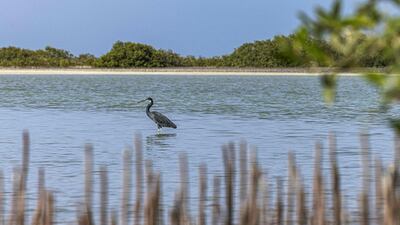
On Egypt's Red Sea coast, fish swim and herons wade among thousands of newly planted mangroves. All photos: AFP -

Birds fly above the mangrove forest, planted as part of a programme to boost biodiversity and fight climate change. -
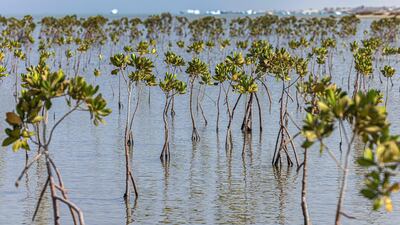
During decades of destruction, the mangroves in the Hamata area were cleared. -

All that remained of the mangroves, where crabs make their homes, were fragmented patches covering about 500 hectares. -
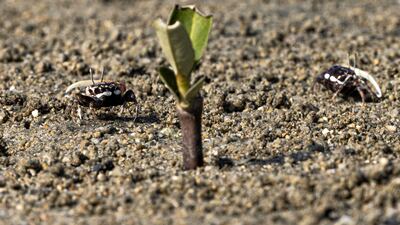
Crabs scuttle from one plant to another. -
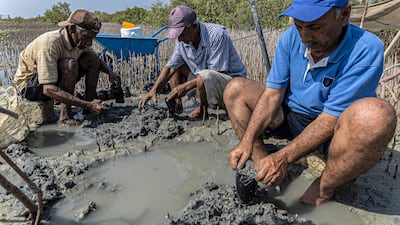
Workers replant trees as part of the state-sponsored mangrove reforestation project. -
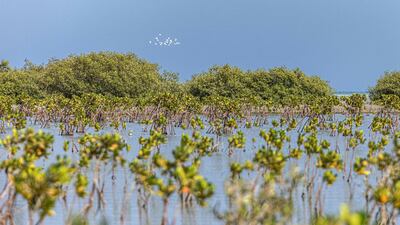
Not a cloud in the sky - only a flock of white birds. -
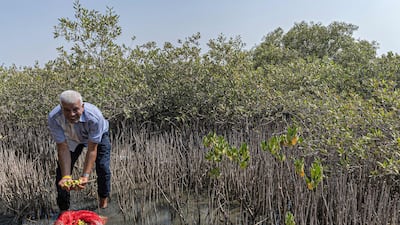
Project leader Sayed Khalifa, the head of Egypt's Syndicate of Agriculture, inspects the fruits of his labour. -
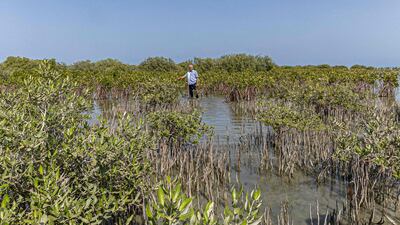
A walk on the wild side for Mr Khalifa. -

Mangrove seedlings grow in a nursery at the site south of Marsa Alam. -

Protecting coastlines is another of the project's aims.



