Inside Aljada - the megaproject that is going to wow Sharjah


John Dennehy
  • English
  • Arabic

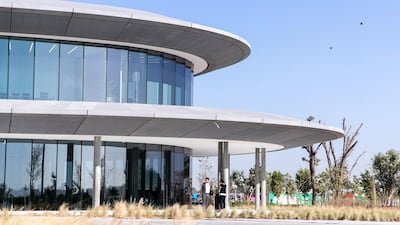
Four hotels, three schools, a business district, a mall, tree-lined avenues and an entertainment complex designed by the acclaimed Zaha Hadid Architects. Welcome to the megaproject that represents a new era for Sharjah.

Aljada, a sprawling 2.2-square kilometre site close to the emirate's airport, universities and the E311 motorway, is now about 30 per cent complete with major elements such as the mall and business district still to be built.

But the development is already buzzing and not just with its own residents. Aljada, which loosely translates as “the district”, has become a destination for people from across the UAE, who come to enjoy its cafes, farmers market, outdoor cinema, restaurants, supermarkets, skateparks and bike paths. There is even a shop selling Emirati farm produce.

Aljada is a very interesting project; very complex and challenging. There is a story behind every spot of this project
Maher Metraji,
Arada

To get a sense of how transformational Aljada could be and why so many people are already spending time there, The National was invited to tour the site, given a rare look inside the major construction areas and shown renderings of the mall that have not been released before.

“In the Sharjah real estate market, we say there is a phase before Aljada and a phase after Aljada,” said Maher Metraji, senior development director at Arada, who is responsible for delivering the project. “Because we have set not only a new standard but a very high standard of how a master development should look; what should it include; how it should be designed; how it should be executed; and handed over.”

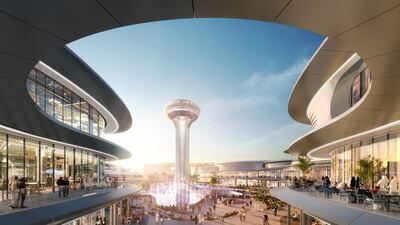
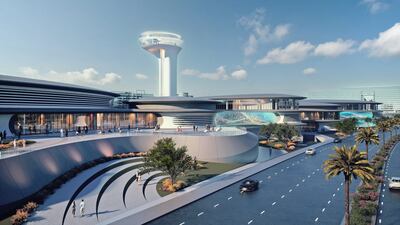
  • Renderings of the planned mall at the Aljada megaproject in Sharjah. Photo: Arada
    Renderings of the planned mall at the Aljada megaproject in Sharjah. Photo: Arada
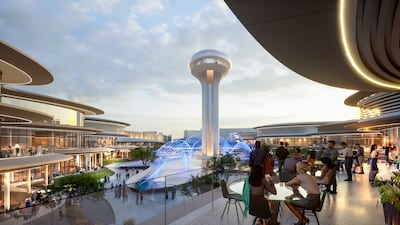
  • Arada said there will be a showpiece water feature and observation tower as part of the mall plans. Photo: Arada
    Arada said there will be a showpiece water feature and observation tower as part of the mall plans. Photo: Arada
  • There will be well-known retail outlets, cafes and restaurants at the mall. Photo: Arada
    There will be well-known retail outlets, cafes and restaurants at the mall. Photo: Arada
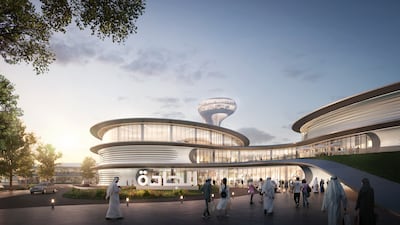
  • Construction of the mall is expected to start in 2024. Photo Arada
    Construction of the mall is expected to start in 2024. Photo Arada
  • Arada said the mall will have a 'wow' factor. Photo: Arada
    Arada said the mall will have a 'wow' factor. Photo: Arada
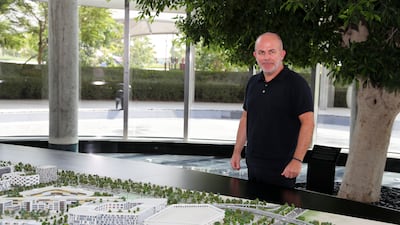
  • Maher Metraji, senior development director at Arada, is responsible for delivering the project. He said Aljada marks a new era for Sharjah developments. Pawan Singh / The National
    Maher Metraji, senior development director at Arada, is responsible for delivering the project. He said Aljada marks a new era for Sharjah developments. Pawan Singh / The National
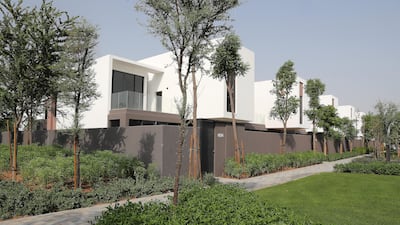
  • Villas and greenery at Aljada. Pawan Singh / The National
    Villas and greenery at Aljada. Pawan Singh / The National
  • The Manbat shop at Aljada sells Emirati produce. Pawan Singh / The National
    The Manbat shop at Aljada sells Emirati produce. Pawan Singh / The National
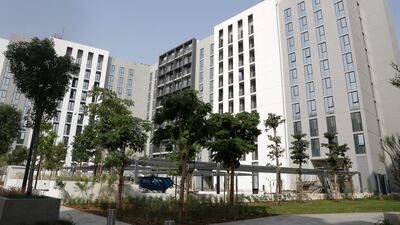
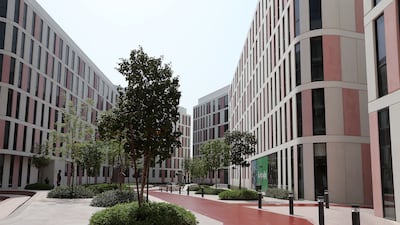
  • Residential buildings at Aljada. Pawan Singh / The National
    Residential buildings at Aljada. Pawan Singh / The National
  • Nest, the student accommodation of 12 buildings. Pawan Singh / The National
    Nest, the student accommodation of 12 buildings. Pawan Singh / The National
  • Sabis International School is the first of three schools to open. Pawan Singh / The National
    Sabis International School is the first of three schools to open. Pawan Singh / The National
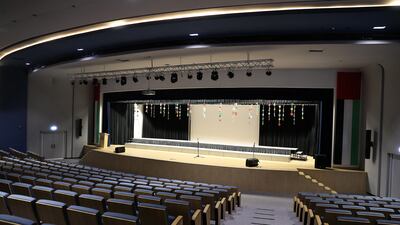
  • Inside the auditorium of the school. Pawan Singh / The National
    Inside the auditorium of the school. Pawan Singh / The National
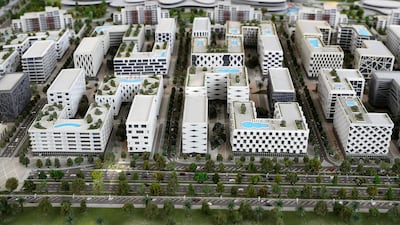
  • A model of the Aljada megaproject. The entire project is set to be complete by 2028. Pawan Singh / The National
    A model of the Aljada megaproject. The entire project is set to be complete by 2028. Pawan Singh / The National

Building a destination

Construction of what Arada describes as Sharjah’s largest-ever mixed-use project began in 2018.

In 2020, the first phase of its Madar entertainment complex opened, featuring a skatepark and food district.

Despite the challenges of the Covid-19 pandemic with its stay-at-home measures and travel bans, Aljada welcomed more than a million visitors in its first year and by the start of 2021, people were moving into the first homes.

By the end of 2023, it is expected 12,000 people will live in the self-contained city.

There is also a nursery for the trees that line its roads. The trees are indigenous where possible and old ghaf trees that were growing on the site when it was just a remote patch of sand have been preserved.

“When you drive to Aljada, you can see parks, gyms, pools, open cinemas, jogging tracks, shops, restaurants – everything you would require whether you live here or visit,” said Mr Metraji.

“That is very interesting to us – that we have built a destination and not just projects.”

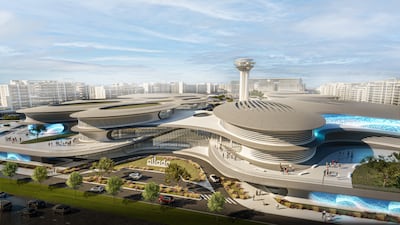
A rendering of the planned mall and observation deck and the wider Aljada megaproject in Sharjah. Arada

Aljada will also be home to what Arada say will be Sharjah’s largest gym. It is just a few months from opening and an army of workers are racing to complete the job. Located in the Madar entertainment district, the 6,038-square metre facility will have an elevated running track winding around the outside.

A trampoline park managed by Bounce will open beside it.

Construction of the mall will start next year, and while Arada are tight-lipped about what will be inside, the developer said it is going to be something special.

Renderings shown to The National reveal a series of futuristic, curved buildings surrounding an observation deck. It will also feature a “showpiece water feature”.

“We are so excited to start this as soon as we can because it is going to be another transformation … not just for Sharjah but the public of the UAE,” said Mr Metraji. “Trust me: it is going to be wow.”

Green spine

The scope of Aljada does not stop there. Four hotels will be built including a Rove, Address and Vida with construction of the Vida already under way.

The central business district, a network of about 40 buildings, has ambitions to be the new commercial centre of Sharjah. Construction is expected to start next year and is styled as the region’s first “post-pandemic business district”.

A striking feature is its “green spine” of trees along with shaded paths, green terraces and spaces for outdoor meetings.

“In Sharjah there is no [specialised] business district,” said Mr Metraji. “This is where we find it very interesting to develop such a product and introduce it to the market. And we are sure this will contribute to the business success of Arada and Sharjah.”

Arada, a venture between KBW Investments – a company controlled by Prince Khaled bin Alwaleed and Sharjah's Basma Group launched in 2017.

Arada has unveiled three master communities in Sharjah – Aljada, Masaar and Nasma Residences. It also bought land on Dubai’s The Palm Jumeirah for Dh240 million but construction has not begun.

Residents of the Misk Apartments at Aljada have views over a park containing more than 5,000 trees. Arada

For those wishing to purchase a property in Aljada, units are freehold. This is part of a wider trend in Sharjah that started in 2014 when all nationalities were allowed to buy in the emirate in certain areas on 100-year leasehold.

By 2022, Sharjah allowed freehold to all nationalities. This encouraged a more diverse mix of investors, helped development expand beyond the historic centre and also eased some of the traffic issues in central Sharjah.

Major infrastructure development undertaken by the Sharjah government, such as the Al Badee interchange works that eased a bottleneck on the E611, have also helped in this regard.

Arada said projects in Sharjah were also boosted by rising populations in both Sharjah and neighbouring Dubai. In July it reported a 186 per cent increase in sales during the first half of this year. It sold 1,616 homes worth Dh4.26 billion ($1.16bn) in the first six months. Apartments cost around Dh786,000 to buy, while rent for a two-bed starts at around Dh55,000.

“It has always been the case that whenever the Dubai market does well, it has an effect on Sharjah as well,” said an Arada representative. “We see the effects of that over the past couple of years.”

The entire Aljada site has a total sales value of Dh24 billion (a construction cost was not revealed) and will ultimately have 25,000 residential units of which most are apartments.

As of July, more than 6,000 residential units, the first school, the first phase of Madar, the student housing community of 12 buildings and the first prime retail spaces have been completed.

Arada said residential investors are primarily Emiratis, other Gulf nationals, Indians, and then Europeans, Australians, Britons, Americans and other nationalities.

It is a similar picture when it comes to renting and people commute to other emirates from Aljada.

Cars are still the only way to get to the development but it is expected that public buses will stop at Aljada in the future. The project is set to finish in 2028, when it will have 75,000 residents.

Arada says Aljada is “transformational” for Sharjah as it is the first master development that looks to the future but also tries to incorporate some of its past.

For example, some of the buildings took inspiration from the Al Khan historic neighbourhood where buildings are grouped together in a certain way to channel the wind and keep them cool.

Today, much of the development still lies ahead, But as Mr Metraji, a veteran of the megaproject game who worked on Dubai Mall, drives around the site his passion for helping to deliver what is undoubtedly a new era is clear.

“Aljada is a very interesting project; very complex and challenging,” he said. “There is a story behind every spot of this project. I'm proud.”

Madar at Aljada opens in 2020 – in pictures

  • Madar at Aljada opened it’s doors to the public on Thursday, February 27. Reem Mohammed/The National
    Madar at Aljada opened it’s doors to the public on Thursday, February 27. Reem Mohammed/The National
  • The colourful, family-friendly entertainment complex contains a number of attractions including a skatepark for adventure enthusiasts and playscape area for children. Reem Mohammed/The National
    The colourful, family-friendly entertainment complex contains a number of attractions including a skatepark for adventure enthusiasts and playscape area for children. Reem Mohammed/The National
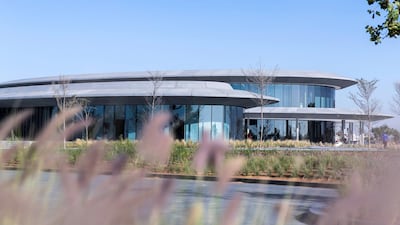
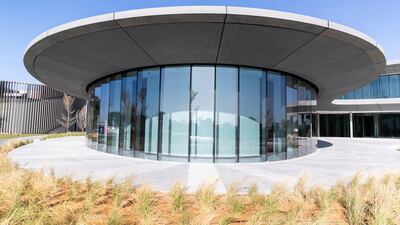
  • The entertainment complex is also home to the Aljada Discovery Centre, designed by Zaha Hadid. Reem Mohammed/The National
    The entertainment complex is also home to the Aljada Discovery Centre, designed by Zaha Hadid. Reem Mohammed/The National
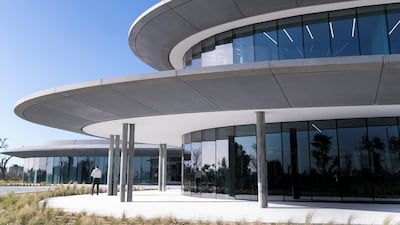
  • The elliptical building showcases the elements of the city’s master plan, and provides prospective homeowners with an opportunity to find out what living in Aljada is all about. Reem Mohammed/The National
    The elliptical building showcases the elements of the city’s master plan, and provides prospective homeowners with an opportunity to find out what living in Aljada is all about. Reem Mohammed/The National
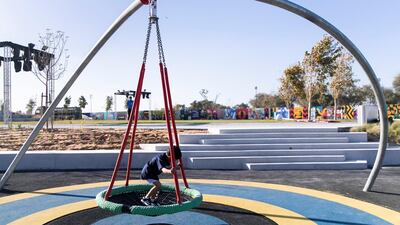
  • Madar at Aljada's Playscape is a children’s adventure zone that features tower frames, swings. trampolines and slides. Reem Mohammed/The National
    Madar at Aljada's Playscape is a children’s adventure zone that features tower frames, swings. trampolines and slides. Reem Mohammed/The National
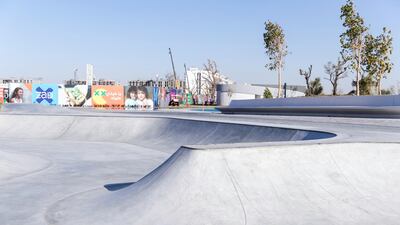
  • Located adjacent to Playscape is Madar’s skatepark. Reem Mohammed/The National
    Located adjacent to Playscape is Madar’s skatepark. Reem Mohammed/The National
  • The skatepark aims to be a new home for adventure sports enthusiasts. Reem Mohammed/The National
    The skatepark aims to be a new home for adventure sports enthusiasts. Reem Mohammed/The National
  • The complex is also home to 14 food and beverage outlets. Reem Mohammed/The National
    The complex is also home to 14 food and beverage outlets. Reem Mohammed/The National
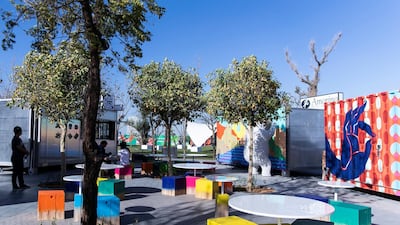
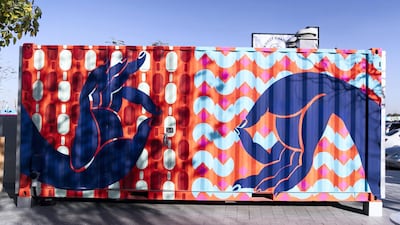
  • Food outlets housed in a redesigned shipping container at Madar. Reem Mohammed/The National
    Food outlets housed in a redesigned shipping container at Madar. Reem Mohammed/The National
  • Colourful and artistic container design at Madar. Reem Mohammed/The National
    Colourful and artistic container design at Madar. Reem Mohammed/The National
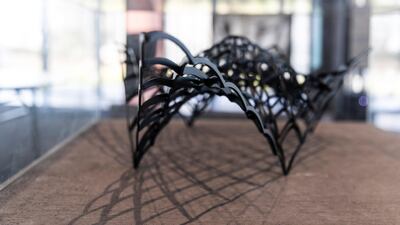
  • Designed by the students from the American University of Sharjah, the AUS Pavilion is an architectural structure designed to provide shade and a communal area for residents and visitors to Aljada. Reem Mohammed/The National
    Designed by the students from the American University of Sharjah, the AUS Pavilion is an architectural structure designed to provide shade and a communal area for residents and visitors to Aljada. Reem Mohammed/The National
  • The Aljada Discovery Centre, designed by Zaha Hadid Architects at Madar. Reem Mohammed/The National
    The Aljada Discovery Centre, designed by Zaha Hadid Architects at Madar. Reem Mohammed/The National
  • The Aljada Discovery Centre, designed by Zaha Hadid Architects at Madar. Reem Mohammed/The National
    The Aljada Discovery Centre, designed by Zaha Hadid Architects at Madar. Reem Mohammed/The National
  • The Aljada Discovery Centre, designed by Zaha Hadid Architects at Madar. Reem Mohammed/The National
    The Aljada Discovery Centre, designed by Zaha Hadid Architects at Madar. Reem Mohammed/The National


Ten tax points to be aware of in 2026

1. Domestic VAT refund amendments: request your refund within five years

If a business does not apply for the refund on time, they lose their credit.

2. E-invoicing in the UAE

Businesses should continue preparing for the implementation of e-invoicing in the UAE, with 2026 a preparation and transition period ahead of phased mandatory adoption. 

3. More tax audits

Tax authorities are increasingly using data already available across multiple filings to identify audit risks. 

4. More beneficial VAT and excise tax penalty regime

Tax disputes are expected to become more frequent and more structured, with clearer administrative objection and appeal processes. The UAE has adopted a new penalty regime for VAT and excise disputes, which now mirrors the penalty regime for corporate tax.

5. Greater emphasis on statutory audit

There is a greater need for the accuracy of financial statements. The International Financial Reporting Standards standards need to be strictly adhered to and, as a result, the quality of the audits will need to increase.

6. Further transfer pricing enforcement

Transfer pricing enforcement, which refers to the practice of establishing prices for internal transactions between related entities, is expected to broaden in scope. The UAE will shortly open the possibility to negotiate advance pricing agreements, or essentially rulings for transfer pricing purposes. 

7. Limited time periods for audits

Recent amendments also introduce a default five-year limitation period for tax audits and assessments, subject to specific statutory exceptions. While the standard audit and assessment period is five years, this may be extended to up to 15 years in cases involving fraud or tax evasion. 

8. Pillar 2 implementation 

Many multinational groups will begin to feel the practical effect of the Domestic Minimum Top-Up Tax (DMTT), the UAE's implementation of the OECD’s global minimum tax under Pillar 2. While the rules apply for financial years starting on or after January 1, 2025, it is 2026 that marks the transition to an operational phase.

9. Reduced compliance obligations for imported goods and services

Businesses that apply the reverse-charge mechanism for VAT purposes in the UAE may benefit from reduced compliance obligations. 

10. Substance and CbC reporting focus

Tax authorities are expected to continue strengthening the enforcement of economic substance and Country-by-Country (CbC) reporting frameworks. In the UAE, these regimes are increasingly being used as risk-assessment tools, providing tax authorities with a comprehensive view of multinational groups’ global footprints and enabling them to assess whether profits are aligned with real economic activity. 

Contributed by Thomas Vanhee and Hend Rashwan, Aurifer

Petrarch: Everywhere a Wanderer
Christopher Celenza,
Reaktion Books

Ferrari 12Cilindri specs

Engine: naturally aspirated 6.5-liter V12

Power: 819hp

Torque: 678Nm at 7,250rpm

Price: From Dh1,700,000

Available: Now

%3Cp%3E%3Ca%20href%3D%22https%3A%2F%2Fwww.thenationalnews.com%2Fbusiness%2Feconomy%2Fislamic-economy-consumer-spending-to-increase-45-to-3-2tn-by-2024-1.936583%22%20target%3D%22_self%22%3EGlobal%20Islamic%20economy%20to%20grow%203.1%25%20to%20touch%20%242.4%20trillion%20by%202024%3C%2Fa%3E%26nbsp%3B%3C%2Fp%3E%0A%3Cp%3E%3Ca%20href%3D%22https%3A%2F%2Fwww.thenationalnews.com%2Fbusiness%2Feconomy%2Fuk-economy-plunges-into-worst-ever-recession-after-record-20-4-contraction-1.1062560%22%20target%3D%22_self%22%3EUK%20economy%20plunges%20into%20worst-ever%20recession%20after%20record%2020.4%25%20contraction%3C%2Fa%3E%3C%2Fp%3E%0A%3Cp%3E%3Ca%20href%3D%22https%3A%2F%2Fwww.thenationalnews.com%2Fbusiness%2Feconomy%2Fislamic-economy-consumer-spending-to-increase-45-to-3-2tn-by-2024-1.936583%22%20target%3D%22_self%22%3EIslamic%20economy%20consumer%20spending%20to%20increase%2045%25%20to%20%243.2tn%20by%202024%3C%2Fa%3E%3C%2Fp%3E%0A
What drives subscription retailing?

Once the domain of newspaper home deliveries, subscription model retailing has combined with e-commerce to permeate myriad products and services.

The concept has grown tremendously around the world and is forecast to thrive further, according to UnivDatos Market Insights’ report on recent and predicted trends in the sector.

The global subscription e-commerce market was valued at $13.2 billion (Dh48.5bn) in 2018. It is forecast to touch $478.2bn in 2025, and include the entertainment, fitness, food, cosmetics, baby care and fashion sectors.

The report says subscription-based services currently constitute “a small trend within e-commerce”. The US hosts almost 70 per cent of recurring plan firms, including leaders Dollar Shave Club, Hello Fresh and Netflix. Walmart and Sephora are among longer established retailers entering the space.

UnivDatos cites younger and affluent urbanites as prime subscription targets, with women currently the largest share of end-users.

That’s expected to remain unchanged until 2025, when women will represent a $246.6bn market share, owing to increasing numbers of start-ups targeting women.

Personal care and beauty occupy the largest chunk of the worldwide subscription e-commerce market, with changing lifestyles, work schedules, customisation and convenience among the chief future drivers.

Why it pays to compare

A comparison of sending Dh20,000 from the UAE using two different routes at the same time - the first direct from a UAE bank to a bank in Germany, and the second from the same UAE bank via an online platform to Germany - found key differences in cost and speed. The transfers were both initiated on January 30.

Route 1: bank transfer

The UAE bank charged Dh152.25 for the Dh20,000 transfer. On top of that, their exchange rate margin added a difference of around Dh415, compared with the mid-market rate.

Total cost: Dh567.25 - around 2.9 per cent of the total amount

Total received: €4,670.30 

Route 2: online platform

The UAE bank’s charge for sending Dh20,000 to a UK dirham-denominated account was Dh2.10. The exchange rate margin cost was Dh60, plus a Dh12 fee.

Total cost: Dh74.10, around 0.4 per cent of the transaction

Total received: €4,756

The UAE bank transfer was far quicker – around two to three working days, while the online platform took around four to five days, but was considerably cheaper. In the online platform transfer, the funds were also exposed to currency risk during the period it took for them to arrive.

Mercer, the investment consulting arm of US services company Marsh & McLennan, expects its wealth division to at least double its assets under management (AUM) in the Middle East as wealth in the region continues to grow despite economic headwinds, a company official said.

Mercer Wealth, which globally has $160 billion in AUM, plans to boost its AUM in the region to $2-$3bn in the next 2-3 years from the present $1bn, said Yasir AbuShaban, a Dubai-based principal with Mercer Wealth.

Within the next two to three years, we are looking at reaching $2 to $3 billion as a conservative estimate and we do see an opportunity to do so,” said Mr AbuShaban.

Mercer does not directly make investments, but allocates clients’ money they have discretion to, to professional asset managers. They also provide advice to clients.

“We have buying power. We can negotiate on their (client’s) behalf with asset managers to provide them lower fees than they otherwise would have to get on their own,” he added.

Mercer Wealth’s clients include sovereign wealth funds, family offices, and insurance companies among others.

From its office in Dubai, Mercer also looks after Africa, India and Turkey, where they also see opportunity for growth.

Wealth creation in Middle East and Africa (MEA) grew 8.5 per cent to $8.1 trillion last year from $7.5tn in 2015, higher than last year’s global average of 6 per cent and the second-highest growth in a region after Asia-Pacific which grew 9.9 per cent, according to consultancy Boston Consulting Group (BCG). In the region, where wealth grew just 1.9 per cent in 2015 compared with 2014, a pickup in oil prices has helped in wealth generation.

BCG is forecasting MEA wealth will rise to $12tn by 2021, growing at an annual average of 8 per cent.

Drivers of wealth generation in the region will be split evenly between new wealth creation and growth of performance of existing assets, according to BCG.

Another general trend in the region is clients’ looking for a comprehensive approach to investing, according to Mr AbuShaban.

“Institutional investors or some of the families are seeing a slowdown in the available capital they have to invest and in that sense they are looking at optimizing the way they manage their portfolios and making sure they are not investing haphazardly and different parts of their investment are working together,” said Mr AbuShaban.

Some clients also have a higher appetite for risk, given the low interest-rate environment that does not provide enough yield for some institutional investors. These clients are keen to invest in illiquid assets, such as private equity and infrastructure.

“What we have seen is a desire for higher returns in what has been a low-return environment specifically in various fixed income or bonds,” he said.

“In this environment, we have seen a de facto increase in the risk that clients are taking in things like illiquid investments, private equity investments, infrastructure and private debt, those kind of investments were higher illiquidity results in incrementally higher returns.”

The Abu Dhabi Investment Authority, one of the largest sovereign wealth funds, said in its 2016 report that has gradually increased its exposure in direct private equity and private credit transactions, mainly in Asian markets and especially in China and India. The authority’s private equity department focused on structured equities owing to “their defensive characteristics.”

Updated: July 22, 2023, 6:35 AM