



When Emirati astronaut Sultan Al Neyadi took off on Thursday for the International Space Station, he began an adventure of the kind only a select few ever experience.
But while his time in space will no doubt be exciting, it will pose stresses and strains on body and mind beyond those faced on planet Earth.
For example, astronauts have been shown to lose muscle mass during space flight because the lack of gravity makes tasks less physically demanding.
Ohio University
“The new astronaut will expect to lose a very substantial proportion of the mass of muscles,” said Malcolm Jackson, of the University of Liverpool in the UK, who has studied cultured muscle cells sent up to the International Space Station.
“It will start within a few days. That happens despite the fact that the astronauts all have to undertake two hours [of exercise] on the space station each day.
“When they went to the Moon, it was about a two-week trip and when they came back, they had to be lifted from their capsule and were very wobbly.”
Dr Jackson’s work has shown that microgravity on the ISS causes muscle cells to undergo a process akin to accelerated ageing.
Maintain conditioning
Much like professional sportspeople, astronauts have nutritionists and exercise coaches to advise them on how to maintain conditioning.
Normal exercise equipment relies on gravity, but on the ISS, the astronauts push against what are, in effect, large springs, Dr Jackson said.
Tim Peake, the British astronaut who spent six months on the ISS, reported that the soles of his feet become “very smooth and soft” because they are hardly used, while the skin on the tops of the toes hardens because it is often employed by astronauts to hold them down or grab handrails.

Exercise equipment can be bulky, so while it can be accommodated on the ISS, there may be issues with other missions, said Nathaniel Szewczyk of Ohio University in the US, who is also an emeritus professor of space biology at the University of Nottingham in the UK.
“The challenges of proper nutrition and proper activity will become emergent problems as we talk about the Moon and Mars,” he said
On their return to Earth, Dr Szewczyk said astronauts often experienced problems with the vestibular system, which controls balance and spatial orientation. This can cause dizziness and difficulty in standing up, walking and turning corners. Blood pressure may also be affected by the lack of gravity.
“In space, it tends to not have that gravity pull; it tends to accumulate a bit in the head. When you come back to Earth, your body has to readjust how it maintains blood pressure,” Dr Szewczyk said.
Balance and blood pressure issues may only last a couple of days after returning to Earth, but hand-eye co-ordination may take longer to return to normal. Tim Peake said his muscles returned to normal over a matter of weeks.

Vision may be affected by being in space because of “quite significant fluid shifts around the eye”, Dr Jackson said.
Microgravity also causes bone mineral density to fall by between 1 per cent and 2 per cent per month, which could pose particular difficulties for longer missions, with astronauts potentially at greater risk of breakages on returning.
Many of the ways in which being in space affects the body happen because of changes to mitochondria, the tiny, energy-producing structures in the cell.
Dr Jackson described the mitochondria as almost like gravity sensors, and it could be their interactions with the cytoskeleton of cells — the network of protein tubules and filaments that give cells their structure — that causes the larger body to be affected by microgravity.
“That’s one of the things we’re trying to [analyse] in another study — the maintaining of tension. It may lead to ways of thinking about how we could prevent these changes and it may have relevance to ageing on Earth,” he said.
Four phases
Space travel does not affect only the body — there are impacts on the mind too, even though astronauts undergo a rigorous psychological assessment before selection.
Astronauts typically experience four phases during a mission, said Patrick Stacey, a senior lecturer in information management at Loughborough University in the UK, who researches mental and emotional health in space.
The arrival phase may involve difficulties sleeping, irritability and nausea, but this is succeeded by the performing phase, when astronauts begin to operate at a high level as they carry out the various experiments they are responsible for.
However, eventually, perhaps after months, the enduring phase begins, in which morale falls and astronauts may wonder when they are going to see their families again, Dr Stacey said.
“It’s well documented — the third phase is [associated with] low morale, which could affect productivity, but it’s not documented the extent to which it does,” he said.
Fortunately, mood tends to pick up in the leaving phase, when astronauts look forward to seeing their relatives again and being back on Earth.
Efforts are made to promote mental well-being during missions, with astronauts typically having a discussion with a psychologist every two or three weeks, Dr Stacey said.
“They can call their family every few weeks or so, but the family cannot call them,” he added.
In previous missions, there has been tension when astronauts have voiced complaints to one another about their life in space, so now they are strongly encouraged to write down concerns in journals instead of saying them aloud.
Sometimes astronauts have struggled on returning to Earth, among them Buzz Aldrin, who became depressed and experienced alcoholism, and Lisa Nowak, who attacked a woman her ex-boyfriend had become involved with.
Dr Stacey said stress could build up during missions and come out later in these ways, highlighting the importance of using journals to “vent”.
SpaceX Falcon 9 rocket launches into space — in pictures
-
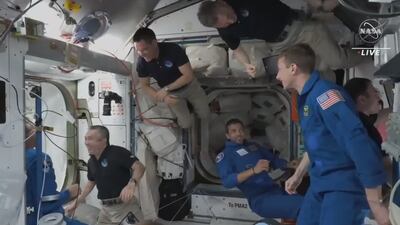
UAE astronaut Sultan Al Neyadi enters the International Space Station for the first time, on Friday. Photo: Nasa -
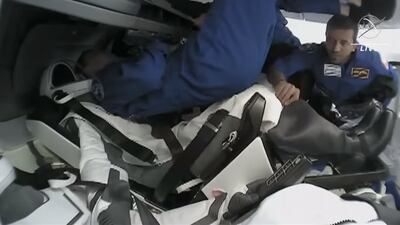
Dr Al Neyadi helps his fellow astronauts as they prepare to enter the space station. Photo: Nasa -
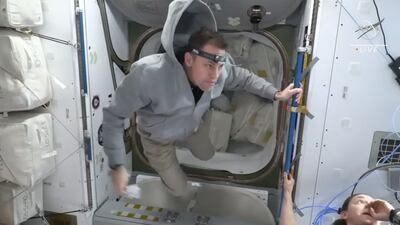
Astronauts already on board the ISS prepare to receive the SpaceX Crew-6 astronauts. Photo: Nasa -
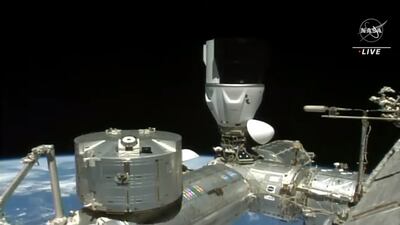
The Dragon capsule docks on the ISS. Photo: Nasa -

The capsule approaches the space station for docking. Photo: Nasa -

The capsule as seen from the ISS. Photo: Nasa -
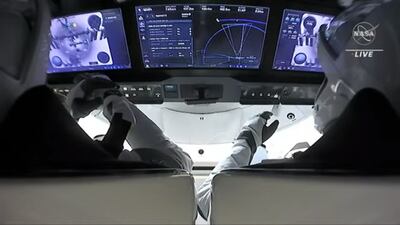
The astronauts watch the docking process on their screens inside the Dragon capsule. Photo: Nasa -
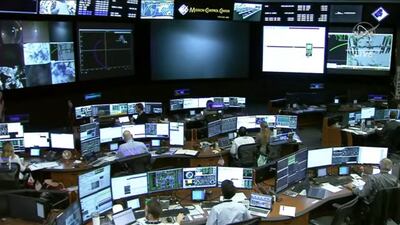
The SpaceX mission control room. Photo: Nasa -
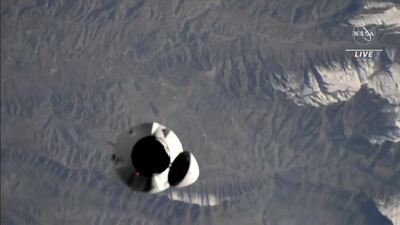
The Dragon capsule during 'Waypoint 1' of its approach to the space station. Photo: Nasa -
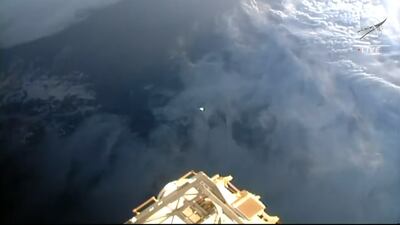
A photo taken from the space station shows the capsule above Earth. Photo: Nasa -
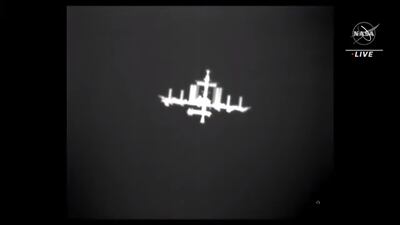
The ISS as seen from the capsule. Photo: Nasa -
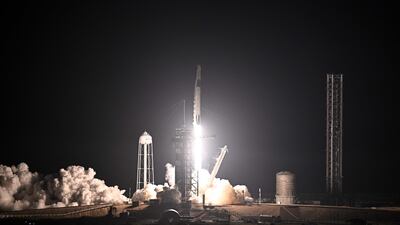
The SpaceX Falcon 9 rocket lifts off from Nasa's Kennedy Space Centre in Cape Canaveral, Florida. AFP -
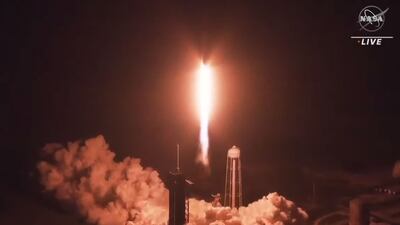
Skies above the Kennedy Space Centre lit up after the rocket lifted off. Photo: nasa -
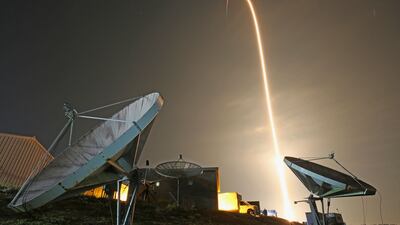
A long exposure shot of the rocket hurtling towards space. AFP -

The Crew-6 astronauts in zero gravity after launch. Photo: NASA -
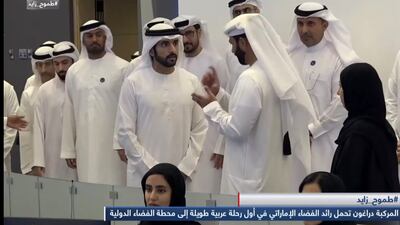
Sheikh Hamdan bin Mohammed, Crown Prince of Dubai, watches from the Mohammed bin Rashid Space Centre as the Falcon 9 rocket lifts off . Photo: Dubai Media Office -
Sheikh Hamdan watches as the rocket carrying Dr Al Neyadi makes its way. Photo: Dubai Media Office -
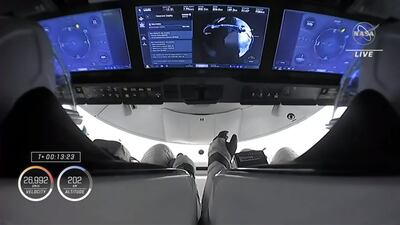
The crew monitoring their operation screens. Photo: NASA -
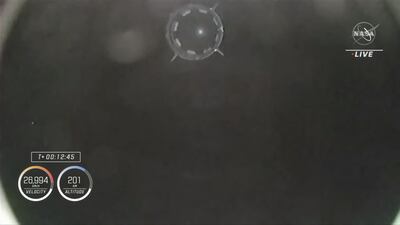
The rear capsule. Photo: NASA -
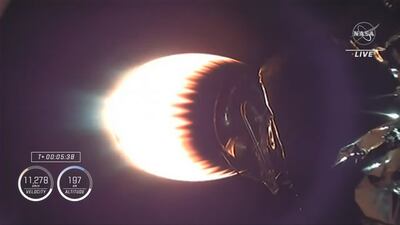
The rocket firing. Photo: NASA -
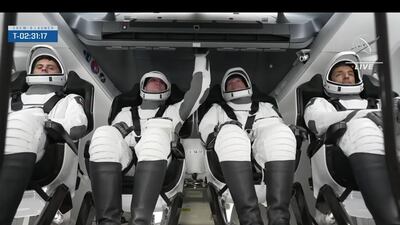
Russian cosmonaut Andrey Fedyaev, Nasa astronauts Warren Hoburg and Stephen Bowen, and the UAE's Dr Al Neyadi moments before blast-off. Photo: Nasa -
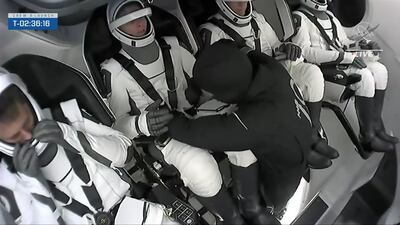
Ground teams prepare the astronauts for launch. Photo: Nasa -
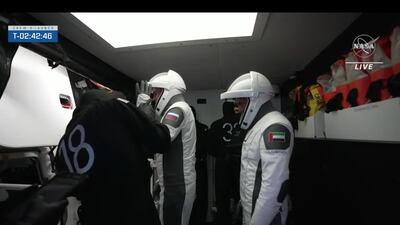
Dr Al Neyadi prepares to board the spacecraft. Photo: Nasa -
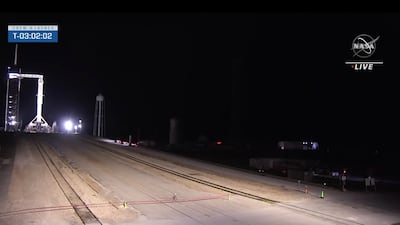
The cars carrying the astronauts approach the launchpad at the Kennedy Space Centre in Cape Canaveral, Florida. Photo: Nasa -
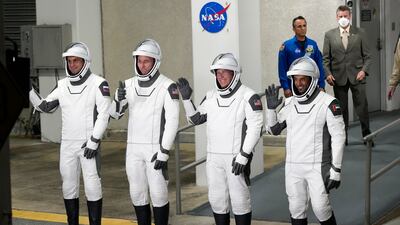
Maj Fedyaev, Dr Hoburg and Capt Bowen, and Dr Al Neyadi head to the launch pad. AP -
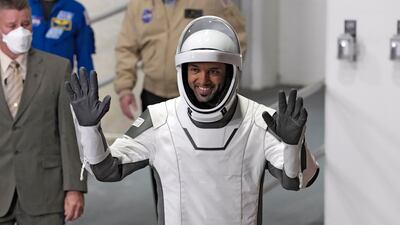
Dr Al Neyadi waves to family members. AP -
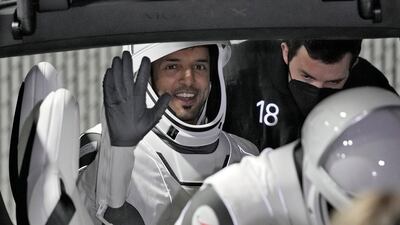
Dr Al Neyadi said he was ready to see space this morning as the Crew-6 astronauts prepared to board. AP -

UAE astronaut Hazza Al Mansouri arrives at the space centre to watch the launch. Sarwat Nasir / The National -

Adnan Al Rais, manager of the UAE's second mission to the International Space Station, at the space centre. Sarwat Nasir / The National



