


Russian forces in Ukraine will struggle to fight in the winter because they have been poorly equipped and ill-treated, the Ukrainian Foreign Minister told the World Policy Conference in Abu Dhabi.
Plunging temperatures and heavy snow have created new challenges in the invasion that began in February, with many towns and cities across Ukraine left without power due to Russian bombing raids.
Addressing the conference from Kyiv by video link, Ukrainian Foreign Minister Dmytro Kuleba, whose home has been among those without power, said more than half of Ukraine’s power generation facilities have been damaged or destroyed.
“One of the reasons Ukraine has been able to repel these Russian attacks is because we have never relied on the weather or the seasons,” he said.
Ukrainian Foreign Minister
“The stakes are very high and nothing can stop our great soldiers or our people, who have suffered enormously.
“We know our army needs to be well-equipped in the winter, just as in the summer.
“The difference between us and the Russians is that we take better care of our soldiers, with better food and uniforms to survive in this environment.
“We have seen how poorly equipped the Russian soldiers are, and also how poorly treated they are — this is a disgrace of the Russian army.
“Many Russian soldiers will suffer enormously because of the cold weather.
“Winter is a game-changer, we know that [Russian President Vladimir] Putin has not accepted the reality that Russia is losing the war and that Russia will not win.”
-
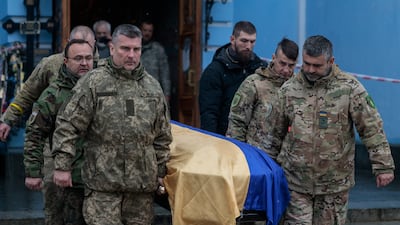
The coffin of Valeriy Krasnyan is brought out of St. Michael's Golden-Domed Monastery in Kyiv. Getty Images -
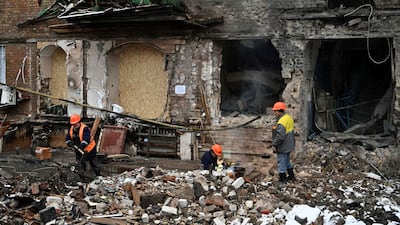
Repairmen work near a residential building damaged following a missile attack in Vyshgorod, outside of Kyiv. AFP -
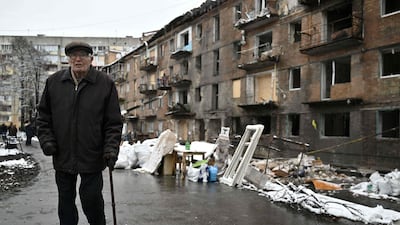
An elderly man walks in front of a residential building damaged following a missile attack in Vyshgorod. AFP -

A boy kisses a dog while he charges his phone at the heating tent dubbed a Point of Invincibly in Bucha, Ukraine. AP -

A couple uses a laptop in the heating tent. AP -
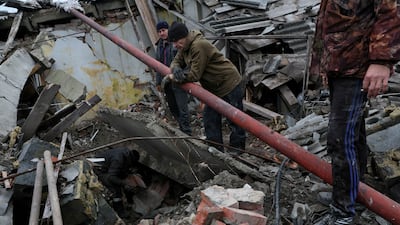
Workers dig out a tire from the rubble of a destroyed storage building at a grain processing center so they can use it for repairs in Siversk, Donetsk region. Reuters -
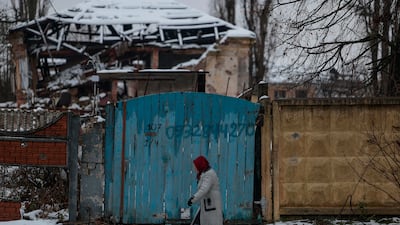
The Chernihiv region found itself on the frontline of Russia's invasion in February, when Moscow's forces were attempting to quickly seize Kyiv. Getty -
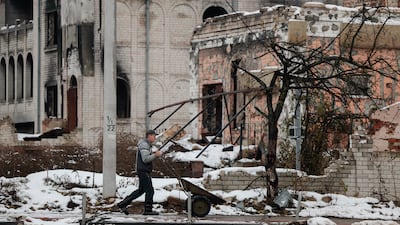
Russia ultimately retreated from northern Ukraine to focus its attack on the east and south. Getty -
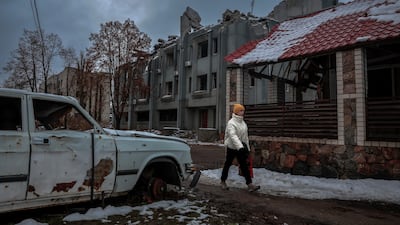
The city of Chernihiv on November 28, 2022 in Chernihiv, Ukraine. Getty -
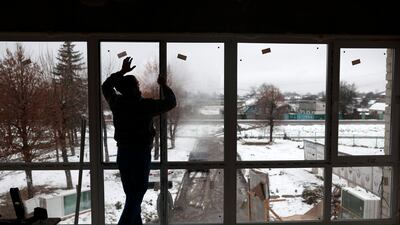
A worker fits in new windows of a building in Chernihiv. Getty -
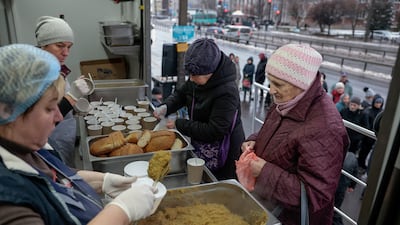
People receive food from AFAT - Disaster and Emergency Management Presidency in Chernihiv. Getty -
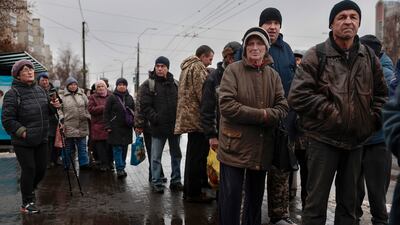
The people Chernihiv queue up for hot food. Getty -
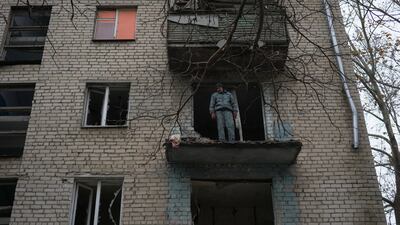
Oleksandr Antonenko stands on a balcony of his apartment damaged by a recent Russian military strike in Kherson. Reuters -
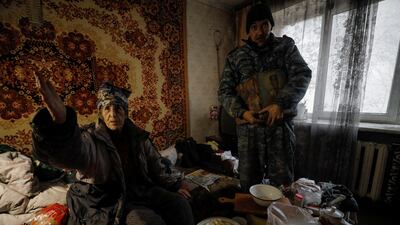
Mr Antonenko and his mother Liudmyla inside their apartment recently damaged by a Russian military strike in Kherson. Reuters -
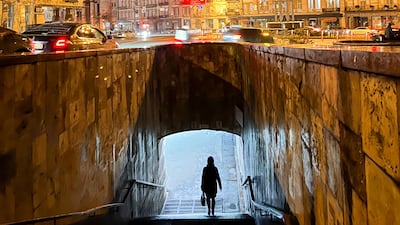
A woman walks in an underpass in Kyiv, on November 26, 2022. AFP -
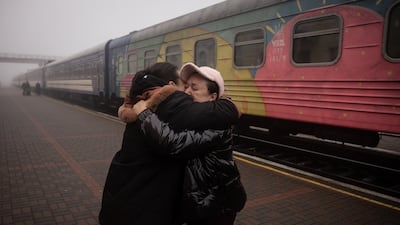
Friends hug after the arrival of a train in the southern city of Kherson. Getty -
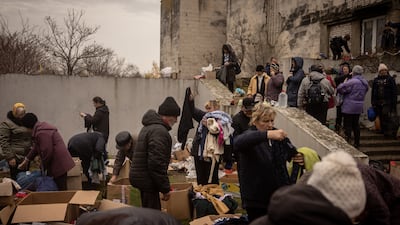
Residents sort through donated clothing at an aid centre in Kherson. Getty -
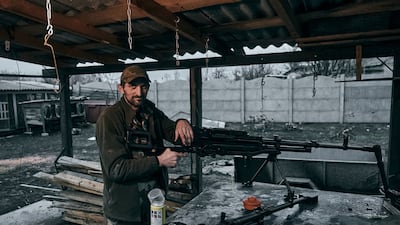
A Ukrainian soldier stands with a machinegun near Liman in the Donetsk region. AP -
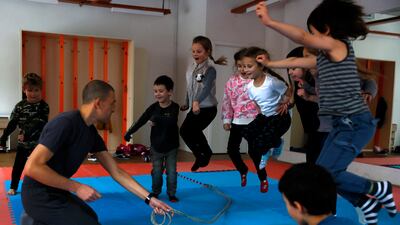
Children attend a physical education class at Spilno School in Kyiv. Getty -
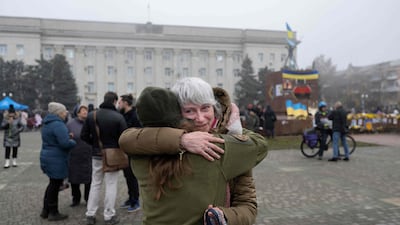
A woman embraces her friend, a soldier in the Ukrainian army, in Kherson. AFP -
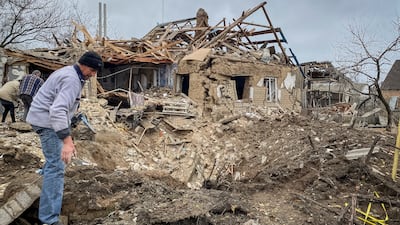
Residents inspect a crater left by a Russian military strike in the village of Komyshuvakha in the Zaporizhzhia region. Reuters -
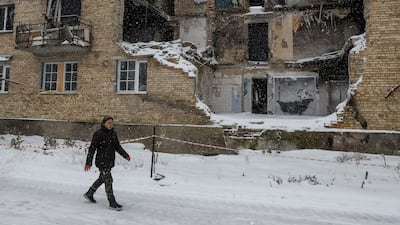
Resident Tetiana Reznychenko walks past a work by world-renowned graffiti artist Banksy, on the wall of a destroyed building in the Ukrainian village of Horenka. Reuters -
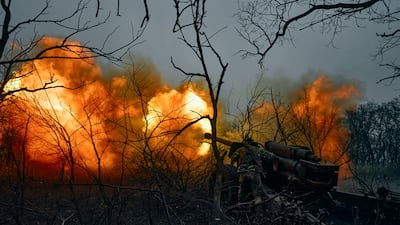
Ukrainian soldiers fire artillery at Russian positions near Bakhmut in the Donetsk region. AP -
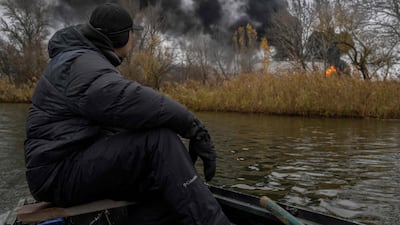
A fisherman sails his boat on the Dnipro as black smoke rises from an oil reserve in Kherson. AFP


Mr Kuleba said Russia was using "Second World War-era warfare" by sending poorly trained soldiers, prisoners and private mercenaries such as the Wagner Group to fight.
“They are sent in as cannon fodder — they are called 'one timers',” he said.
He said that showed "human life does not matter to Russia".
“This is the biggest difference with Ukraine. Our people are precious to our country.”
International support
Mr Kuleba said Ukraine had formally applied to join Nato and would also seek to join the EU.
He appealed for support in donations of transformers, generators and spare parts to help rebuild the country's energy infrastructure.
He said Ukrainian forces would fight for as long as it took to defeat Russia.
“If someone breaks into your apartment, you do not put a time on when they must leave — you fight until it is done. We must end this war as soon as possible,” he said.
“We want nothing more than what belongs to us by history and by law. That is our borders.
“In practice, that goes back to restoring its borders.
“This must happen unconditionally. A strategic victory involves the entire international community and it depends on how we can get Russia to play by the rules.
“The people in Russia must decide how they can help to make this change. Without the international community supporting this, it is impossible to imagine victory.
“If Russia is allowed to do this, other counties will think it is OK to invade and extend their borders.”
He criticised countries purchased Russian gas at discounted rates.
India is among the nations to have bought discounted Russian crude oil and made it clear it would prioritise its own energy needs.
China and India have become the largest buyers of Russian oil, benefiting from discounted rates.
“You can say 100 times this is not your war, but when food prices go up and people suffer from this due to the block on exports from Ukraine, it cannot be ignored,” Mr Kuleba said.
“Others try to benefit by paying for discounted Russian oil and gas. Countries have the right to do so, but they are making profits on people in Ukraine dying.
“Without this war and the sanctions, Russia would not be offering its oil at discount.”

