



Sports tourists heading to the UAE this winter are expected to boost the local hospitality and events economy by millions of dirhams, analysts said.
The UAE topped a list of preferred destinations for those travelling to the region to catch some of the biggest global sporting events, such as the 2022 Fifa World Cup in Qatar, Abu Dhabi Grand Prix and European Tour golf’s Race to Dubai finals.
A recent report by online travel agency Musafir found travellers opted for the UAE because of its proximity to major sporting events as well as family-orientated activities, personal safety, security, room availability, shopping, adventure sports and seamless connectivity.
Book Yachts, Dubai
Meanwhile, hospitality companies in Dubai reported “considerably” higher demand for hotel rooms, events, brunches and yacht hire resulting from the high-profile sports events in the final quarter of the year.
The football World Cup in Qatar is the main draw, with a deluge of arrivals imminent from South America ― a relatively new tourism market for the Emirates.
“This is the usual high leisure season for international source markets, but we are certainly seeing a rise in demand this year in arrivals from particular destinations, including Argentina and Brazil,” said Mohanad Malhas, general manager at Arabian Adventures, which operates desert safaris, overnight camping and dune buggy hire.
“We are witnessing strong demand for our services during the winter months of 2022.
“This is across our entire range of services, from planning, hotel stays, transfers, arrivals and in-resort organising excursions, managing events and cruises, alongside our award-winning desert safari and city tour products.
“For groups and individual travellers, clients are choosing Dubai as a hub during the months of highly anticipated mega events coming to the region this winter.”
Sports tourism destination
-
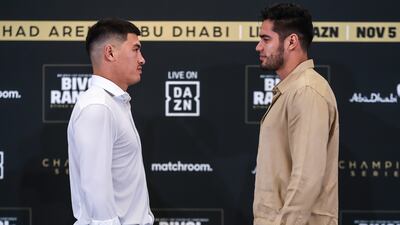
Undefeated light heavyweight champion Dmitry Bivol, left, is putting his title on the line against Gilberto 'Zurdo' Ramirez at Etihad Arena on November 5. All photos: Victor Besa / The National -
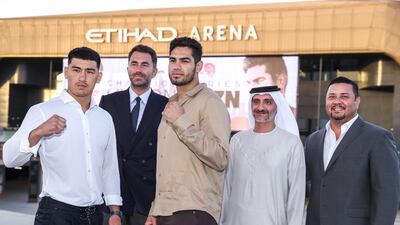
Left to right: Dmitry Bivol, Eddie Hearn, Zurdo Ramirez, Saleh Mohammed Al Geziry and Eric Gomez in front of the Etihad Arena in Abu Dhabi. -
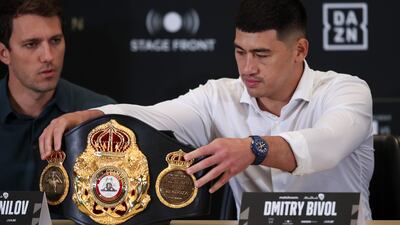
Russia'a Dmitry Bivol with his WBA light heavyweight belt in Abu Dhabi. -
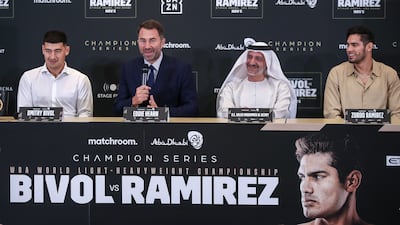
Left to right: Dmitry Bivol, Eddie Hearn, Saleh Mohammed Al Geziry and Zurdo Ramirez. -

The press conference on Wednesday, August 31, 2022, for Dmitry Bivol v Gilberto Ramirez at the Etihad Arena. -
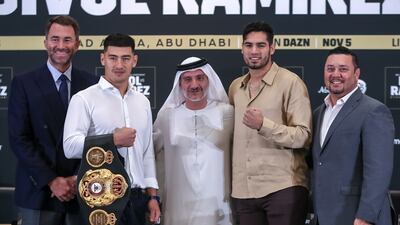
Left to right: Eddie Hearn, Dmitry Bivol, Saleh Mohammed Al Geziry, Zurdo Ramirez and Eric Gomez during the press conference. -
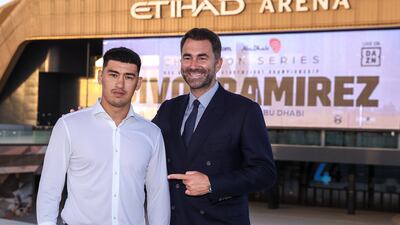
Undefeated light heavyweight champ Dmitry Bivol with Eddie Hearn. -
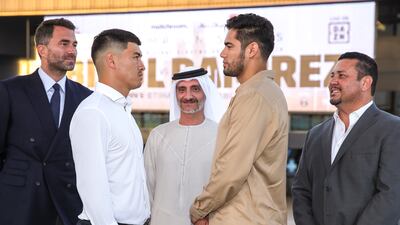
Left to right: Eddie Hearn, Dmitry Bivol, Saleh Mohammed Al Geziry, Gilberto Ramirez, in front of the Etihad Arena in Abu Dhabi. -
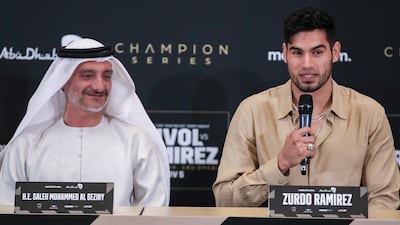
Saleh Mohammed Al Geziry and Mexico's Zurdo Ramirez during the press conference. -
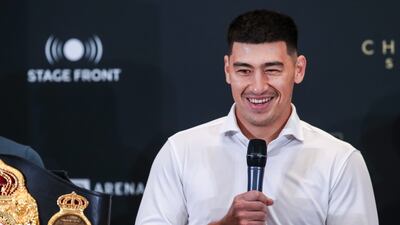
Undefeated light heavyweight champ Dmitry Bivol. -
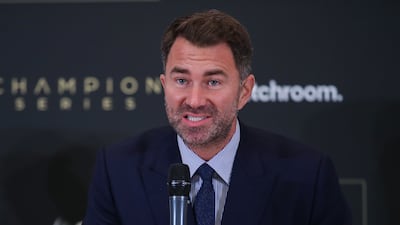
Promoter Eddie Hearn during the press conference in Abu Dhabi.


According to the World Trade Organisation, the Middle East is becoming the world’s fastest-growing sports tourism destination valued at an estimated $600 billion (Dh2.2 trillion).
Aloki Batra, chief executive of Five Hospitality — operator of Five Hotels on The Palm Jumeirah and in Jumeirah Village Circle — said Dubai was likely to hit peak popularity this winter.
“We have already seen a surge in advance bookings from celebrities, locals and visitors alike with a 25 per cent increase over last year,” he said.
“This is mainly from our key markets such as the United Kingdom, Scandinavia, Germany and France.”
It is not only hotel providers who will benefit from the boom, with ancillary tourism services also reporting a significant rise in demand.
One of those industries is the pleasure yacht business.
Ahlam Mohammed, sales and marketing manager at Book Yachts in Dubai, said bookings were well up on recent years, with many people asking about sailing yachts directly to Qatar for the World Cup.
“October is usually busy, but we are seeing a lot more bookings than usual,” he said.
“We have many guests from India and America, but there are a lot more now coming in from Europe.
“People want birthdays, to hang out or just to enjoy a family holiday while they are here for the World Cup.
“We have had several enquires about taking a yacht from Dubai to Qatar, but unfortunately that is not possible owing to certain regulations, and it would take anything from 12 to 18 hours.
“Most people we speak with are travelling to Qatar by road from Dubai.”
Inbound flights to the UAE are expected to soar by up to 20 per cent compared with the same time last year, the Musafir report said.
Apart from attending sporting events, fans will want to explore thrill-seeking activities as an add-on for a comprehensive travel experience encapsulating all that the country has to offer.
The Musafir report said the average spend by travellers to Dubai would be about $5,000 (Dh18,300) for a hotel stay, transport, shopping and to explore the city.
Findings from the report showed UAE hotels will record an up to 40 per cent increase in demand for accommodation and price inflation with occupancy rates likely to hit 100 per cent during the tournament.
Data also showed an 80 per cent growth in advance bookings for travel between Dubai and Doha.
That has been encouraged by the joint multiple-entry tourist visa for the UAE, Saudi Arabia and Oman to holders of the Hayya Fan ID.
“Sports events act as a catalyst and can have a tremendous impact on the economy ― as we will see millions of fans gather to not only watch their favourite sport but also to have an unforgettable experience during their stay in the region,” said Sachin Gadoya, chief executive and co-founder of Musafir Business.
“We are anticipating an exponential growth in the tourism sector, as arrivals and occupancy will be even more than pre-pandemic times, which is a much-needed boost for the travel and hospitality sector.”
NBA District in Abu Dhabi: what to expect at the week-long basketball fan zone
-
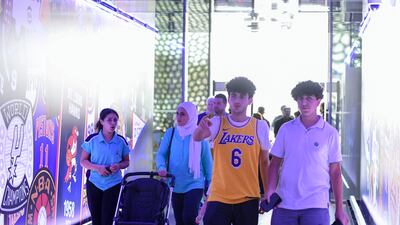
Fans arrive at the NBA District under a tunnel walk that celebrates the history of championship rings, banners and jerseys over the past 75 years. All photos: Khushnum Bhandari / The National -

The family-friendly event is open to fans of all ages. -

A fan takes a photo with former NBA player and coach Isiah Thomas. -
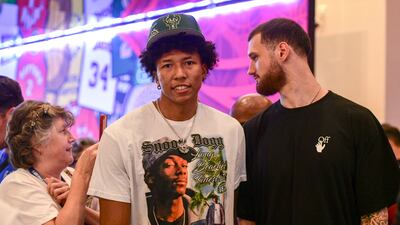
Milwaukee Bucks players MarJon Beauchamp, centre, and Sandro Mamukelashvili, right, visit the NBA District. -
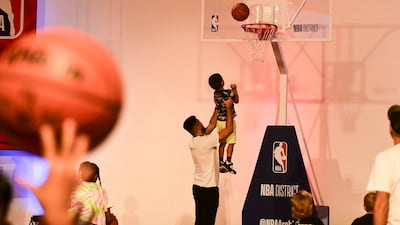
NBA District has various zones for visitors and fans to explore. -
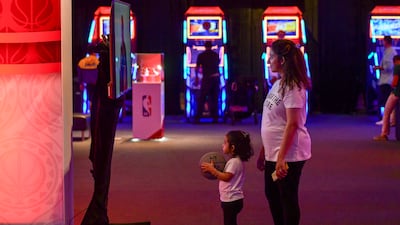
A young fan enjoys one of the video installations. -
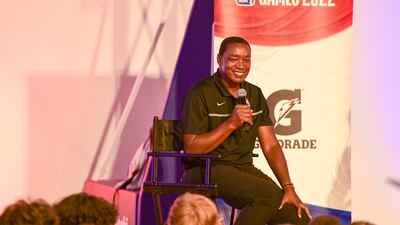
Thomas takes to the stage for a small Q&A session with fans. -
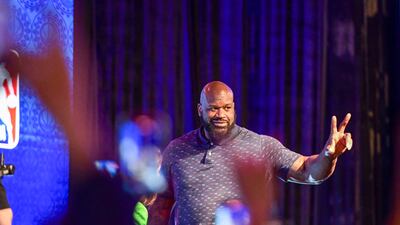
Former basketball champion Shaquille O'Neal makes his way to the stage. -
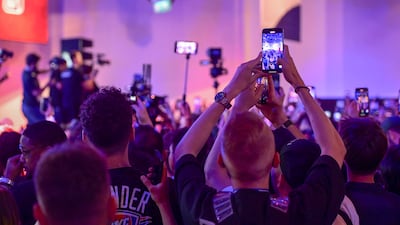
Fans crowd for basketball Hall of Fame players O'Neal and Thomas. -
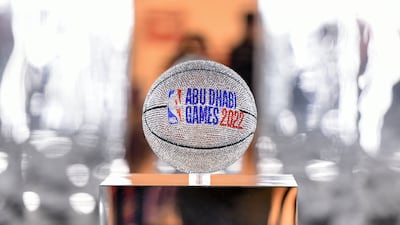
A basketball covered in Swarovski crystals on display in the 'Infinity Room'. -

There are two half-courts set up inside the NBA District. -
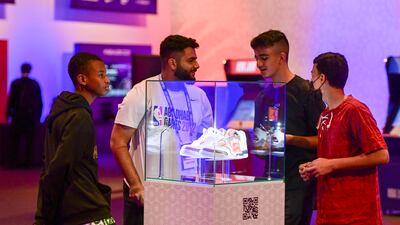
Fans have a chance to win limited-edition Air Jordans. -

There's a small NBA store for visitors to purchase merchandise. -
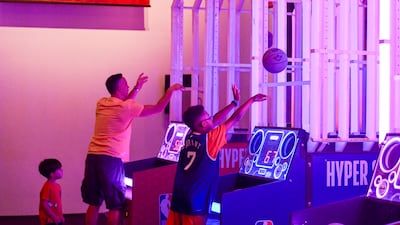
Fans show off their skills playing 'Pop-A-Shots'. -
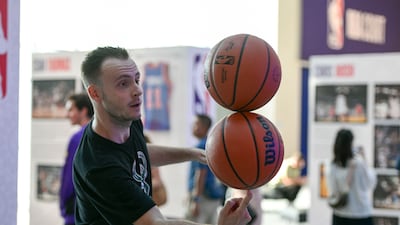
A freestyler shows off his balancing skills. -
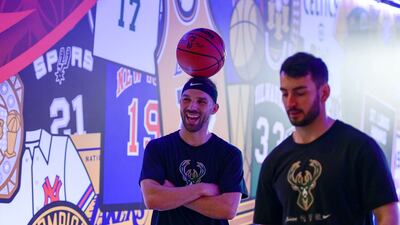
Freestylers show their skills at the NBA District. -
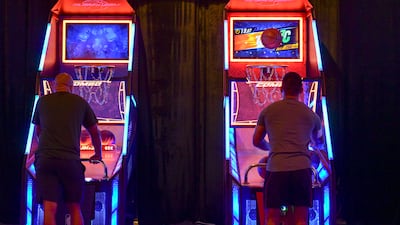
The arcade space has videogames such as 'NBA 2k', 'NBA Blitz', 'NBA Hoops' and 'Pop-A-Shots'. -

The NBA District is explored by all age groups at Manarat Al Saadiyat. Khushnum Bhandari / The National -

The Gatorade zone has five different activities on one stand. -
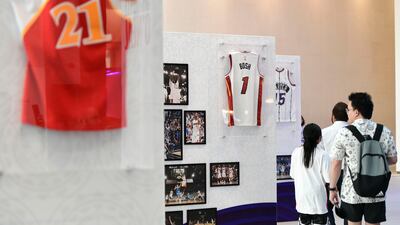
An exhibition about past NBA players is on display.



