



Residents can convert their driving licences through various online platforms in the UAE.
Some people who have a licence from another country need to pass a test in the UAE before being granted a licence.
For others, it is simply a case of converting their national driving licence to a UAE version.
The National breaks down the procedures involved in converting your licence in each of the emirates.
Abu Dhabi
Abu Dhabi Police this month said drivers should check if their licence is from an accredited country and is still valid before submitting a request to convert it.
“Through this smart service, individuals can request for the replacement of driving licences issued by specific foreign and Gulf countries with driving licences issued by UAE,” said Abu Dhabi Police in a tweet.
Licences from the following countries and regions can be converted into the UAE version: GCC countries, Finland, France, Germany, Japan, the Netherlands, Australia, Austria, Belgium, Canada, Denmark, Greece, Ireland, Italy, New Zealand, Norway, Turkey, Poland, UK, US, Portugal, Spain, South Korea, Sweden, South Africa and Romania.
What do you need to apply for the service in the UAE?
The first step is to take an eye test at an optician accredited by Abu Dhabi Police. You will need a valid original foreign licence, a legal Arabic translation of the foreign licence — if it is not already in Arabic — a copy of your passport and Emirates ID, and two personal photos with a white background.
How to apply for the service
The person must be an Abu Dhabi resident to apply, which you can do online through Abu Dhabi government's Tamm website or use the Abu Dhabi Police website or application.
You can also visit one of Tamm's customer service centres or the Traffic Licensing Department at Abu Dhabi Police to apply in person.
The cost of converting a driving licence is Dh600 ($163). For enquires, contact Awnak at 8003333.
Dubai
-

Driving instructor Zubeida with a Bentley car instructing Nick Webster at the Emirates Driving Institute, Dubai. Leslie Pableo for The National -
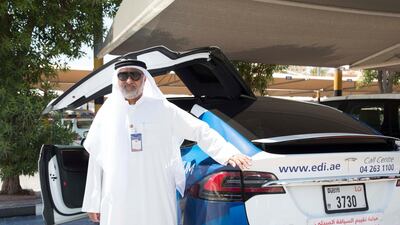
Taleb Mahmoud Ayub, Head of Operations next to a Tesla car at the Emirates Driving Institute, Dubai. Leslie Pableo for The National -

Driving instructor Zubeida inside a Bentley car instructing Nick Webster at the Emirates Driving Institute, Dubai. Leslie Pableo for The National -
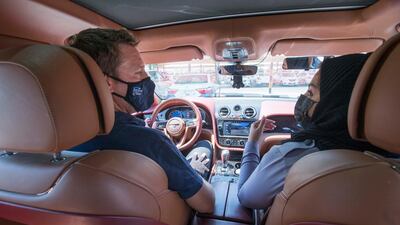
Driving instructor Zubeida inside a Bentley car instructing Nick Webster at the Emirates Driving Institute, Dubai. Leslie Pableo for The National -
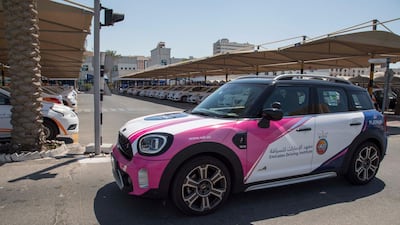
A Mini Cooper specially for women drivers at the Emirates Driving Institute, Dubai. Leslie Pableo for The National -
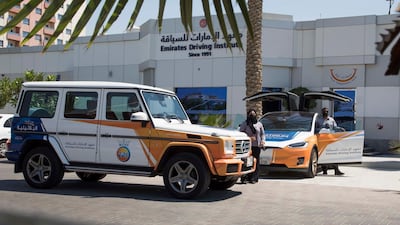
A Mercedes and Tesla at the Emirates Driving Institute, Dubai. Leslie Pableo for The National -
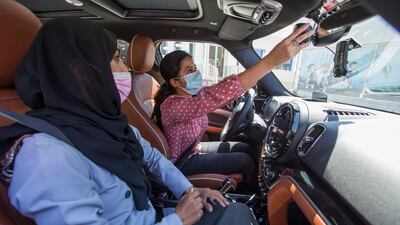
Instructor Sabia teaching a students pointers in driving at the Emirates Driving Institute, Dubai. Leslie Pableo for The National -

A Mercedes and Tesla at the Emirates Driving Institute, Dubai. Leslie Pableo for The National


Dubai's Roads and Transport Authority (RTA) offers driving licence exchanges through its website.
This service is available for citizens from the following countries and regions with licences from these countries: GCC countries, Lithuania, Portugal, Hungary, Bulgaria, Latvia, Serbia, Luxembourg, Estonia, Cyprus, Slovakia, Slovenia, Albania, Romania, Germany, Italy, Switzerland, Poland, Finland, Spain, the Netherlands, Greece, Sweden, Belgium, Ireland, Turkey, Denmark, Austria, France, UK, Norway, Montenegro, Ukraine, Canada, US, Japan, South Korea, Hong Kong, China, Australia, New Zealand, Singapore and South Africa.
For some countries, the service is open only to citizens. For example, a driver with a Portuguese licence must be from Portugal to exchange the licence.
Driving licences issued from these countries or territories cannot be replaced: Puerto Rico (US), North Mariana (US), Guam island (US), Liechtenstein (Switzerland) Monaco (France) and Jersey island (Britain).
What do you need to apply for the service in Dubai?
An original driving licence from one of the aforementioned countries, an eye test, your Emirates ID and a legal translation of the driving licence, if it is not in English or Arabic.
If residents have a visa issued in another emirate but the company where they work has a branch in Dubai, they can apply through the RTA after providing a letter from the company certifying that they work in Dubai, as well as a trade licence copy from the branches in Dubai and the other emirate.
How to apply for the service
Go to the RTA website to access the service. Specify the country and driving licence source, and attach a copy of it.
Once the application is submitted, a reference number will be issued for all follow-up actions or queries.
The applicant must visit the RTA customer happiness centre with an original driving licence to verify it. The licence will then be printed and given to the customer.
Singaporean residents need to submit the application through driving institutes and present the required documents to book an appointment for the knowledge test.
The cost of converting the driving licence is Dh870. For Singaporean licence holders, the cost is Dh1,070.
For enquiries, contact RTA-Dubai 8009090 from inside the UAE and +97146051414 from outside the UAE or email ask@rta.ae
Other emirates
Residents in Sharjah, Ajman, Umm Al Quwain, Ras Al Khaimah and Fujairah can ask to convert their foreign licences through the Ministry of Interior website.
This service is available to licences issued in: GCC countries, Lithuania, Portugal, Hungary, Bulgaria, Latvia, Serbia, Luxembourg, Estonia, Cyprus, Slovakia, Slovenia, Albania, Romania, Germany, Italy, Switzerland, Poland, Finland, Spain, the Netherlands, Greece, Sweden, Belgium, Ireland, Turkey, Denmark, Austria, France, UK, Norway, Montenegro, Ukraine, Canada, US, Japan, South Korea, Hong Kong, China, Australia, New Zealand, Singapore and South Africa.
Applicants need to submit a legal translation of the foreign driving licence, as well as their Emirates ID and take an eye test before logging on to the ministry’s website for the service.
After paying Dh600, customers need to approach the traffic licensing department in the emirate and present the receipt to receive their UAE licence.
For enquiries, contact the ministry at 8005000.
Tesla engineers hit Dubai desert for 'extreme heat and durability testing' - in pictures
-

Tesla field quality engineers have been in Dubai at the hottest time of the year, analysing the electric cars for their durability and performance in extreme temperatures. All photos: Tesla -
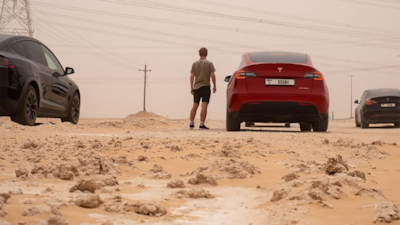
Tesla posted about the tests on Instagram, saying the cars had experienced temperatures greater than 50°C. -

The line-up of cars tested includes the Model Y, the refreshed Model X and the Model 3. -

The engineers took on sand, mountain roads and gravel-strewn tracks. -
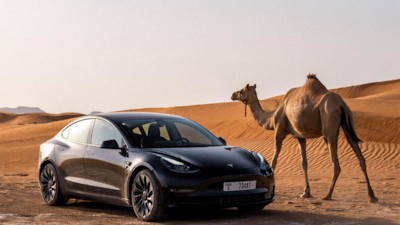
Testing a car for durability requires it to be pushed to the limit. -

The company does its cold weather testing in Alaska, the US. -
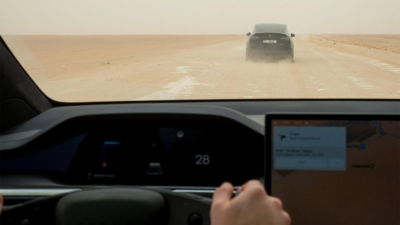
The engineers may also have looked at the performance of the new heat pump, which was introduced into the Model Y last year. -
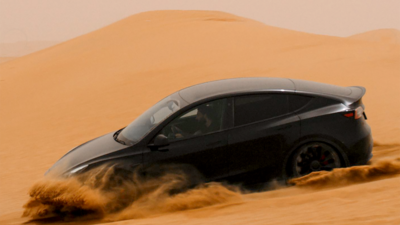
Hitting the dunes. -
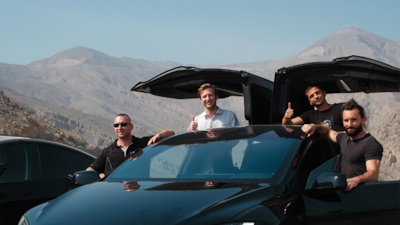
Tesla field quality engineers will study the data to help improve the performance of the electric vehicles.



