My Dubai Rent takes you inside a reader's home to have a look at what they pay each month, see who they live with and ask what they like and don't like
When Mouna Ramdani moved to Dubai a year ago, she decided to put down roots in the busy Marina area.
But after eight months sharing a flat with two roommates, she decided it was time to get her own place.
Having never lived on her own before, she opted to move inland to Al Ghaf 1 in Arjan, as it was more affordable and in a quieter part of town.
For the price she was paying for a bedroom in Dubai Marina, she now has a whole studio to live and work from. She didn’t have to compromise on price for the extra space.
Working as a freelance digital marketer, 24-year-old Mouna said she spends 80 per cent of her time at home either working or producing content for her growing social media brand.
Here, she invites The National into her home to take a look around.
Where do you live?
I moved to Arjan in February after spending quite a few months in Dubai Marina, which was very busy.
Tell us about your property
I live in a studio with a balcony and I adore having that outdoor space. The only thing that I don’t love is the fact the balcony backs on to a street, so it’s not very private.
The layout of the studio is quite typical to most that you'll find in the city. The kitchen is the first thing you see when you enter through the front door, then the room opens up into a big living and sleeping area.
I live on the second floor of a low rise building, which is something I purposely looked for when flat hunting. When I lived in the Marina I was staying on a high floor and during peak times it would sometimes take 20 to 30 minutes to wait for the lift to arrive. I was not a fan of that.
How much do you pay for the studio?
It’s Dh30,000 a year, so Dh2,500 a month. With bills on top I pay about Dh3,700 which is the same amount I was paying for my previous accommodation. I love the fact that I got all this extra space to myself but didn’t have to pay extra in rent.
Have you lived on your own before?
No. I did flat share with a friend in London when I was at university but this is the first time I’ve ever stayed on my own. So far I am loving it as I get to make all my own decisions about the property and nobody eats my food. I changed the whole layout of my studio just to tie in with the aesthetic in my head. I love the fact that I can do that and I don’t have to consult with a roommate first.
Why did you move from a busy neighbourhood to a quieter one?
When I first moved to Dubai I chose the Marina as I had heard a lot about it and it seems to be the place that most young people move to when they first land here. I remember it was tourist season when I arrived and I just felt quite suffocated. There were so many people about all the time and so much traffic, it just wasn’t for me.
I love Arjan as it’s only 20 minutes away from Downtown Dubai, which is where most of my clients are, and there are plenty of amenities like salons, supermarkets and cafes.
The only bugbear I have is that there is no mosque in the area, which, as a Muslim, is a bit of a problem. I travel to Motor City once a week to the mosque there but if there was one here I would visit more often.
Another driving factor as to why I moved was that I wanted to foster cats and I couldn’t do that in my other flat. I have a cat staying with me now and it’s the third one I’ve had since moving in February. He has his own corner of the room with his bed and toys and I love that.
How have you made your house a home?
I’d say my style is quite minimalist, so there is a lot of grey and white in the apartment because I like a clean aesthetic. I haven’t really got any items from home or things from my travels but I have tried to accent the place with some gold decorative pieces. I’m still very new to the apartment and could probably make it more homely in time. I’ve kept in very open plan as I think if I started segmenting sections off it would feel too closed off.
How did you find the apartment?
My friend lives in the same building and she referred me on to her agent. This was the first studio I looked at and I fell in love with it straight away. It has a great pool and gym and the building has a lot of young people living in it. At the weekend people tend to gather around the pool area, so it’s very sociable.
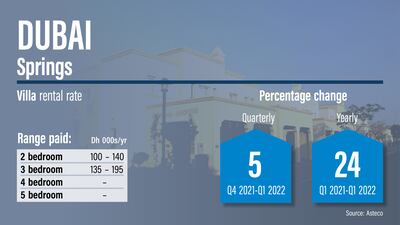
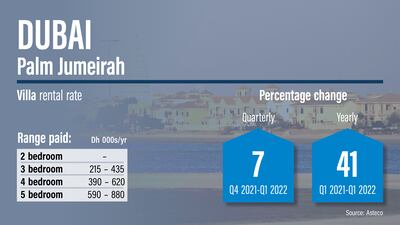
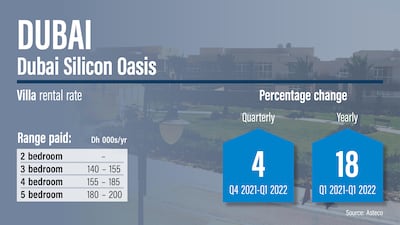
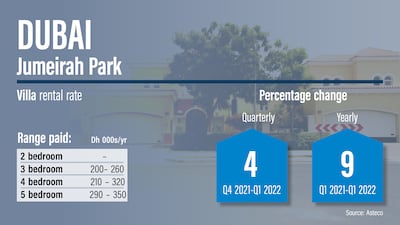
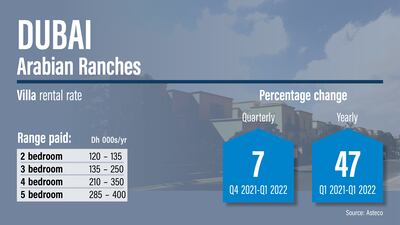
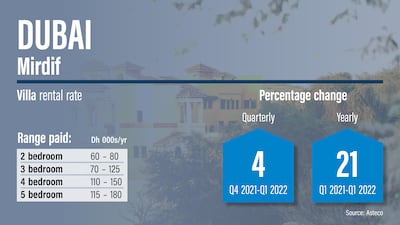
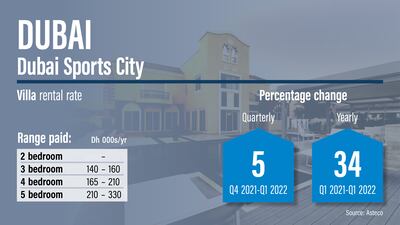
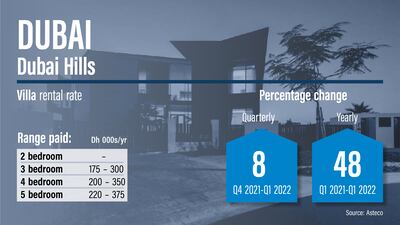
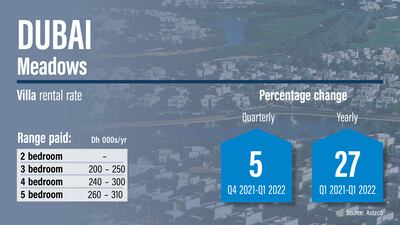
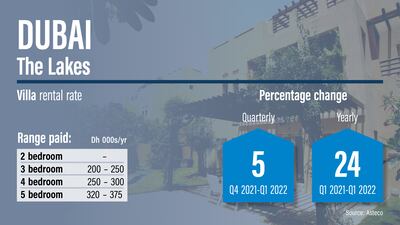
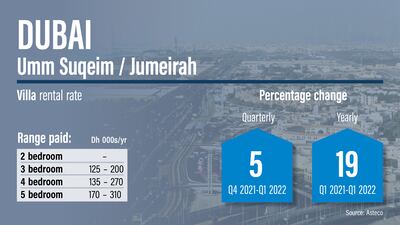
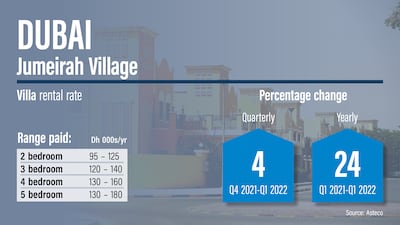
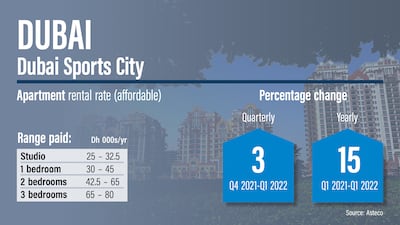
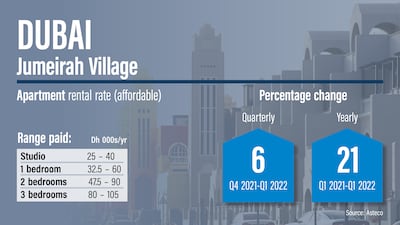
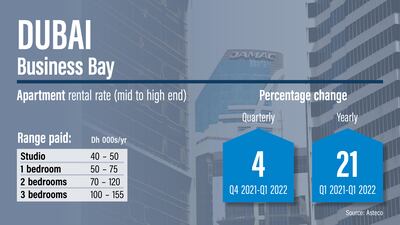
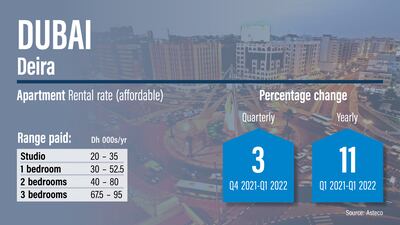
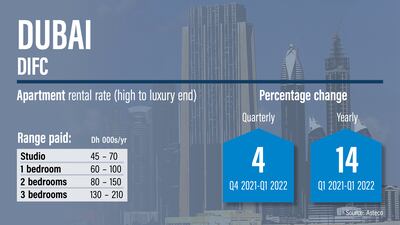
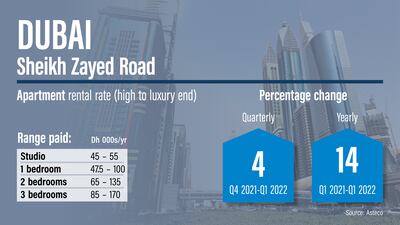
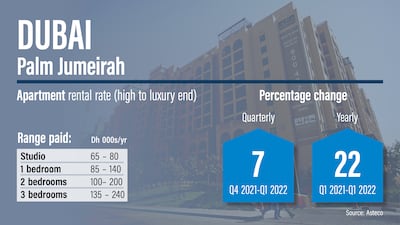
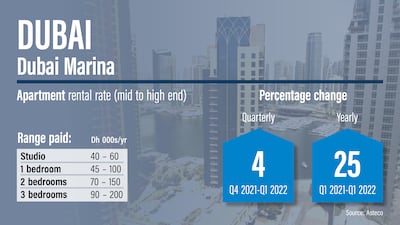
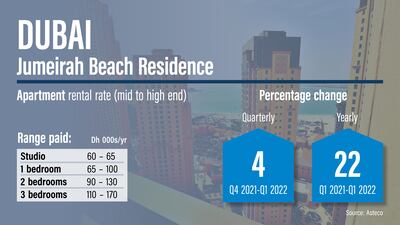
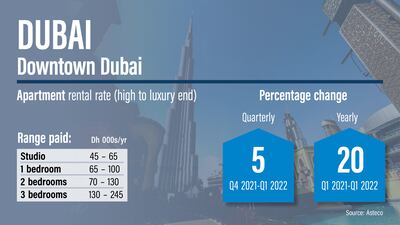
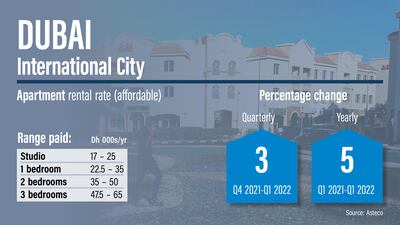
Dubai rents Q1 2022: in pictures
Scoreline
Bournemouth 2
Wilson 70', Ibe 74'
Arsenal 1
Bellerin 52'
Winners
Ballon d’Or (Men’s)
Ousmane Dembélé (Paris Saint-Germain / France)
Ballon d’Or Féminin (Women’s)
Aitana Bonmatí (Barcelona / Spain)
Kopa Trophy (Best player under 21 – Men’s)
Lamine Yamal (Barcelona / Spain)
Best Young Women’s Player
Vicky López (Barcelona / Spain)
Yashin Trophy (Best Goalkeeper – Men’s)
Gianluigi Donnarumma (Paris Saint-Germain and Manchester City / Italy)
Best Women’s Goalkeeper
Hannah Hampton (England / Aston Villa and Chelsea)
Men’s Coach of the Year
Luis Enrique (Paris Saint-Germain)
Women’s Coach of the Year
Sarina Wiegman (England)
Key figures in the life of the fort
Sheikh Dhiyab bin Isa (ruled 1761-1793) Built Qasr Al Hosn as a watchtower to guard over the only freshwater well on Abu Dhabi island.
Sheikh Shakhbut bin Dhiyab (ruled 1793-1816) Expanded the tower into a small fort and transferred his ruling place of residence from Liwa Oasis to the fort on the island.
Sheikh Tahnoon bin Shakhbut (ruled 1818-1833) Expanded Qasr Al Hosn further as Abu Dhabi grew from a small village of palm huts to a town of more than 5,000 inhabitants.
Sheikh Khalifa bin Shakhbut (ruled 1833-1845) Repaired and fortified the fort.
Sheikh Saeed bin Tahnoon (ruled 1845-1855) Turned Qasr Al Hosn into a strong two-storied structure.
Sheikh Zayed bin Khalifa (ruled 1855-1909) Expanded Qasr Al Hosn further to reflect the emirate's increasing prominence.
Sheikh Shakhbut bin Sultan (ruled 1928-1966) Renovated and enlarged Qasr Al Hosn, adding a decorative arch and two new villas.
Sheikh Zayed bin Sultan (ruled 1966-2004) Moved the royal residence to Al Manhal palace and kept his diwan at Qasr Al Hosn.
Sources: Jayanti Maitra, www.adach.ae
If you go...
Etihad Airways flies from Abu Dhabi to Kuala Lumpur, from about Dh3,600. Air Asia currently flies from Kuala Lumpur to Terengganu, with Berjaya Hotels & Resorts planning to launch direct chartered flights to Redang Island in the near future. Rooms at The Taaras Beach and Spa Resort start from 680RM (Dh597).
UAE%20v%20West%20Indies
%3Cp%3EFirst%20ODI%20-%20Sunday%2C%20June%204%20%0D%3Cbr%3ESecond%20ODI%20-%20Tuesday%2C%20June%206%20%0D%3Cbr%3EThird%20ODI%20-%20Friday%2C%20June%209%26nbsp%3B%3C%2Fp%3E%0A%3Cp%3EMatches%20at%20Sharjah%20Cricket%20Stadium.%20All%20games%20start%20at%204.30pm%0D%3Cbr%3E%0D%3Cbr%3E%3Cstrong%3EUAE%20squad%3C%2Fstrong%3E%0D%3Cbr%3EMuhammad%20Waseem%20(captain)%2C%20Aayan%20Khan%2C%20Adithya%20Shetty%2C%20Ali%20Naseer%2C%20Ansh%20Tandon%2C%20Aryansh%20Sharma%2C%20Asif%20Khan%2C%20Basil%20Hameed%2C%20Ethan%20D%E2%80%99Souza%2C%20Fahad%20Nawaz%2C%20Jonathan%20Figy%2C%20Junaid%20Siddique%2C%20Karthik%20Meiyappan%2C%20Lovepreet%20Singh%2C%20Matiullah%2C%20Mohammed%20Faraazuddin%2C%20Muhammad%20Jawadullah%2C%20Rameez%20Shahzad%2C%20Rohan%20Mustafa%2C%20Sanchit%20Sharma%2C%20Vriitya%20Aravind%2C%20Zahoor%20Khan%0D%3C%2Fp%3E%0A
Mercer, the investment consulting arm of US services company Marsh & McLennan, expects its wealth division to at least double its assets under management (AUM) in the Middle East as wealth in the region continues to grow despite economic headwinds, a company official said.
Mercer Wealth, which globally has $160 billion in AUM, plans to boost its AUM in the region to $2-$3bn in the next 2-3 years from the present $1bn, said Yasir AbuShaban, a Dubai-based principal with Mercer Wealth.
“Within the next two to three years, we are looking at reaching $2 to $3 billion as a conservative estimate and we do see an opportunity to do so,” said Mr AbuShaban.
Mercer does not directly make investments, but allocates clients’ money they have discretion to, to professional asset managers. They also provide advice to clients.
“We have buying power. We can negotiate on their (client’s) behalf with asset managers to provide them lower fees than they otherwise would have to get on their own,” he added.
Mercer Wealth’s clients include sovereign wealth funds, family offices, and insurance companies among others.
From its office in Dubai, Mercer also looks after Africa, India and Turkey, where they also see opportunity for growth.
Wealth creation in Middle East and Africa (MEA) grew 8.5 per cent to $8.1 trillion last year from $7.5tn in 2015, higher than last year’s global average of 6 per cent and the second-highest growth in a region after Asia-Pacific which grew 9.9 per cent, according to consultancy Boston Consulting Group (BCG). In the region, where wealth grew just 1.9 per cent in 2015 compared with 2014, a pickup in oil prices has helped in wealth generation.
BCG is forecasting MEA wealth will rise to $12tn by 2021, growing at an annual average of 8 per cent.
Drivers of wealth generation in the region will be split evenly between new wealth creation and growth of performance of existing assets, according to BCG.
Another general trend in the region is clients’ looking for a comprehensive approach to investing, according to Mr AbuShaban.
“Institutional investors or some of the families are seeing a slowdown in the available capital they have to invest and in that sense they are looking at optimizing the way they manage their portfolios and making sure they are not investing haphazardly and different parts of their investment are working together,” said Mr AbuShaban.
Some clients also have a higher appetite for risk, given the low interest-rate environment that does not provide enough yield for some institutional investors. These clients are keen to invest in illiquid assets, such as private equity and infrastructure.
“What we have seen is a desire for higher returns in what has been a low-return environment specifically in various fixed income or bonds,” he said.
“In this environment, we have seen a de facto increase in the risk that clients are taking in things like illiquid investments, private equity investments, infrastructure and private debt, those kind of investments were higher illiquidity results in incrementally higher returns.”
The Abu Dhabi Investment Authority, one of the largest sovereign wealth funds, said in its 2016 report that has gradually increased its exposure in direct private equity and private credit transactions, mainly in Asian markets and especially in China and India. The authority’s private equity department focused on structured equities owing to “their defensive characteristics.”
Real estate tokenisation project
Dubai launched the pilot phase of its real estate tokenisation project last month.
The initiative focuses on converting real estate assets into digital tokens recorded on blockchain technology and helps in streamlining the process of buying, selling and investing, the Dubai Land Department said.
Dubai’s real estate tokenisation market is projected to reach Dh60 billion ($16.33 billion) by 2033, representing 7 per cent of the emirate’s total property transactions, according to the DLD.
Groom and Two Brides
Director: Elie Semaan
Starring: Abdullah Boushehri, Laila Abdallah, Lulwa Almulla
Rating: 3/5
Desert Warrior
Starring: Anthony Mackie, Aiysha Hart, Ben Kingsley
Director: Rupert Wyatt
Rating: 3/5