Veterinarians spray cattle with disinfectant in Kirkuk, a day after Iraq registered the first death this year from Crimean-Congo haemorrhagic fever. AFP

Everything you need to know about the Crimean-Congo fever sweeping through Iraq


Gillian Duncan
  • English
  • Arabic

A virus with a fatality rate of up to 30 per cent is killing unprecedented numbers of people in Iraq.

Crimean-Congo haemorrhagic fever was first documented there in 1979 and historically there have been only a handful of cases each year.

But infections caused by the tick-borne virus have soared since the start of this year, with more than 100 recorded so far.

The cause of the increase is not fully understood but some experts think global warming could have had a hand in it.

The National explains everything you need to know about the virus.

What is Crimean-Congo haemorrhagic fever?

It is a tick-borne virus, first discovered in Crimea in 1944, and subsequently named Crimean haemorrhagic fever.

It was later also discovered in the Congo, resulting in the current name.

It is the most widespread type of viral tick-transmitted haemorrhagic fever, according to the European Centre for Disease Prevention and Control, and it can be up to 30 per cent fatal for those hospitalised.

It is called a haemorrhagic fever as infected people can experience fever and severe bleeding, among other symptoms.

The virus is transmitted to people by tick bites or through contact with infected animal blood or tissue during and immediately after slaughter.

There is currently no approved vaccine for this disease.

A member of a veterinary team sprays cattle with disinfectant in Iraq's northern city of Kirkuk one day after it registered the first death of Crimean-Congo haemorrhagic fever. AFP

What are the symptoms?

The incubation period is around three to seven days, less if contracted via tick bite or needle injury as opposed to coming into contact with infected blood.

The majority of CCHF cases, more than 80 per cent, are asymptomatic or mild.

More severe symptoms begin suddenly, with a headache, high fever, back pain, joint pain, stomach pain, and vomiting.

Red eyes, a flushed face, a red throat, and petechiae (red spots) on the palate are also common, according to the US Centres for Disease Control and Prevention. Jaundice can occur, in addition to changes in mood and sensory perception.

On about the fourth day of the illness, large areas of severe bruising develop, along with heavy nosebleeds and uncontrolled bleeding at injection sites. This phase lasts for about two weeks.

Children usually exhibit milder symptoms.

Where is it found?

Sporadic outbreaks of the disease have been reported in parts of Asia and Africa, while in European cases have so far been restricted to the Balkan region, Spain, Russia and Turkey.

Around three billion people are at risk globally but in previous years, the number of cases in Iraq could be counted on ‘one hand’. Numbers have rocketed this year, particularly in Dhi Qar, a poor farming region in the south, which accounts for nearly half of Iraq's cases.

The country has so far this year recorded 111 CCHF cases and 19 deaths.

The surge has shocked officials, because numbers far exceed recorded cases in the 43 years since the virus was first documented in Iraq in 1979.

Why have there been so many cases this year?

The cause has not been identified, but the WHO's representative in Iraq, Ahmed Zouiten, said there were several hypotheses.

They include the absence of livestock-spraying campaigns during Covid in 2020 and 2021, resulting in the increased spread of ticks.

“Very cautiously, we attribute part of this outbreak to global warming, which has lengthened the period of multiplication of ticks,” Mr Zouiten said.

However, mortality appears to be declining after Iraq mounted a pesticide spraying campaign, he said, while new hospital treatments had shown “good results”.

Mers virus in camels: in pictures

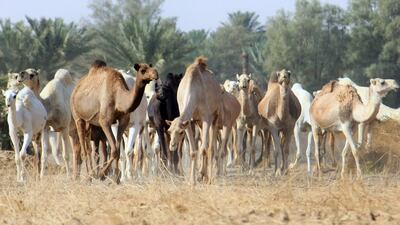
  • While the world’s attention has been focused on the coronavirus in recent years, a related pathogen -- the Middle East Respiratory Syndrome (MERS) -- has been continuing to circulate and cause deaths. Reuters
    While the world’s attention has been focused on the coronavirus in recent years, a related pathogen -- the Middle East Respiratory Syndrome (MERS) -- has been continuing to circulate and cause deaths. Reuters
  • Since the disease emerged a decade ago, there have been 2,605 confirmed cases, about 84 per cent of them in Saudi Arabia. AFP
    Since the disease emerged a decade ago, there have been 2,605 confirmed cases, about 84 per cent of them in Saudi Arabia. AFP
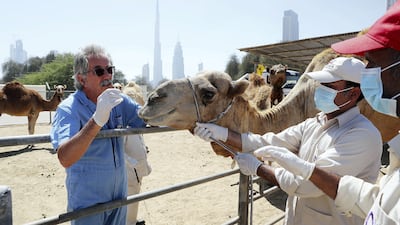
  • Ulrich Wernery, scientific director of the Central Veterinary Research Laboratory in Dubai, takes samples from a camel to assist with a study of Mers. Pawan Singh / The National
    Ulrich Wernery, scientific director of the Central Veterinary Research Laboratory in Dubai, takes samples from a camel to assist with a study of Mers. Pawan Singh / The National
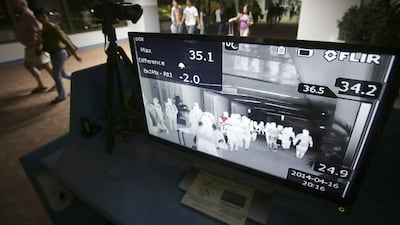
  • Passengers walk past a thermal scanner at Manila International Airport in the Philippines. The country is one of 18 that have reported cases of the MERS coronavirus. AP
    Passengers walk past a thermal scanner at Manila International Airport in the Philippines. The country is one of 18 that have reported cases of the MERS coronavirus. AP
  • Camel owners do not want to vaccinate their herd because the animals themselves do not become ill.
    Camel owners do not want to vaccinate their herd because the animals themselves do not become ill.
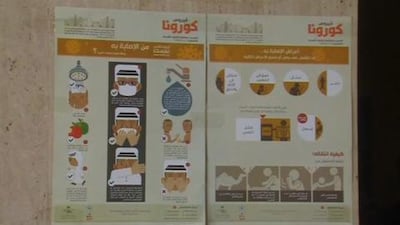
  • Saudi Arabia has urged its citizens and foreign workers to wear masks and gloves when dealing with camels. AFP
    Saudi Arabia has urged its citizens and foreign workers to wear masks and gloves when dealing with camels. AFP
  • Better hygiene and other virus control measures have helped to reduce the number of people infected with the virus from camels. Pawan Singh / The National
    Better hygiene and other virus control measures have helped to reduce the number of people infected with the virus from camels. Pawan Singh / The National
Profile box

Founders: Michele Ferrario, Nino Ulsamer and Freddy Lim
Started: established in 2016 and launched in July 2017
Based: Singapore, with offices in the UAE, Malaysia, Hong Kong, Thailand
Sector: FinTech, wealth management
Initial investment: $500,000 in seed round 1 in 2016; $2.2m in seed round 2 in 2017; $5m in series A round in 2018; $12m in series B round in 2019; $16m in series C round in 2020 and $25m in series D round in 2021
Current staff: more than 160 employees
Stage: series D 
Investors: EightRoads Ventures, Square Peg Capital, Sequoia Capital India

Spider-Man%202
%3Cp%3E%3Cstrong%3EDeveloper%3A%3C%2Fstrong%3E%20Insomniac%20Games%0D%3Cbr%3E%3Cstrong%3EPublisher%3A%3C%2Fstrong%3E%20%20Sony%20Interactive%20Entertainment%0D%3Cbr%3E%3Cstrong%3EConsole%3A%20%3C%2Fstrong%3EPlayStation%205%0D%3Cbr%3E%3Cstrong%3ERating%3A%3C%2Fstrong%3E%205%2F5%3C%2Fp%3E%0A
What are the influencer academy modules?
  1. Mastery of audio-visual content creation. 
  2. Cinematography, shots and movement.
  3. All aspects of post-production.
  4. Emerging technologies and VFX with AI and CGI.
  5. Understanding of marketing objectives and audience engagement.
  6. Tourism industry knowledge.
  7. Professional ethics.
Teri%20Baaton%20Mein%20Aisa%20Uljha%20Jiya
%3Cp%3E%3Cstrong%3EDirectors%3A%3C%2Fstrong%3E%20Amit%20Joshi%20and%20Aradhana%20Sah%3C%2Fp%3E%0A%3Cp%3E%3Cstrong%3ECast%3A%3C%2Fstrong%3E%20Shahid%20Kapoor%2C%20Kriti%20Sanon%2C%20Dharmendra%2C%20Dimple%20Kapadia%2C%20Rakesh%20Bedi%3C%2Fp%3E%0A%3Cp%3E%3Cstrong%3ERating%3A%3C%2Fstrong%3E%204%2F5%3C%2Fp%3E%0A

Like a Fading Shadow

Antonio Muñoz Molina

Translated from the Spanish by Camilo A. Ramirez

Tuskar Rock Press (pp. 310)

Results

5pm: Maiden (PA) Dh80,000 (Turf) 2,200m; Winner: Gurm, Antonio Fresu (jockey), Eric Lemartinel (trainer)

5.30pm: Handicap (PA) Dh80,000 (T) 1,600m; Winner: Al Nafece, Al Muatasm Al Balushi, Mohammed Ramadan

6pm: Wathba Stallions Cup Handicap (PA) Dh70,000 (T) 1,200m; Winner: Ashton Tourettes, Adrie de Vries, Ibrahim Aseel

6.30pm: Arabian Triple Crown – Group 3 (PA) Dh300,000 (T) 2,200m; Winner: Ottoman, Adrie de Vries, Abdallah Al Hammadi

7pm: Liwa Oasis – Group 2 (PA) 300,000 (T) 1,400m; Winner: Hakeemat Muscat, Szczepan Mazur, Ibrahim Al Hadhrami

7.30pm: Handicap (TB) Dh80,000 (T) 1,600m; Winner: Ganbaru, Antonio Fresu, Musabah Al Muhairi

ABU DHABI ORDER OF PLAY

Starting at 10am:

Daria Kasatkina v Qiang Wang

Veronika Kudermetova v Annet Kontaveit (10)

Maria Sakkari (9) v Anastasia Potapova

Anastasia Pavlyuchenkova v Ons Jabeur (15)

Donna Vekic (16) v Bernarda Pera 

Ekaterina Alexandrova v Zarina Diyas

Updated: May 30, 2022, 1:17 PM