• Exercise helps to lower blood pressure by reducing vessel stiffness so blood can flow around the body more easily. Victor Besa / The National
    Exercise helps to lower blood pressure by reducing vessel stiffness so blood can flow around the body more easily. Victor Besa / The National
  • Cycling is just as beneficial as walking to reduce blood pressure. Victor Besa / The National
    Cycling is just as beneficial as walking to reduce blood pressure. Victor Besa / The National
  • Physical activity such as hiking can lower blood pressure by up to 10 points. Reuters
    Physical activity such as hiking can lower blood pressure by up to 10 points. Reuters
  • In a study, blood pressure readings were even more optimal when participants ambled while working. Getty Images
    In a study, blood pressure readings were even more optimal when participants ambled while working. Getty Images
  • Weight training or lifting can reduce blood pressure once the gym session is over. Reuters
    Weight training or lifting can reduce blood pressure once the gym session is over. Reuters
  • Swimming can be beneficial in controlling blood pressure in adults 60 and older. Getty Images
    Swimming can be beneficial in controlling blood pressure in adults 60 and older. Getty Images

Jab to tackle high blood pressure would change lives, doctors say


Nick Webster
  • English
  • Arabic

Trials into the effectiveness of biannual injections to treat hypertension, or high blood pressure, have been welcomed by UAE doctors, who said a breakthrough in care could help save lives by simplifying medication plans.

Global research by Queen Mary University of London and Barts Health NHS Trust will trial an injection taken every six months instead of a daily tablet on 630 patients to see how effective it is in lowering blood pressure.

While it often does not have noticeable symptoms, if hypertension is not treated it can increase the risk of heart attacks, strokes and other severe health problems.

Skipping medication during periods of fasting over Ramadan, or simply forgetting to take daily pills to halt dangerous symptoms, puts lives at risk, doctors have said.

“These results are only from stage one trials, so it would take at least another two to three years before we are close to seeing this become available — but it looks like an innovative solution for patients managing hypertension,” said Dr Saurabh Potdar, a cardiologist at Burjeel Day Surgery in Abu Dhabi.

“A biannual injection, as opposed to daily medication, could have potentially a significant cost implication, compared with daily medication taken over the course of many years to manage these kinds of chronic conditions.

“Some patients are reluctant to take medication on a daily basis, as they often forget or miss their dose, which can cause problems.

Dr Saurabh Potdar said some patients are reluctant to take medication on a daily basis. Victor Besa / The National

“This is particularly the case during Ramadan when people may be fasting and can forget to take their daily medicine or choose not to take it.

“That is when they come to us with dizziness or chest pains, so this option could be easier to control symptoms that can come on quite quickly.”

Hypertension is on the rise in the UAE, with around 29 per cent of the population likely to have the condition.

It has been described as a silent killer, as many live with hypertension without realising it due to infrequent blood pressure checks.

The British Heart Foundation (BHF) said while there is not always an explanation for the cause of high blood pressure, most people develop it because of their diet, lifestyle or a medical condition.

Funded by Alnylam Pharmaceuticals, the three-year study is supported by the UK’s National Institute for Health and Care Research, and could revolutionise the way hypertension is treated for millions of people.

“We have seen an exponential growth in the amount of people with high blood pressure, particularly in younger people,” said Dr Potdar.

“Now we are seeing patients in their 20s and 30s with hypertension, with the only contributing factor being a stressful lifestyle.

"The pandemic has definitely made it more common.”

Doctors would typically give angiotensin-converting-enzyme (ACE) inhibitors to control blood pressure and counter the effects of constricting blood vessels.

ACE inhibitors are a class of medication that relax blood vessels and decrease blood volume, lowering blood pressure and decreasing the heart’s oxygen demand.

Survey shows hypertension on the rise

A Dubai household health survey of 2,530 adults conducted in 2019 found 38 per cent of men and 16 per cent of women had hypertension.

Pre-hypertension, where early markers of the condition are found by doctors, was reported in 29.8 per cent of people in the survey.

The condition can serve as an early warning for patients and doctors, and a sign of possible blood pressure changes that could lead to heart disease.

“Prevalence of hypertension is high and treatment needs good compliance to chronic medical therapy,” said Dr Sandeep Golchha, a cardiologist at NMC Specialty Hospital, Al Nahda, Dubai.

“Accordingly, long-term compliance is an issue with chronic medications.

"However, if the scientific trials of the said twice-yearly injections for hypertension address our safety and efficacy concerns, then it holds a lot of promise to be of great help for the majority of hypertensive patients for controlling blood pressure and addressing compliance issues at the same time.

“Clinicians would love to see more data based on research and trials to establish the safety and efficacy of the injectable regime.”

Foods that help to lower blood pressure

  • Blueberries are a superfood that can help to lower high blood pressure. Reuters
    Blueberries are a superfood that can help to lower high blood pressure. Reuters
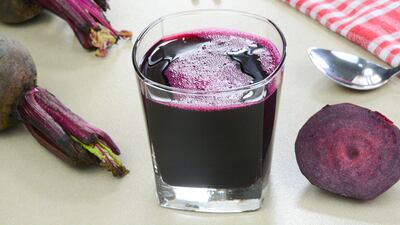
  • Research suggests that beetroot’s high levels of inorganic nitrate cause a reduction in blood pressure. Getty
    Research suggests that beetroot’s high levels of inorganic nitrate cause a reduction in blood pressure. Getty
  • Scientific trials found that dark chocolate with a cocoa content of between 50 per cent and 70 per cent is a treat that could help lower blood pressure. Getty
    Scientific trials found that dark chocolate with a cocoa content of between 50 per cent and 70 per cent is a treat that could help lower blood pressure. Getty
  • A daily serving of kiwi can reduce blood pressure in people with mildly elevated levels. Getty
    A daily serving of kiwi can reduce blood pressure in people with mildly elevated levels. Getty
  • Watermelon contains an amino acid called citrulline, which may help to manage blood pressure. Getty Images
    Watermelon contains an amino acid called citrulline, which may help to manage blood pressure. Getty Images
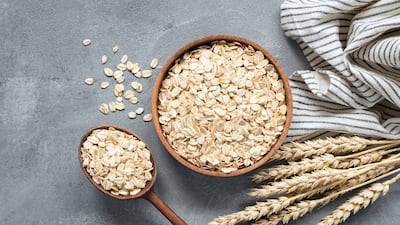
  • Oats contain a type of fibre called beta-glucan, which may reduce blood cholesterol levels. Getty
    Oats contain a type of fibre called beta-glucan, which may reduce blood cholesterol levels. Getty
  • Leafy green vegetables are rich in nitrates which help to manage blood pressure. Reuters
    Leafy green vegetables are rich in nitrates which help to manage blood pressure. Reuters
  • One study reported that garlic extract reduced both systolic and diastolic blood pressure in hypertensive people. Getty
    One study reported that garlic extract reduced both systolic and diastolic blood pressure in hypertensive people. Getty
  • Eating probiotics such as kimchi can have a positive effect on high blood pressure. Reuters
    Eating probiotics such as kimchi can have a positive effect on high blood pressure. Reuters
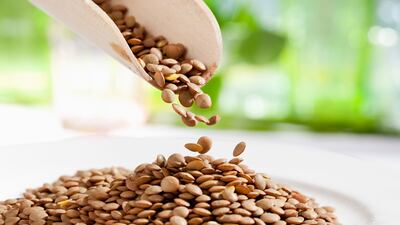
  • Scientists looked into the effects of a diet rich in pulses on rats and reported decreased levels of blood pressure. Getty
    Scientists looked into the effects of a diet rich in pulses on rats and reported decreased levels of blood pressure. Getty
  • Yoghurt may reduce the risk of high blood pressure in women. Getty
    Yoghurt may reduce the risk of high blood pressure in women. Getty
  • One cup of pomegranate juice daily for 28 days can lower high blood pressure in the short term. Reuters
    One cup of pomegranate juice daily for 28 days can lower high blood pressure in the short term. Reuters
  • Cinnamon may also help to reduce blood pressure. Reuters
    Cinnamon may also help to reduce blood pressure. Reuters
  • Pistachios are healthy nuts that may decrease hypertension. Reuters
    Pistachios are healthy nuts that may decrease hypertension. Reuters

Mercer, the investment consulting arm of US services company Marsh & McLennan, expects its wealth division to at least double its assets under management (AUM) in the Middle East as wealth in the region continues to grow despite economic headwinds, a company official said.

Mercer Wealth, which globally has $160 billion in AUM, plans to boost its AUM in the region to $2-$3bn in the next 2-3 years from the present $1bn, said Yasir AbuShaban, a Dubai-based principal with Mercer Wealth.

Within the next two to three years, we are looking at reaching $2 to $3 billion as a conservative estimate and we do see an opportunity to do so,” said Mr AbuShaban.

Mercer does not directly make investments, but allocates clients’ money they have discretion to, to professional asset managers. They also provide advice to clients.

“We have buying power. We can negotiate on their (client’s) behalf with asset managers to provide them lower fees than they otherwise would have to get on their own,” he added.

Mercer Wealth’s clients include sovereign wealth funds, family offices, and insurance companies among others.

From its office in Dubai, Mercer also looks after Africa, India and Turkey, where they also see opportunity for growth.

Wealth creation in Middle East and Africa (MEA) grew 8.5 per cent to $8.1 trillion last year from $7.5tn in 2015, higher than last year’s global average of 6 per cent and the second-highest growth in a region after Asia-Pacific which grew 9.9 per cent, according to consultancy Boston Consulting Group (BCG). In the region, where wealth grew just 1.9 per cent in 2015 compared with 2014, a pickup in oil prices has helped in wealth generation.

BCG is forecasting MEA wealth will rise to $12tn by 2021, growing at an annual average of 8 per cent.

Drivers of wealth generation in the region will be split evenly between new wealth creation and growth of performance of existing assets, according to BCG.

Another general trend in the region is clients’ looking for a comprehensive approach to investing, according to Mr AbuShaban.

“Institutional investors or some of the families are seeing a slowdown in the available capital they have to invest and in that sense they are looking at optimizing the way they manage their portfolios and making sure they are not investing haphazardly and different parts of their investment are working together,” said Mr AbuShaban.

Some clients also have a higher appetite for risk, given the low interest-rate environment that does not provide enough yield for some institutional investors. These clients are keen to invest in illiquid assets, such as private equity and infrastructure.

“What we have seen is a desire for higher returns in what has been a low-return environment specifically in various fixed income or bonds,” he said.

“In this environment, we have seen a de facto increase in the risk that clients are taking in things like illiquid investments, private equity investments, infrastructure and private debt, those kind of investments were higher illiquidity results in incrementally higher returns.”

The Abu Dhabi Investment Authority, one of the largest sovereign wealth funds, said in its 2016 report that has gradually increased its exposure in direct private equity and private credit transactions, mainly in Asian markets and especially in China and India. The authority’s private equity department focused on structured equities owing to “their defensive characteristics.”

BAD%20BOYS%3A%20RIDE%20OR%20DIE
%3Cp%3E%3Cstrong%3EDirector%3A%3C%2Fstrong%3E%20Adil%20El%20Arbi%20and%20Bilall%20Fallah%3C%2Fp%3E%0A%3Cp%3E%3Cstrong%3EStarring%3A%20%3C%2Fstrong%3EWill%20Smith%2C%20Martin%20Lawrence%2C%20Joe%20Pantoliano%3C%2Fp%3E%0A%3Cp%3E%3Cstrong%3ERating%3A%3C%2Fstrong%3E%203.5%2F5%3C%2Fp%3E%0A
Company%20profile
%3Cp%3E%3Cstrong%3EName%3A%3C%2Fstrong%3E%20Belong%3Cbr%3E%3Cstrong%3EBased%3A%3C%2Fstrong%3E%20Dubai%3Cbr%3E%3Cstrong%3EFounders%3A%3C%2Fstrong%3E%20Michael%20Askew%20and%20Matthew%20Gaziano%3Cbr%3E%3Cstrong%3ESector%3A%3C%2Fstrong%3E%20Technology%3Cbr%3E%3Cstrong%3ETotal%20funding%3A%3C%2Fstrong%3E%20%243.5%20million%20from%20crowd%20funding%20and%20angel%20investors%3Cstrong%3E%3Cbr%3ENumber%20of%20employees%3A%3C%2Fstrong%3E%2012%3C%2Fp%3E%0A
Results
%3Cp%3E%0D%3Cstrong%3EElite%20men%3C%2Fstrong%3E%0D%3Cbr%3E1.%20Amare%20Hailemichael%20Samson%20(ERI)%202%3A07%3A10%0D%3Cbr%3E2.%20Leornard%20Barsoton%20(KEN)%202%3A09%3A37%0D%3Cbr%3E3.%20Ilham%20Ozbilan%20(TUR)%202%3A10%3A16%0D%3Cbr%3E4.%20Gideon%20Chepkonga%20(KEN)%202%3A11%3A17%0D%3Cbr%3E5.%20Isaac%20Timoi%20(KEN)%202%3A11%3A34%0D%3Cbr%3E%3Cstrong%3EElite%20women%3C%2Fstrong%3E%0D%3Cbr%3E1.%20Brigid%20Kosgei%20(KEN)%202%3A19%3A15%0D%3Cbr%3E2.%20Hawi%20Feysa%20Gejia%20(ETH)%202%3A24%3A03%0D%3Cbr%3E3.%20Sintayehu%20Dessi%20(ETH)%202%3A25%3A36%0D%3Cbr%3E4.%20Aurelia%20Kiptui%20(KEN)%202%3A28%3A59%0D%3Cbr%3E5.%20Emily%20Kipchumba%20(KEN)%202%3A29%3A52%3C%2Fp%3E%0A
Updated: April 29, 2022, 5:46 AM