


The Middle East and Central Asia faces dire economic and financial consequences if nothing is done to address the worsening climate crisis, according to an International Monetary Fund report.
The IMF’s managing director, Kristalina Georgieva, said climate change was already affecting people’s lives and livelihoods in the region.
And the problem is only set to escalate if the world fails to rein in rising temperatures.
Addressing the World Government Summit, Ms Georgieva said the IMF’s new report, Feeling the Heat: Adapting to Climate Change in the Middle East and Central Asia demonstrated how urgent the issue was.
According to the report:
- At just 1.1°C of warming, half the global population faces water insecurity at least one month per year. The problem will be particularly felt in this region.
- So far this century, in an average year, climate disasters in the Middle East and Central Asia have injured and displaced 7 million people, caused more than 2,600 deaths and resulted in $2 billion in damage
- To address the problem, the world needs to cut global emissions by one half by 2030
“With just 1.1 degrees Celsius of warming, half the global population faces water insecurity at least one month per year. And this is particularly strongly felt in this region,” she said.
“Over the past two decades, the frequency and severity of climate-related disasters here have been rising faster than anywhere in the world. Droughts in North Africa, Somalia and Iran. Epidemics and locust infestations in the Horn of Africa. Severe floods in the Caucasus and Central Asia.
“The list of disasters is quickly getting longer.”
As the new paper shows, the economic and financial implications of these climate impacts pose a “major threat” to growth and prosperity of the region, said Ms Georgieva.

So far this century, climate disasters in the Middle East and Central Asia have injured and displaced 7 million people, caused more than 2,600 deaths and resulted in $2 billion in damage in an average year, she added.
“We also know that extreme weather events typically cut annual economic growth by 1–2 percentage points per capita.
“In the Caucasus and Central Asia sub-region, they even caused a permanent loss in the GDP level of 5.5 percentage points. Today’s climate challenges are already exacting a heavy toll.
"And we know our planet is set to keep on getting warmer. Even accounting for significant global cuts to emissions, by 2050, average summertime temperatures could exceed 30°C in half of the region’s countries.”
But there is much that could be done to address the problem, she said.
__________________________________
UAE tackling plastic waste: in pictures
-
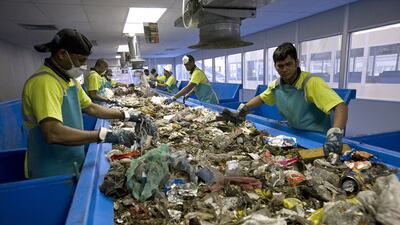
Workers sift through the rubbish from the Sharjah landfill to separate the recyclables. Jeff Topping / The National -
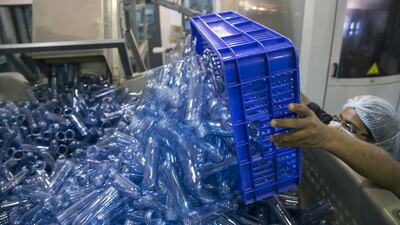
The UAE aims to recycle or reuse 75 per cent of municipal solid waste by the end of 2021. Silvia Razgova / The National -

Organisers and volunteers fill bags with used water bottles, old cans, bits of wood and a huge haul of plastic rubbish as they work their way along Hameem Beach in Al Dhafra. Delores Johnson / The National -
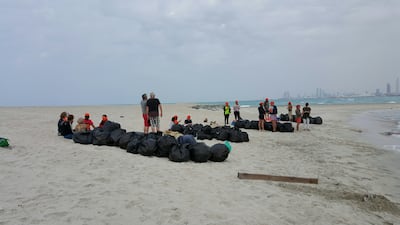
Every year the Netherlands embassy in Abu Dhabi, together with the Consulate General in Dubai, organises a teambuilding event. This was a beach clean-up in which 100 bags of rubbish were filled. Photo: Embassy of the Netherlands in Abu Dhabi -
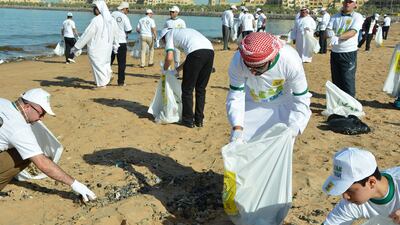
Two tonnes of waste were collected by hundreds of volunteers for the 14th Clean Up UAE by the Emirates Environmental Group. The National -
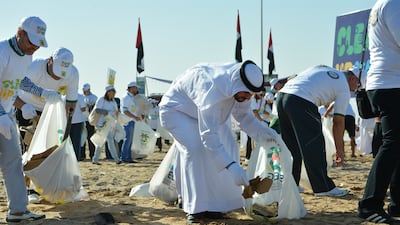
More from Clean Up UAE. Photo: Emirates Environmental Group -
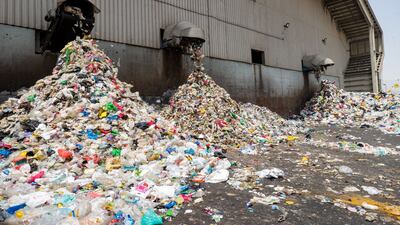
Solid waste bound for landfill at the Bee'ah waste management complex in Sharjah. The UAE is building one of the world’s largest waste-to-energy plants to process its growing amount of rubbish. Christopher Pike / Bloomberg -
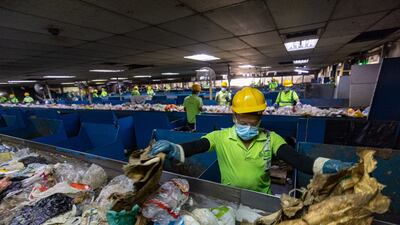
Workers sort solid waste material at the Bee'ah waste management complex in Sharjah. Christopher Pike / Bloomberg


__________________________________
“First, all countries need to drastically reduce emissions to stabilise global temperatures and make the adaptation challenge more manageable,” said Ms Georgieva.
The world needs to cut global emissions by one half by 2030, she said.
To achieve that the IMF recommends a steadily rising carbon price, backed by equivalent non-pricing measures, together with green investments, and actions to ensure a just transition across and within countries.
“Here, the UAE has led regional efforts with its pledge to invest more than $160 billion in renewables to achieve net zero carbon emissions by 2050,” said Ms Georgieva.
Second, countries should prioritise high-value risk management measures, which are justified under all plausible future climate scenarios.
Egypt is investing in modern irrigation techniques, education and health care.
“The UAE is focused on clean energy, sustainable construction, and water conservation,” she said.
Third, adaption policies should be included in national economic strategies.
“Within these frameworks, specific interventions could help boost public investment in resilient infrastructure, including increased flood protection, better irrigation, and improved buildings,” said Ms Georgieva.
“Simulations for Morocco show that investment in water infrastructure improves resilience to droughts, reducing GDP losses by almost 60 per cent and containing shocks to public debt.”
As a result, public infrastructure investment needs could amount to 3.3 per cent of annual GDP for individual countries in the region over the next 10 years, more than twice the emerging market average, she said.
Countries should start mobilising revenue, increasing efficiency and reprioritising public spending where possible, domestically.
“On the international side, a good start would be for advanced economies to meet or exceed the goal of providing $100 billion a year in climate finance to developing countries. The IMF will play its part,” she said.
Ms Georgieva said the IMF was stepping up its engagement on climate to assist in several ways, including creating a chapter on green jobs in its next World Economic Outlook.
“This year, international attention on climate issues is squarely focused on the Middle East. Egypt will host Cop27 in November, and in 2023 it will be the UAE's turn,” she said.
“As we look ahead to these meetings, the international community must come together to discuss the critical importance for climate action, for our present and our future.
“The IMF stands ready to support our members as we work together in these efforts.”

