


The number of fish sustainably caught in Abu Dhabi’s waters has surged over the past three years.
An index measuring sustainable exploitation ― which is the amount of fishing that does not have a negative impact on marine ecosystems – rose from 8.9 per cent in 2018 to 62.3 per cent in 2021, Environment Agency - Abu Dhabi said on Monday.
The statistics show recoveries in average mature stocks of some of the most threatened species, such as hammour, which increased from 15.8 per cent in 2020 to 20.5 per cent over the same period.
It means at least 70 per cent of the emirate’s fish stock could recover sustainably by 2030 if current fishing practices and conservation efforts continue.
Sheikh Hamdan bin Zayed, Ruler's Representative in Al Dhafra Region and chairman of the EAD, said the fishing sector in the emirate of Abu Dhabi was under pressure due to the over-exploitation of fisheries and their severe depletion.
"This required the implementation of a set of international procedures and standards for the management of fisheries in Abu Dhabi, which today, has succeeded in achieving remarkable results," said Sheikh Hamdan, paying tribute to all involved from fishermen to the Minstry of Climate Change and Environment.
“The measures taken ... will contribute to enabling fish stocks to recover on the long run, allowing at least 70 per cent of our fisheries' resources to recover sustainably by 2030," he said.

The indicator was calculated in 2021 by evaluating 32 species, which represents 98.6 per cent of landings that year.
The percentage of fish old enough to spawn, allowing for the renewal of the population, also increased.
The recovery follows a string of rules introduced by the EAD to save stocks, after a 2019 report highlighted how overzealous fishing practices had wiped out some species and pushed other populations to the brink of collapse.
The EAD survey revealed drops in fish populations of some 200 species due to overfishing, suggesting hammour, sheri and farsh were being fished between three and five times the sustainable limits.
Authorities swung into action and that year banned gargoor nets ― a traditional fishing cage blamed for decimating the stock of hammour and farsh. These stocks at one point declined to just 10 per cent of their adult stock size compared to levels in 1978.
The EAD also banned encircling nets, established marine reserves, implemented seasonal fishing bans, set out minimum catch sizes and also ran awareness campaigns for local fishermen.
"We must preserve the fishing heritage passed on from our ancestors for our future generations, so that they can enjoy the goodness of our land and our cultural and natural heritage," said Sheikh Hamdan.
"We must preserve the fishing heritage passed on from our ancestors for our future generations."
UAE sustainability projects - in pictures
-
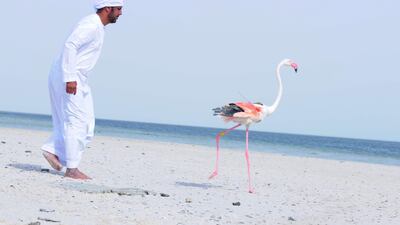
The UAE is known for protecting the environment. Here Environment Agency Abu Dhabi staff release a tagged flamingo as part of Abu Dhabi Birdathon initiative. Courtesy Environment Agency Abu Dhabi -

Umbrella Thorn Acacia trees are among the UAE's rich flora. Silvia Razgova / The National -
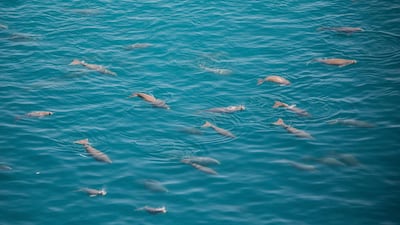
Abu Dhabi has the second-largest dugong population in the world. Environment Agency Abu Dhabi -
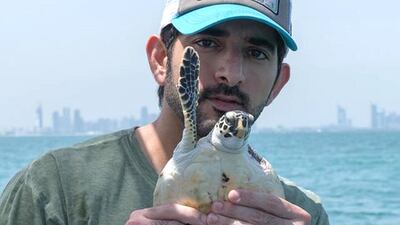
Love of nature is part of life here. Sheikh Hamdan bin Mohammed, Crown Prince of Dubai, with a sea turtles he helped release into the wild. Instagram/ @faz3 -
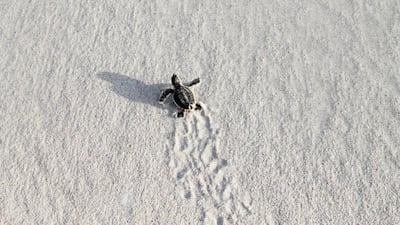
Abu Dhabi's environment agency is working to protect Hawksbill and Green turtles which live in the emirate's waters. Courtesy TDIC -
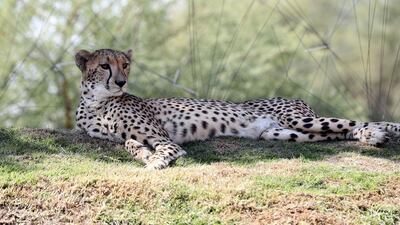
A cheetah at Al Ain Zoo, Al Ain. The zoo was founded by the Late President, Sheikh Zayed. Chris Whiteoak / The National -
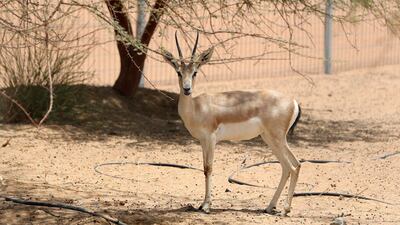
An Arabian sand gazelle at the Mleiha Archaeological Centre in Sharjah. Chris Whiteoak / The National -

The UAE is also embracing clean energy. This computer-generated image shows what phase four of Dubai's Mohammed Bin Rashid Solar Park, currently under construction in Dubai. Image courtesy of Acwa Power -

Nuclear energy is also important. The first reactor at Barakah nuclear plant reached 100 per cent power in December 2020. -

Abu Dhabi's new Midfield Terminal has won a coveted three-pearl rating under Abu Dhabi's Estidama, Arabic for sustainability, system. Courtesy KPF -
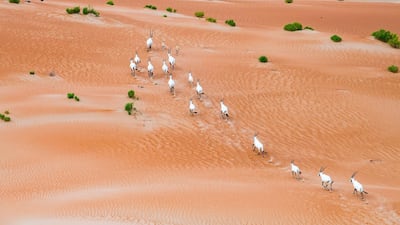
A breeding programme run by Environment Agency Abu Dhabi helped bring Arabian Oryx back from the brink of extinction. Courtesy: EAD



