• An artist's impression of the UAE's lunar rover called Rashid.
    An artist's impression of the UAE's lunar rover called Rashid.
  • Dr Hamad Al Marzooqi, project manager of the Emirates Lunar Mission at the Mohammed bin Rashid Space Centre. Chris Whiteoak / The National
    Dr Hamad Al Marzooqi, project manager of the Emirates Lunar Mission at the Mohammed bin Rashid Space Centre. Chris Whiteoak / The National
  • An artist's impression of iSpace's Hakuto-Reboot lunar lander. It will carry UAE's Rashid rover to the surface of the Moon in 2022.
    An artist's impression of iSpace's Hakuto-Reboot lunar lander. It will carry UAE's Rashid rover to the surface of the Moon in 2022.
  • The UAE aims to land the Rashid rover on the near side of the Moon due to its smoother surface.
    The UAE aims to land the Rashid rover on the near side of the Moon due to its smoother surface.
  • The far side of the Moon remains largely unexplored, but Nasa is turning its focus back to the lunar surface.
    The far side of the Moon remains largely unexplored, but Nasa is turning its focus back to the lunar surface.
  • The HAKUTO-R lander, which will deliver the UAE's Rashid rover to the lunar surface in 2022, is now in final stages of assembly.
    The HAKUTO-R lander, which will deliver the UAE's Rashid rover to the lunar surface in 2022, is now in final stages of assembly.
  • The ispace team completed the assembly of the lander's structure thermal model in April. Courtesy: ispace
    The ispace team completed the assembly of the lander's structure thermal model in April. Courtesy: ispace
  • The final assembly of the lander is being carried out in co-operation with the Ariane Group GmbH at the Ariane Group facility in Lampoldshausen, Germany. Courtesy: ispace
    The final assembly of the lander is being carried out in co-operation with the Ariane Group GmbH at the Ariane Group facility in Lampoldshausen, Germany. Courtesy: ispace
  • Using a lander and rocket that is already available helps Emirati engineers and scientists get quicker and easier access to space. Courtesy: ispace
    Using a lander and rocket that is already available helps Emirati engineers and scientists get quicker and easier access to space. Courtesy: ispace
  • The initial concept design of the Rashid rover. Courtesy: MBRSC
    The initial concept design of the Rashid rover. Courtesy: MBRSC
  • Rashid rover's thermal imager will analyse the Moon's properties through thermal energy. Courtesy: MBRSC
    Rashid rover's thermal imager will analyse the Moon's properties through thermal energy. Courtesy: MBRSC
  • The Langmuir probes on the rover will analyse the lunar surface charge and electric fields. Courtesy: MBRSC
    The Langmuir probes on the rover will analyse the lunar surface charge and electric fields. Courtesy: MBRSC
  • One of the rover's two high-resolution optical imagers that will take photos of the Moon. Courtesy: MBRSC
    One of the rover's two high-resolution optical imagers that will take photos of the Moon. Courtesy: MBRSC

UAE's Moon mission on track for October launch


Sarwat Nasir
  • English
  • Arabic

The UAE will attempt to land a rover on the Moon in October, the chief of the Mohammed bin Rashid Space Centre said on Tuesday.

The Arab world's first Moon mission was announced in 2020, with a launch date set for 2024.

However, the Emirates was able to secure an earlier flight when it partnered with Japan's ispace to use its Hakuto-R mission lander to deliver the rover to the lunar surface this year.

Salem Al Marri, the director general of the Mohammed bin Rashid Space Centre, confirmed the rover would launch in October.

“We plan to launch our first rover, which will be the first object from the Arab world to land on another celestial body,” he said.

“We will be landing on the Moon in October of this year.”

Engineers at the UAE space centre are assembling the Rashid rover.

Work on the mission started in 2017.

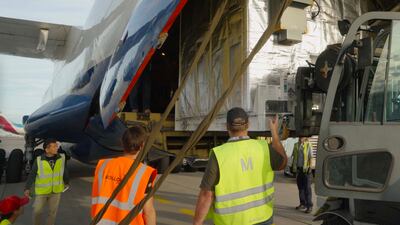
  • The Hakuto-R Mission 1 lunar lander is delivered to Florida's Cape Canaveral from where it will carry the UAE's Rashid rover to the Moon. Photo: ispace
    The Hakuto-R Mission 1 lunar lander is delivered to Florida's Cape Canaveral from where it will carry the UAE's Rashid rover to the Moon. Photo: ispace
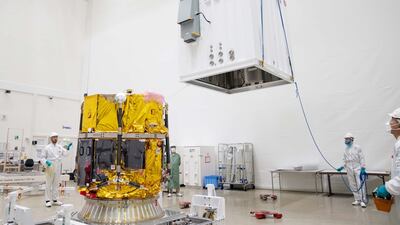
  • The Hakuto lander with the Rashid rover stored inside, ready to be shipped to Florida. Photo: ispace
    The Hakuto lander with the Rashid rover stored inside, ready to be shipped to Florida. Photo: ispace
  • Rashid lunar rover's final prototype. Photo: Mohammed bin Rashid Space Centre
    Rashid lunar rover's final prototype. Photo: Mohammed bin Rashid Space Centre
  • An Emirati engineer tested the Moon rover in remote desert areas of Dubai. Photo: Mohammed bin Rashid Space Centre
    An Emirati engineer tested the Moon rover in remote desert areas of Dubai. Photo: Mohammed bin Rashid Space Centre
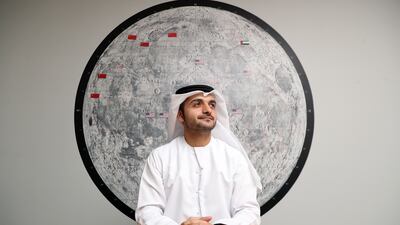
  • Dr Hamad Al Marzooqi, project manager of the Emirates lunar mission. Chris Whiteoak / The National
    Dr Hamad Al Marzooqi, project manager of the Emirates lunar mission. Chris Whiteoak / The National
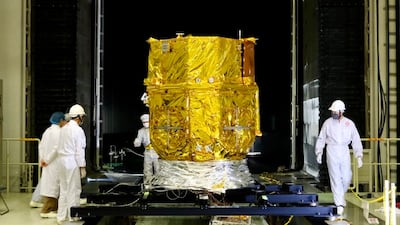
  • Development of the lander nears completion. Photo: ispace
    Development of the lander nears completion. Photo: ispace
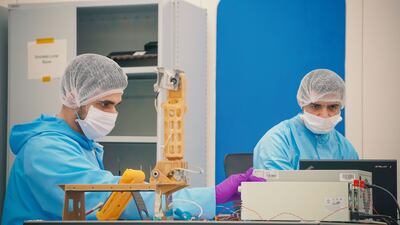
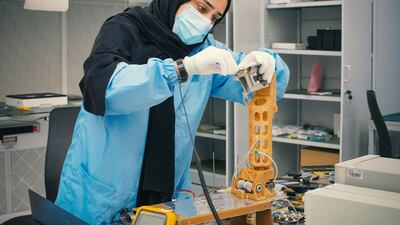
  • Emirati engineers test parts of the Rashid rover. Photo: Mohammed Bin Rashid Space Centre
    Emirati engineers test parts of the Rashid rover. Photo: Mohammed Bin Rashid Space Centre
  • Emirati engineers test parts of the Rashid rover. Photo: Mohammed Bin Rashid Space Centre
    Emirati engineers test parts of the Rashid rover. Photo: Mohammed Bin Rashid Space Centre
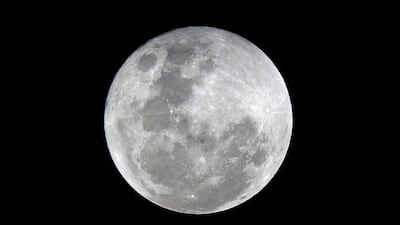
  • A full Moon gleams above Buenos Aires. AFP
    A full Moon gleams above Buenos Aires. AFP

After years in development, the Japanese lander that will take the UAE rover to the Moon is nearing completion.

The Hakuto-R lander has been in development since 2019. Technical problems in 2020 delayed its first launch plan.

It is now in the final stages of assembly and will be ready to receive the Rashid rover for integration in April.

Final tests will be carried out before the mission heads to Florida’s Kennedy Space Centre for launch on board a SpaceX Falcon 9 rocket.

Securing an already available commercial lander offers the UAE the easiest access to the lunar surface.

The Emirates' entire Moon mission relies heavily on the Japanese lander, which will act as a “lunar taxi” for the rover.

Engineers install the fuel tank on the Hakuto-R lander. Photo: ispace

“The year ahead is the most important yet for us. This is everything we’ve worked for,” ispace founder Takeshi Hakamada said.

“Every member of our team has contributed to our progress and I continue to be grateful for our employees each day.

“There is still a lot of work to do, so we must remain focused and steadfast as we progress toward our first mission.

“However, by this time next year, I am optimistic that we will be able to look up at the Moon during the New Year celebrations and see it in a way we’ve never seen it before.”

The lander will also provide the Rashid rover with wired communication and power during the cruise phase and wireless communication on the lunar surface.

In the months ahead, engineers will install radiators, insulation layers, solar panels, landing gear and deployment mechanisms on the lander.

An artist's impression of the Hakuto-R lander approaching the Moon. Photo: ispace

The lander is carrying seven payloads from space agencies and private companies.

They include a lunar robot by the Japanese space agency, 360-degree cameras by Canadian company Canadensys Aerospace, and an artificial intelligence flight computer by another Canadian organisation, Mission Control Services.

If the lander reaches the Moon and delivers these payloads, it will mark a major milestone for the commercial space industry.

More private companies are seeking to establish delivery services to the Moon to cater to space agencies and private organisations that wish to reach the lunar surface.

Intuitive Machines, a private space company in Houston, will soon launch its own lunar lander on top of a SpaceX rocket.

The Nova-C lunar lander will carry five commercial payloads to the Moon’s surface for Nasa and private companies.

The Nasa-sponsored flight will also carry the first British mission, a small rover built by private company Spacebit, to the Moon’s surface.


Updated: January 26, 2022, 2:06 PM