


Facebook and Instagram are urging users to report and not share potentially harmful content of children as part of a new Mena-wide campaign being launched this month.
Teenagers not yet 16 are being encouraged to put safety first and to create only private accounts on Instagram.
The campaign is being run by the social media networks' parent company Meta and aims to inform people that sharing exploitative material of children, even in the context of outrage or condemnation, can cause further harm and is illegal.
The central message of the campaign, which will begin on World Children's Day on November 20, is: Report it. Don’t Share it.
-

Child-on-child sexual abuse and self-generated indecent images were among a growing trend of online exploitation. Photo: Reuters -
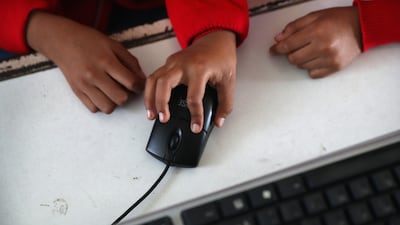
A detailed assessment of online child exploitation found 44 per cent of respondents in the Mena region experienced online sexual harm in childhood. Photo: Getty -
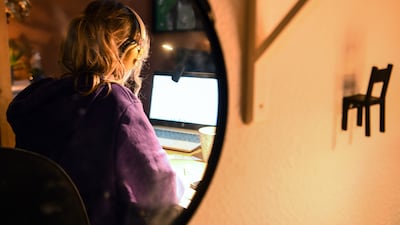
A total of 34 per cent of respondents said that during their childhood they had been asked to do something sexually explicit online that they were uncomfortable with. Photo: Getty -

A report shows that almost half of young adults aged 18 to 20 in the Mena region suffered abuse online when they were growing up. Photo: Getty -

Economist Impact asked more than 5,000 people aged 18 to 20 in 54 countries about their experiences online as children. Photo: Reuters -

Such abuse may be more common than current data suggest, because the figures are not globally representative and are skewed towards countries in which detection and reporting are higher, such as in the US and UK. Photo: Getty


David Miles, head of safety at Meta for Europe, Middle East and Africa, said the organisation focused heavily on prevention and continued to work tirelessly to ban child sexual exploitation and avoid even the potential for abuse.
“With this comprehensive approach in 2020, we removed more than 20 million pieces that violated our child nudity or sexual exploitation policy. Ninety-nine per cent of these were removed before anyone reported it," Mr Miles said.
Mr Miles said they studied people’s motivations for viewing and sharing this content and found that very often the motives were innocent.
Meta
"About 10 per cent to 12 per cent of the 20 million reports we send are what we call malicious to contacting or grooming children," he said.
"What became clear to us us is that we needed to take different kinds of approaches for different people.
"What also became clear was that we needed to do a public awareness campaign in some countries to raise the awareness of how this kind of content victimises the child even if done with the best of intentions."
They launched the pilot campaign in countries in Africa and Latin American where he said these were very successful.
"We will be doing a similar thing in the Mena region because we find it's very effective," he said.
"It makes people aware of what a difficult problem it is and that behind the images are real victims who need to be supported."
Mr Miles said that the Mena region was one of the four globally where they had witnessed a substantial increase in the sharing and distribution of content in the past few years.
He said education was key, particularly in the case of those who share offensive material in a misguided effort to highlight the problem.
"We get people sharing content but they don’t realise that it is illegal or harmful. That’s an education process. People are shocked and want to share."
He said that in a two-month period from October to November 2020, 90 per cent of the reports placed in the US were not malicious.
Privacy setting is key
Tara Hopkins, head of public policy Europe, Middle East and Africa at Instagram, said having a private account was the best way to stay safe on Instagram.
She said that earlier this year Instagram announced that anyone under 16 who joins Instagram will be opted into a private account by default.
During testing, eight out of 10 young people accepted the private default settings.
Anyone under 16 who was already on Instagram was sent notifications encouraging them to understand their privacy settings.
"On Instagram many users have more than one account, that is a very normal behaviour. We want young people to intentionally think about their privacy even if they don’t have a private account. But we do strongly encourage young people under the age of 16 to have a private account," Ms Hopkins said.
"To protect young people from unwanted contact from adults we have introduced a feature that prevents adults from sending messages to anyone under the age of 18 or who does not follow them."
They have also developed new technology to identify potentially suspicious accounts from finding and interacting with teens.
Nearly half of 18 to 20-year-olds in the Middle East have suffered online abuse and exploitation, a major survey found in October, with many taken advantage of after sending compromising images across the web.
It found 44 per cent of respondents in the Middle East and North Africa region experienced online sexual harm in childhood.
Child-on-child sexual abuse and self-generated indecent images were among a growing trend of online exploitation found in a report by the WeProtect Global Alliance, an organisation comprising more than 200 governments, private sector companies and civil society groups.

