


A new research centre in Abu Dhabi will use the UAE desert as a testing ground to explore how space technology can help food production thrive in challenging climates – on Earth and beyond.
US-based firm Nanoracks, which specialises in launching small payloads such as mini and cube satellites, will establish a commercial space research centre called StarLab Oasis in the capital.
The company, which opened an office in Abu Dhabi’s Hub71 in 2019, has received funding from the Abu Dhabi Investment Office for the programme.
Researchers will look into ways of producing food on Mars as well as in areas, such as the Emirates, where scant rainfall is an obstacle to thriving agriculture.
“In the UAE, we really saw how space can be applied to what the issues are in the region, and one of them is food security,” Allen Herbert, vice president of business development and strategy at Nanoracks, told The National.

“Many people don’t realise that the vertical farming industry initially started almost 30 years ago and some of that technology came from Nasa because they were trying to figure out how we could sustain people in space for long durations and on other planets.
“Now, we’re launching a company called StarLab Oasis. What we’ll be focusing on is how we can utilise space technology and do even more research to impact food security on Earth, as well as how technologies on Earth can be used in space.”
High-tech operations to commence in 2022
An international team of scientists and engineers will work at the centre, which is expected to begin operations next year.
The UAE imports most of its food, but the country is working on ways to become self-sufficient.
Under its food security strategy, scientists have been using various agricultural methods to grow crops, such as rice, in the desert and in controlled environments.
Mr Herbert believes that space-based technology that already exists, and that can be further improved, could help advance those methods.
“For example, there are sensors that have been developed that monitor plant growth,” he said.
“You could also use artificial intelligence and have a lot of different data to maximise plant growth in limited space. Using AI, you could also look at the genomics of the plant, how it can survive, maximise plant genomics to grow in limited space with little sun in a certain strange environment.”
-
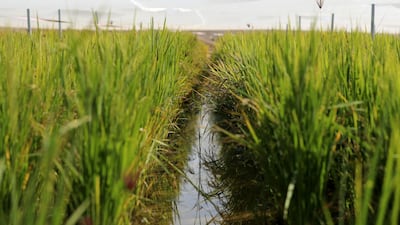
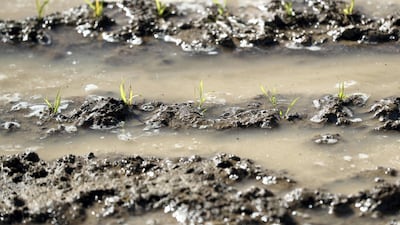
Emirati and Korean scientists have successfully grown rice crops in a remote Sharjah desert. All photos: Chris Whiteoak / The National -
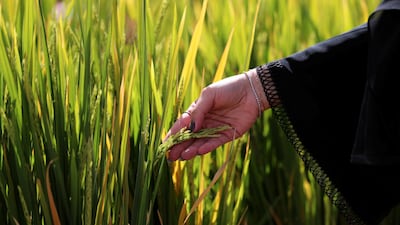
In 2020, 763 kilograms of crops were harvested. -
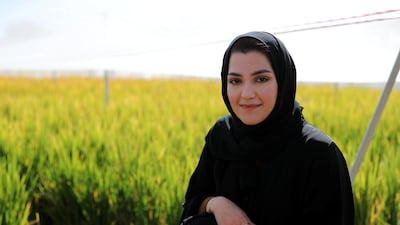
Amal Al Ahmadi, head of agricultural research section at Ministry of Climate Change and Environment, said the efforts are part of a research project to enhance the UAE's food security. -
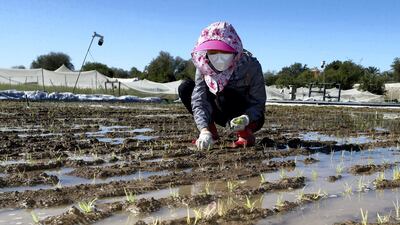
The UAE is one of the largest importers of rice. Due to the country's hot climate, rice is difficult to cultivate and is better suited for nations with high rainfall. -
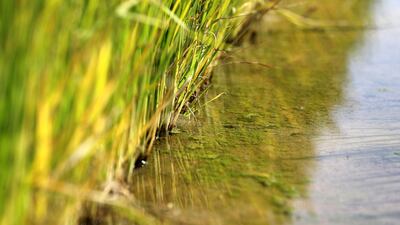
The ministry has partnered with South Korea's Rural Development Administration to create innovative ways to grow rice. -
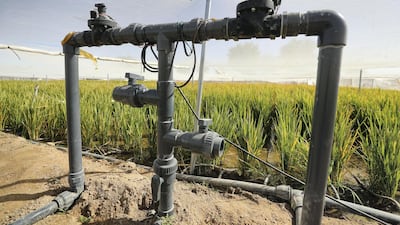
An underground drop irrigation system is used to water the crops. There are four methods used, including drip and furrows (canals with drips), normal drip system, flooding with a protective layer and flooding in furrows. -
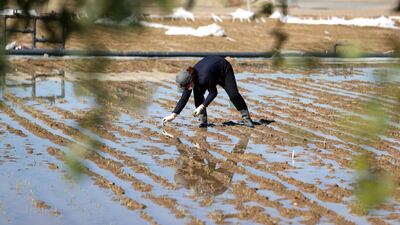
Korean scientists are at the farm nearly every day to monitor the crops. -
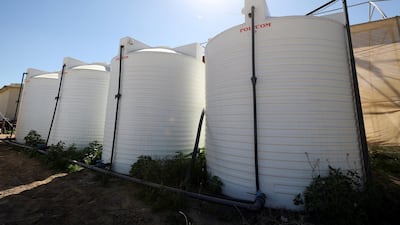
The goal is to grow the crops in a sustainable way by using 50 per cent less water than what would be required. Pictured are water tanks that are used for farming. -
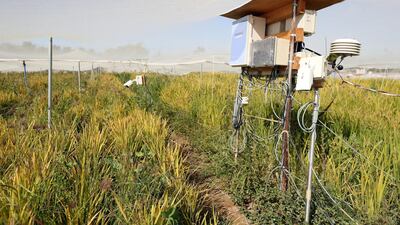
Technology is also used to help monitor the crops' health, including cameras, sensors and weather systems. -
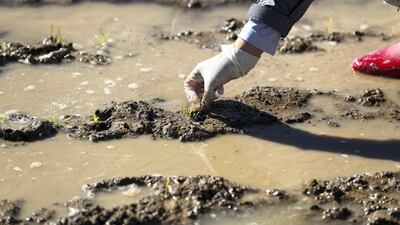
The main challenge have been seed-eating birds that damage the crops. -
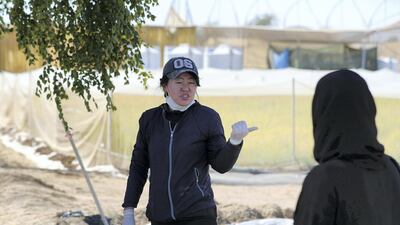
The Asemi variety of rice has been the most successful out of the two main ones that were tested, but there are 33 other types that are also being researched in smaller patches. -
The project is also meant to help farmers grow rice sustainably in the future. -
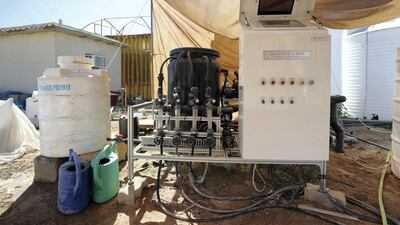
A machine designed to distribute nutrients to the plants at the rice farm. -
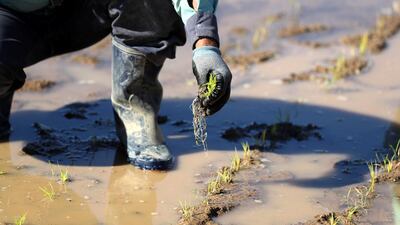
The rice is only for research purposes and will not be available for commercial use.


Scientists with the programme will use the UAE desert to carry out experiments.
Mr Herbert said they are looking at “greening of the desert” through advanced agricultural techniques, while using enhanced technology for agriculture in enclosed environments.
“When you take seeds up into space and expose them to minimum gravity, minimum energy, and even radiation, and then you bring them down, the harshest seeds will survive.
“Those seeds can be used to grow [crops] in the desert. Also, different techniques, in terms of energy and water, can be used in a desert environment.”
UAE investing in advanced food security methods
Nanoracks will be announcing more details on the project next week during the National Space Symposium in Colorado, being held from August 23 to 26.
Adio has invested Dh152 million ($41.4m) in three companies – Nanoracks, Pure Harvest Smart Farms and FreshToHome – as part of its AgTech Incentive Programme that focuses on land, sea and space projects to achieve food security.
Tariq Bin Hendi, director general of Adio, said Abu Dhabi was pressing ahead with its mission to turn the desert green and solve long-term global food security challenges.
“We have created an environment where innovative ideas can flourish and this has enabled the rapid expansion of our AgTech sector,” he said.
“Innovations from the companies we partnered with earlier this year are already propelling the growth of Abu Dhabi’s 24,000 farms. Partnering with Pure Harvest, FreshToHome and Nanoracks adds a realm of new capabilities to the ecosystem across land, sea and space.
“We are driving innovation across the entire agriculture value chain and this is producing a compounding effect that is benefiting farmers, innovators and companies in our region and beyond.”
Oyster farm in Dibba - in pictures
-
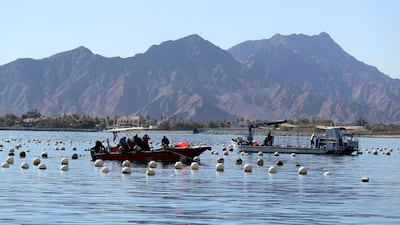
Oysters are typically farmed close to shore but these oysters are farmed off shore to take advantage of the warmer climate. Chris Whiteoak / The National -
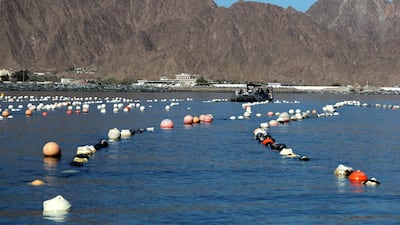
Dibba Bay Oysters farm in Fujairah, where millions of oysters are produced. Chris Whiteoak / The National -
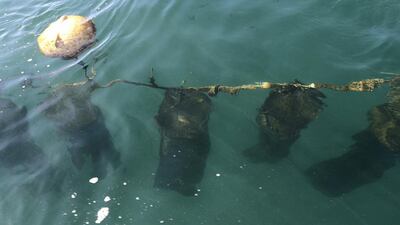
Oysters grow in a series of graduated nets, known as lanterns, metres beneath the surface of the sea. ocean farm. Chris Whiteoak / The National -
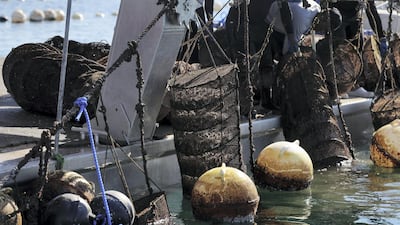
Oysters grow in a series of graduated nets, known as lanterns, metres beneath the surface of the sea. ocean farm. Chris Whiteoak / The National -
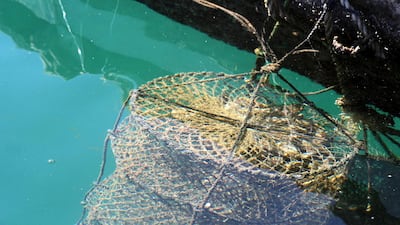
The lanterns protect the oysters while allowing the water to flow through so they can feed. Chris Whiteoak / The National -
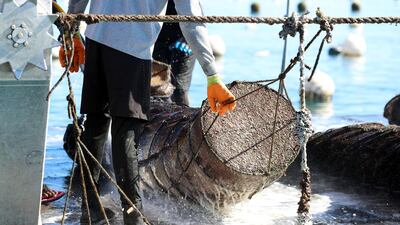
The lanterns are filled with oysters that take about eight months to grow before being harvested. Chris Whiteoak / The National -
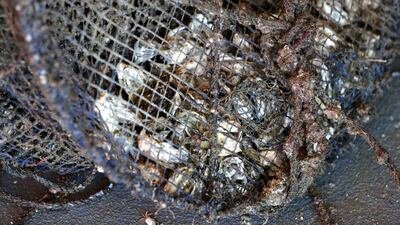
Oysters are harvested from the aqua farm. They take about eight months to grow completely. Chris Whiteoak / The National -

Workers pull lanterns full of oysters from the sea. Chris Whiteoak / The National -
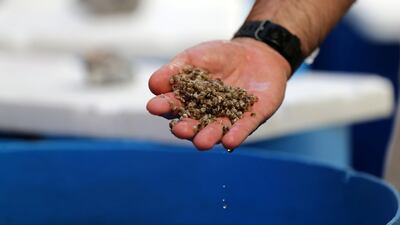
Between 5,000 and 10,000 baby oysters fit in each lantern. Once fully grown, that reduces to about 400 to 500. Chris Whiteoak / The National -

Ramie Murray, founder of Dibba Bay Oysters, is a Scottish expatriate who has lived in the UAE for more than two decades.. Chris Whiteoak / The National -
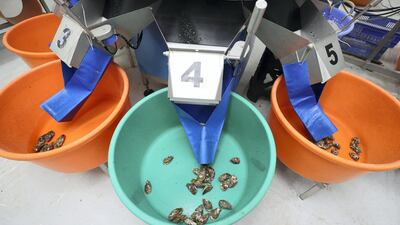
Oysters are weighed in the weighing room back at the land processing area. Chris Whiteoak / The National -

After passing through the offshore farm and processing platform, the oysters are washed down, cleaned and individually weighed at the on-shore sorting facility before being packed and shipped for local or international export. Chris Whiteoak / The National -

Cleaned oysters are packaged so they can be sold. Chris Whiteoak / The National -
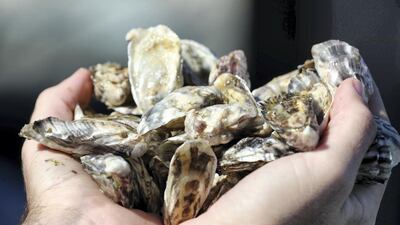
Cleaned, freshly harvested oysters are ready for packaging. Chris Whiteoak / The National -
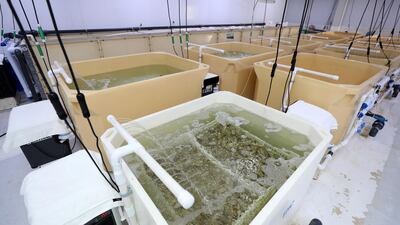
Harvested oysters are cleaned before they are packaged and sold. Chris Whiteoak / The National -

Oysters freshly pulled from the sea are taken for processing. Chris Whiteoak / The National -
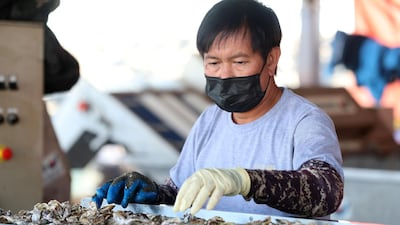
A worker separates the oysters based on their size at the land processing platform. Chris Whiteoak / The National -

Ramie Murray, founder of Dibba Bay Oysters, buys baby oysters from the UK and France before growing them in the waters off Fujairah. Chris Whiteoak / The National -
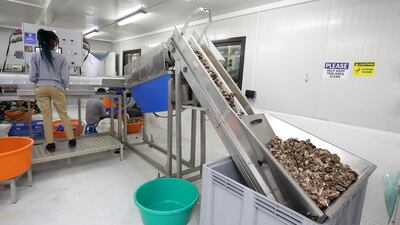
Oysters pass through the land processing area where they are weighed, cleaned and packaged for sale. Chris Whiteoak / The National -
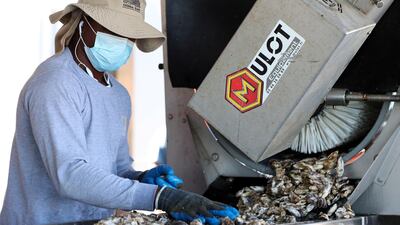
The processing platform, where the oysters are separated based on size and cleaned before packaging. Chris Whiteoak / The National



