


School leaders in the UAE believe they are in a strong position to rally from the economic impact of the Covid-19 pandemic.
Schools in the Emirates and across the globe have invested in a number of measures to ensure a safe environment for pupils and accelerate the transition to remote learning.
ISC research, an educational data provider that has been collecting information on international schools for 27 years, said the full effects of Covid-19 on the education sector may not be felt until the coming academic year.
But while schools in the UAE are counting the cost of the pandemic, an increasing focus on affordability and freezing of fees will attract pupils.
“Schools have had to purchase extra cleaning resources, social distancing tools such as signage and barriers, thermal scanners, licences for online platforms, and devices for some children and teachers," said Nalini Cook, Europe, Middle East and Africa head of research at ISC Research.
"They have had to increase their digital infrastructure and some schools have increased their staff to cover divided classes and quarantine and isolation periods."
Community care, wellbeing initiatives, and a strong distance learning programme are key for schools to recover, she said.
"Bouncing back is important but many, whilst looking for a return to some normality and familiarity are also exploring what has been learned over the last 18 months and so the bounce back may actually be a bounce ‘forward’ rather than ‘back," she said.

UAE schools invest in safety
In November 2020, schools in the UAE said they were confident of bouncing back from the economic effect of the pandemic after investing heavily to meet Covid-19 safety regulations.
Schools spent tens of thousand of dirhams to ensure premises were able to safely welcome back pupils at the start of the academic year.
Fiona Cottam, principal of Hartland International School in Dubai, said coronavirus had proved "incredibly challenging" for all industries, including the education sector.
The school, which caters for pupils aged 3 to 18, had spent close to Dh100,000 ($27,000) at the time to set up a medical room and increase sanitisation measures to meet guidelines required to reopen.
On the other hand, the economic impact of the virus has reduced disposable income for some families and, with that, their access to private education, according to ISC Research.
International schools said some pupils were being moved to more affordable institutes.
Schools also reported they had received requests from parents for payment plans, fee discounts, bursaries or loans to cover school fees in the short-term.
Low-cost schools in demand
Diane Glass, commercial director at ISC Research, said across the world admissions were down at some schools, while a few institutions closed and fees were being frozen in some geographies.
She said the Middle East had prepared for and witnessed a growth in the number of mid-market schools in recent times.
"It was probably the first part of the world that began to develop these mid-market fee point schools to appeal to a much wider audience," said Ms Glass.
"There are a lot of very positive things going on in the Middle East and a lot of companies we work with are still doing extremely well in that part of the world.
"Certainly parts of the world that are dependent on tourism have suffered and that has affected opportunities for international schools."
-
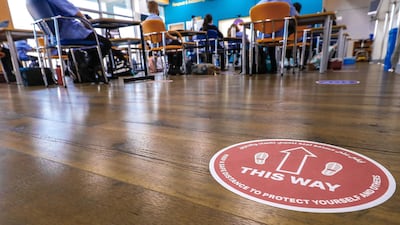
Covid-19 safety measures remain in place at schools in the UAE. Victor Besa / The National -
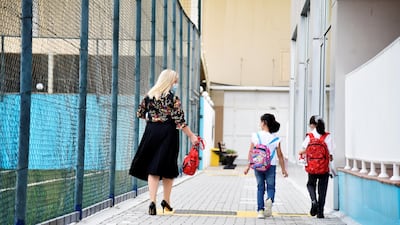
Testing and vaccination rules are in place for staff and pupils. Shruti Jain for The National -
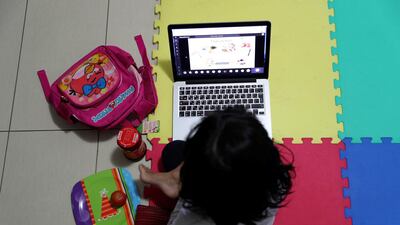
Some schools will continue to allow pupils to learn from home. Pawan Singh / The National -
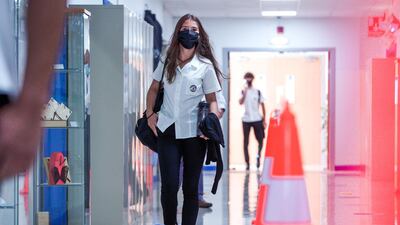
Pupils across the UAE will return to school on August 29. Victor Besa / The National -

Desks are spaced apart in a classroom at the American Academy for Girls in Al Mizhar, Dubai. Shruti Jain for The National


Ten new private schools are to open in Dubai in the next academic year, increasing the emirate's number of schools to 220 and creating 15,000 new places for pupils.
Two of the offers will be low-cost schools. An initiative, called Dubai Schools, will be run by a private sector operator with government funding, under a new model for the city.
Dino Varkey, chief executive of Gems Education, was on ARN's Business Breakfast radio show recently to discuss the impact of the pandemic.
He said the school group had witnessed a drop in the number of enrolments for the first time in 60 years but hoped numbers would be back at pre-pandemic levels by next year.
"We certainly think that we'll be back up to where we were pre-Covid. We contracted enrollments by 3 per cent, certainly the first time in our 60 years that we've ever seen, enrollments go backwards,” said Mr Varkey.
"But given the pandemic, I think, not surprising, certainly, we would see us recovering that number. And if we have a similar summer, as we have done over the last couple of years, I would hope that we'd be ahead of that as well.”
-

Kings’ Education launched Windsor School during the 2021-2022 academic year. Parents joining in the first year will pay Dh43,388 in foundation stage one and Dh52,500 in year six. Photo: Kings’ Education -
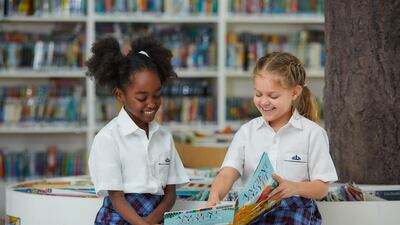
Windsor School is located near Dubai International Financial Centre. Photo: Kings’ Education -
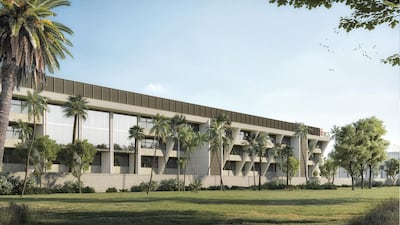
A rendering of the Royal Grammar School Guildford Dubai. Courtesy: It opened in September 2021. Photo: Royal Grammar School Guildford Dubai -
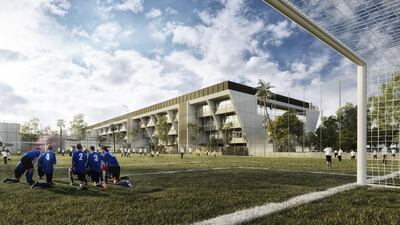
A rendering of a sports field at Royal Grammar School Guildford Dubai that was released before its launch. Photo: Royal Grammar School Guildford Dubai -

How the science block will shape up at Royal Grammar School Guildford Dubai. Photo: Royal Grammar School Guildford Dubai -

A rendering of F Level at Royal Grammar School Guildford Dubai. Photo: Royal Grammar School Guildford Dubai -
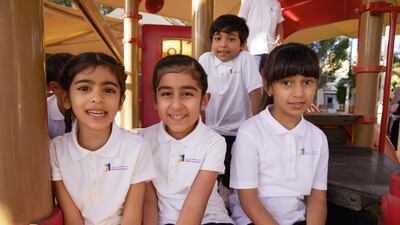
Dubai Schools opened to children in preschool to Grade 4 in September. Photo: Taleem


“Over the course of the last three, four years, we've certainly seen consistent growth in our affordable or value segment."
Alan Williamson, chief executive of Taaleem said families and staff craved safety, security and well-being amid a pandemic.
“Parents are looking for security and I think the bigger brands like Taaleem are arguably where parents will go at a time of uncertainty,” said Mr Williamson.

