



From revamped train carriages to restored aircraft and buses converted into diners, India is home to a number of unusual restaurants ensconced within refurbished and stationary modes of transportation.
These eateries offer an immersive experience for adventurous diners. From relishing a flavour-charged thali in a traditional tram and tucking into juicy burgers on the wings of an Airbus 320 or a crispy masala dosa inside a double-decker bus to savouring a 10-course Kashmiri wazwan feast aboard a “houseboat”, these meals on wheels (and decks) serve up unexpected adventures.
Food Bus Of India, Delhi

Few people passing by these flaming red double-decker buses — akin to those seen on the streets of London — can resist their charm. Placed at six strategic locations across New Delhi, the Food Bus of India’s atmospheric interiors are reminiscent of American diners.
The menu serves up European and Asian treats, including Indian street food favourites such as chaat or vada pav paired with a fiery gunpowder chutney. Or perhaps you’d prefer to savour the handcrafted barbecue chicken pizzas, spring rolls or regional Indian thalis? There are also inventive mocktails to quench your thirst.
“It took a whole year of planning and another year of execution to bring this new age double-decker dining into the Indian market,” says award-winning restaurateur Sukhraj Singh, who co-founded the eatery with his father in September. “I conceptualised the ‘quick service restaurant’ format during my studies in the UK. The idea was to serve famous street foods from the capitals of the world.”

Customers queue up outside the double-decker bus to first collect their "tickets". They are then ushered to their designated seats, where they can order from a varied menu. “It’s all about giving Delhiites the ultimate hop-on, hop-off experience, while serving them comfort food in the atmospheric interiors of a popular mode of transport,” says Singh.
The food is pre-prepared at the restaurant’s central kitchen and transported to the bus, with special touches added to it at a small counter located inside the vehicle. Though staples like thali will remain, new dishes will be added every now and then, says Singh. “Ours is a youth-centric brand, so we need to keep things fresh and novel.”
Runway 1, Delhi

For those who missed air travel during the pandemic, Runway 1 has the perfect compromise: a grounded aircraft serving up delicious Italian, Punjabi, Chinese and Indian fare. The 100-seater eatery offers a complete onboard dining experience, with staff dressed as cabin crew, in-flight announcements punctuating the air every so often, sensors installed on every seat to beckon servers and a boarding pass issued to all visitors.
Located inside Delhi’s Adventure Island in Metro Walk, Rohini, West Delhi, the restaurant is set on a verdant green lawn with an illuminated waterbody encircling it. “We are the first airplane restaurant in the world to offer dining on the wings, in an al fresco setting,” says owner Kshitiz Kakkar. Other such concept restaurants, in London and various Chinese cities, limit their dining to the fuselage.

“My wife Shruti, who was an air hostess with Jet Airways, and I came up with the idea. And it took us almost a year to set this up as the aircraft arrived disassembled from Delhi,” says the restaurateur. The aircraft was junked by Air India and Kakkar procured it through an agent as it was no longer viable to fly, but was large enough to function as an operational restaurant.
The process of converting a plane into a sit-down restaurant required lots of patience and hard work. Once the aircraft was procured, the process of disassembling it and removing all internal parts, and then refitting it with seating and so on, took nearly eight months. The kitchen is located on the ground, with the fuselage and wings forming the actual dining space.
Popular dishes include capsicum pizza, mint paratha, malai kofta (creamy dumplings), walnut brownies and an Oreo shake. Customers range from young couples to men wanting to propose in an unusual setting, as well as families celebrating special occasions. “Some even book the entire aircraft for a party,” says Singh.
Zarpar houseboat restaurant, Jaipur, Rajasthan

Zarpar resembles the beautiful wooden Kashmiri houseboats that pepper Dal Lake in Kashmir’s capital city Srinagar. Located in the Malviya Nagar area of Jaipur, the restaurant is fitted with Kashmiri carpets and bric-a-brac flown in especially from Kashmir, while an artificial waterfall gushes outside.
A replica of Kashmiri balconies, called zoona dub, offers diners a selfie point from which to capture the experience, and they can even don Kashmiri attire provided by the restaurant. In another corner, Kashmiri handicrafts, copperware, wood-carved items, dry fruits, saffron and honey are offered for sale.
Guests are given a traditional welcome with the ritualistic burning of harmal seeds, which have ayurvedic properties, to ward off the evil eye, a popular Kashmiri custom. “Ours is the only restaurant in India that provides visitors a full Kashmiri cultural experience, including traditional food, as well as the sale of art and handicrafts under one roof,” says Zarpar’s owner, Suman Raina, who launched the restaurant three years ago.

Food is served in copper utensils and handcrafted copper cutlery created by Kashmiri artisans. Diners remove their footwear and sit cross-legged on the carpet while being served by staff in traditional Kashmiri attire.
The signature meal — the wazwan — is a several-course Kashmiri feast usually served at weddings or celebrations. Vegetarian dishes include dum aloo (tandoori potatoes), yakhni (yoghurt-based curry) and tchoki wangan (sour brinjals). After the meal, hands are washed in tash naer (a copper vessel). There are different kitchens for cooking vegetarian and non-vegetarian food.
“We brought in most of the material for the restaurant from Kashmir. The drapery, cutlery and furnishings have all been designed in Kashmir to recreate an authentic ambience for our diners. We’re thrilled with customers’ feedback and hope to take Kashmiri cuisine to all corners of the country,” says Raina.
Kolkata Street Food tram cafe, Kolkata
Set up in March, the Kolkata Street Food cafe pays tribute to the tramcars that have been an intrinsic part of the culturally rich city of Kolkata since the 19th century. Once an integral mode of transportation, only a few locals use them in today’s urban, fast-paced life.
Given their diminishing utility, the West Bengal government has transformed one of its trams into a restaurant. Stationed at Eco Park in Kolkata's Newtown, the Kolkata Street Food tram cafe radiates a vintage charm, with props including lamp posts and movie posters and songs further augmenting the nostalgic dining experience.
Operational from noon to 9pm, the eatery seats 20 customers at a time and serves Indian delicacies, desi Chinese fare and spicy street food treats. There’s a feast for the eyes as well — you can watch the food being rustled up in a small kitchen in one corner of the tram, whether flaky puchkas (deep-fried dumplings) bobbing up and down in a ghee-filled wok or Mughlai parathas and kathi rolls being tossed on the griddle. Hakka noodles, Manchow soup, fried rice and many more hybridised Kolkata-style Chinese flavours tickle foodies’ taste buds at this quirky restaurant.
How modern-day Indian royals make a living — in pictures
-

Bollywood actor Saif Ali Khan is the 10th nawab of Pataudi. Subhash Sharma / The National -

Lakshyaraj Singh Mewar of Udaipur, Rajasthan. Getty Images -
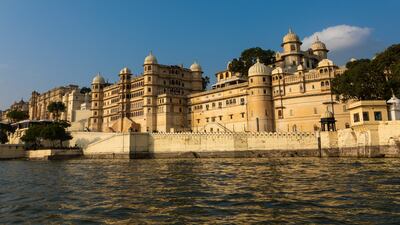
One of the oldest royal families in India, the Udaipur-based Mewar dynasty’s descendants continue to live at the stunning City Palace. Getty Images -

Rajyashree Kumari of Bikaner, Rajasthan. Getty Images -
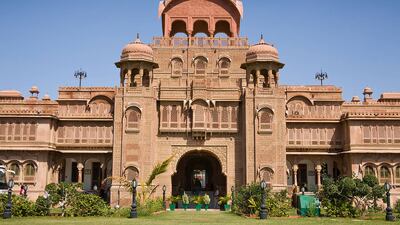
Rajyashree Kumari of Bikaner is also the owner of the opulent heritage hotel, Lalgarh Mahal, which hosts the Sri Sardul Museum. Getty Images -
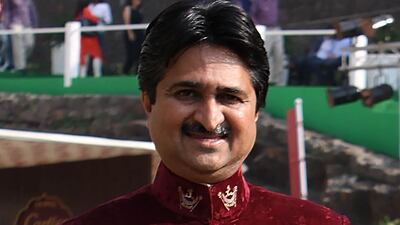
Yuvraj Mandhatasinh Jadeja of Rajkot, Gujarat. Getty Images -
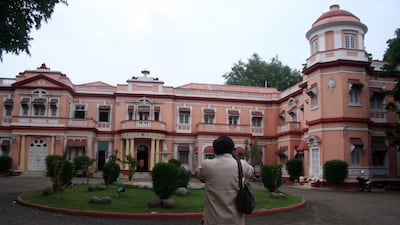
The Rajpipla Palace in Gujarat was built in 1915. -
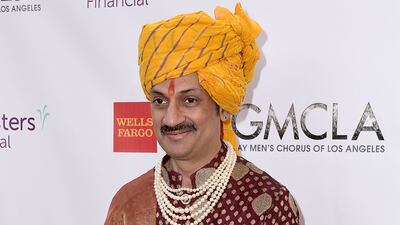
Manvendra Singh Gohil of Rajpipla, Gujarat. Getty Images



