“Sorry, tourist. Barcelona is already sold out,” the placards read as thousands of protesters took to the streets of the Spanish city earlier this month, their demonstrations mirrored in Mallorca and Ibiza.
Railing against what they see as overtourism, Spanish protesters claim the influx of annual summer visitors has become overwhelming, resulting in a poorer quality of life for locals with increased traffic congestion, pollution and a squeezed housing market as rental homes are turned into Airbnbs.
There is also the question of the way tourists behave while travelling. This was the focus of a protest in Bangkok on September 10, when hundreds of people converged on the Israeli Embassy in the Thai capital to complain about the behaviour of Israeli tourists at some of Thailand’s most popular destinations.


Tourism is under the spotlight like never before; one argument is that it drives business revenue, but another is that it also increases the cost of living for locals.
Where does reality lie and can we better strike the balance?
What causes over-tourism?
The modern phenomenon is the result of a combination of things, including cheap travel from low-cost airlines and cruise ships, the increase in short-term rentals, destinations going viral on social media and a lack of local government regulation.
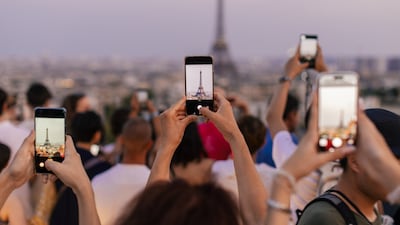
“Mass tourism isn't simply about too many tourists. It's about too many tourists concentrated in the same places, with the same itinerary, doing the same things at the same time,” says Omar Al Shunnar, owner of boutique travel company Beyond With You. “Social media has not only accelerated, but also likely caused that concentration, for example with the 'TikTok effect’, along with imitation and checklist mentality.
"Increasingly, we risk consuming destinations rather than exploring them, while local communities question whether they are receiving enough of the benefits.”

Environmental tech company Murmuration, which uses satellite data to help tourism destinations measure and manage their environmental impact, reports that 80 per cent of travellers visit just 10 per cent of the world’s tourism destinations. Additionally, in the report Tourism Towards 2030, the United Nations World Tourism Organisation projects that international tourist arrivals will reach 1.8 billion by 2030.
“I think the conversation is rightly shifting from simply counting visitor numbers towards value for residents, local communities and travellers,” says Al Shunnar. “The future should be about better tourism through better stewardship by the authorities.”
Is tiny tourism the solution?
Amid the growing backlash against mass tourism, the “tiny tourism” concept, coined this year by British creative platform It’s Nice That, offers a solution for travellers and locals alike.
Tiny tourism is about eschewing the most famous places, cities and attractions in favour of going off-the-beaten path to seek out destinations and experiences away from the crowds and in ways that quietly benefit previously underserved communities.
“It has real value for both sides,” says Shrey Nayar, airline business director and global head of flight marketing solutions for Trip.com in the Middle East and India. “For the traveller, going beyond the places that dominate postcards can give you a much more complete understanding of a destination. Often, the experiences people remember most are not necessarily the landmark itself, but the restaurant they found nearby, the neighbourhood they walked through afterwards, a local market or a conversation they did not plan for.”

As well as spreading economic benefits beyond capital cities and popular destinations, tiny tourism other far-reaching advantages, says Al Shunnar.
“Tiny tourism reduces pressure on infrastructure, nature, historic landmarks and famous areas, thus creating a better quality of life,” he says. “For travellers, it creates discovery, interaction and often a much richer personal experience.”
Nayar adds: “Tiny tourism asks travellers to widen the frame and pay attention to what exists around the attraction, rather than treating the attraction as the entire destination.”
Does it mean avoiding famous attractions?
While it’s all well and good to want to experience a country beyond its most celebrated landmarks, what if you’ve spent your life dreaming of seeing the Eiffel Tower, Taj Mahal or Big Ben?
“Certain places become iconic for a reason, and if seeing the Sagrada Familia has been on your list for 10 years, I don't think the answer is to fly to Barcelona and deliberately avoid it,” says Nayar.
“The more useful conversation is about how we travel. Plan ahead, respect local guidance, travel outside peak periods where possible, and spend some of your time and money beyond the busiest tourism districts.”
There are also ways to travel around these landmarks, Nayar explains.

“Technology can help here as well. Travel platforms can increasingly surface different activities, neighbourhoods and experiences based on what an individual traveller is interested in, rather than showing everyone the same itinerary. That makes discovery easier without asking people to give up the places they genuinely want to see.
“Tiny tourism, to me, is therefore less about rejecting famous places and more about putting them back into context. See the landmark, but don't assume it's all there is to see.”
How to be a tiny tourist
Tiny tourism is as much about a shift in mindset as it is about a destination.
Swapping visits to chain coffee shops and restaurants in favour of locally owned outlets is an easy way to be a tiny tourist in even the most popular places and cities. Travelling out-of-season and not being seduced by social media destinations are all attributes of the tiny tourist.
“Travellers can build trips around smaller interests rather than only around destinations, such as a particular food culture, a neighbourhood, nature, sport, music or a local event," says Nayar. "The destination still matters, but the reason for choosing it becomes more specific."
Al Shunnar concludes: "We have to be careful with the idea of constantly ‘discovering’ the next hidden gem. We've seen how quickly social media can take somewhere quiet and turn it into another overcrowded destination.
“Tiny tourism should be about travelling more thoughtfully, not simply finding somewhere new to consume.”

