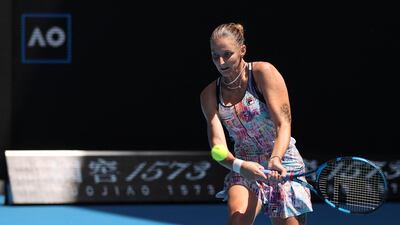
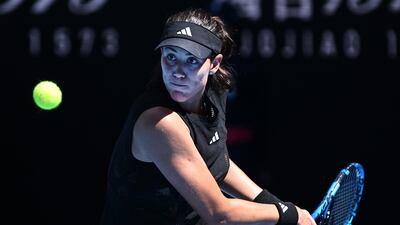
Karolina Pliskova has been drawn to face two-time Grand Slam champion Garbine Muguruza in the first round of the Mubadala Abu Dhabi Open. AFP

Karolina Pliskova ready to build on encouraging start to season at Abu Dhabi Open


  • English
  • Arabic

Karolina Pliskova's first observations when asked about the field for the inaugural Mubadala Abu Dhabi Open was to say it looks “incredibly tough” and that she expects there to be plenty of “exciting matches”.

Pliskova made those comments before the draw was made, and following Saturday's ceremony at The Galleria, it's unlikely the Czech would have changed her tune.

That is because she has been drawn to face two-time Grand Slam champion, and fellow former world No 1, Garbine Muguruza in what is undoubtedly the blockbuster match-up of the first round.

Had this tournament made its debut 12 months ago, these two titans of the WTA Tour would have been kept well apart: Pliskova was ranked world No 3 and Muguruza was just three places lower. Now, neither player is among the top eight seeds in Abu Dhabi, so both were vulnerable to face anyone in the draw including, as it proved, each other.

Muguruza's on-court struggles have been well-documented. The Spaniard's form has nosedived since winning the WTA Tour Finals in 2021; she has lost her first four matches of this year and has plummeted to 82 in the rankings.

Pliskova, meanwhile, has more been a victim of professional tennis' ranking points system. The Czech, who reached the Wimbledon final in 2021, was unable to defend any of those points after the tournament was stripped of them for banning Russian and Belarusian players.

Her ranking then hit another setback with a second-round exit at the Cincinnati Open having made the semi-finals the previous year.

A second successive quarter-final appearance at the US Open meant Pliskova didn't lose any more ground, but a first-round defeat at the Guadalajara Open saw her slump to 32nd, where she started this season.

Confirmed players for 2023 Mubadala Abu Dhabi Open

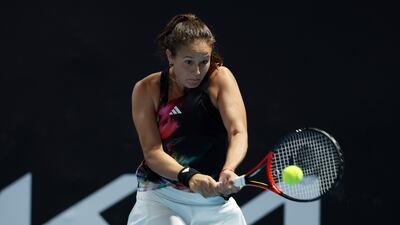
  • CONFIRMED PLAYERS FOR 2023 MUBADALA ABU DHABI OPEN: Daria Kasatkina (Russia): Age - 25 / WTA ranking - 8 / WTA Tour titles - 6. Getty
    CONFIRMED PLAYERS FOR 2023 MUBADALA ABU DHABI OPEN: Daria Kasatkina (Russia): Age - 25 / WTA ranking - 8 / WTA Tour titles - 6. Getty
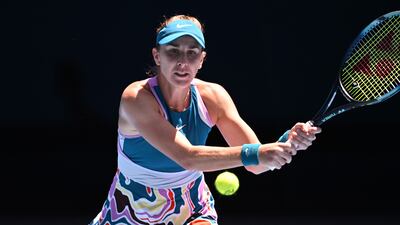
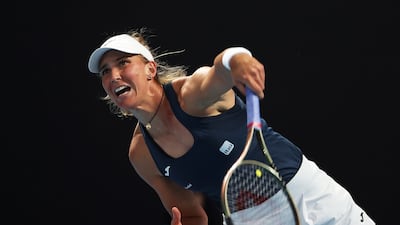
  • Belinda Bencic (Switzerland): Age - 25 / WTA ranking - 9 / WTA Tour titles - 6. EPA
    Belinda Bencic (Switzerland): Age - 25 / WTA ranking - 9 / WTA Tour titles - 6. EPA
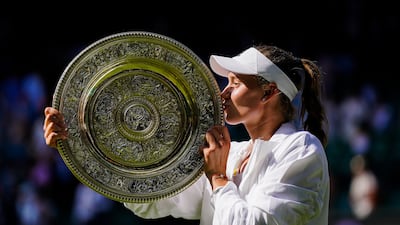
  • Elena Rybakina (Kazakhstan): Age - 23 / WTA ranking - 10 / WTA Tour titles - 3. PA
    Elena Rybakina (Kazakhstan): Age - 23 / WTA ranking - 10 / WTA Tour titles - 3. PA
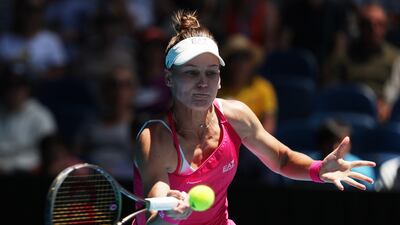
  • Veronika Kudermetova (Russia): Age - 25 / WTA ranking - 11 / WTA titles - 1. Getty
    Veronika Kudermetova (Russia): Age - 25 / WTA ranking - 11 / WTA titles - 1. Getty
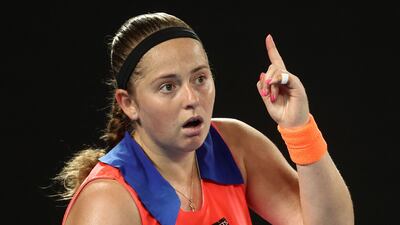
  • Jelena Ostapenko (Latvia): Age - 25 / WTA ranking - 12 / WTA Tour titles - 5. AFP
    Jelena Ostapenko (Latvia): Age - 25 / WTA ranking - 12 / WTA Tour titles - 5. AFP
  • Beatriz Haddad Maia (Brazil): Age - 26/ WTA ranking - 14 / WTA Tour titles - 2. EPA
    Beatriz Haddad Maia (Brazil): Age - 26/ WTA ranking - 14 / WTA Tour titles - 2. EPA
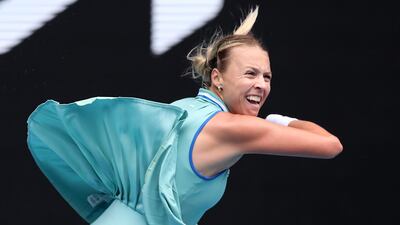
  • Anett Kontaveit (Estonia): Age - 27 / WTA ranking - 18/ WTA Tour titles - 6. Getty
    Anett Kontaveit (Estonia): Age - 27 / WTA ranking - 18/ WTA Tour titles - 6. Getty
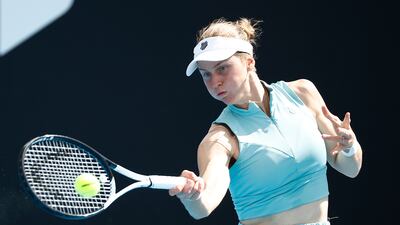
  • Liudmila Samsonova (Russia): Age - 24 / WTA rankings - 19 / WTA Tour titles - 4. Getty
    Liudmila Samsonova (Russia): Age - 24 / WTA rankings - 19 / WTA Tour titles - 4. Getty
  • Karolina Pliskova (Czech Republic): Age - 30 / WTA ranking - 20 / WTA Tour titles - 16. AFP
    Karolina Pliskova (Czech Republic): Age - 30 / WTA ranking - 20 / WTA Tour titles - 16. AFP
  • Paula Badosa (Spain): Age - 25 / WTA ranking - 21 / WTA Tour titles - 3. Getty
    Paula Badosa (Spain): Age - 25 / WTA ranking - 21 / WTA Tour titles - 3. Getty
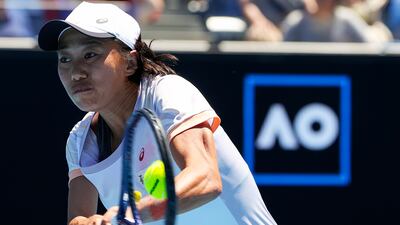
  • Shuai Zhang (China): Age - 34 / WTA rankings - 23 / WTA Tour titles - 3. EPA
    Shuai Zhang (China): Age - 34 / WTA rankings - 23 / WTA Tour titles - 3. EPA
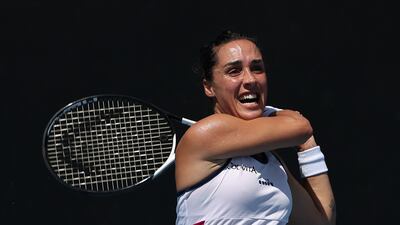
  • Martina Trevisan (Italy): Age - 29 / WTA ranking - 25 / WTA Tour titles - 1. Getty
    Martina Trevisan (Italy): Age - 29 / WTA ranking - 25 / WTA Tour titles - 1. Getty
  • Marie Bouzkova (Czech Republic): Age - 24 / WTA ranking - 26 / WTA Tour titles - 0. Getty
    Marie Bouzkova (Czech Republic): Age - 24 / WTA ranking - 26 / WTA Tour titles - 0. Getty
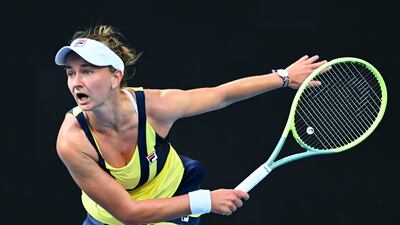
  • Barbora Krejcikova (Czech Republic): Age - 27 / WTA ranking - 30 / WTA Tour titles - 5. Getty
    Barbora Krejcikova (Czech Republic): Age - 27 / WTA ranking - 30 / WTA Tour titles - 5. Getty
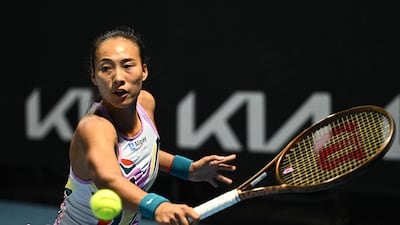
  • Zheng Qinwen (China): Age - 20 / WTA ranking - 29 / WTA Tour titles - 0. AFP
    Zheng Qinwen (China): Age - 20 / WTA ranking - 29 / WTA Tour titles - 0. AFP
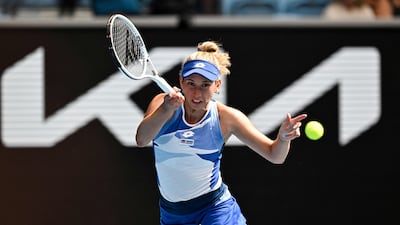
  • Elise Mertens (Belgium): Age - 27 / WTA rankings - 32 / WTA Tour titles - 7. AFP
    Elise Mertens (Belgium): Age - 27 / WTA rankings - 32 / WTA Tour titles - 7. AFP
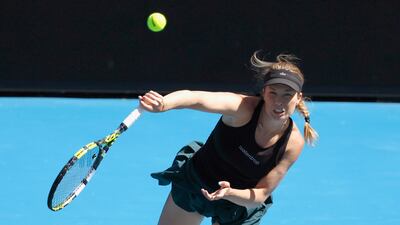
  • Danielle Collins (USA): Age - 29 / WTA ranking - 40 / WTA Tour titles - 2. AP
    Danielle Collins (USA): Age - 29 / WTA ranking - 40 / WTA Tour titles - 2. AP
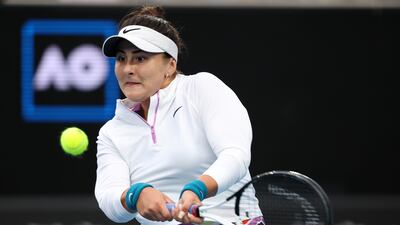
  • Bianca Andreescu (Canada): Age - 22 / WTA ranking - 42 / WTA Tour titles - 3. Getty
    Bianca Andreescu (Canada): Age - 22 / WTA ranking - 42 / WTA Tour titles - 3. Getty
  • Garbine Muguruza (Spain): Age - 29 / WTA ranking - 82 / WTA Tour titles - 10. EPA
    Garbine Muguruza (Spain): Age - 29 / WTA ranking - 82 / WTA Tour titles - 10. EPA

At least the system has worked in her favour so far this year. An encouraging run to the quarter-finals of the Australian Open – she missed the Grand Slam event last year – has seen Pliskova surge back up to 20th and trending in the right direction.

“At the beginning of the year, it’s tough but super important because if you start by losing two or three matches then it can be difficult to gain confidence during the year when everyone is playing better and growing stronger,” Pliskova told The National.

“I played some good tennis [in Australia]. A bit disappointed about the quarter-final but overall my level is there. Of course, there are some things to improve to become more solid but overall the situation is quite good.”

Should Pliskova get past Muguruza – she has beaten the Spaniard in nine of their 11 meetings – then it does not get any easier, with a second-round clash against Wimbledon champion Elena Rybakina.

The Kazakh world No 10 had the opportunity to make it two major titles from two finals but fell just short to Aryna Sabalenka in an Australian Open thriller last month.

Pliskova knows all too well about the heartbreak of Grand Slam final defeats. Twice the 30-year-old has been on the cusp of a major trophy, twice she has been on the losing side of three-set losses, her defeat to Ash Barty in 2021 coming almost five years after narrowly going down to Angelique Kerber at the US Open. Unsurprisingly, it remains the ultimate ambition.

“In my situation and at my age, after achieving what I have so far and what I have won, the goal remains the same: to win a Slam,” Pliskova said. “I was close again last year, reaching the final at Wimbledon. I seem to get close but still so far.”

There is plenty of tennis to be played before Pliskova gets another crack at a major trophy, so the next 16 weeks until the French Open is all about establishing her best form, starting in Abu Dhabi.

The 500-level tournament is a new addition to the calendar and Pliskova is pleased to see the WTA expanding into new places. The capital did host a one-off event in January 2021 to help with scheduling issues during the pandemic, where Pliskova was eliminated in the second round.

“It was a tough start to the year, not playing really well, so I hope to play a bit better [this time],” Pliskova said. “As a player, I’ve been travelling since I was 15, and to go to the same places you do like it, but you also want to see some new places.

“For this tournament, being in Abu Dhabi is great because then we go to Doha then Dubai, so it’s all quite near. These three tournaments in a row is a great plan.”


Mercer, the investment consulting arm of US services company Marsh & McLennan, expects its wealth division to at least double its assets under management (AUM) in the Middle East as wealth in the region continues to grow despite economic headwinds, a company official said.

Mercer Wealth, which globally has $160 billion in AUM, plans to boost its AUM in the region to $2-$3bn in the next 2-3 years from the present $1bn, said Yasir AbuShaban, a Dubai-based principal with Mercer Wealth.

Within the next two to three years, we are looking at reaching $2 to $3 billion as a conservative estimate and we do see an opportunity to do so,” said Mr AbuShaban.

Mercer does not directly make investments, but allocates clients’ money they have discretion to, to professional asset managers. They also provide advice to clients.

“We have buying power. We can negotiate on their (client’s) behalf with asset managers to provide them lower fees than they otherwise would have to get on their own,” he added.

Mercer Wealth’s clients include sovereign wealth funds, family offices, and insurance companies among others.

From its office in Dubai, Mercer also looks after Africa, India and Turkey, where they also see opportunity for growth.

Wealth creation in Middle East and Africa (MEA) grew 8.5 per cent to $8.1 trillion last year from $7.5tn in 2015, higher than last year’s global average of 6 per cent and the second-highest growth in a region after Asia-Pacific which grew 9.9 per cent, according to consultancy Boston Consulting Group (BCG). In the region, where wealth grew just 1.9 per cent in 2015 compared with 2014, a pickup in oil prices has helped in wealth generation.

BCG is forecasting MEA wealth will rise to $12tn by 2021, growing at an annual average of 8 per cent.

Drivers of wealth generation in the region will be split evenly between new wealth creation and growth of performance of existing assets, according to BCG.

Another general trend in the region is clients’ looking for a comprehensive approach to investing, according to Mr AbuShaban.

“Institutional investors or some of the families are seeing a slowdown in the available capital they have to invest and in that sense they are looking at optimizing the way they manage their portfolios and making sure they are not investing haphazardly and different parts of their investment are working together,” said Mr AbuShaban.

Some clients also have a higher appetite for risk, given the low interest-rate environment that does not provide enough yield for some institutional investors. These clients are keen to invest in illiquid assets, such as private equity and infrastructure.

“What we have seen is a desire for higher returns in what has been a low-return environment specifically in various fixed income or bonds,” he said.

“In this environment, we have seen a de facto increase in the risk that clients are taking in things like illiquid investments, private equity investments, infrastructure and private debt, those kind of investments were higher illiquidity results in incrementally higher returns.”

The Abu Dhabi Investment Authority, one of the largest sovereign wealth funds, said in its 2016 report that has gradually increased its exposure in direct private equity and private credit transactions, mainly in Asian markets and especially in China and India. The authority’s private equity department focused on structured equities owing to “their defensive characteristics.”

UAE currency: the story behind the money in your pockets
EMILY%20IN%20PARIS%3A%20SEASON%203
%3Cp%3ECreated%20by%3A%20Darren%20Star%3C%2Fp%3E%0A%3Cp%3EStarring%3A%20Lily%20Collins%2C%20Philippine%20Leroy-Beaulieu%2C%20Ashley%20Park%3C%2Fp%3E%0A%3Cp%3ERating%3A%202.75%2F5%3C%2Fp%3E%0A
Quick pearls of wisdom

Focus on gratitude: And do so deeply, he says. “Think of one to three things a day that you’re grateful for. It needs to be specific, too, don’t just say ‘air.’ Really think about it. If you’re grateful for, say, what your parents have done for you, that will motivate you to do more for the world.”

Know how to fight: Shetty married his wife, Radhi, three years ago (he met her in a meditation class before he went off and became a monk). He says they’ve had to learn to respect each other’s “fighting styles” – he’s a talk it-out-immediately person, while she needs space to think. “When you’re having an argument, remember, it’s not you against each other. It’s both of you against the problem. When you win, they lose. If you’re on a team you have to win together.” 

Company%20profile
%3Cp%3EName%3A%20Tabby%3Cbr%3EFounded%3A%20August%202019%3B%20platform%20went%20live%20in%20February%202020%3Cbr%3EFounder%2FCEO%3A%20Hosam%20Arab%2C%20co-founder%3A%20Daniil%20Barkalov%3Cbr%3EBased%3A%20Dubai%2C%20UAE%3Cbr%3ESector%3A%20Payments%3Cbr%3ESize%3A%2040-50%20employees%3Cbr%3EStage%3A%20Series%20A%3Cbr%3EInvestors%3A%20Arbor%20Ventures%2C%20Mubadala%20Capital%2C%20Wamda%20Capital%2C%20STV%2C%20Raed%20Ventures%2C%20Global%20Founders%20Capital%2C%20JIMCO%2C%20Global%20Ventures%2C%20Venture%20Souq%2C%20Outliers%20VC%2C%20MSA%20Capital%2C%20HOF%20and%20AB%20Accelerator.%3Cbr%3E%3C%2Fp%3E%0A
Updated: February 05, 2023, 2:09 PM