



Latest: Novak Djokovic set to board flight to Dubai after losing Australian visa appeal
Novak Djokovic said he was disappointed that a court on Sunday dismissed his challenge to a deportation order and accepted his hopes of defending his Australian Open title were over.
The world No 1 released a statement shortly after three Federal Court judges unanimously upheld a decision made on Friday by Immigration Minister Alex Hawke to cancel the 34-year-old Serb’s visa on public interest grounds because he is not vaccinated against Covid-19.
“I am extremely disappointed with the Court ruling to dismiss my application for judicial review of the Minister’s decision to cancel my visa, which means I cannot stay in Australia and participate in the Australian Open,” Djokovic said.
“I respect the Court’s ruling and I will cooperate with the relevant authorities in relation to my departure from the country,” he added.
Djokovic said he was “uncomfortable” that the focus had been on him since his visa was first cancelled on arrival at Mebourne's airport on January 6.
“I hope that we can all now focus on the game and tournament I love,” he said.
-
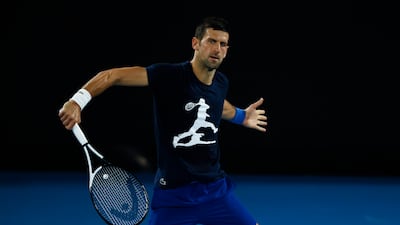
Novak Djokovic plays a backhand during a practice session ahead of the 2022 Australian Open at Melbourne Park on January 14, 2022. Getty Images -
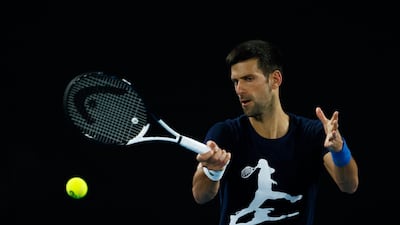
Novak Djokovic plays a forehand during a practice session ahead of the 2022 Australian Open at Melbourne Park. Getty Images -
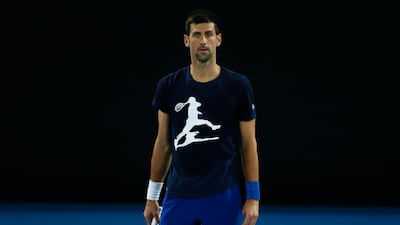
Novak Djokovic looks on during a practice session ahead of the 2022 Australian Open at Melbourne Park. Getty Images -
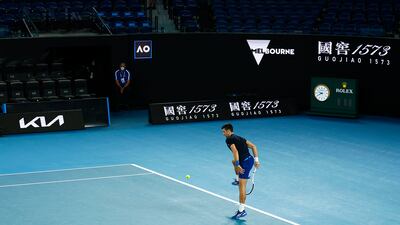
Novak Djokovic during a practice session ahead of the 2022 Australian Open at Melbourne Park. Getty Images -
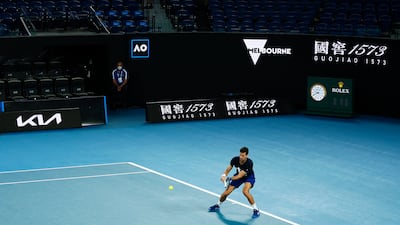
Novak Djokovic plays a backhand during a practice session ahead of the 2022 Australian Open at Melbourne Park. Getty Images -
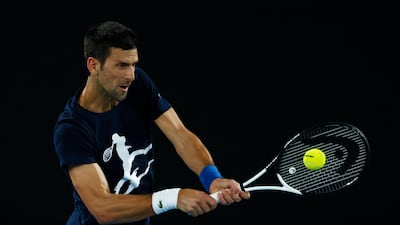
Novak Djokovic plays a backhand during a practice session ahead of the 2022 Australian Open at Melbourne Park. Getty Images -

Novak Djokovic plays a backhand during a practice session ahead of the 2022 Australian Open at Melbourne Park. Getty Images -
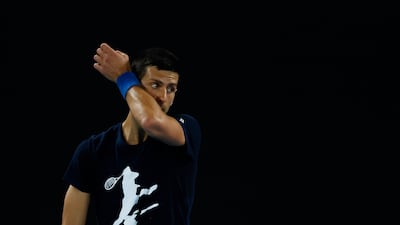
Novak Djokovic during a practice session ahead of the 2022 Australian Open at Melbourne Park. Getty Images -
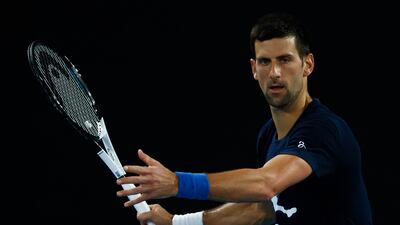
Novak Djokovic plays a forehand during a practice session ahead of the 2022 Australian Open at Melbourne Park. Getty Images -
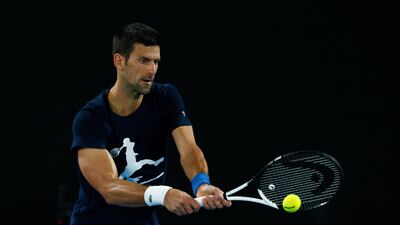
Novak Djokovic plays a backhand during a practice session ahead of the 2022 Australian Open at Melbourne Park. Getty Images -
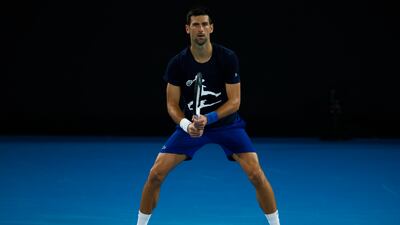
Novak Djokovic in action during a practice session ahead of the 2022 Australian Open at Melbourne Park. Getty Images -
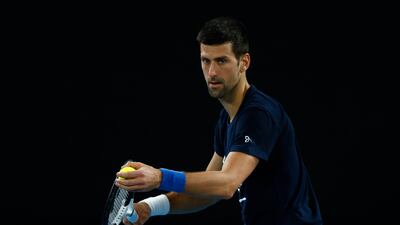
Novak Djokovic serves during a practice session ahead of the 2022 Australian Open at Melbourne Park. Getty Images -
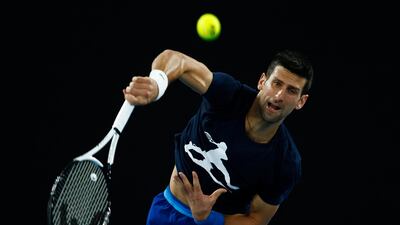
Novak Djokov hits a serve during a practice session ahead of the 2022 Australian Open at Melbourne Park. Getty Images -
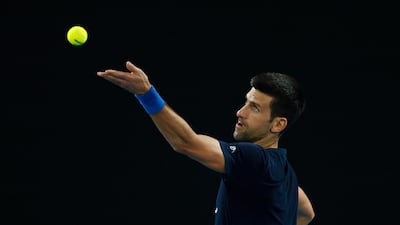
Novak Djokov hits a serve during a practice session ahead of the 2022 Australian Open at Melbourne Park. Getty Images


The decision likely means that Djokovic, who is not vaccinated against Covid-19, will remain in detention in Melbourne until he is deported.
Deportation usually occurs as soon as possible after an order unless prevented by court action. The government has not said when Djokovic will leave.
A deportation order usually also includes a three-year ban on returning to Australia.
Chief Justice James Allsop said the ruling came down to whether the minister's decision was "irrational or legally unreasonable.”
Hawke welcomed the decision, saying: “Australia’s strong border protection policies have kept us safe during the pandemic, resulting in one of the lowest death rates, strongest economic recoveries, and highest vaccination rates in the world.
“Strong border protection policies are also fundamental to safe-guarding Australia’s social cohesion which continues to strengthen despite the pandemic,” he added.
-
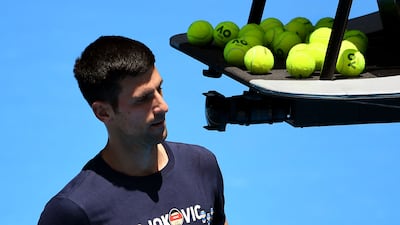
Novak Djokovic of Serbia takes a break during a practice session ahead of the Australian Open at the Melbourne Park tennis centre in Melbourne on January 12, 2022. AFP -
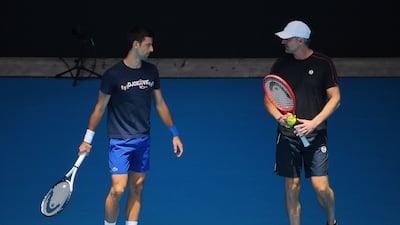
Novak Djokovic and coach Goran Ivanisevic. EPA -
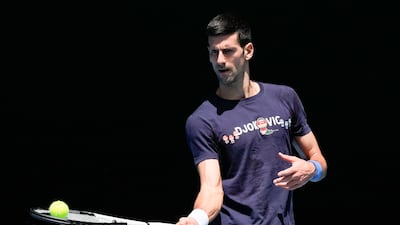
Defending men's champion Serbia's Novak Djokovic practices on Rod Laver Arena ahead of the Australian Open, which begins on January 12. AP Photo -
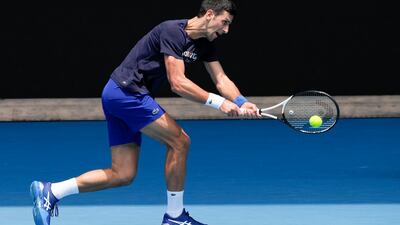
Serbia's Novak Djokovic practices on Rod Laver Arena. AP Photo -
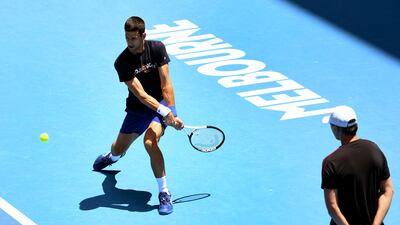
Novak Djokovic of Serbia is watched by coach Goran Ivanisevic. AFP -
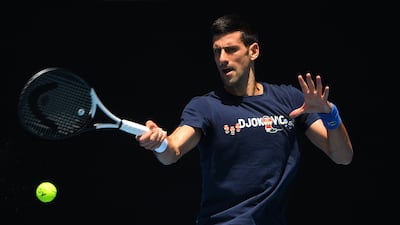
Novak Djokovic of Serbia is seen in action during a training session at Melbourne Park. EPA -
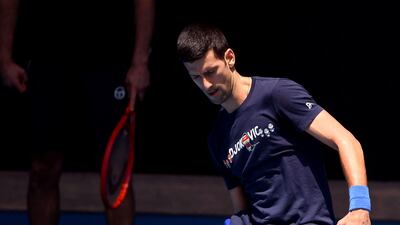
Novak Djokovic hits a return during a practice session ahead of the Australian Open at the Melbourne Park tennis centre in Melbourne. AFP -
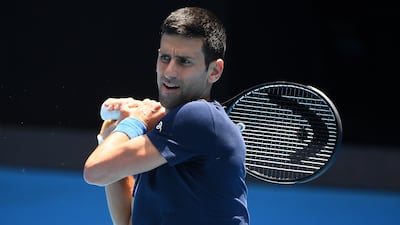
Novak Djokovic of Serbia. EPA -
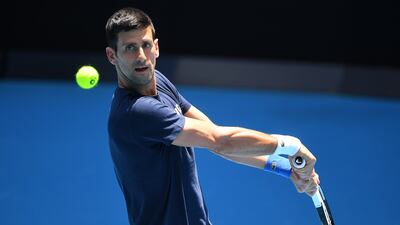
Novak Djokovic hits a return. EPA -
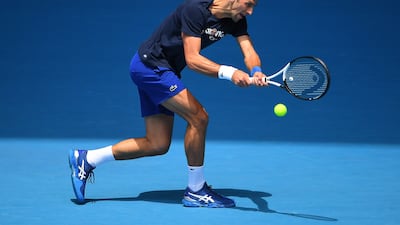
Novak Djokovic returns a backhand. EPA -

Novak Djokovic, left, listens to his coach Goran Ivanisevic. AP Photo -
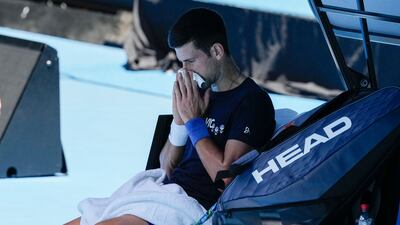
Novak Djokovic rests during a practice session on Rod Laver Arena. AP Photo -
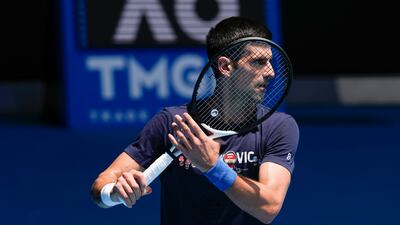
Defending Australian Open men's champion Novak Djokovic. AP Photo -
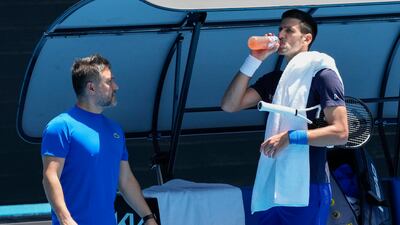
Serbia's Novak Djokovic takes a drink during a practice session on Rod Laver Arena. AP Photo -
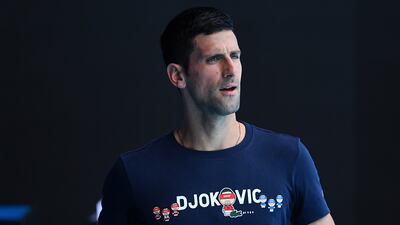
Novak Djokovic of Serbia is seen during a training session at Melbourne Park. EPA -
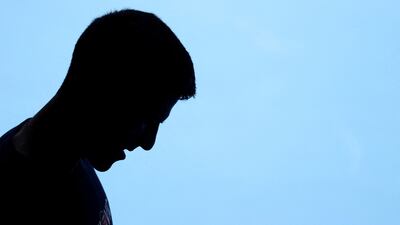
Serbian tennis player Novak Djokovic practices at Melbourne Park as questions remain over the legal battle regarding his visa to play in the Australian Open in Melbourne. Reuters -
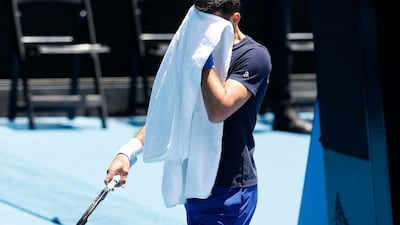
Novak Djokovic of Serbia is seen during a practice session ahead of the 2022 Australian Open at Melbourne Park. Getty Images


Djokovic could potentially appeal to the High Court, but not in time for him to compete in the Australian Open, which begins Monday.
“I will now be taking some time to rest and to recuperate, before making any further comments beyond this,” he said.
The court process that Djokovic had hoped would keep his aspirations alive for a 21st Grand Slam title was extraordinarily fast by Australian standards.
Within three hours of Hawke's announcement on Friday afternoon that Djokovic's visa was canceled, his lawyers went before a Federal Circuit and Family Court judge to initiate their challenge to the decision. The case was elevated to the Federal Court on Saturday and submissions were filed by both sides that same day.
The three judges heard the case over five hours on Sunday and announced their verdict two hours later.
Djokovic, 34, has won the Australian Open the past three years and was a strong favourite to claim a record-extending 10th Melbourne Park crown.
The top seed was set to face Miomir Kecmanovic in his opening match at Rod Laver Arena on Monday.
-
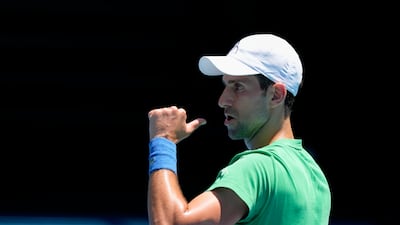
Novak Djokovic in action during a training session at Melbourne Park on Thursday before a decision from immigration minister Alex Hawke over whether he can play in the Australian Open. EPA -
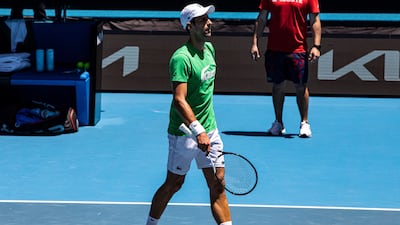
Novak Djokovic in action during a training session. EPA -

Novak Djokovic in training. EPA -

Defending men's champion Serbia's Novak Djokovic rests during a practice session on Margaret Court Arena ahead of the Australian Open tennis championship. AP -

Novak Djokovic takes a break. AP -

Novak Djokovic practices on Margaret Court Arena. AP -

Novak Djokovic practices at Melbourne Park. Reuters -

Novak Djokovic shakes hands with Argentina's Federico Coria following a practice session. AP -

Defending Novak Djokovic practices on Margaret Court Arena. AP -
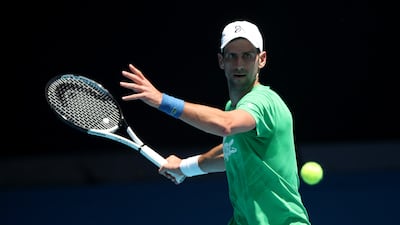
Novak Djokovic plays a forehand during a practice session. Getty


Tennis Australia had no immediate comment on the star player's legal defeat.
Hawke cancelled the visa on the grounds that Djokovic’s presence in Australia may be a risk to the health and “good order” of the Australian public and “may be counterproductive to efforts at vaccination by others in Australia.”
Djokovic’s visa was initially cancelled on January 6 at Melbourne’s airport hours after he arrived to compete in the first Grand Slam of 2022.
A border official cancelled his visa after deciding Djokovic didn’t qualify for a medical exemption from Australia’s rules for unvaccinated visitors.
After spending four days in an immigration detention centre, Djokovic, 34, won his appeal after the court quashed the revocation before it was cancelled a second time on Friday.
-

Members of the Serbian community march in Melbourne, Australia. Serbian tennis player Novak Djokovic was to be released from an immigration detention center in Melbourne after an order by the Federal Circuit Court. The tennis world number one had been staying in a hotel-turned-detention center after his visa was revoked upon landing in Australia. EPA -
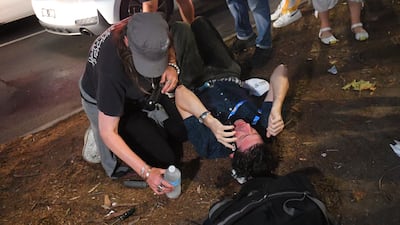
A member of the press lies on the ground after sustaining an injury during clashes between the Serbian Community and Victorian Police officers in Melbourne, Australia. Djokovic was to be released from an immigration detention center in Melbourne after an order by the Federal Circuit Court. The tennis world number one had been staying in a hotel-turned-detention center after his visa was revoked upon landing in Australia. EPA -

Members of the local Serbian community play music and dance outside the legal offices where Serbia's tennis champion Novak Djokovic is in with his legal team in Melbourne. AFP -
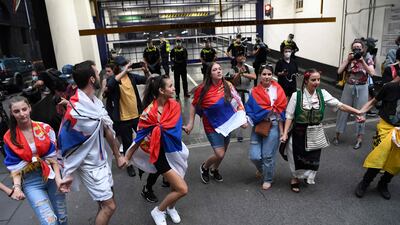
Members of the local Serbian community play music and dance outside the legal offices where Serbia's tennis champion Novak Djokovic is in with his legal team in Melbourne. AFP -
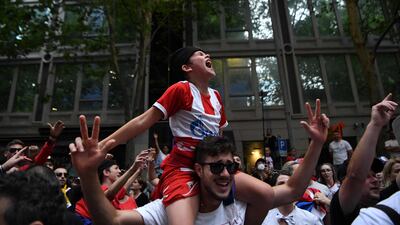
Members of the local Serbian community play music and dance outside the legal offices where Serbia's tennis champion Novak Djokovic is in with his legal team in Melbourne on January 9, 2022. (Photo by William WEST / AFP) -
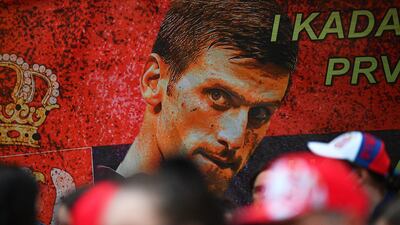
Members of the Serbian community march in Melbourne, Australia. Serbian tennis player Novak Djokovic was to be released from an immigration detention center in Melbourne after an order by the Federal Circuit Court. The tennis world number one had been staying in a hotel-turned-detention center after his visa was revoked upon landing in Australia. EPA -
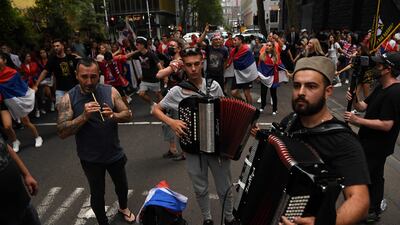
Members of the local Serbian community play music and dance outside the legal offices where Serbia's tennis champion Novak Djokovic is in with his legal team in Melbourne. AFP -
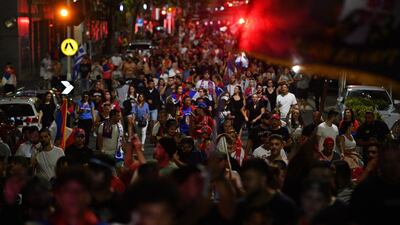
epa09677057 Members of the Serbian community march in Melbourne, Australia. Serbian tennis player Novak Djokovic was to be released from an immigration detention center in Melbourne after an order by the Federal Circuit Court. The tennis world number one had been staying in a hotel-turned-detention center after his visa was revoked upon landing in Australia. EPA -
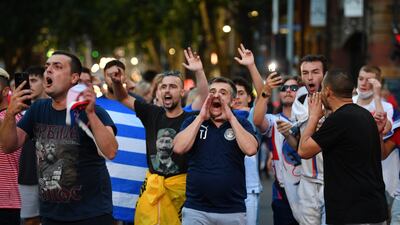
epa09677043 Members of the Serbian community taunt Victorian Police officers after Novak Djokovic was allegedly taken away in a vechile from his lawyer's office in Melbourne. Djokovic was to be released from an immigration detention center in Melbourne after an order by the Federal Circuit Court. The tennis world number one had been staying in a hotel-turned-detention center after his visa was revoked upon landing in Australia. EPA



