


On this day four years ago, Serge Gnabry was packing a medal in his case, and setting off for home. It had been an exhilarating three weeks in Brazil, but his feelings were bittersweet. The medal was silver, and although he had one prize for first place – top goalscorer in the men’s Olympic tournament – the finishing second, with Germany, left him with many what-might-have-been thoughts. Germany had lost the final, to Brazil, on penalties.
So he headed for home as a partial hero, and a puzzled one if you were to have asked him what ‘home’ meant. Over the previous 12 months it had been, variously, London, the English midlands, and his native Germany. He also feels an attachment to Ivory Coast, where his supportive father was born. As for belonging, the Germany Olympic under-23 team, a transient entity by its very nature, seemed more of an anchor than his clubs had lately been.
Back in the summer of 2016, Gnabry was 21. And though he was top marksman in Brazil, he was nearly invisible at West Bromwich Albion, where he had started the season that finished with the Olympics. Just before the Games he been formally let go by Arsenal, his employers since he was 16, and was about to join Werder Bremen, to make an entirely new home.
Four years on, Gnabry, ex of Arsenal, West Brom, Bremen, Hoffenheim and the German Olympic, under-16, under-17, under-18, under-19 and under-21 sides is about compete for the greatest prize in club football.
He is now a certain starter, from a loosely defined position wide on the right, for the most in-form team in Europe, Bayern Munich, in Sunday's Champions League final. Munich is very much Gnabry’s settled home now, and it would take a very substantial amount of money in transfer fees to prise him away.
How much? Well, let’s start at a bare minimum of 10 times the €6 million (Dh26m) fee Bremen paid Arsenal, in the summer of 2016, when he collected his Olympic silver and his Golden Boot from the Rio Games.
Back then Arsenal were still proud that the teenaged Gnabry was one of the many young talents spotted and brought to North London under the long reign of Arsene Wenger as manager. He had been scouted and brought from Stuttgart at 16. Ninety-eight days after his 17th birthday he became Arsenal’s second-youngest debutant in a league fixture.
Keen to progress, Gnabry, who would instinctively describe himself as a winger, soon saw the competition for places was keen. Earlier this season, reflecting on his Arsenal education to English reporters, Gnabry reeled off the list of more senior men who formed the queue ahead of him as he reached his 20s: “Arsenal had so many wingers at the time – Alex Oxlade-Chamberlain, Tomas Rosicky, Theo Walcott, Santi Cazorla, Alexis Sanchez, Mesut Ozil. So I had to go. Sadly.”
He moved on from Arsenal after 18 first-team appearances – nine starts – in search of minutes on the pitch. To Wenger’s approval, and Gnabry’s, he was offered a potential breakthrough year in the Premier League. West Brom took him on loan.
_____________________
Lyon v Bayern Munich player ratings
-

LYON: Anthony Lopes – 6, The Portuguese goalkeeper did well to paw away Goretzka’s miscued shot early in the piece. He stood no chance with Gnabry’s goals, but might have come for the cross that led to Lewandowski’s. Reuters -
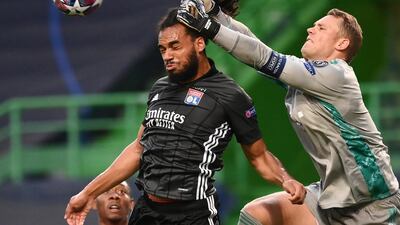
Jason Denayer – 6, Struggled to keep track of Lewandowski and Gnabry in the first half, but was plucky when he and Marcelo were short-handed at the back later on. EPA -
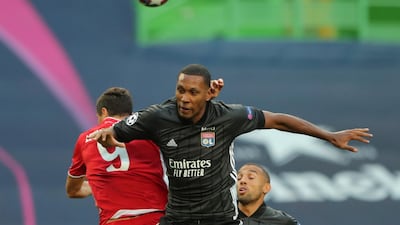
Marcelo – 7, His yellow card, for a foul a long way off the ball on Lewandowski, spoke of panic as Bayern started to purr in the first half. AP Photo -
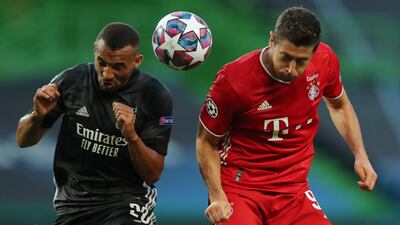
Marcal – 6, Fortunate not to be punished when his nervy header presented a chance to Gnabry – and even more so when he was spared a second yellow card in the second. AFP -
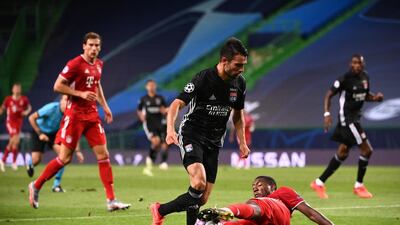
Leo Dubois – 6, One of the players withdrawn as Lyon chased the game in the second half, having failed to make much of an impression while he was on. Getty Images -
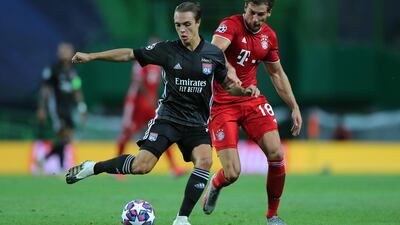
Maxence Caqueret – 7, Intercepted an Alcantara pass and played smart through ball to set up Depay’s fourth-minute chance. He was bright throughout. AFP -
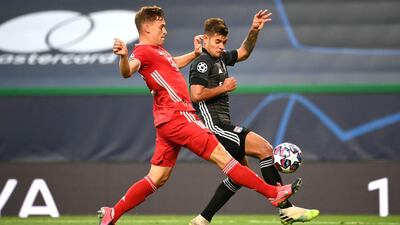
Bruno Guimaraes – 5, Struggled to make an impact in the first half, and was the fall guy as Rudi Garcia shuffled his pack at half time to try to bridge the gap in the second. AFP -
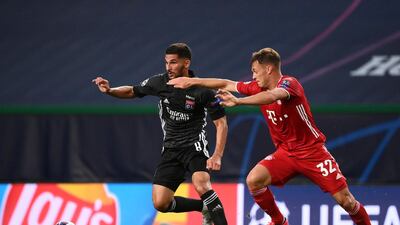
Houssem Aouar – 8, Showed plenty of purpose as he tried to keep Lyon in the contest in the second phase. AP Photo -
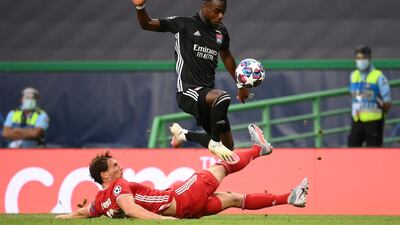
Maxwel Cornet – 7, He was to the fore during Lyon’s fast start, but was unable to get a vital cross past Boateng. That might have been a crucial moment. Reuters -
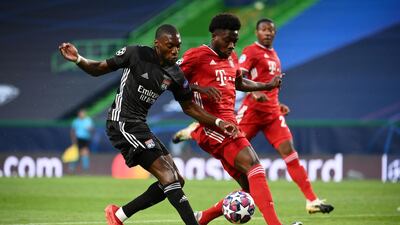
Karl Toko Ekambi – 6, Brilliant run to beat Davies early on, but hit the post when he should have scored, and he hit Neuer’s leg when well placed in the second, too. Reuters -
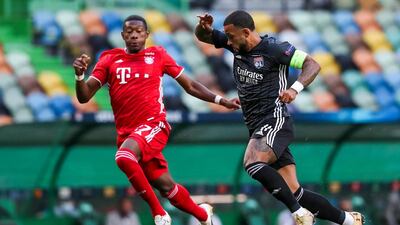
Memphis Depay – 7, Found the side netting when one on one with Neuer in the fourth minute. Was full of endeavour but ran out of puff and made way for Dembele again. EPA -

SUBS: Thiago Mendes – 5, His most notable contribution after being introduced at half time was being yellow carded for a rash tackle. AP Photo -
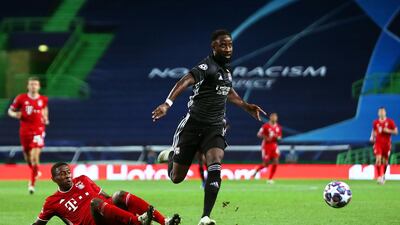
Moussa Dembele – 6, Provided a different threat to Depay, and was more of a focal point for the attack. EPA -
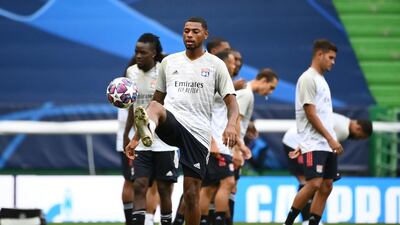
Jeff Reine-Adelaide – 7, Brought a much-needed spark when he was one of a raft of changes in the second half, and linked up well with fellow sub Tete. Getty Images -
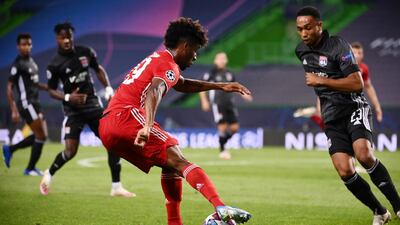
Kenny Tete – 6, Needed greater urgency when he found himself in a good position to cross shortly after coming on. AFP -

Rayan Cherki – 6, The 17 year old mishit a shot when well placed almost immediately after coming on for the centre back Machal. PA -
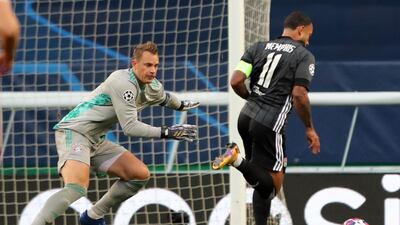
BAYERN MUNICH: Manuel Neuer – 7, Luck was on his side when Depay shot wide, and Toko Ekambi struck a post early on. He made a fine block from the latter in the second. AFP -
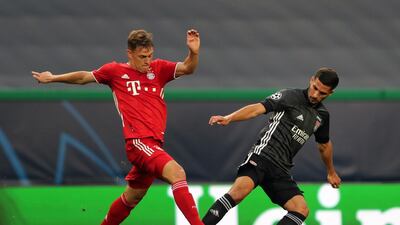
Joshua Kimmich – 6, The full back was in the wars in the first half as Lyon’s young midfielders seemed to be taking turns to crash into him. Suitably solid in defence. AP Photo -
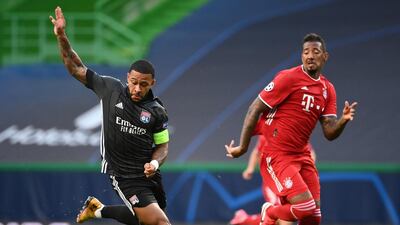
Jerome Boateng – 6, Made a crucial block of a cross from Cornet as Lyon enjoyed the better of the opening exchanges. He was replaced at half time. EPA -
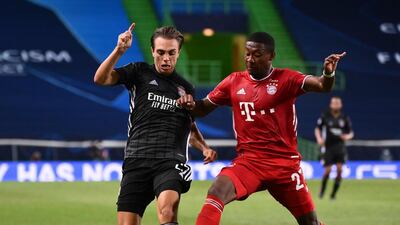
David Alaba – 7, Provided some dominant defending to help quell Lyon’s bright start. Quite why he took a late free-kick ahead of Lewandowski, who knows? AP -
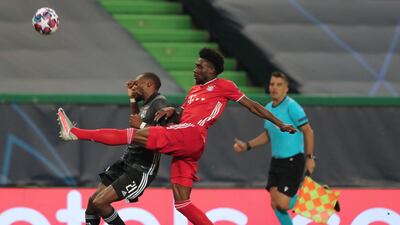
Alphonso Davies – 6, Nowhere near the explosive levels of the Barcelona game, and was given a tough time by Toko Ekambi. AFP -
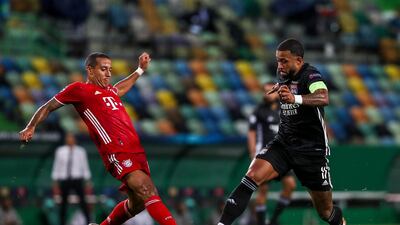
Thiago Alcantara – 7, Was culpable early on when he gave the ball to Caqueret, who split the defence to create a chance for Depay, but otherwise rarely wasted possession. EPA -
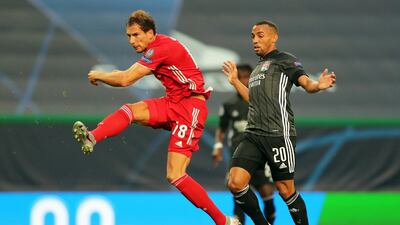
Leon Goretzka – 8, Saw a bobbling, mishit shot kept out by Lopes, then a fiercely struck drive in the second kept out by his own teammate, Muller. EPA -

Serge Gnabry – 9, Bayern might have been 2-0 down when Gnabry struck. His spectacular finish turned the tide. His second, shortly after, could not have been simpler. PA -
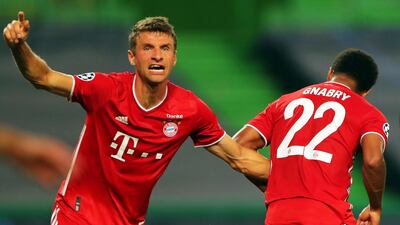
Thomas Muller – 7, Not an influence for any of the goals, and he headed his clearest chance wide just as the clock was ticking to 90 minutes. EPA -
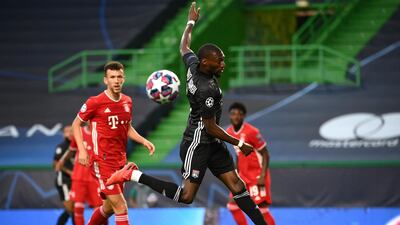
Ivan Perisic – 6, He should have killed the tie at the start of the second half, but hit a tame shot too close to Lopes. He was replaced by Coman not long after. AFP -
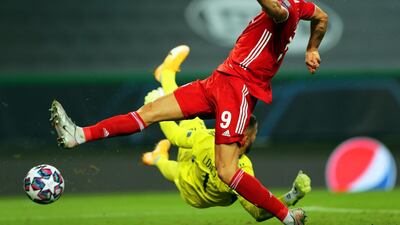
Robert Lewandowski – 7, Had a very rare shocker in the first half: missed a sitter (which Gnabry followed up to score), had an air shot from a yard out, then got in the way of a goalbound shot by a teammate. Was not to be denied, though, as he netted a fine late header. EPA -
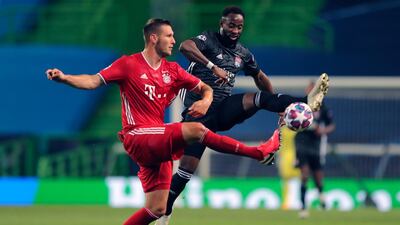
SUBS: Niklas Sule – 6, Diligent enough after coming on for Boateng at the interval, and had to be sharp to keep Depay away from the danger area. AP -
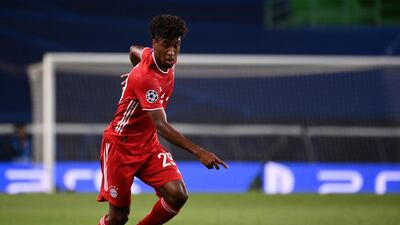
Kingsley Coman – 7, Typically perky when he was brought on for Perisic, as he went up against a side including his close mate Dembele. AP -
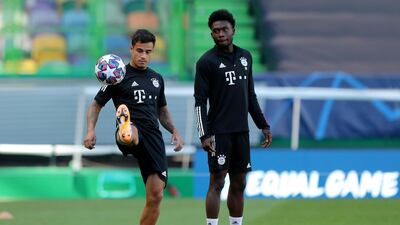
Philippe Coutinho – 6, Had one good shooting chance after coming on for the outstanding Gnabry, but saw it deflected wide. AP -
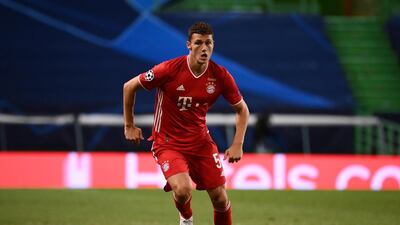
Benjamin Pavard – 6, The Frenchman was eased back into action after injury with a brief appearance late on. AP -

Corentin Tolisso – 6, He was a ballboy for Lyon the last time these sides met in Europe. He might have scored against his former club, but blazed a shot over in injury time. AP


_____________________
It was a very bad move. Six months in, Gnabry seemed further back in a queue led by James McClean, Stephane Sessegnon and Callum McManaman than he had been in the Cazorla-Ozil-Alexis hierarchy.
The West Brom manager of the time, Tony Pulis, played Gnabry three times in six months in the 2015/16 season. Two of those were in the League Cup; In Premier League, he got 12 minutes as a substitute. Arsenal recalled him in the January, and sold their Olympic star to Bremen the following summer.
From there, things really took off. His maiden Bundesliga season with Bremen yielded 11 goals, and a bid from Bayern. He had a successful loan season at Hoffenheim. Bayern had seen him mature exactly as they wished. Since he turned 25 last summer, Gnabry has become ever more essential to Bayern, a regular in the German national team and a Champions League record-breaker: He scored four away goals in a single night at Tottenham Hotspur in the group phase. He put two past Chelsea in the 3-0 away win in the last-16. Evidently, he likes going back to London.
He likes leadership, too. In Wednesday’s semi-final against Lyon, no Bayern player responded with greater authority to an alarming opening quarter-hour, when Lyon were brisk and menacing, than Gnabry. Cutting in from the right, he dared a parade of Lyon defenders to steal the ball from him, before unleashing a rocket from his left foot. 1-0. Once he poached his second goal 12 minutes before half time, Bayern were all but certain of their place in the final.

