



Karim Benzema capped another thrilling Real Madrid comeback on Sunday as the Spanish league leaders came back from two goals down to defeat Sevilla 3-2.
The come-from-behind win in La Liga came just days after Real pulled off an epic comeback against Chelsea in the Champions League where Benzema's extra-time strike clinch a place in the semi-finals 5-4 on aggregate.
Defeat would have given fresh hope to the chasing pack, with Sevilla and Barcelona both beginning the day 12 points behind, Barca with two games in hand.
Instead, goals in the second half from Rodrygo, Nacho and Benzema in the 92nd minute mean Madrid extend their advantage to 15 points with six games left to play in La Liga.
"It's difficult to understand why we played like that in the first half and to be honest how we played as well as that in the second," said Real Madrid head coach Carlo Ancelotti.
"In the first half we looked tired. In the second, the intensity was spectacular."
Real Madrid v Chelsea ratings
-

REAL MADRID RATINGS: Thibaut Courtois 7. Couldn’t be blamed for Chelsea’s first goal. Or the second, both towering headers. Unlucky on the third. Fine save from a powerful Ziyech shot on 114 minutes. EPA -
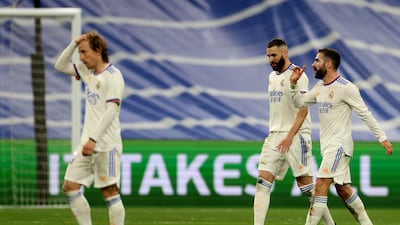
Dani Carvajal 7. The ball deflected off the full-back onto Alonso’s hand – invalidating what Chelsea thought was a third goal. Was moved to central defence late on as Nacho was injured. More touches than any Madrid player. Action Images -
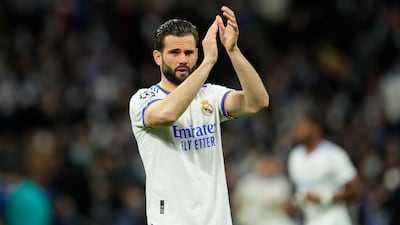
Nacho 7. Havertz slid into him on 38 minutes, prompting fury among home fans, especially as he wasn’t booked. Went off injured. AP -
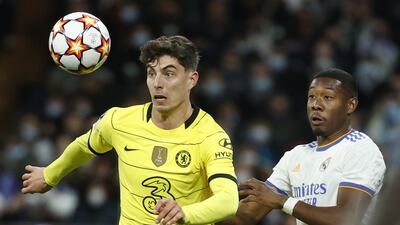
David Alaba 7. The only Madrid player in his usual position for the game. Went to press and ended up out of position before the first goal. EPA -

Ferland Mendy 5. Poor and uneasy against the European and world champions. Reuters -

Luka Modric 9. Neat one-two with Benzema in a rare spell of fruitful first-half possession. Stopped a dangerous 46th minute Chelsea attack and became his side’s key force in the second half. His assist for Madrid’s first, game-saving goal on 80 minutes was perfection. EPA -
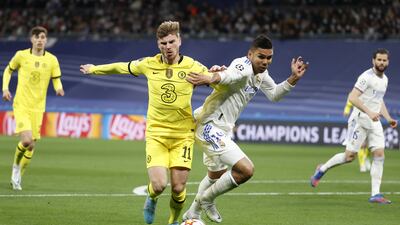
Casemiro 7. Just couldn’t get his usual traction as Chelsea dominated in waves. “This team lives for winning impossible games,” he said after. EPA -

Toni Kroos 6. Fouled the speeding Werner to concede a 35th minute free-kick. Didn’t have the same influence as in the previous round at home to PSG and was the first Madrid player off. AFP -
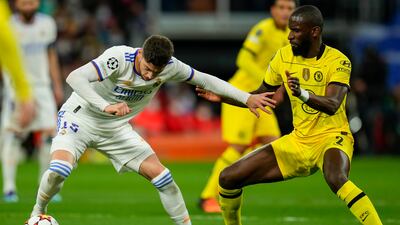
Federico Valverde 7. Outclassed by better opponents, then shot over on 62 minutes as Madrid tried to get a foothold. Cleared a 70th minute free-kick and got better and better in the second half. AP -
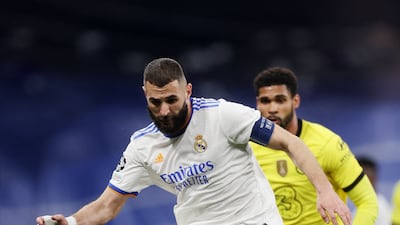
Karim Benzema 8. Man of the moment, he hit a 10th minute free-kick over, then saw a volley deflected over on 22 minutes. Booked after catching Silva with a high boot. Mis-hit a 53rd minute shot when he really needed to have an influence on the game. Headed against the bar on 65 and looked floored. Then he got the tie-clinching goal. Action Images -
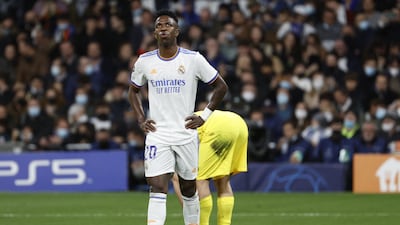
Vinicius Jr 7. Madrid’s best player in the first half. Turned quickly past James to win a 9th minute free-kick. Won a 50/50 with Loftus-Cheek just before half time – to the fury of Tuchel. Lost possession which led to what Chelsea thought was their third goal – the one disallowed by VAR. Then set up Madrid’s second. EPA -

SUBS: Eduardo Camavinga 8. On for Kroos 72. Played in Rodrygo for the second and was all over the pitch. Getty -
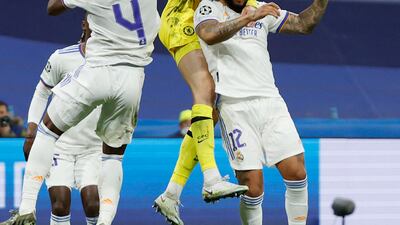
Marcelo 7. On for Mendy on 72. Intercepted the ball from Kante to start the build up for Madrid’s opener. Reuters -
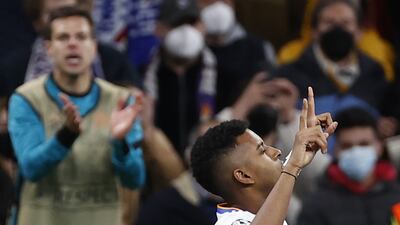
Rodrygo 8. On for Marcelo on 78 and what an impact. Finished Modric’s exquisite pass to give Madrid hope. EPA -
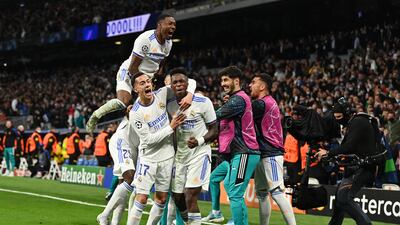
Luca Vasquez 7. On for Nacho on 87. Getty -
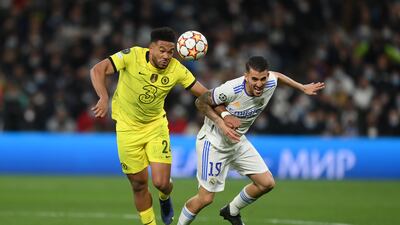
Dani Ceballos NA. on for Vinicius on 115 to try and help see the game out. Getty Images -

CHELSEA RATINGS: Edouard Mendy 7 - Produced a save for the cameras from Toni Kroos’ free-kick 10 minutes after half-time. The Senegalese stopper couldn’t do anything about the goals. AFP -
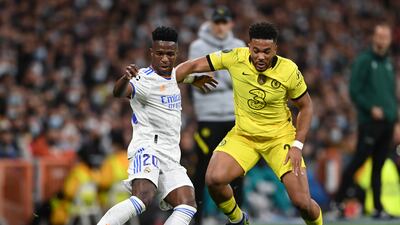
Reece James 8 - Booked in the 10th minute after getting squared up by Vinicius on the edge of the box, but defended solidly afterwards and didn’t give the Brazilian winger any joy. Managed to get a vital toe just as Benzema was ready to pull the trigger. Good delivery from wide areas. Getty -
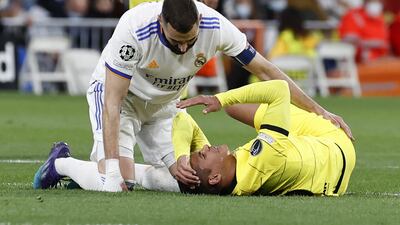
Thiago Silva 8 - Should have got closer to stop Vinicius’s cross for Benzema’s winner, but defended well for most of the game and showed his experience to read the play on numerous occasions. EPA -
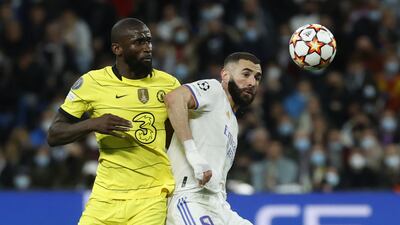
Antonio Rudiger 9 - The big defender opened his European account with a towering header from an outswinging corner in the 50th minute. What tackle on the edge of his own box as Kroos slid in Vinicius. Gave everything he had. EPA -
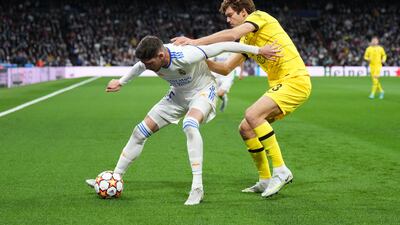
Marcos Alonso 7 - Rattled what he thought was Chelsea’s third goal right footed into the top corner only for VAR to cancel it out when the ball was judged to have touched his hand. Getty -

Ruben Loftus-Cheek 7 - Kept it simple and worked well with James down the right. Quiet in terms of chances created, but a solid display in the Chelsea engine room. Getty -
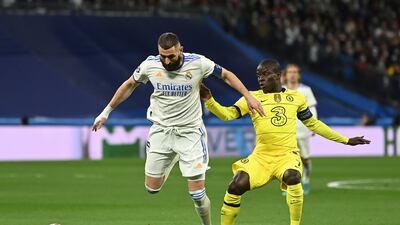
N’Golo Kante 7 - A magnet for second balls, the skipper was his usual industrious self. Lost possession in vital areas a couple of times, but moved the ball well on the whole and made some good interceptions. Getty -

Mateo Kovacic 9 - Energy, drive, determination and quality in possession. The Croatian was the catalyst for most of Chelsea’s good work. A sublime through ball for Werner’s goal only bettered by Modric’s outside of the boot pass to set up Real Madrid’s equaliser. EPA -

Mason Mount 8 - Curled a lovely side foot finish past Courtois after Chelsea quickened the tempo of their play around the edge of the Madrid box. A high energy performance from the English international. EPA -
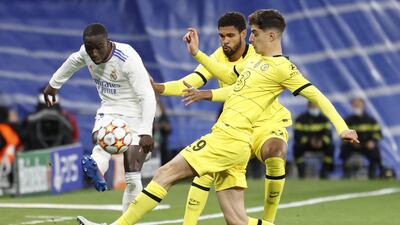
Kai Havertz 8 - Linked very well with Werner and Mount and didn’t stop running. The Chelsea striker’s movement and aerial threat at set pieces caused Madrid problems all night. Should’ve at least hit the target in the dying minutes when James whipped a cross on to his head at the near post. EPA -
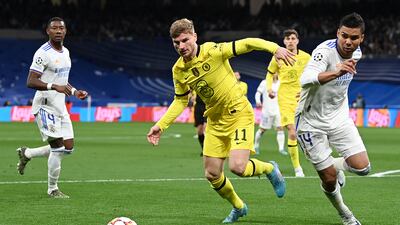
Timo Werner 8 - The German speedster sent Casemiro sliding as he cut back on to his right foot after latching onto Kovacic’s perfectly weighted pass. A second touch inside sat another Madrid defender down before he finished into the far corner via a deflection to put Chelsea into the lead on the night. Getty -
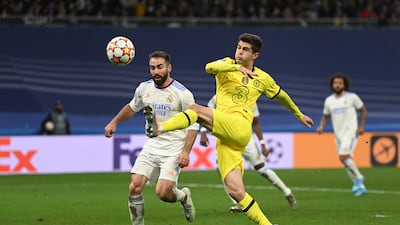
SUBS: Christian Pulisic (Werner, 83) 5 - The US talisman had two chances to win the game in injury time as he latched onto headers from set pieces. He could only partially connect with his left shin from Rudiger’s knock on and then it was a right foot side foot volley over the bar when Havertz nodded down a second set piece right at the end of normal time. Getty -
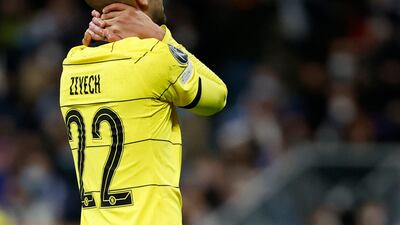
Hakim Ziyech (Kante, 100) N/A - Had a left foot strike saved from the angle when he might have picked someone out in the box. Reuters -
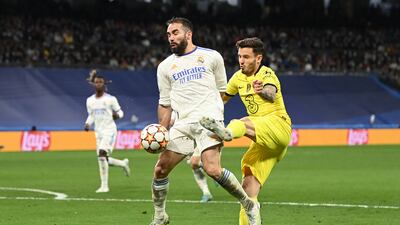
Saul Niguez (Loftus-Cheek, 106) N/A - On for the last 15 minutes, drifted a nothing ball out for a goal kick as Chelsea pressed for a goal. Jorginho (Kovacic, 106) N/A - Had a glorious chance to take the game to penalties, but he snatched at the ball as it landed at his feet following a shot from Ziyech . Getty


An Ivan Rakitic free-kick and Erik Lamela's smart finish had put Sevilla two up at the Ramon Sanchez Pizjuan.
Rakitic gave Sevilla the lead in the 25th minute, curling a free-kick into the corner after Luka Modric had brought down Papu Gomez.
Lamela doubled the advantage four minutes later, slotting after Tecatito drew out Thibaut Courtois and left the net open.
But a superb Vinicius Jr backheel for Dani Carvajal allowed Rodrygo to pull a goal back in the 50th minute.
Vinicius thought he had made it 2-2 in the 74th minute, only for the goal to be ruled out, the referee deciding the Brazilian had controlled with his arm and not his chest.
Madrid though were undeterred as Rakitic headed away a corner, only for Carvajal to drive to the line and pull back for Nacho to finish.
And then in the 92nd minute, Benzema completed another remarkable revival, collecting Rodrygo's pass, controlling and firing past three Sevilla defenders on the line.
Frenchman Benzema now has 44 goals in 46 appearances this season and 15 in his last 10.

