
Jasprit Bumrah is undoubtedly one of the greatest all-format pacers of the 21st century. The Indian quick has conquered every opposition, home and away and in all formats.
Multiple IPL trophies, a T20 World Cup triumph that was achieved only because of him, and an outstanding Test record that compares to the all-time greats all point to a phenomenal career.
In red-ball cricket, Bumrah has raised the bar exponentially; his average of 19.6 is the best in the history of cricket among bowlers who have at least 200 wickets.
However, the edge in his bowling is starting to wear thin after injury setbacks and a mediocre support cast. Even with him in the playing XI, the Indian bowling attack are falling flat in Test matches.
-
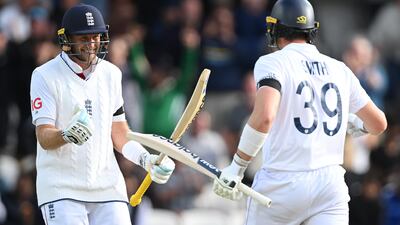
England's Joe Root, left, and Jamie Smith celebrate victory over India on the final day of the first Test against India at Headingley. Getty Images -
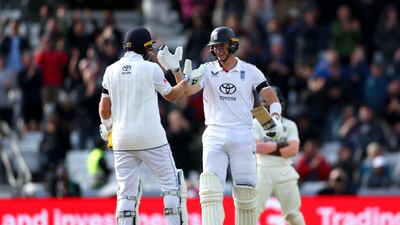
Jamie Smith, right, and Joe Root helped England chase down 371 to win the first Test against India at Leeds. Getty Images -
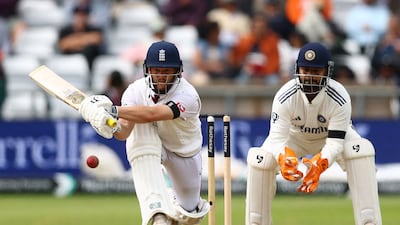
England's Ben Duckett hit a superb 149 to set up a famous win. Reuters -
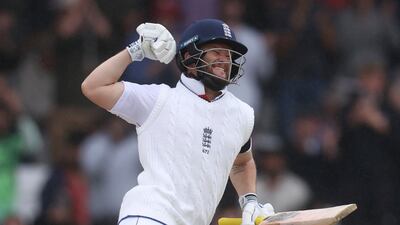
England's Ben Duckett celebrates after reaching his century. Ap -
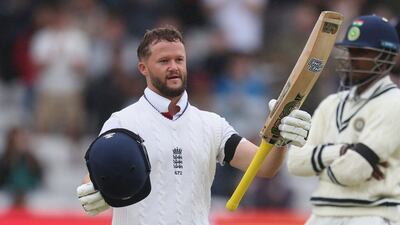
England's Ben Duckett added 188 for the opening wicket with Zak Crawley. AP -
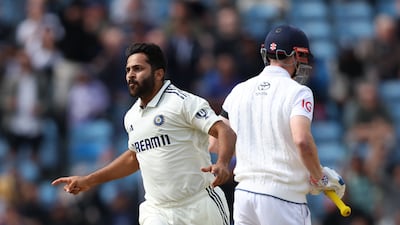
Shardul Thakur picked up two quick wickets but it wasn't enough as India failed to defend 371. Getty Images


The signs were there during the Test series last year against New Zealand where the India were whitewashed 3-0 for the first time at home. Bumrah failed to make an impact in the opening match and went wicketless in his next.
The right-arm quick miraculously pulled off victory in the opening Test in Australia while juggling captaincy duties. But the exertions over the remainder of the series saw his back injury flare up again, ruling him out for months.
He returned to bowling this year and was outstanding in the IPL, going for under seven runs an over. But his fitness became a big talking point.
The rigours of Test cricket had taken its toll, and Bumrah was advised to play no more than three Tests in a series, and that, too, with enough rest and while monitoring his workload.
The first Test against England in Leeds was one of those three games. India badly needed a win, or at least a draw, as after Bumrah, they don’t have any pace spearhead.
The right-arm pacer picked up five wickets in the first innings, but when the team really needed extra effort from Bumrah while defending 371 in the second innings, he went wicketless.
This is not the first time this has happened in Tests in England. During the 2021 World Test Championship final against New Zealand in Southampton, Bumrah went wicketless on a pitch where no team scored more than 250.
What was thought to be a one-off in Tests has sadly been happening more often.
Bumrah is either not taking wickets, or teams are simply working him out. Whatever the reason, India can’t rely only on Bumrah to take 20 wickets anymore.
A few years back, India had a rock-solid pace attack in Bumrah, Mohammad Shami and Ishant Sharma. All three would guarantee 50-60 overs of immaculate pace, control and swing. Now, the Indian pace cupboard sits largely empty in red-ball cricket.
Mohammad Siraj is all hustle and bustle but can’t be relied to work in tandem with Bumrah; something Shami and Ishant did expertly.
And after Siraj, it is slim pickings. Prasidh Krishna is eager and quick, but lacks Test miles in his legs to be a consistent threat. After him, India are hoping left-arm pacer Arshdeep Singh provides some much-needed conventional swing at some point in the England series.
Akash Deep has shown potential with pace and swing, but has somehow not won the trust of the team management.
And after that? All-rounders Shardul Thakur was non-threatening for most of the first Test. Nitish Kumar Reddy needs to work on his bowling a lot more to be considered an all-rounder. The team is clutching at straws beyond this point.
So while India were fixated on the departure of Virat Kohli and Rohit Sharma from the Test batting line-up, it is the sidelining of Shami and Ishant that should have really set the alarm bells ringing.
In the Headingley Test, India scored five centuries across both innings without Kohli and Rohit. It is in pace bowling where India are seriously lacking. And once Bumrah is put on an enforced break, new Test captain Shubman Gill will have few alternatives.

