After all the anger and bloodletting of Pakistan’s premature exit from the T20 World Cup, there was a hint of perspective. Maybe even a little sympathy.
“Team Pakistan, we love you but … get it together,” read one banner in the crowd at Broward County Stadium in Florida during their final pool match.
“It’s OK boys. We still love you,” read another, screened as they had just about muddled through to beat similarly hapless Ireland.
Whether they felt entirely loved is a different matter. The past couple of weeks have been miserable, and the recriminations are likely to be felt for some while yet, and will be in even sharper focus when they get back home.
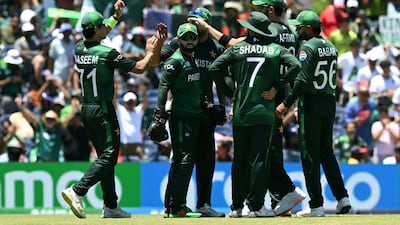
Their three-wicket win over the Irish on the last day of pool play was their tournament in microcosm. There was the odd moment of individual excellence, particularly from bowlers who were trying to make up for the failings of their batters in advance.
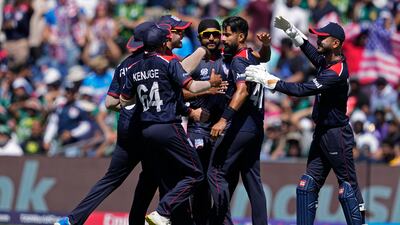
There were further reminders from Mohammed Amir, who took two for 11 from four overs, and Imad Wasim, who took three for eight from his quota, about exactly what Pakistan had missed while they were retired. And enough noise around them, too, to make it understandable why they were happy to stay away.
There was a batting cameo from Shaheen Afridi. Enough for a highlights reel that would have attracted many admiring glances. Not least from himself.
Then there was the customary slapstick. Shaheen and Usman Khan collided in the outfield going for a catch, leaving both floored. Usman had to be treated for whiplash and a head injury, and missed much of the fielding innings.
And there was the standard hapless batting. Three batters were out heaving across the line on a pitch of variable bounce, while two others drilled poor deliveries straight to fielders.
It all felt like such a fitting end. What is it with Pakistan and tours to North America? It feels like they have never ended well, dating back to that time in 1997 when Inzamam-ul-Haq waded into the stands in Toronto to confront an India supporter who was baiting him with talk about potatoes.
In 2007 they lurched to perhaps the nadir of their own impressive list of calamitous tours when they crashed out of the 50-over World Cup in the West Indies.
It started out with the death, in harness, of coach Bob Woolmer in Jamaica. On the field, there was the loss to Ireland which was so damaging it had ramifications for the world game for the next two decades, not just Pakistan.
Because of that, and India’s simultaneous exit at the hands of Bangladesh, the structure of global events was overhauled. It has meant at least one fixture per tournament between India and Pakistan has become set in stone, rather than left to fate or meritocracy. And the emerging cricket world were excluded for years.
Now there is this tournament, where Pakistan have not even made it as far as playing matches in the Caribbean in a Caribbean World Cup.
Who is to blame? The targets have already been many and varied. Shoaib Malik, a former occasional Pakistan captain of middling success, reckons he would have resigned already had he overseen the campaign Babar Azam did. Of course he would. He might have thrown in a few retirements as well for good measure.
Babar himself reckons it's everyone’s fault. “This is not because of an individual as we lost as a team,” he said after the Ireland win. “It’s not just the captain. I cannot play for every player as there are 11 players.”
Fair. But then the captain is ultimately accountable for the performance of the whole.
Old hang-ups continue to linger. It is a tournament in which strike rates have been of minimal importance, seeing as it has mainly been played on wickets that could not resemble the roads of the Pakistan Super League any less. Undulating pitches require thinking cricket, which is where Pakistan fell down.
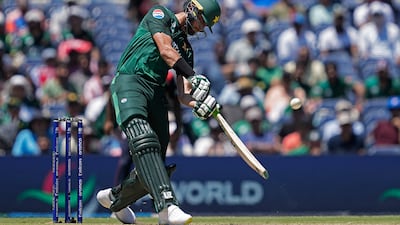
The “RizBar” axis of Babar and Mohammed Rizwan is still being spoken about as being too sedentary. In this tournament, Rizwan was scoring at 90.90 and Babar Azam at 101.66. Clearly, nowhere near their PSL peaks.
But they did not need to be. Take South Africa as an example. They made it through to the Super Eights by topping their group with four wins out of four. And yet not one of their players was striking at as much as a run a ball.
Quinton de Kock was hitting at 97.95, David Miller at 96.19, and Tristan Stubbs 82.95. They just found the right way to win, not by sticking to the macho brand of batting that they are more readily associated with. Pakistan, by contrast, found ways to lose.
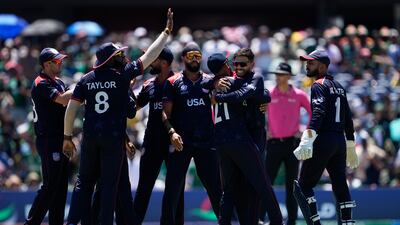
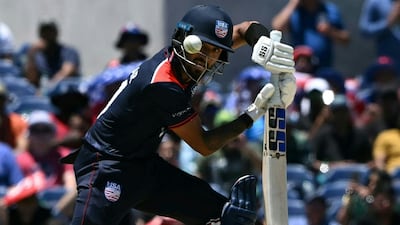
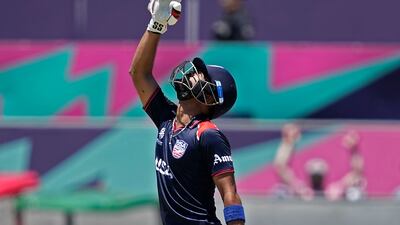
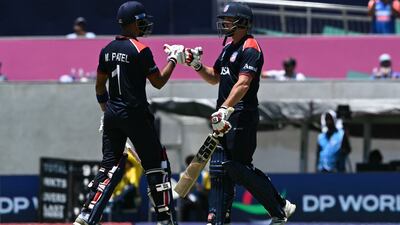
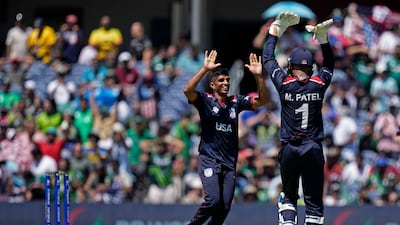
Admittedly, they are being judged on just two defeats – the shock on opening day against the United States in Dallas, and the capitulation from a winning position in New York against India.
But even in the wins over Canada and Ireland they were unconvincing. As Shaheen said after picking up the player of the match award against Ireland, they are not playing the cricket their country demands.
There is always a lot of noise from outside the Pakistan team when they are struggling. But there are plenty of talking heads within the setup itself now, with Gary Kirsten newly in charge as coach, Babar as captain, Shaheen having had a taste of the same office, plus plenty of others besides.
Someone needs to be held accountable. With all that collective IQ, Pakistan should not be playing such mindless cricket as they showed at this World Cup.

Lexus LX700h specs
Engine: 3.4-litre twin-turbo V6 plus supplementary electric motor
Power: 464hp at 5,200rpm
Torque: 790Nm from 2,000-3,600rpm
Transmission: 10-speed auto
Fuel consumption: 11.7L/100km
On sale: Now
Price: From Dh590,000
%3Cp%3EMATA%0D%3Cbr%3EArtist%3A%20M.I.A%0D%3Cbr%3ELabel%3A%20Island%0D%3Cbr%3ERating%3A%203.5%2F5%3C%2Fp%3E%0A
Zakat definitions
Zakat: an Arabic word meaning ‘to cleanse’ or ‘purification’.
Nisab: the minimum amount that a Muslim must have before being obliged to pay zakat. Traditionally, the nisab threshold was 87.48 grams of gold, or 612.36 grams of silver. The monetary value of the nisab therefore varies by current prices and currencies.
Zakat Al Mal: the ‘cleansing’ of wealth, as one of the five pillars of Islam; a spiritual duty for all Muslims meeting the ‘nisab’ wealth criteria in a lunar year, to pay 2.5 per cent of their wealth in alms to the deserving and needy.
Zakat Al Fitr: a donation to charity given during Ramadan, before Eid Al Fitr, in the form of food. Every adult Muslim who possesses food in excess of the needs of themselves and their family must pay two qadahs (an old measure just over 2 kilograms) of flour, wheat, barley or rice from each person in a household, as a minimum.
SPECS
%3Cp%3E%3Cstrong%3EEngine%3A%3C%2Fstrong%3E%201.5-litre%204-cylinder%3Cbr%3E%3Cstrong%3EPower%3A%3C%2Fstrong%3E%20101hp%3Cbr%3E%3Cstrong%3ETorque%3A%3C%2Fstrong%3E%20135Nm%3Cbr%3E%3Cstrong%3ETransmission%3C%2Fstrong%3E%3A%20Six-speed%20auto%3Cbr%3E%3Cstrong%3EPrice%3A%3C%2Fstrong%3E%20From%20Dh79%2C900%3Cbr%3E%3Cstrong%3EOn%20sale%3A%3C%2Fstrong%3E%20Now%3C%2Fp%3E%0A
More on Coronavirus in France
Key facilities
- Olympic-size swimming pool with a split bulkhead for multi-use configurations, including water polo and 50m/25m training lanes
- Premier League-standard football pitch
- 400m Olympic running track
- NBA-spec basketball court with auditorium
- 600-seat auditorium
- Spaces for historical and cultural exploration
- An elevated football field that doubles as a helipad
- Specialist robotics and science laboratories
- AR and VR-enabled learning centres
- Disruption Lab and Research Centre for developing entrepreneurial skills
Ten tax points to be aware of in 2026
1. Domestic VAT refund amendments: request your refund within five years
If a business does not apply for the refund on time, they lose their credit.
2. E-invoicing in the UAE
Businesses should continue preparing for the implementation of e-invoicing in the UAE, with 2026 a preparation and transition period ahead of phased mandatory adoption.
3. More tax audits
Tax authorities are increasingly using data already available across multiple filings to identify audit risks.
4. More beneficial VAT and excise tax penalty regime
Tax disputes are expected to become more frequent and more structured, with clearer administrative objection and appeal processes. The UAE has adopted a new penalty regime for VAT and excise disputes, which now mirrors the penalty regime for corporate tax.
5. Greater emphasis on statutory audit
There is a greater need for the accuracy of financial statements. The International Financial Reporting Standards standards need to be strictly adhered to and, as a result, the quality of the audits will need to increase.
6. Further transfer pricing enforcement
Transfer pricing enforcement, which refers to the practice of establishing prices for internal transactions between related entities, is expected to broaden in scope. The UAE will shortly open the possibility to negotiate advance pricing agreements, or essentially rulings for transfer pricing purposes.
7. Limited time periods for audits
Recent amendments also introduce a default five-year limitation period for tax audits and assessments, subject to specific statutory exceptions. While the standard audit and assessment period is five years, this may be extended to up to 15 years in cases involving fraud or tax evasion.
8. Pillar 2 implementation
Many multinational groups will begin to feel the practical effect of the Domestic Minimum Top-Up Tax (DMTT), the UAE's implementation of the OECD’s global minimum tax under Pillar 2. While the rules apply for financial years starting on or after January 1, 2025, it is 2026 that marks the transition to an operational phase.
9. Reduced compliance obligations for imported goods and services
Businesses that apply the reverse-charge mechanism for VAT purposes in the UAE may benefit from reduced compliance obligations.
10. Substance and CbC reporting focus
Tax authorities are expected to continue strengthening the enforcement of economic substance and Country-by-Country (CbC) reporting frameworks. In the UAE, these regimes are increasingly being used as risk-assessment tools, providing tax authorities with a comprehensive view of multinational groups’ global footprints and enabling them to assess whether profits are aligned with real economic activity.
Contributed by Thomas Vanhee and Hend Rashwan, Aurifer
In the Restaurant: Society in Four Courses
Christoph Ribbat
Translated by Jamie Searle Romanelli
Pushkin Press
Killing of Qassem Suleimani
Squad
Ali Kasheif, Salim Rashid, Khalifa Al Hammadi, Khalfan Mubarak, Ali Mabkhout, Omar Abdulrahman, Mohammed Al Attas, Abdullah Ramadan, Zayed Al Ameri (Al Jazira), Mohammed Al Shamsi, Hamdan Al Kamali, Mohammed Barghash, Khalil Al Hammadi (Al Wahda), Khalid Essa, Mohammed Shaker, Ahmed Barman, Bandar Al Ahbabi (Al Ain), Al Hassan Saleh, Majid Suroor (Sharjah) Walid Abbas, Ahmed Khalil (Shabab Al Ahli), Tariq Ahmed, Jasim Yaqoub (Al Nasr), Ali Saleh, Ali Salmeen (Al Wasl), Hassan Al Muharami (Baniyas)
Florence and the Machine – High as Hope
Three stars
Like a Fading Shadow
Antonio Muñoz Molina
Translated from the Spanish by Camilo A. Ramirez
Tuskar Rock Press (pp. 310)
%20Ramez%20Gab%20Min%20El%20Akher
%3Cp%3E%3Cstrong%3ECreator%3A%3C%2Fstrong%3E%20Ramez%20Galal%3C%2Fp%3E%0A%3Cp%3E%3Cstrong%3EStarring%3A%3C%2Fstrong%3E%20Ramez%20Galal%3C%2Fp%3E%0A%3Cp%3E%3Cstrong%3EStreaming%20on%3A%20%3C%2Fstrong%3EMBC%20Shahid%3C%2Fp%3E%0A%3Cp%3E%3Cstrong%3ERating%3A%20%3C%2Fstrong%3E2.5%2F5%3C%2Fp%3E%0A
TRAINING FOR TOKYO
A typical week's training for Sebastian, who is competing at the ITU Abu Dhabi World Triathlon on March 8-9:
- Four swim sessions (14km)
- Three bike sessions (200km)
- Four run sessions (45km)
- Two strength and conditioning session (two hours)
- One session therapy session at DISC Dubai
- Two-three hours of stretching and self-maintenance of the body
ITU Abu Dhabi World Triathlon
For more information go to www.abudhabi.triathlon.org.
India Test squad
Kohli (c), Dhawan, Rahul, Vijay, Pujara, Rahane (vc), Karun, Karthik (wk), Rishabh Pant (wk), Ashwin, Jadeja, Kuldeep, Pandya, Ishant, Shami, Umesh, Bumrah, Thakur
Who's who in Yemen conflict
Houthis: Iran-backed rebels who occupy Sanaa and run unrecognised government
Yemeni government: Exiled government in Aden led by eight-member Presidential Leadership Council
Southern Transitional Council: Faction in Yemeni government that seeks autonomy for the south
Habrish 'rebels': Tribal-backed forces feuding with STC over control of oil in government territory
Bharatanatyam
A ancient classical dance from the southern Indian state of Tamil Nadu. Intricate footwork and expressions are used to denote spiritual stories and ideas.
Avatar: Fire and Ash
Director: James Cameron
Starring: Sam Worthington, Sigourney Weaver, Zoe Saldana
Rating: 4.5/5
Results
5pm: Wadi Nagab – Maiden (PA) Dh80,000 (Turf) 1,200m; Winner: Al Falaq, Antonio Fresu (jockey), Ahmed Al Shemaili (trainer)
5.30pm: Wadi Sidr – Handicap (PA) Dh80,000 (T) 1,200m; Winner: AF Majalis, Tadhg O’Shea, Ernst Oertel
6pm: Wathba Stallions Cup – Handicap (PA) Dh70,000 (T) 2,200m; Winner: AF Fakhama, Fernando Jara, Mohamed Daggash
6.30pm: Wadi Shees – Handicap (PA) Dh80,000 (T) 2,200m; Winner: Mutaqadim, Antonio Fresu, Ibrahim Al Hadhrami
7pm: Arabian Triple Crown Round-1 – Listed (PA) Dh230,000 (T) 1,600m; Winner: Bahar Muscat, Antonio Fresu, Ibrahim Al Hadhrami
7.30pm: Wadi Tayyibah – Maiden (TB) Dh80,000 (T) 1,600m; Winner: Poster Paint, Patrick Cosgrave, Bhupat Seemar