

After losing three consecutive squash World Championship finals to familiar foe Nour El Sherbini, the question of whether she’d ever be able to clinch that elusive title had been haunting Nouran Gohar.
On Saturday, on a glass court staged at Cairo’s National Museum of Egyptian Civilisation, Gohar finally completed her World Championship quest by besting El Sherbini 3-1 in the title decider.
The Egyptian world No 2 denied her compatriot El Sherbini the chance to secure a record-tying eighth World Championship crown and fell to the ground, covering her face in disbelief, after a gruelling 81-minute final.
“I had reached a point where I was like, ‘I’m OK if I end my career today without winning a World Championship’. So I think it took off some pressure that I was putting on myself,” Gohar told The National in Cairo.
“If you ask me, ‘Do you think you deserve to win a World Championship?’, I would l tell you, ‘I deserve to win more than one World Championship, with everything I’ve been working for’.
“But not thinking about it too much this year, and thinking about the process itself of winning matches, that definitely helped me big time.”
El Sherbini, the world No 1, entered the match with a 22-9 head-to-head record over her challenger, but Gohar had clinched their most recent meeting in the Gouna final earlier this month.
Gohar started the 2023/24 campaign injured and in a protective boot, unable to walk without pain until January.
“I couldn’t walk for six weeks. I was always in pain. So the first thing I wanted is just to be able to walk without any pain,” revealed Gohar.
“So if you would have told me that four months after that I would win the World Championship, I would tell you, ‘You’re just crazy, you don’t even know what you’re talking about’. And it happened. That’s why I got very, very emotional.
“I had a very rough time. But everything paid off in the end and I’m very happy and I’m very grateful ... I think that’s the word, I’m very grateful for everything that happened to me.”
Gohar, 26, had a good feeling going into the championship and somehow managed to treat it like it was any other tournament.
“I think because I lost so many finals, I know where the mistakes were. And I know what I don’t want to do,” she said.
“It’s like I had a bad relationship with the World Championship, and I didn’t want to make the exact same mistakes, I wanted to be smarter than the years before.
-
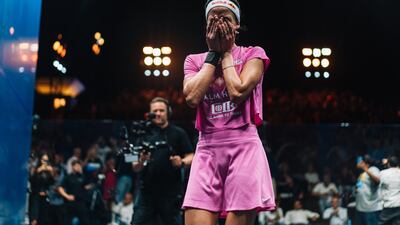
Nouran Gohar celebrates her win in the final of the women's CIB PSA World Championships. Photo: PSA -
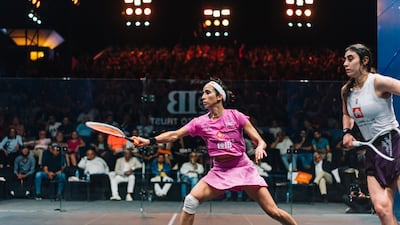
Nouran Gohar clinched her first World Championship title after defeating defending champion Nour El Sherbini. Photo: PSA -
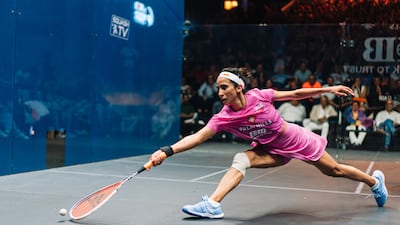
Nouran Gohar finally won a world title after three consecutive losses in championship finals. Photo: PSA -

Nouran Gohar defeated Nour El Sherbini in the title match at Cairo’s National Museum of Egyptian Civilisation. Photo: PSA -
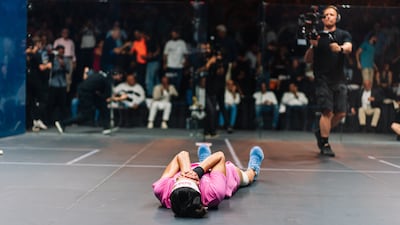
Nouran Gohar after her win. Photo: PSA -
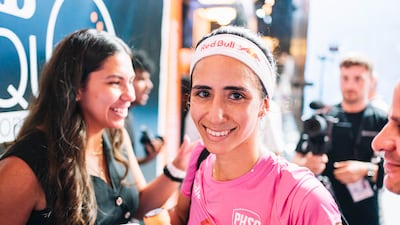
Nouran Gohar was relieved after her win. Photo: PSA


“So I think the experience part helped me big time. I had the experience and definitely I was very confident in my physicality and the way I was playing. I felt I was enjoying myself on court big time, and I haven’t felt that in so long.”
One would think that fulfilling a lifelong dream could somehow dampen her appetite moving forward, but Gohar says the first thing she did the morning after winning the final was check the practice sheet for the upcoming British Open, her next event, which starts on June 2.
“The winning feeling is like an addiction and it gives you so much energy, so much positivity, you feel like everything is going great in your life,” said Gohar.
“I think any athlete can relate to that. Obviously, I had the best three weeks of my life, winning three titles back-to-back. It started with a gold event, and then the platinum, and then the World Championship. If I was dreaming of these three weeks, I would never picture it that way to be honest.”
Gohar’s recent decision to add mental coach Haitham Gheita to her team paid rich dividends and she hasn’t lost a match since they started working together, capturing three titles in as many weeks, and picking up 15 match-wins in a row.
“He’s feeling the pressure of that actually,” she said with a laugh. “He’s like, ‘I just want to tell you that someday it’s going to happen, we’re going to lose a match that we shouldn’t lose. We have to be prepared for that, it’s OK, it’s not the end of the world’. So he keeps reminding me of that because you can just think that that’s the norm.
“He told me as well that you have to learn to celebrate the small wins and be happy about that. And I feel like right now I’m even enjoying the simplest things in life. Just driving my car around, having a good coffee. So when you’re in this relaxed mindset, it really helps you to perform very well on court.”
While Gohar was busy winning a World Championship in Cairo, her husband, Ziad Elsissy, a sabre fencer ranked No 2 in the world, was in Madrid helping guide Egypt to its first team silver medal at a World Cup.
Elsissy was in Cairo supporting Gohar from the sidelines up until the round of 16 before he flew to Spain the morning of the quarter-finals for his own competition.
“Obviously, I wanted him to be with me, so I was a bit sad, but I didn’t want to show him that I was sad. So I had some emotions going into the quarter-finals and obviously I was stressed because that was the quarter-final of the World Championship. But you have to adapt, you have to find ways, and again, I matured in that way I think,” said Gohar.
“Now we have time to celebrate. We have like a week off or something, so we can have some time to celebrate together.”

