


Today sees the first anniversary of Rishi Sunak becoming Prime Minister. It’s hard to imagine that anyone in Downing Street will be in the mood for celebration.
There is cause for some satisfaction in that Sunak has lasted longer than his predecessor, Liz Truss, although that was not difficult. Otherwise, there are few grains of comfort.
He’s steadied the ship, he made a good conference speech, his first as Tory leader. Er, that’s about it.
The first is not to be dismissed, however. Sunak came in on the back of a period of total chaos, when Britain risked becoming an international laughing stock, its reputation for financial stability trashed by the excesses of Truss and her chancellor, Kwasi Kwarteng.
Sunak instilled calm, no mean feat when the markets are out to mark you down and the UK must operate in an intensely scrutinising, globally competitive environment.
To that extent, the nation’s stature has been restored. Sunak was true to his word, promising in his first speech as prime minister, “integrity, professionalism and accountability”. That, again, is no mean feat. Compared to Truss and, before her, Boris Johnson, sticking to the task and delivering are rare standout achievements.
In other areas, Sunak has struggled. To be fair, the hand he was dealt was mightily tough. He took over a country that was just pulling out of the pandemic, that was having to cope with the fallout from Russia’s invasion of Ukraine and found its lack of energy security dangerously exposed.
The implementation, too, of Brexit was still a novelty and causing all manner of issues among the business community. Money was tight and meanwhile, President Joe Biden launched a giant incentive package to galvanise the US economy and encourage it to turn green. The comparison with Sunak, stuck with little room for manoeuvre, was stark.
None of this was Sunak’s fault. He could not be blamed for the failures of previous governments to plan and invest long-term. But he is charged with inspiring and motivating, and in this he has failed.
-
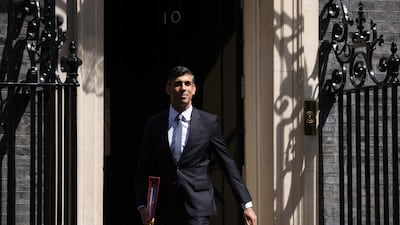
Rishi Sunak has been British Prime Minister for one year. Here The National looks back at his time in No 10 Downing Street. Getty Images -
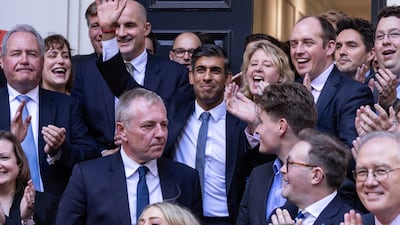
Mr Sunak after being announced as winner of the Conservative Party leadership contest on October 24. Getty Images -
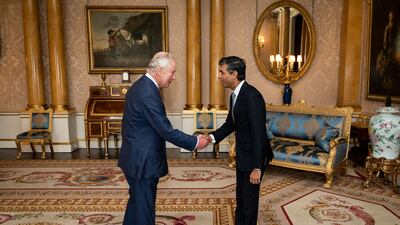
King Charles III welcomes Mr Sunak to Buckingham Palace where he invited him to become Prime Minister. Getty Images -
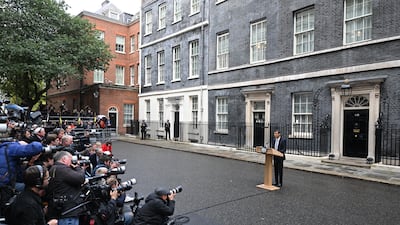
The new Prime Minister makes a speech outside No 10. Getty Images -
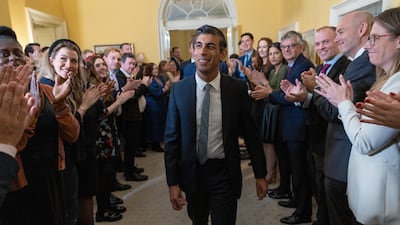
Mr Sunak arrives at No 10 for the first time as Prime Minister. Photo: Simon Walker/ No 10 Downing Street -
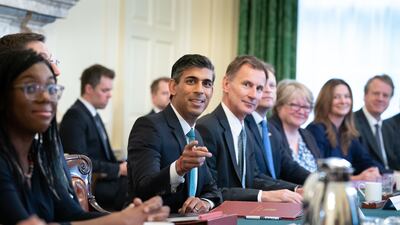
Mr Sunak holds his first cabinet meeting. Getty Images -
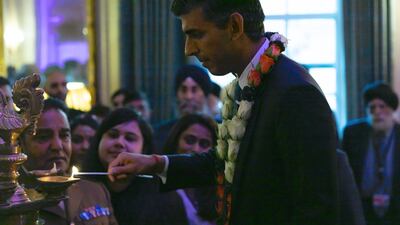
Mr Sunak hosts a reception to celebrate Diwali at No 10. Photo: Simon Walker / No 10 Downing Street -
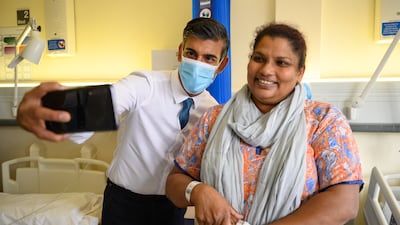
A visit to Croydon University Hospital, south London. Getty Images -
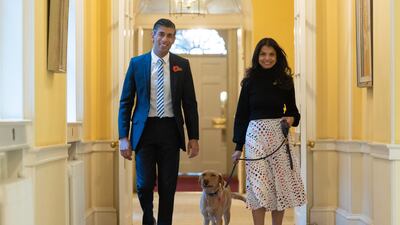
Mr Sunak and his wife Akshata Murty with Nova, their pet Labrador. Photo: Simon Walker / No 10 Downing Street -
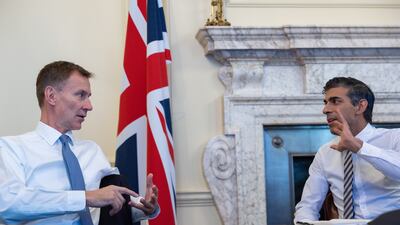
The Prime Minister with Chancellor Jeremy Hunt in the Cabinet Room at No 10. Photo: Simon Walker / No 10 Downing Street -
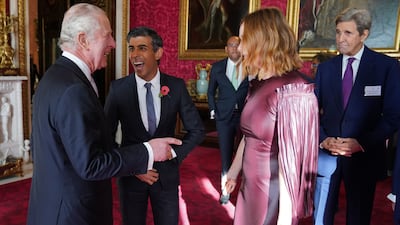
King Charles, Mr Sunak, fashion designer Stella McCartney and US climate envoy John Kerry at Buckingham Palace before Cop27. Getty Images -
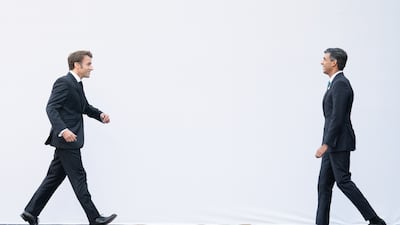
French President Emmanuel Macron and Mr Sunak at Cop27 in Sharm El Sheikh, Egypt. Getty Images -
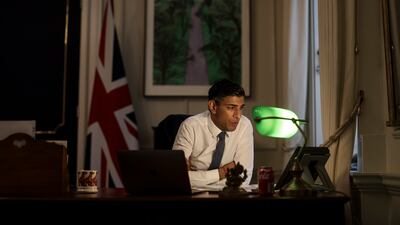
Mr Sunak during a call to Ukraine President Volodymyr Zelenskyy from his office. Photo: Simon Dawson / No 10 Downing Street -
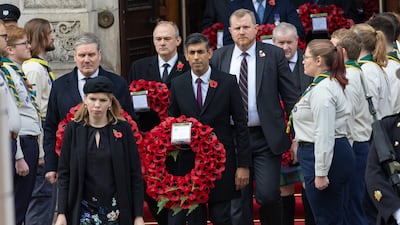
On Remembrance Sunday at the Cenotaph in London. Photo: Simon Walker / No 10 Downing Street -
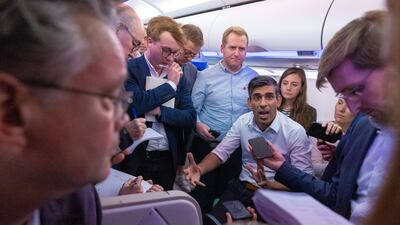
Mr Sunak with journalists on a flight to Bali for the G20 summit. Photo: Simon Walker / No 10 Downing Street -

With Saudi Arabia's Crown Prince Mohammed bin Salman during a meeting at the G20 in Nusa Dua, Indonesia. Getty Images -
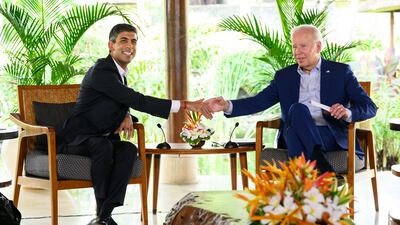
Mr Sunak with US President Joe Biden at the G20 summit. Getty Images -
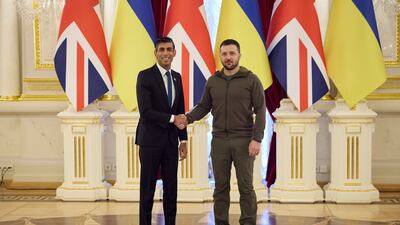
Mr Sunak and Ukrainian President Volodymyr Zelenskyy. Getty Images -
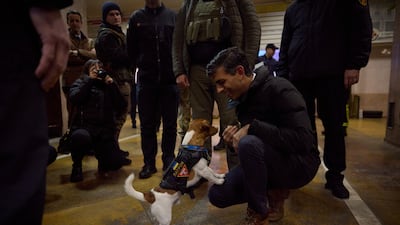
Mr Sunak meets rescue teams during his visit to Ukraine. Photo: No 10 Downing Street -
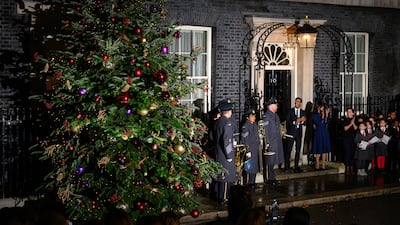
Mr Sunak and his wife outside No 10 as the Christmas lights are turned on. Getty Images -
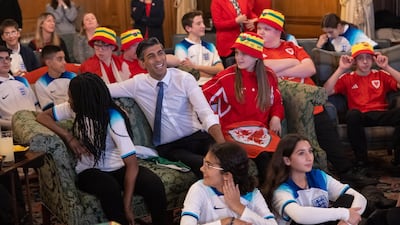
With youth footballers from Wales and England to watch the World Cup match between the two nations. Photo: Simon Walker / No 10 Downing Street -
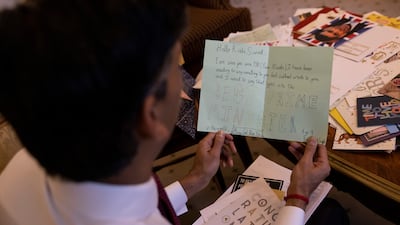
Reading congratulations cards from members of the public after being appointed. Photo: Simon Dawson / No 10 Downing Street -

At RAF Coningsby in Lincolnshire after the announcement that Britain will develop next-generation fighter jets with Italy and Japan. Getty Images -
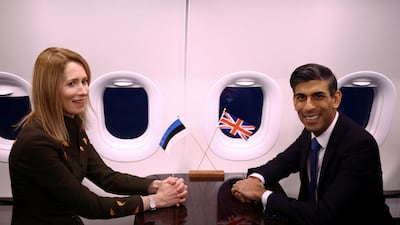
Mr Sunak and Estonian Prime Minister Kaja Kallas on a plane to Tallinn. Getty Images -
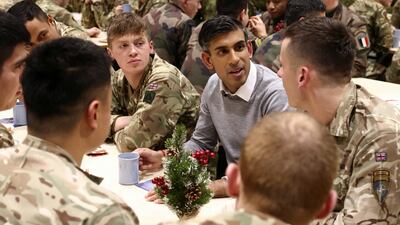
The Prime Minister with troops at the Tapa military base, Estonia. Getty Images -

The photo on Mr Sunak's official Christmas card. Photo: Simon Walker / No 10 Downing Street -
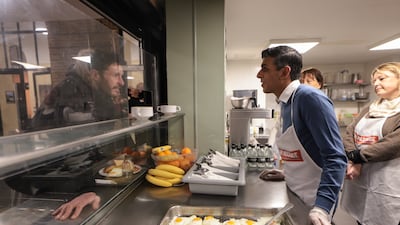
Serving breakfast on a visit to The Passage homeless shelter in London just before Christmas. Photo: Simon Dawson / No 10 Downing Street -
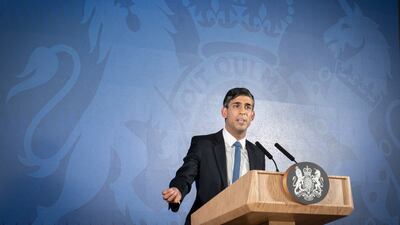
Making his first major domestic speech of the year. Getty Images -
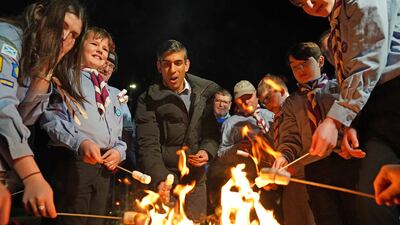
Toasting marshmallows on a visit to the Sea Scouts community group in Muirtown near Inverness. Getty Images -
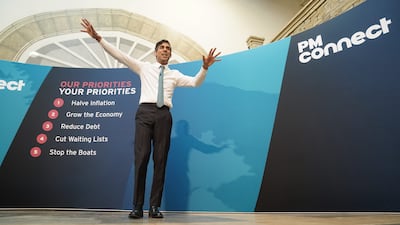
A Q&A session at The Platform in Morecambe, Lancashire, after a community visit to the Eden Project North. Getty Images -
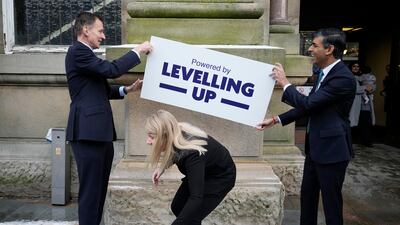
Mr Sunak and Mr Hunt at Accrington Market Hall with local MP Sara Britcliffe to announce projects under the levelling-up fund. Getty Images -
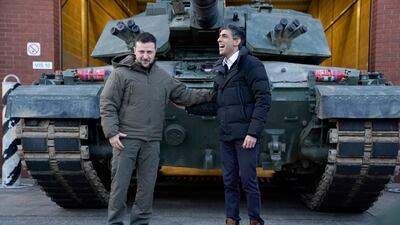
Mr Sunak and Mr Zelenskyy meet Ukrainian troops being trained to command Challenger 2 tanks at a military facility in Lulworth, Dorset. Getty Images -
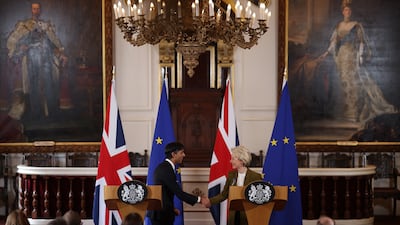
With EU Commission President Ursula von der Leyen at a press conference at Windsor Guildhall. Getty Images -
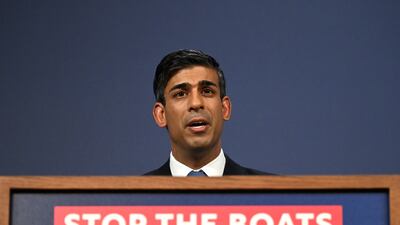
Speaking at a press conference following the launch of new legislation on migrant channel crossings at Downing Street. Getty Images -
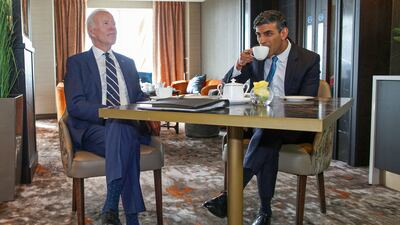
Mr Biden meets Mr Sunak during the 25th anniversary commemorations of the "Good Friday Agreement" in Belfast, Northern Ireland. Getty Images -
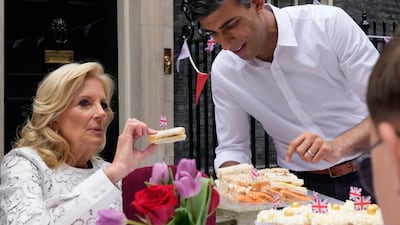
Mr Sunak holds a plate of sandwiches for US First Lady Jill Biden at Downing Street to celebrate King Charles' coronation. Getty Images -
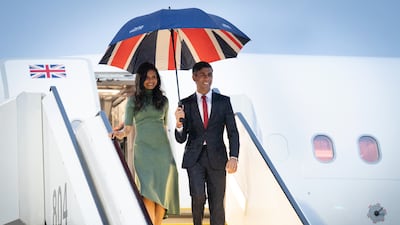
Mr Sunak and his wife Mrs Murty ahead of the G7 Summit, in Hiroshima, Japan. Getty Images -
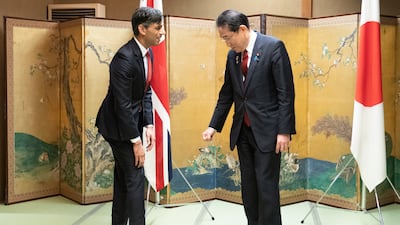
Mr Sunak with Japanese Prime Minister Fumio Kishida during their bilateral meeting in Hiroshima ahead of the G7 Summit. Getty Images -
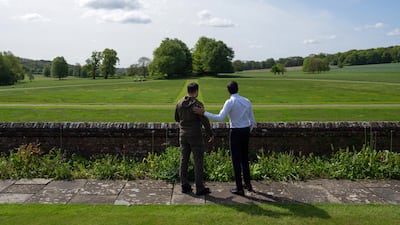
Mr Sunak and Mr Zelenskyy look out towards trees planted by Winston Churchill as they walk in the garden at Chequers. Getty Images -
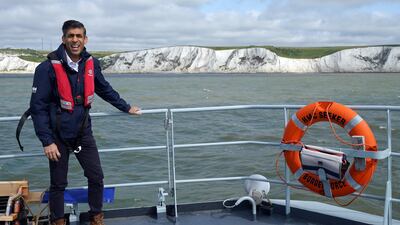
Mr Sunak onboard Border Agency cutter HMC Seeker during a visit to Dover. Getty Images -
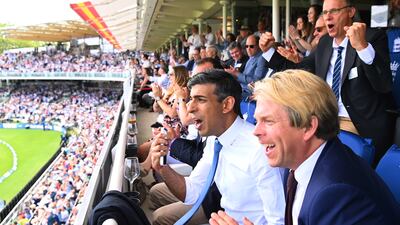
Mr Sunak cheers during the Ashes Test match between England and Australia at Lord's Cricket Ground. Getty Images -
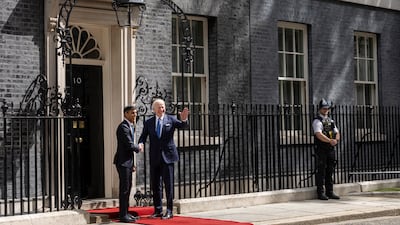
Mr Sunak welcomes Mr Biden at 10 Downing Street. Getty Images -
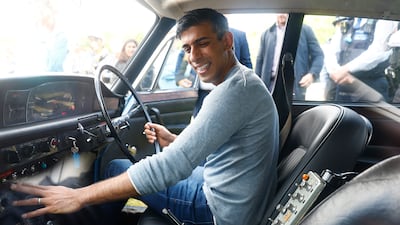
In a Special Branch police vehicle used to transport former Prime Minister, Margaret Thatcher, in Bexley. Getty Images -
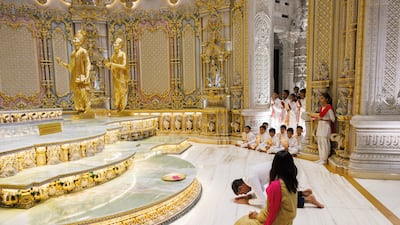
Mr Sunak and his wife Mrs Murty offer prayers as they visit the Akshardham Hindu Temple in New Delhi, India. Getty Images -

Mr Sunak meets the Prime Minister of Israel Benjamin Netanyahu. No 10 Downing Street


Truss talked about “growth” constantly. Sunak would like to do the same, if only he could. One of his early acts was to instruct ministers to suggest ideas for growing the economy. The trouble was they were not allowed to use any of the measures that Truss had suggested. She was advocating cutting taxes; and that’s what her Mini-Budget decreed.
That was her undoing. The City took fright due to the naive enthusiasm of Truss and Kwarteng in laying an entire banquet of reductions before international investors and not offering solid evidence of how it was all going to be paid for. If they’d trimmed their cloth and offered one or two morsels, with the prospect of more ahead, the reaction could well have been favourable.
As it was, Sunak found himself short of wriggle-room. He had to resort to bigging up steps that on analysis did not amount to much and to cutting back to allow him to spend – the HS2 line north of Birmingham being the most spectacular example.
In the City, and from business leaders, the common refrain is that Sunak is a “good COO” but not a CEO. They appreciate his qualities as a manager, as a technocrat who likes to get into the granular detail of everything that crosses his desk. Again, certainly versus Johnson that is welcome.
There are though, aspects of Johnson where he falls short. Sunak is not a born leader; he doesn’t do the big and bold. Johnson did them too much, but with Sunak they’ve been absent.
Sunak’s pragmatism, while a strength, has also served to make him seem weak. His reversal on fossil fuels, made with good intent, to counter the vulnerability of Britain’s energy supply and the likelihood of falling behind with the roll-out of renewables and electric vehicle charging points, while arguably necessary was not something Johnson would have countenanced.
There has been no shortage of photo opportunities, with Sunak seeming energetic and earnest, smiling broadly, pressing the flesh, appealing to people’s understanding and goodness. None of it has achieved the desired uplift.
That’s evident in the polls, where Sunak has not made any headway. Even his widely applauded conference address failed to make an inroad into Labour’s substantial lead in the polls.
Try as he might, presenting himself as embodying “change”, he’s appeared as representing a party that has grown tired and complacent after 13 years of rule.
Sunak bristles with vitality but those around him at the Cabinet table do not. Worse, when he picked his ministerial line-up he fell back on stalwarts Gavin Williamson, Dominic Raab and Nadhim Zahawi. He ignored warnings about their conduct and stood by them.
Subsequently, all three left the government, only further undermining the person who appointed them in the first place.
Similarly, he remains loyal to his controversial Home Secretary, Suella Braverman. She, like one or two others, appears intent on laying out her credentials to be the next leader – not reassuring if you’re attempting to make a fist of being the current one.
There’s a feeling of powerlessness and of power slipping away; powerless to forge the Britain and society he talks about; power disappearing to a revitalised Labour (now given an added boost from a declining SNP and increased chances of picking up seats in Scotland).
Sunak, by consensus, has many virtues. He’s not widely disliked, but neither is he admired, not to the extent that people are likely to vote for him in the numbers required for victory at the looming general election. Starmer is no great shakes either when he’s assessed on personal popularity and charisma.
Starmer, however, has the merit of leading an alternative party, one that is not Conservative. The City can sense that, too. It likes to back winners, not losers – hence the donors and business chieftains wanting to meet Starmer and the Shadow Chancellor, Rachel Reeves.
It’s not by any means over for Sunak. Much can happen between now and when he calls the election. He’s got his five pledges – to halve inflation, grow the economy, reduce debt, cut NHS waiting lists, stop the small boats of immigrants.
At one stage, it looked as if he might be on track with the inflation target, which had the highest priority. Then, Hamas attacked and it’s slipped.
That was an ending to his first 12 months in charge he could do without. It’s been that sort of year, of lots of noise but ultimately not providing lift-off. Perhaps he will have a small cake with a single candle on top: nobody can say he’s not earned it.

