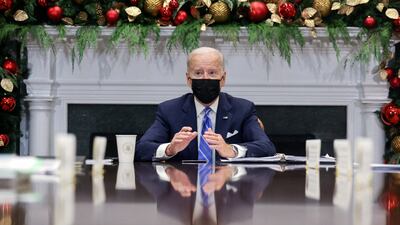
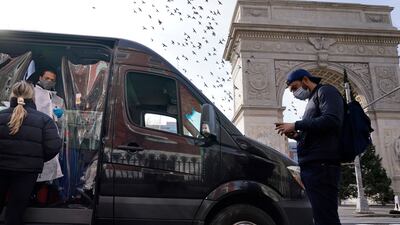
A government advertisement promoting the UK government's Covid-19 vaccine booster programme in London. Photo: AFP


We have enough jabs for everyone on Earth, so why are most poor countries unvaccinated?


Seth Berkley
Seth Berkley
  • English
  • Arabic

December 31, 2021

It is now nearly two years since the first Covid-19 case was reported and more than a year since the distribution of the first vaccines began.

Yet with a new tidal wave of infections sweeping around the globe, and Omicron riding high upon it, are we any closer to ending this crisis and better prepared for the next pandemic?

The answer to both of these questions depends very much on what we do now at this critical stage in the global crisis. The fact is we have the tools we need to bring this virus under control, and a road map for how to mitigate the next pandemic threat, but up until this point we have not been making the best use of them.

Thanks to the incredible work of the scientific community and vaccine manufacturers, not one but 21 Covid-19 vaccines were developed and distributed in record-breaking time, and in unprecedented volumes. And we also have in place the global health networks needed to make the world’s largest and most complex vaccine deployment ever possible. The only trouble is vaccines are still not reaching everyone fast enough.

During a global pandemic, speed is absolutely critical. You cannot stop a virus in geographical phases, vaccinating people in some parts of the world while leaving the protection of others until later. Because so long as large populations of unvaccinated people exist anywhere, the virus will continue to spread and mutate, and new and potentially dangerous variants will continue to emerge, as we have seen with Omicron.

This is why it has been so important from the very beginning to make access to Covid-19 vaccines rapid, fair and equitable to people all over the world. So when Covax, the global effort to make these vaccines equitably available, co-led by my organisation Gavi, was able to start delivering them to people in lower-income countries just 39 days after people in the high-income countries first started receiving them, it gave hope to billions across the world that they, too, would soon be protected. The end of the crisis appeared to be in sight.

Yet as we have seen, what followed tells a very different story. Despite this initial success, with Covax getting first doses out to people in 100 countries in just six weeks, we faced a series of obstacles. Export restrictions and vaccine hoarding by wealthy countries repeatedly disrupted our supply of Covid-19 vaccines. As a result, Covax’s trajectory for getting doses to lower-income countries was affected severely.

This is the principal reason why we have seen such appalling global disparities in the distribution of Covid-19 vaccines. Today, the world’s wealthiest nations have protected more than 75 per cent of their citizens, while only in the poorest countries just 8.3 per cent of people have had their first shot.

At the initial stages, demand for vaccines was always going to outstrip supply, but these challenges have persisted even since global production got into full swing. More than 1.5 billion doses are now being produced a month, and by the end of the year around 12 billion doses will have been produced globally, enough to fully vaccinate everyone on this planet. Yet, as things stand, nearly 3.4 billion people – nearly half the global population – remain unvaccinated.

The positive news is that Covax’s supply lines are now ramping up. We are quickly making up for lost ground, with 1.6 billion doses allocated and more than 870 million doses delivered into countries by the end of the year, the vast majority to lower-income countries. And, by early 2022, we hope to have shipped enough for these countries to have protected 20 per cent of their populations, enough to protect the people most at risk, such as frontline healthcare workers and vulnerable populations.

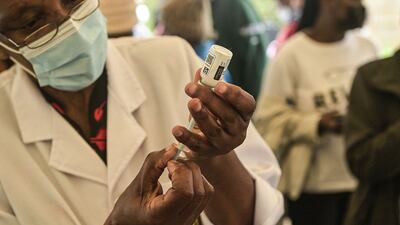
A health worker injects a person with a dose of the Moderna Covid-19 vaccine donated through the Covax initiative in Port-au-Prince, Haiti. Photo: AP

During a pandemic, protecting people everywhere with a primary vaccination should have been the global priority from the start. The greatest impact of vaccination during any outbreak lies with first protecting the people most likely to come into contact with the virus and those most likely to be affected by it, and then slowing the spread by increasing coverage. Yet while many governments have been fast to act on this, particularly when it comes to their own high-risk citizens, it’s a strategy that has not been applied globally.

Until that is remedied, and the task of getting primary doses to people in all countries, particularly high-risk individuals, becomes the global priority, we can only expect to see further resurgences as new variants continue to emerge.

With Omicron once again threatening to bring more disruption, wealthy governments are again turning inward as they race to accelerate their booster programmes. The worry now is that the increased demand for booster doses by governments will create renewed pressure on global supply, creating a vaccine inequity 2.0 scenario that has an impact on Covax’s access to doses and delays our ability to get first doses out to people.

Currently, while there is some evidence to suggest that boosters may provide some additional protection against symptomatic infection, it is still not clear if they provide additional protection against severe disease, admission to hospital or death, or to what extent. Moreover, there is no evidence to suggest that two doses of existing vaccines are any less effective at preventing severe disease with Omicron.

What this means is that while boosters may help slow the local spread of the disease and ease the burden on local health services, in the long term this will do nothing to stop the global spread, and reduce the risk of the next Pi, Rho, Sigma or Tao variants emerging and further resurgences from occurring, if we don’t also get primary doses out to the billions of people who are still unvaccinated, particularly those in lower-income countries.

The Covax Advance Market Commitment, AMC, makes this possible. But if we are to increase coverage and work towards the World Health Organisation’s target of protecting 70 per cent of people in every country by mid-2022, then at least $5.2 billion of additional funding is needed over the next three months.

Compared to when this virus first struck, we are now infinitely better equipped to beat this pandemic. In addition to the vaccines, we also now have all the critical pieces needed to carry out a global vaccination effort. This includes everything from the scaled-up manufacturing, regulatory frameworks, the infrastructure, logistics, personnel, data systems and disease monitoring systems, as well as the necessary compensation, liability and indemnification legal safety nets, much of which Covax was central to putting in place.

For future pandemic preparedness, we now need to build on this, and the global health networks that underpin it all to mount a rapid and robust response. But that response can only ever be effective if it is truly global. With Covid-19, we’re still not seeing that. What we need now is for the global priority to become getting primary doses out to the billions of people in lower-income countries who are still unprotected, and support for countries that are struggling to get shots into people’s arms.

If the world can now rally around this goal, with the same level of urgency with which boosters are being distributed, then this time next year the end of the crisis may finally be within sight.


THE LIGHT

Director: Tom Tykwer

Starring: Tala Al Deen, Nicolette Krebitz, Lars Eidinger

Rating: 3/5

Benefits of first-time home buyers' scheme
  • Priority access to new homes from participating developers
  • Discounts on sales price of off-plan units
  • Flexible payment plans from developers
  • Mortgages with better interest rates, faster approval times and reduced fees
  • DLD registration fee can be paid through banks or credit cards at zero interest rates
The Penguin

Starring: Colin Farrell, Cristin Milioti, Rhenzy Feliz

Creator: Lauren LeFranc

Rating: 4/5

UAE currency: the story behind the money in your pockets
if you go

The flights

Etihad, Emirates and Singapore Airlines fly direct from the UAE to Singapore from Dh2,265 return including taxes. The flight takes about 7 hours.

The hotel

Rooms at the M Social Singapore cost from SG $179 (Dh488) per night including taxes.

The tour

Makan Makan Walking group tours costs from SG $90 (Dh245) per person for about three hours. Tailor-made tours can be arranged. For details go to www.woknstroll.com.sg

MATCH INFO

Real Madrid 2 (Benzema 13', Kroos 28')
Barcelona 1 (Mingueza 60')

Red card: Casemiro (Real Madrid)

RESULTS

2pm: Handicap (PA) Dh 40,000 (Dirt) 1,200m
Winner: AF Senad, Nathan Crosse (jockey), Kareem Ramadan (trainer)

2.30pm: Maiden (PA) Dh 40,000 (D) 1,000m
Winner: Ashjaan, Fabrice Veron, Eric Lemartinel.

3pm: Maiden (PA) Dh 40,000 (D) 1,700m
Winner: Amirah, Conner Beasley, Ali Rashid Al Raihe.

3.30pm: Handicap (PA) Dh 40,000 (D) 1,700m
Winner: Jap Al Yaasoob, Szczepan Mazur, Irfan Ellahi.

4pm: Sheikh Mansour bin Zayed Al Nahyan Cup Prestige Handicap (PA) Dh 100,000 (D) 1,200m
Winner: Jawaal, Fernando Jara, Majed Al Jahouri.

4.30pm: Handicap (TB) Dh 40,000 (D) 1,200m
Winner: Manhunter, Ryan Curatolo, Mujeeb Rahman.

THE%20HOLDOVERS
%3Cp%3E%3Cstrong%3EDirector%3A%20%3C%2Fstrong%3EAlexander%20Payne%3C%2Fp%3E%0A%3Cp%3E%3Cstrong%3EStarring%3A%3C%2Fstrong%3E%20Paul%20Giamatti%2C%20Da'Vine%20Joy%20Randolph%2C%20Dominic%20Sessa%3C%2Fp%3E%0A%3Cp%3E%3Cstrong%3ERating%3A%3C%2Fstrong%3E%204.5%2F5%3C%2Fp%3E%0A
UPI facts

More than 2.2 million Indian tourists arrived in UAE in 2023
More than 3.5 million Indians reside in UAE
Indian tourists can make purchases in UAE using rupee accounts in India through QR-code-based UPI real-time payment systems
Indian residents in UAE can use their non-resident NRO and NRE accounts held in Indian banks linked to a UAE mobile number for UPI transactions

MATCH INFO

Uefa Champions League semi-finals, first leg
Liverpool v Roma

When: April 24, 10.45pm kick-off (UAE)
Where: Anfield, Liverpool
Live: BeIN Sports HD
Second leg: May 2, Stadio Olimpico, Rome

Profile of MoneyFellows

Founder: Ahmed Wadi

Launched: 2016

Employees: 76

Financing stage: Series A ($4 million)

Investors: Partech, Sawari Ventures, 500 Startups, Dubai Angel Investors, Phoenician Fund

UAE currency: the story behind the money in your pockets
Company%20profile
%3Cp%3E%3Cstrong%3EName%3A%3C%2Fstrong%3E%20WonderTree%3Cbr%3E%3Cstrong%3EStarted%3A%3C%2Fstrong%3E%20April%202016%3Cbr%3E%3Cstrong%3ECo-founders%3A%3C%2Fstrong%3E%20Muhammad%20Waqas%20and%20Muhammad%20Usman%3Cbr%3E%3Cstrong%3EBased%3A%3C%2Fstrong%3E%20Karachi%2C%20Pakistan%2C%20Abu%20Dhabi%2C%20UAE%2C%20and%20Delaware%2C%20US%3Cbr%3E%3Cstrong%3ESector%3A%3C%2Fstrong%3E%20Special%20education%2C%20education%20technology%2C%20assistive%20technology%2C%20augmented%20reality%3Cbr%3EN%3Cstrong%3Eumber%20of%20staff%3A%20%3C%2Fstrong%3E16%3Cbr%3E%3Cstrong%3EInvestment%20stage%3A%20%3C%2Fstrong%3EGrowth%3Cbr%3E%3Cstrong%3EInvestors%3A%3C%2Fstrong%3E%20Grants%20from%20the%20Lego%20Foundation%2C%20UAE's%20Anjal%20Z%2C%20Unicef%2C%20Pakistan's%20Ignite%20National%20Technology%20Fund%3C%2Fp%3E%0A
COMPANY%20PROFILE
%3Cp%3E%3Cstrong%3ECompany%20name%3A%3C%2Fstrong%3E%203S%20Money%3Cbr%3E%3Cstrong%3EStarted%3A%3C%2Fstrong%3E%202018%3Cbr%3E%3Cstrong%3EBased%3A%3C%2Fstrong%3E%20London%3Cbr%3E%3Cstrong%3EFounders%3A%3C%2Fstrong%3E%20Ivan%20Zhiznevsky%2C%20Eugene%20Dugaev%20and%20Andrei%20Dikouchine%3Cbr%3E%3Cstrong%3ESector%3A%3C%2Fstrong%3E%20FinTech%3Cbr%3E%3Cstrong%3EInvestment%20stage%3A%3C%2Fstrong%3E%20%245.6%20million%20raised%20in%20total%3C%2Fp%3E%0A
IF YOU GO

The flights

FlyDubai flies direct from Dubai to Skopje in five hours from Dh1,314 return including taxes. Hourly buses from Skopje to Ohrid take three hours.

The tours

English-speaking guided tours of Ohrid town and the surrounding area are organised by Cultura 365; these cost €90 (Dh386) for a one-day trip including driver and guide and €100 a day (Dh429) for two people. 

The hotels

Villa St Sofija in the old town of Ohrid, twin room from $54 (Dh198) a night.

St Naum Monastery, on the lake 30km south of Ohrid town, has updated its pilgrims' quarters into a modern 3-star hotel, with rooms overlooking the monastery courtyard and lake. Double room from $60 (Dh 220) a night.


Timeline

2012-2015

The company offers payments/bribes to win key contracts in the Middle East

May 2017

The UK SFO officially opens investigation into Petrofac’s use of agents, corruption, and potential bribery to secure contracts

September 2021

Petrofac pleads guilty to seven counts of failing to prevent bribery under the UK Bribery Act

October 2021

Court fines Petrofac £77 million for bribery. Former executive receives a two-year suspended sentence 

December 2024

Petrofac enters into comprehensive restructuring to strengthen the financial position of the group

May 2025

The High Court of England and Wales approves the company’s restructuring plan

July 2025

The Court of Appeal issues a judgment challenging parts of the restructuring plan

August 2025

Petrofac issues a business update to execute the restructuring and confirms it will appeal the Court of Appeal decision

October 2025

Petrofac loses a major TenneT offshore wind contract worth €13 billion. Holding company files for administration in the UK. Petrofac delisted from the London Stock Exchange

November 2025

180 Petrofac employees laid off in the UAE

Founders: Abdulmajeed Alsukhan, Turki Bin Zarah and Abdulmohsen Albabtain.

Based: Riyadh

Offices: UAE, Vietnam and Germany

Founded: September, 2020

Number of employees: 70

Sector: FinTech, online payment solutions

Funding to date: $116m in two funding rounds  

Investors: Checkout.com, Impact46, Vision Ventures, Wealth Well, Seedra, Khwarizmi, Hala Ventures, Nama Ventures and family offices

Results

2.30pm Maiden (PA) Dh40,000 1,200m

Winner Lamia, Tadhg O’Shea, Ernst Oertel.

3pm Handicap (PA) Dh40,000 1,000m

Winner Jap Al Afreet, Elione Chaves, Irfan Ellahi.

3.30pm Handicap (PA) Dh40,000 1,700m

Winner MH Tawag, Bernardo Pinheiro, Elise Jeanne.

4pm Handicap (TB) Dh40,000 2,000m

Winner Skygazer, Sandro Paiva, Ali Rashid Al Raihe.

4.30pm The Ruler of Sharjah Cup Prestige (PA) Dh250,000 1,700m

Winner AF Kal Noor, Tadhg O’Shea, Ernst Oertel.

5pm Sharjah Marathon (PA) Dh70,000 2,700m

Winner RB Grynade, Bernardo Pinheiro, Eric Lemartinel.

Company%20profile
%3Cp%3E%3Cstrong%3EName%3A%3C%2Fstrong%3E%20JustClean%3Cbr%3E%3Cbr%3E%3Cstrong%3EBased%3A%20%3C%2Fstrong%3EDubai%20with%20offices%20in%20other%20GCC%20countries%3Cbr%3E%3Cbr%3E%3Cstrong%3ELaunch%20year%3A%3C%2Fstrong%3E%202016%3Cbr%3E%3Cbr%3E%3Cstrong%3ENumber%20of%20employees%3A%3C%2Fstrong%3E%20160%2B%20with%2021%20nationalities%20in%20eight%20cities%3Cbr%3E%3Cstrong%3E%3Cbr%3ESector%3A%3C%2Fstrong%3E%20online%20laundry%20and%20cleaning%20services%3Cbr%3E%3Cbr%3E%3Cstrong%3EFunding%3A%20%3C%2Fstrong%3E%2430m%20from%20Kuwait-based%20Faith%20Capital%20Holding%20and%20Gulf%20Investment%20Corporation%3C%2Fp%3E%0A
SERIE A FIXTURES

Saturday (All UAE kick-off times)

Lecce v SPAL (6pm)

Bologna v Genoa (9pm)

Atlanta v Roma (11.45pm)

Sunday

Udinese v Hellas Verona (3.30pm)

Juventus v Brescia (6pm)

Sampdoria v Fiorentina (6pm)

Sassuolo v Parma (6pm)

Cagliari v Napoli (9pm)

Lazio v Inter Milan (11.45pm)

Monday

AC Milan v Torino (11.45pm)


A%20QUIET%20PLACE
%3Cp%3E%3Cstrong%3EStarring%3A%3C%2Fstrong%3E%20Lupita%20Nyong'o%2C%20Joseph%20Quinn%2C%20Djimon%20Hounsou%3C%2Fp%3E%0A%3Cp%3E%3Cstrong%3EDirector%3A%20%3C%2Fstrong%3EMichael%20Sarnoski%3C%2Fp%3E%0A%3Cp%3E%3Cstrong%3ERating%3A%3C%2Fstrong%3E%204%2F5%3C%2Fp%3E%0A
Brief scoreline:

Liverpool 5

Keita 1', Mane 23', 66', Salah 45' 1, 83'

Huddersfield 0

The UAE squad for the Asian Indoor and Martial Arts Games

The jiu-jitsu men’s team: Faisal Al Ketbi, Zayed Al Kaabi, Yahia Al Hammadi, Taleb Al Kirbi, Obaid Al Nuaimi, Omar Al Fadhli, Zayed Al Mansoori, Saeed Al Mazroui, Ibrahim Al Hosani, Mohammed Al Qubaisi, Salem Al Suwaidi, Khalfan Belhol, Saood Al Hammadi.

Women’s team: Mouza Al Shamsi, Wadeema Al Yafei, Reem Al Hashmi, Mahra Al Hanaei, Bashayer Al Matrooshi, Hessa Thani, Salwa Al Ali.

UAE currency: the story behind the money in your pockets
ESSENTIALS

The flights 
Emirates, Etihad and Swiss fly direct from the UAE to Zurich from Dh2,855 return, including taxes.
 

The chalet
Chalet N is currently open in winter only, between now and April 21. During the ski season, starting on December 11, a week’s rental costs from €210,000 (Dh898,431) per week for the whole property, which has 22 beds in total, across six suites, three double rooms and a children’s suite. The price includes all scheduled meals, a week’s ski pass, Wi-Fi, parking, transfers between Munich, Innsbruck or Zurich airports and one 50-minute massage per person. Private ski lessons cost from €360 (Dh1,541) per day. Halal food is available on request.

BMW M5 specs

Engine: 4.4-litre twin-turbo V-8 petrol enging with additional electric motor

Power: 727hp

Torque: 1,000Nm

Transmission: 8-speed auto

Fuel consumption: 10.6L/100km

On sale: Now

Price: From Dh650,000

Important questions to consider

1. Where on the plane does my pet travel?

There are different types of travel available for pets:

  • Manifest cargo
  • Excess luggage in the hold
  • Excess luggage in the cabin

Each option is safe. The feasibility of each option is based on the size and breed of your pet, the airline they are traveling on and country they are travelling to.


2. What is the difference between my pet traveling as manifest cargo or as excess luggage?

If traveling as manifest cargo, your pet is traveling in the front hold of the plane and can travel with or without you being on the same plane. The cost of your pets travel is based on volumetric weight, in other words, the size of their travel crate.

If traveling as excess luggage, your pet will be in the rear hold of the plane and must be traveling under the ticket of a human passenger. The cost of your pets travel is based on the actual (combined) weight of your pet in their crate.


3. What happens when my pet arrives in the country they are traveling to?

As soon as the flight arrives, your pet will be taken from the plane straight to the airport terminal.

If your pet is traveling as excess luggage, they will taken to the oversized luggage area in the arrival hall. Once you clear passport control, you will be able to collect them at the same time as your normal luggage. As you exit the airport via the ‘something to declare’ customs channel you will be asked to present your pets travel paperwork to the customs official and / or the vet on duty. 

If your pet is traveling as manifest cargo, they will be taken to the Animal Reception Centre. There, their documentation will be reviewed by the staff of the ARC to ensure all is in order. At the same time, relevant customs formalities will be completed by staff based at the arriving airport. 


4. How long does the travel paperwork and other travel preparations take?

This depends entirely on the location that your pet is traveling to. Your pet relocation compnay will provide you with an accurate timeline of how long the relevant preparations will take and at what point in the process the various steps must be taken.

In some cases they can get your pet ‘travel ready’ in a few days. In others it can be up to six months or more.


5. What vaccinations does my pet need to travel?

Regardless of where your pet is traveling, they will need certain vaccinations. The exact vaccinations they need are entirely dependent on the location they are traveling to. The one vaccination that is mandatory for every country your pet may travel to is a rabies vaccination.

Other vaccinations may also be necessary. These will be advised to you as relevant. In every situation, it is essential to keep your vaccinations current and to not miss a due date, even by one day. To do so could severely hinder your pets travel plans.

Source: Pawsome Pets UAE

'The worst thing you can eat'

Trans fat is typically found in fried and baked goods, but you may be consuming more than you think.

Powdered coffee creamer, microwave popcorn and virtually anything processed with a crust is likely to contain it, as this guide from Mayo Clinic outlines: 

Baked goods - Most cakes, cookies, pie crusts and crackers contain shortening, which is usually made from partially hydrogenated vegetable oil. Ready-made frosting is another source of trans fat.

Snacks - Potato, corn and tortilla chips often contain trans fat. And while popcorn can be a healthy snack, many types of packaged or microwave popcorn use trans fat to help cook or flavour the popcorn.

Fried food - Foods that require deep frying — french fries, doughnuts and fried chicken — can contain trans fat from the oil used in the cooking process.

Refrigerator dough - Products such as canned biscuits and cinnamon rolls often contain trans fat, as do frozen pizza crusts.

Creamer and margarine - Nondairy coffee creamer and stick margarines also may contain partially hydrogenated vegetable oils.

Updated: December 31, 2021, 4:47 AM