


Turkey is once again using the displaced and the helpless as pawns in its dangerous, years-long geopolitical game with Syria and Europe. As vast numbers of refugees are forced to make their way on foot through the hills and fields that comprise Turkey’s European border, the world must act now if it is to avert another humanitarian crisis threatening to unfold in the Mediterranean.
On Friday, Ankara declared that it was opening its land and sea crossings to Europe to allow Syrian migrants and refugees living within its borders to make their way to the continent. Its decision to turn on the migrant-flow tap came shortly after an air strike by Bashar Al Assad's regime forces in Syria killed 33 Turkish soldiers stationed in the war-torn country's north-western province of Idlib.
Meanwhile, Turkey has demanded help from fellow Nato member states in its proxy war against the Russian-backed regime in Damascus – one that has yielded little else but violence and bloodshed in recent times, as well as great instability in the Middle East.
-
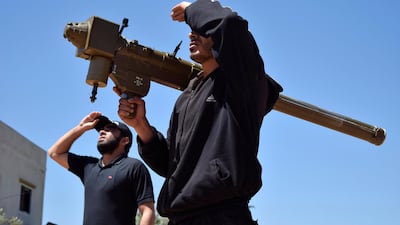
Rebel-fighters monitor the sky holding a FN-6 man-portable air-defence system (MANPADS) in the Syrian village of Teir Maalah, near Homs. AFP -
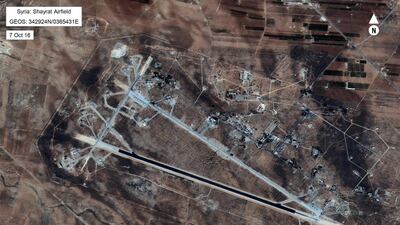
The Shayrat airfield in Syria. Donald Trump ordered a massive military strike on a Syrian air base in retaliation for a chemical attack he blamed on President Bashar al-Assad. AFP -

Smoke plumes billowing from bombardment by the Syrian government forces and allies on the town of Sarmin, southeast of the city of Idlib. AFP -
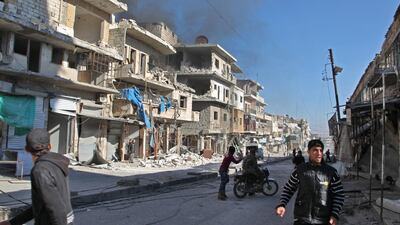
Smoke billows from a building following a reported bombardment by pro-Syrian government forces in the town of Maaret al-Numan in Syria's Idlib province. AFP -
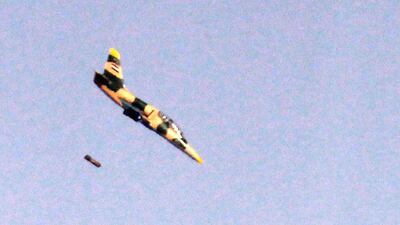
A Syrian Aero L-39 Albatros war plane dropping a payload above buildings across the border in Syria during air strikes backing a Syrian-government-led offensive. AFP -
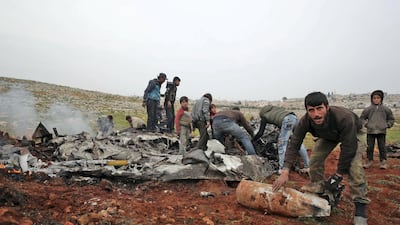
People search for scraps of metal among the debris of a Syrian military helicopter that was shot down in the western countryside of Aleppo province. AFP -
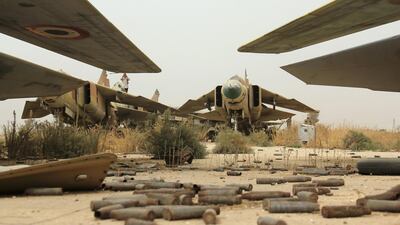
A general view shows former Syrian army MiG-23 fighter jets at the Abu Duhur military airport, the last regime-held military base in northwestern Idlib province. AFP -
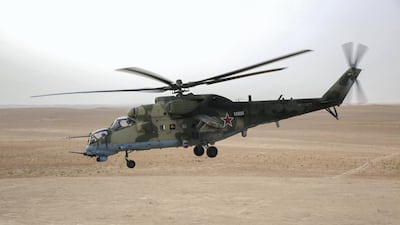
A Russian Mil Mi-24 "Hind" attack helicopter flying in the eastern Syrian region of Deir Ezzor. AFP -
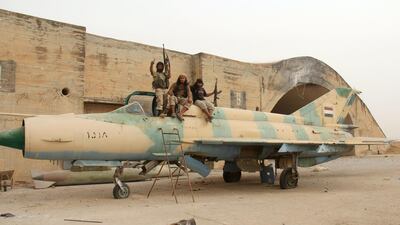
Members of Al-Qaeda's Syrian affiliate and its allies sit on top of a former Syrian army MiG-21 figther jet after they seized the Abu Duhur military airport. AFP -
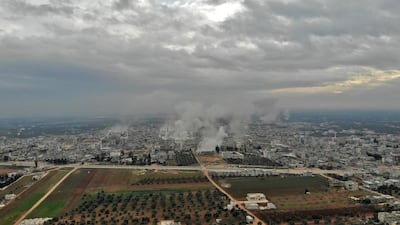
An aerial view of smoke plumes billowing from bombardment by the Syrian government forces and allies on the town of Sarmin, southeast of the city of Idlib. AFP. -
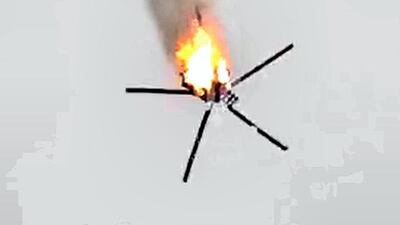
An image grab taken from a video allegedly shows a Syrian military helicopter being downed on in Syria's war-torn province of Idlib. AFP


Turkey has been home to 3.7 million refugees since the start of the Syrian civil war. But even though the European Union signed a deal with Ankara four years ago – it provides billions of euros in aid in return for Ankara agreeing to stem the influx of migrants into Europe – President Recep Tayyip Ergdogan has often threatened to send some of them westwards unless the forces he backs in Syria receive more help from other countries.
This time, however, that threat seems real, with Turkish officials reportedly having rushed thousands refugees on buses to the vicinity of border with Greece, only to make them walk the rest of the way for the cameras.
Mr Erdogan’s gamble is dangerous, as the potential influx of refugees into Europe risks exacerbating the already-rising ethnic tensions across the continent. While the Al Assad regime must take the lion’s share of the blame for the larger refugee crisis, Mr Erdogan’s policies have indirectly instigated right-wing political movements in Europe bearing nativist and xenophobic agendas as well as a determination to deny permanent homes to those they say do not share their way of life or look like them.
-
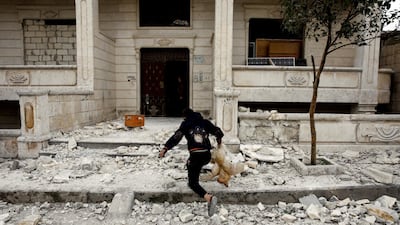
A Syrian boy removes a dead chicken from the debris of a building hit by an air strike in Idlib, Syria. REUTERS -
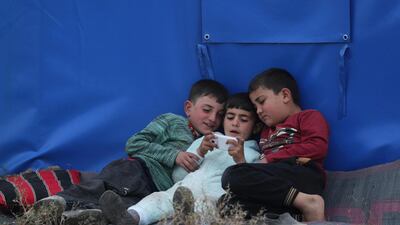
Internally displaced Syrian boys play on a mobile phone outside a tent in Azaz, Syria. REUTERS -
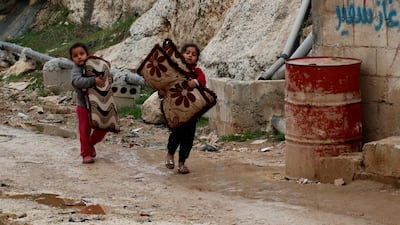
Internally displaced Syrian girls carry their belongings in an IDP camp located in Sarmada in Idlib province, Syria. REUTERS -
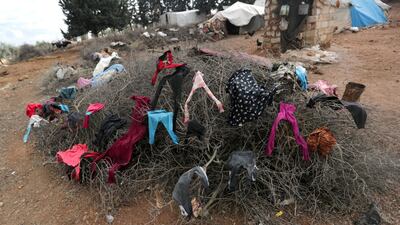
Clothes hang to dry on a cluster of branches in Azaz, Syria. REUTERS -
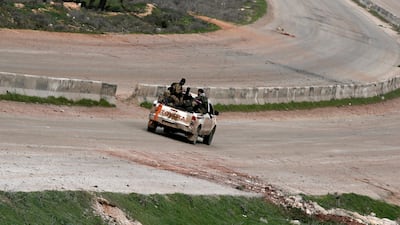
Fighters drive through Idlib city center from Saraqeb in Idlib province, Syria. REUTERS -
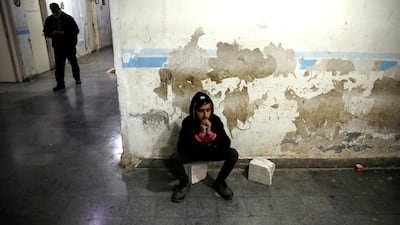
A relative of a wounded fighter waits for the end of his surgery in a hospital in Idlib, Syria. REUTERS -
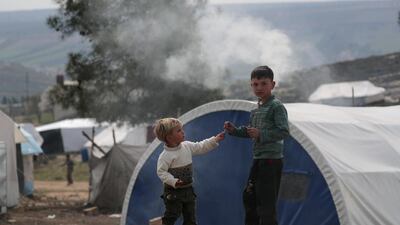
Internally displaced Syrian boys stand near tents in Azaz, Syria. REUTERS -
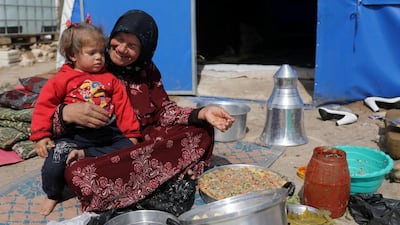
An internally displaced woman with a child on her lap prepares food outside a tent in Azaz, Syria. REUTERS -
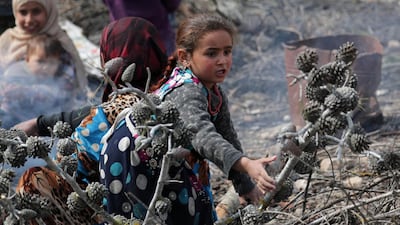
An internally displaced Syrian girl collects firewood for cooking, in Azaz, Syria. REUTERS -

Turkish ambassador to the United Nations Feridun Sinirlioglu speaks with U.S. Ambassador to the United Nations Kelly Craft alone following a Security Council meeting about the situation in Syria at United Nations Headquarters in the Manhattan borough of New York City, New York, U.S. REUTERS -
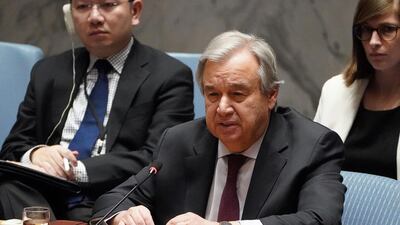
Secretary General of the United Nations Antonio Guterres speaks during a Security Council meeting about the situation in Syria at U.N. Headquarters in the Manhattan borough of New York City, New York, U.S. REUTERS


An unfortunate manifestation of this thinking were the deaths of nine people in two shisha cafes in western Germany at the hands of a far-right extremist earlier this month.
Unfortunately, those killings have been among many such incidents of violence, mounted by right-wing extremists and jihadists alike, to rock Europe ever since refugees forayed en masse into the continent, five years ago.
Mr Erdogan’s latest attempt to apply pressure on the EU and Nato to solve the Syrian crisis is also ill-founded, given that the latest tragedy in Syria is partly of his own making. According to the United Nations, almost 950,000 civilians have been displaced since early December, and more than 300 have been killed, as Turkish-supported and Syrian regime-backed forces battle each other for the only territory that remains out of the regime’s control. The war has already claimed hundreds of thousands lives and displaced millions more since 2011.
However, with the violence set to continue unabated in Syria’s north-west and the threat of another refugee crisis on the horizon at Europe's doorstep, it is incumbent upon all the stakeholders in Syria's future, including the EU, to come up with tangible solutions on an urgent basis.

