A robot interacts with visitors at Gitex Technology Week. The National


Growing the UAE's digital economy


  • English
  • Arabic

April 13, 2022

In a 2015 speech, Sheikh Mohamed bin Zayed, Crown Prince of Abu Dhabi and Deputy Supreme Commander of the Armed Forces, posed a question to an audience at the World Government Summit about the future of the UAE: "There will be a time, 50 years from now, when we load the last barrel of oil aboard a ship. The question is, after we have loaded this last barrel of oil, are we going to feel sad?" Sheikh Mohamed went on to say “If our investment today is right, I think – dear brothers and sisters – we will celebrate that moment”.

The UAE has been working for years in preparation of this moment, as have other GCC countries – and rightly so. In 2018, hydrocarbons contributed more than 50 per cent to Kuwait's GDP. Qatar was just under half. The situation is particularly acute for countries whose reserves are dwindling. Bahrain is expected to run out in a decade, Oman in 25 years.

Hydrocarbons are still a significant asset. A recent spike in prices is a sign of global instability, and while it means more revenues for oil producers, the UAE is among those countries that prefers stable prices over all else. For hydrocarbons, what goes up must come down – sharp fluctuations are not good for markets.

That is why the UAE has ensured it diversifies its investments. In the same speech, Sheikh Mohamed said: "Our best bet at this period of time where we have wealth is to invest all our resources in education." Alongside education, recent years have seen complementary policies to create a business environment where every aspect of diversification is supported and harnessed, be it through talent visas, easing the setting up of businesses and start-ups, or more generally creating a tolerant, open society.

It is paying off. Yesterday, The National reported on S&P Global Dubai Purchasing Managers' Index climbing to 55.5 in March from 54.1 in February. That means that last month business activity in the emirate's non-oil private sector surged to a 33-month high. Travel and tourism, the lifting of Covid-19 restrictions and Dubai Expo 2020 are primary causes.

The news came as the UAE Cabinet approved a strategy to make the country's digital economy contribute 20 per cent to the gross non-oil national economy within the next decade. The UAE's neighbours are following suit. In November, a Strategy& report found that the digital economies of GCC countries are growing twice as fast as their advanced-economy counterparts. The expansion, according to the global management consultancy firm, could add up to $255 billion to regional GDP and match the sophistication of those in Organisation of Economic Co-operation and Development countries in five years.

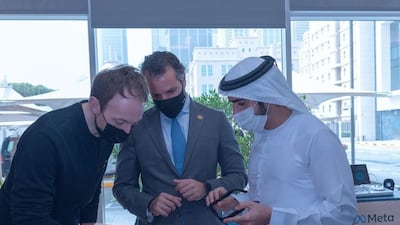
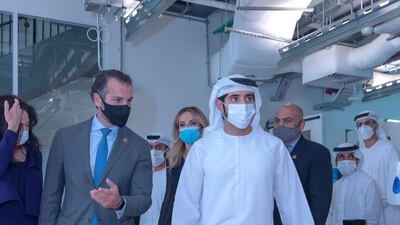
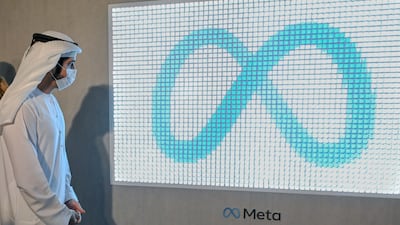
Embracing this particular sector is about more than simply importing an industry doing well for advanced foreign economies. Digital technologies are constantly evolving, and by having strong domestic industries, GCC countries can shape the sector technologically and in terms of governance. Cryptocurrencies, for example, are a promising but somewhat anarchic trend in pressing need of regulation and understanding. The UAE is set to have a voice in this, following news yesterday that Binance, the world’s largest cryptocurrency exchange, received in-principle approval from Abu Dhabi to operate as a broker-dealer in virtual assets. Dubai and Bahrain have already approved the firm. The same could be said of Mark Zuckerberg's Meta, which has just opened its regional offices in Dubai.

Oil is here for now, and remains a blessing for the UAE and the global economy. But with the right foundations, its eventual phasing-out does not have to be a sad moment, but merely a transition for an economy in which, in the words of Sheikh Mohamed, "every citizen is a national resource".


In numbers: PKK’s money network in Europe

Germany: PKK collectors typically bring in $18 million in cash a year – amount has trebled since 2010

Revolutionary tax: Investigators say about $2 million a year raised from ‘tax collection’ around Marseille

Extortion: Gunman convicted in 2023 of demanding $10,000 from Kurdish businessman in Stockholm

Drug trade: PKK income claimed by Turkish anti-drugs force in 2024 to be as high as $500 million a year

Denmark: PKK one of two terrorist groups along with Iranian separatists ASMLA to raise “two-digit million amounts”

Contributions: Hundreds of euros expected from typical Kurdish families and thousands from business owners

TV channel: Kurdish Roj TV accounts frozen and went bankrupt after Denmark fined it more than $1 million over PKK links in 2013 

LAST-16 FIXTURES

Sunday, January 20
3pm: Jordan v Vietnam at Al Maktoum Stadium, Dubai
6pm: Thailand v China at Hazza bin Zayed Stadium, Al Ain
9pm: Iran v Oman at Mohamed bin Zayed Stadium, Abu Dhabi

Monday, January 21
3pm: Japan v Saudi Arabia at Sharjah Stadium
6pm: Australia v Uzbekistan at Khalifa bin Zayed Stadium, Al Ain
9pm: UAE v Kyrgyzstan at Zayed Sports City Stadium, Abu Dhabi

Tuesday, January 22
5pm: South Korea v Bahrain at Rashid Stadium, Dubai
8pm: Qatar v Iraq at Al Nahyan Stadium, Abu Dhabi

COMPANY%20PROFILE
%3Cp%3E%3Cstrong%3ECompany%20name%3A%3C%2Fstrong%3E%203S%20Money%3Cbr%3E%3Cstrong%3EStarted%3A%3C%2Fstrong%3E%202018%3Cbr%3E%3Cstrong%3EBased%3A%3C%2Fstrong%3E%20London%3Cbr%3E%3Cstrong%3EFounders%3A%3C%2Fstrong%3E%20Ivan%20Zhiznevsky%2C%20Eugene%20Dugaev%20and%20Andrei%20Dikouchine%3Cbr%3E%3Cstrong%3ESector%3A%3C%2Fstrong%3E%20FinTech%3Cbr%3E%3Cstrong%3EInvestment%20stage%3A%3C%2Fstrong%3E%20%245.6%20million%20raised%20in%20total%3C%2Fp%3E%0A
Navdeep Suri, India's Ambassador to the UAE

There has been a longstanding need from the Indian community to have a religious premises where they can practise their beliefs. Currently there is a very, very small temple in Bur Dubai and the community has outgrown this. So this will be a major temple and open to all denominations and a place should reflect India’s diversity.

It fits so well into the UAE’s own commitment to tolerance and pluralism and coming in the year of tolerance gives it that extra dimension.

What we will see on April 20 is the foundation ceremony and we expect a pretty broad cross section of the Indian community to be present, both from the UAE and abroad. The Hindu group that is building the temple will have their holiest leader attending – and we expect very senior representation from the leadership of the UAE.

When the designs were taken to the leadership, there were two clear options. There was a New Jersey model with a rectangular structure with the temple recessed inside so it was not too visible from the outside and another was the Neasden temple in London with the spires in its classical shape. And they said: look we said we wanted a temple so it should look like a temple. So this should be a classical style temple in all its glory.

It is beautifully located - 30 minutes outside of Abu Dhabi and barely 45 minutes to Dubai so it serves the needs of both communities.

This is going to be the big temple where I expect people to come from across the country at major festivals and occasions.

It is hugely important – it will take a couple of years to complete given the scale. It is going to be remarkable and will contribute something not just to the landscape in terms of visual architecture but also to the ethos. Here will be a real representation of UAE’s pluralism.

Founders: Abdulmajeed Alsukhan, Turki Bin Zarah and Abdulmohsen Albabtain.

Based: Riyadh

Offices: UAE, Vietnam and Germany

Founded: September, 2020

Number of employees: 70

Sector: FinTech, online payment solutions

Funding to date: $116m in two funding rounds  

Investors: Checkout.com, Impact46, Vision Ventures, Wealth Well, Seedra, Khwarizmi, Hala Ventures, Nama Ventures and family offices

UAE%20PREMIERSHIP
%3Cp%3E%3Cstrong%3EFinal%3A%3C%2Fstrong%3E%20Dubai%20Hurricanes%20v%20Jebel%20Ali%20Dragons%0D%3Cbr%3E%0DSaturday%2C%208.15pm%2C%20Al%20Ain%20Amblers%0D%3C%2Fp%3E%0A%3Cp%3E%3Cstrong%3ESemi-final%20results%3C%2Fstrong%3E%0D%3Cbr%3EDubai%20Exiles%2020-26%20Dubai%20Hurricanes%0D%3Cbr%3EDubai%20Tigers%2032-43%20Jebel%20Ali%20Dragons%0D%3C%2Fp%3E%0A%3Cp%3E%3Cstrong%3ETable%3C%2Fstrong%3E%0D%3Cbr%3E1%20Dubai%20Tigers%2C%2033%20points%0D%3Cbr%3E2%20Dubai%20Exiles%2C%2024%20points%0D%3Cbr%3E3%20Dubai%20Hurricanes%2C%2018%20points%0D%3Cbr%3E4%20Jebel%20Ali%20Dragons%2C%2014%20points%0D%3Cbr%3E5%20Abu%20Dhabi%20Harlequins%2C%2014%20points%3C%2Fp%3E%0A
UAE currency: the story behind the money in your pockets
Who's who in Yemen conflict

Houthis: Iran-backed rebels who occupy Sanaa and run unrecognised government

Yemeni government: Exiled government in Aden led by eight-member Presidential Leadership Council

Southern Transitional Council: Faction in Yemeni government that seeks autonomy for the south

Habrish 'rebels': Tribal-backed forces feuding with STC over control of oil in government territory

UAE currency: the story behind the money in your pockets
Earth under attack: Cosmic impacts throughout history

4.5 billion years ago: Mars-sized object smashes into the newly-formed Earth, creating debris that coalesces to form the Moon

- 66 million years ago: 10km-wide asteroid crashes into the Gulf of Mexico, wiping out over 70 per cent of living species – including the dinosaurs.

50,000 years ago: 50m-wide iron meteor crashes in Arizona with the violence of 10 megatonne hydrogen bomb, creating the famous 1.2km-wide Barringer Crater

1490: Meteor storm over Shansi Province, north-east China when large stones “fell like rain”, reportedly leading to thousands of deaths.  

1908: 100-metre meteor from the Taurid Complex explodes near the Tunguska river in Siberia with the force of 1,000 Hiroshima-type bombs, devastating 2,000 square kilometres of forest.

1998: Comet Shoemaker-Levy 9 breaks apart and crashes into Jupiter in series of impacts that would have annihilated life on Earth.

-2013: 10,000-tonne meteor burns up over the southern Urals region of Russia, releasing a pressure blast and flash that left over 1600 people injured.

Timeline

2012-2015

The company offers payments/bribes to win key contracts in the Middle East

May 2017

The UK SFO officially opens investigation into Petrofac’s use of agents, corruption, and potential bribery to secure contracts

September 2021

Petrofac pleads guilty to seven counts of failing to prevent bribery under the UK Bribery Act

October 2021

Court fines Petrofac £77 million for bribery. Former executive receives a two-year suspended sentence 

December 2024

Petrofac enters into comprehensive restructuring to strengthen the financial position of the group

May 2025

The High Court of England and Wales approves the company’s restructuring plan

July 2025

The Court of Appeal issues a judgment challenging parts of the restructuring plan

August 2025

Petrofac issues a business update to execute the restructuring and confirms it will appeal the Court of Appeal decision

October 2025

Petrofac loses a major TenneT offshore wind contract worth €13 billion. Holding company files for administration in the UK. Petrofac delisted from the London Stock Exchange

November 2025

180 Petrofac employees laid off in the UAE

UAE currency: the story behind the money in your pockets
Call of Duty: Black Ops 6

Developer: Treyarch, Raven Software
Publisher:  Activision
Console: PlayStation 4 & 5, Windows, Xbox One & Series X/S
Rating: 3.5/5

Mercer, the investment consulting arm of US services company Marsh & McLennan, expects its wealth division to at least double its assets under management (AUM) in the Middle East as wealth in the region continues to grow despite economic headwinds, a company official said.

Mercer Wealth, which globally has $160 billion in AUM, plans to boost its AUM in the region to $2-$3bn in the next 2-3 years from the present $1bn, said Yasir AbuShaban, a Dubai-based principal with Mercer Wealth.

Within the next two to three years, we are looking at reaching $2 to $3 billion as a conservative estimate and we do see an opportunity to do so,” said Mr AbuShaban.

Mercer does not directly make investments, but allocates clients’ money they have discretion to, to professional asset managers. They also provide advice to clients.

“We have buying power. We can negotiate on their (client’s) behalf with asset managers to provide them lower fees than they otherwise would have to get on their own,” he added.

Mercer Wealth’s clients include sovereign wealth funds, family offices, and insurance companies among others.

From its office in Dubai, Mercer also looks after Africa, India and Turkey, where they also see opportunity for growth.

Wealth creation in Middle East and Africa (MEA) grew 8.5 per cent to $8.1 trillion last year from $7.5tn in 2015, higher than last year’s global average of 6 per cent and the second-highest growth in a region after Asia-Pacific which grew 9.9 per cent, according to consultancy Boston Consulting Group (BCG). In the region, where wealth grew just 1.9 per cent in 2015 compared with 2014, a pickup in oil prices has helped in wealth generation.

BCG is forecasting MEA wealth will rise to $12tn by 2021, growing at an annual average of 8 per cent.

Drivers of wealth generation in the region will be split evenly between new wealth creation and growth of performance of existing assets, according to BCG.

Another general trend in the region is clients’ looking for a comprehensive approach to investing, according to Mr AbuShaban.

“Institutional investors or some of the families are seeing a slowdown in the available capital they have to invest and in that sense they are looking at optimizing the way they manage their portfolios and making sure they are not investing haphazardly and different parts of their investment are working together,” said Mr AbuShaban.

Some clients also have a higher appetite for risk, given the low interest-rate environment that does not provide enough yield for some institutional investors. These clients are keen to invest in illiquid assets, such as private equity and infrastructure.

“What we have seen is a desire for higher returns in what has been a low-return environment specifically in various fixed income or bonds,” he said.

“In this environment, we have seen a de facto increase in the risk that clients are taking in things like illiquid investments, private equity investments, infrastructure and private debt, those kind of investments were higher illiquidity results in incrementally higher returns.”

The Abu Dhabi Investment Authority, one of the largest sovereign wealth funds, said in its 2016 report that has gradually increased its exposure in direct private equity and private credit transactions, mainly in Asian markets and especially in China and India. The authority’s private equity department focused on structured equities owing to “their defensive characteristics.”

Our legal advisor

Ahmad El Sayed is Senior Associate at Charles Russell Speechlys, a law firm headquartered in London with offices in the UK, Europe, the Middle East and Hong Kong.

Experience: Commercial litigator who has assisted clients with overseas judgments before UAE courts. His specialties are cases related to banking, real estate, shareholder disputes, company liquidations and criminal matters as well as employment related litigation. 

Education: Sagesse University, Beirut, Lebanon, in 2005.

Zombieland: Double Tap

Director: Ruben Fleischer

Stars: Woody Harrelson, Jesse Eisenberg, Emma Stone

Four out of five stars 

UAE rugby in numbers

5 - Year sponsorship deal between Hesco and Jebel Ali Dragons

700 - Dubai Hurricanes had more than 700 playing members last season between their mini and youth, men's and women's teams

Dh600,000 - Dubai Exiles' budget for pitch and court hire next season, for their rugby, netball and cricket teams

Dh1.8m - Dubai Hurricanes' overall budget for next season

Dh2.8m - Dubai Exiles’ overall budget for next season

Updated: April 13, 2022, 3:00 AM