


People could be forgiven for thinking the world’s diplomats have been having a rather fruitless year. Almost three months into 2022, none of the world’s wars have ended and a new one has begun. Those responsible for pushing parties to peace often come up against old habits of intransigence, as well as a lack of public interest. War and angry rhetoric capture imagination and attention, but multilateral sessions and dialogues do not.
Much of what diplomats discuss cannot even be aired in the open – so fragile are the potential gains from compromise. But when they are achieved, they can seem near miraculous.
News yesterday that Armenia and Turkey might be close to normalising relations is a good example, and proof that even what appear to be the most intractable of issues, can be solved.
-
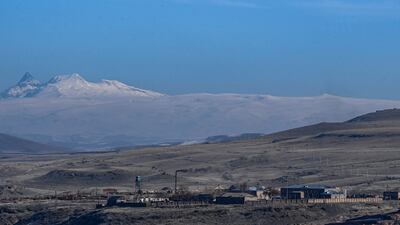
A rare ray of hope is shining across the snow-capped mountains towering over Turkey's northeastern edge ahead of the first direct talks in years between the country and Armenia. All photos: AFP -
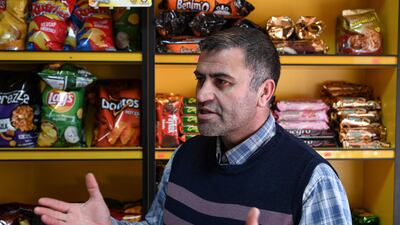
'Since the border was shut in 1993, our region has become the country's blind spot, locked on all sides,' says Engin Yildirim, director of Turkey's Akyaka traders' association. -
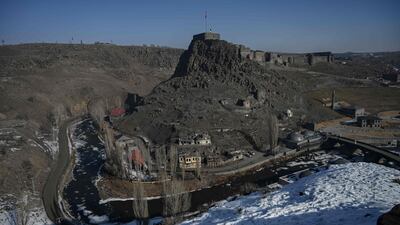
The Soviet Union's chaotic breakup in 1991 set off a wave of regional conflicts, sparking an all-out war between Christian Armenians and Muslim Azerbaijanis over the disputed region of Nagorno Karabakh. -
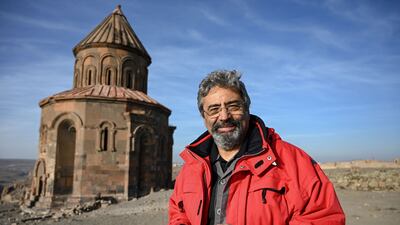
'In 1991, people would flock to both sides of the border to meet up, Vedat Akcayoz, a local historian, says. 'For two years, it was all the rage.' -
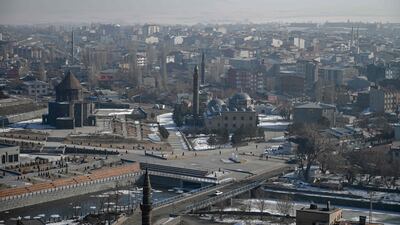
Since then, a second war over Nagorno Karabakh in 2020 saw Azerbaijan reverse most of its losses and Armenia agree to a Russian-brokered truce. -

'Our government is in favour of reopening the border and I believe the Armenians are too, Mr Akcayoz says. 'We have no problem with the Armenians, and they have no problem with us.' -

The remote region's shop owners recall a time when Armenians would come across the border and buy their goods. -
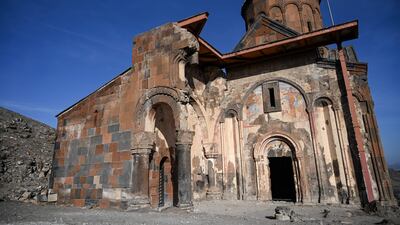
Few here like to talk about the underlining point of tension: the killing of what historians estimate is more than one million Armenians by Ottoman Turks in 1915-16. -
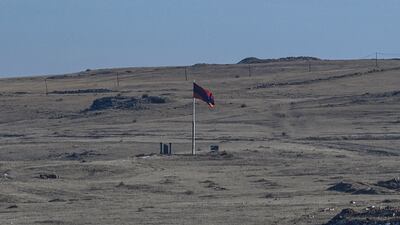
'I am sure the date for the border's reopening has already been set,' former Kars mayor Naif Alibeyoglu says, as a Russian flag flies over a border crossing a few miles away where Moscow has set up a base in support of its Armenian ally.


Few bilateral relationships have been as complex during the past century. Rooted in an extremely painful and contested history, simmering tensions exploded into outright war in 2020 in Nagorno-Karabakh, when Armenian and Turkish-backed Azerbaijani forces fought over the ethnic Armenian province that broke away from Baku during the early 1990s. Five thousand soldiers are thought to have died, as well as hundreds of civilians. Turkish-supplied drones, which are now being used in Ukraine, were instrumental in Azerbaijan's relatively swift but deadly victory.
For Armenians, who were already struggling with economic malaise and political turmoil at home – similar to their Turkish neighbours – losing another piece of territory to ethnic Turks brought up historical reminders of their horrific, deadly persecution and flight from the ruins of the Ottoman Empire in the beginning of the 20th century.
In spite of all this, both sides appear to be rising above the tumult and choosing peace. According to what Armenian Foreign Minister Ararat Mirzoyan told the Turkish state-run Anadolu news agency on Tuesday, Yerevan and Ankara are not only close to establishing diplomatic relations, but also opening the more than 300-kilometre border between both. It would be a significant commercial boost that both struggling economies need, and a victory not just on the bilateral and regional level – the Caucuses is often described as an even more complicated, fraught version of the Balkans – but globally, bucking what appears to be the growing weakness of international diplomacy.
Constant vigilance will be required to keep up momentum if relations are established. It will not be easy. Faltering truces and geopolitical balancing acts from the Balkans to the Middle East, driven by bitter camps at home and nefarious foreign influence, are a reminder that peace requires constant work to prevent a descent into blinkered nationalism.
By accepting this mission and the intense work it will require, Armenia and Turkey are choosing in many ways the harder and longer, but infinitely more responsible path of peace. By not allowing the past to be an impediment in the present, they are acknowledging that what is done is done, but what is yet to come can be shaped by officials and society to boost common prosperity. As is so often a feature of the most bitter historic rivalries, both sides actually have much in common. Healing historic bitterness might still be a long way off, but with both sides talking and trading, it is one important step closer.

